On a busy thoroughfare in the heart of Dubai, a new building stands out effortlessly against the urban skyline, virtually impossible for passersby to miss. Its vibrant red facade glows vividly with electric white lights, commanding attention from drivers and pedestrians alike. Three giant archways cut into the structure, offering onlookers a tantalizing glimpse inside to a towering two-story screen that plays a continuous loop of editorial-style video content. Stepping through the entrance reveals a stark, almost brutalist construction, softened and offset by striking two-tone red furniture and a contemporary neon wall mural that stretches across the room.
Visitors might mistake it for an exclusive members-only club or a high-end luxury retail boutique, but it is neither. It is a Kentucky Fried Chicken.
This striking architectural departure from the traditional bucket-and-stripe red-and-white roadside diners of the past represents the physical manifestation of a much larger, global ambition. We are currently living in the middle of a modern chicken war, and the pioneer of the fast-food fried chicken industry is fighting desperately to reclaim its iconic status on the world stage. Today, chicken—and more specifically, the humble chicken tender—is undeniably having a massive cultural and culinary moment. This surge in popularity comes even as the broader fast-casual food space continues to languish in a prolonged post-pandemic slump, heavily impacted by ongoing cost-of-living pressures and changing consumer spending habits.
While the broader restaurant sector struggles, rising stars in the poultry category such as Raising Cane’s, Dave’s Hot Chicken, and Hangry Joe’s Hot Chicken & Wings are generating major sales volumes and dominating social media feeds. These nimble competitors have successfully wooed younger consumers with their signature dipping sauces, specialized menus, and chunky pickles. Meanwhile, the legacy chicken purveyor that practically invented the category, KFC, has occasionally faded into the background, watching from the sidelines as newer brands captured the cultural zeitgeist.
Now, KFC is ready to throw its drumstick back into the ring and mount a serious defense of its historic territory. After quietly testing new chicken concepts, experimental beverage lineups, and varied brand approaches for the past several years, the global fast-food giant is undertaking a massive, comprehensive transformation. The ultimate goal is to reclaim undisputed chicken supremacy. As part of this sweeping overhaul, the company began testing what it calls a revolutionary restaurant concept of the future, rolling out avant-garde design elements designed to redefine how consumers interact with the brand.
Catherine Tan-Gillespie, a dedicated KFC veteran who has been with the company since 2015, stepped into the role of president of KFC U.S. in April 2025 with a clear-eyed view of the challenges ahead. Upon taking the helm, she immediately recognized a powerful paradox at the heart of the business. It was so obvious to her that there is a massive, enduring latent love for the brand among generations of consumers. As she noted upon stepping into the role, KFC is an undisputed American icon.
At the same time, however, it was equally clear that while people still hold fond, nostalgic memories of the famous chain, the real challenge lies in keeping the brand relevant, modern, and culturally resonant. That challenge became starkly apparent in 2025, when rival chain Raising Cane’s officially bumped KFC out of the top three U.S. chicken restaurants by sales, a competitive list still led by giants Chick-fil-A and Popeyes.
Reflecting on that pivotal market share loss, Tan-Gillespie recalls that it served as an undeniable wake-up call for the entire corporate organization. It was the absolute catalyst for realizing that the company had to do something urgently around making KFC more relevant, more easy to consume, and more distinctive in a crowded marketplace.
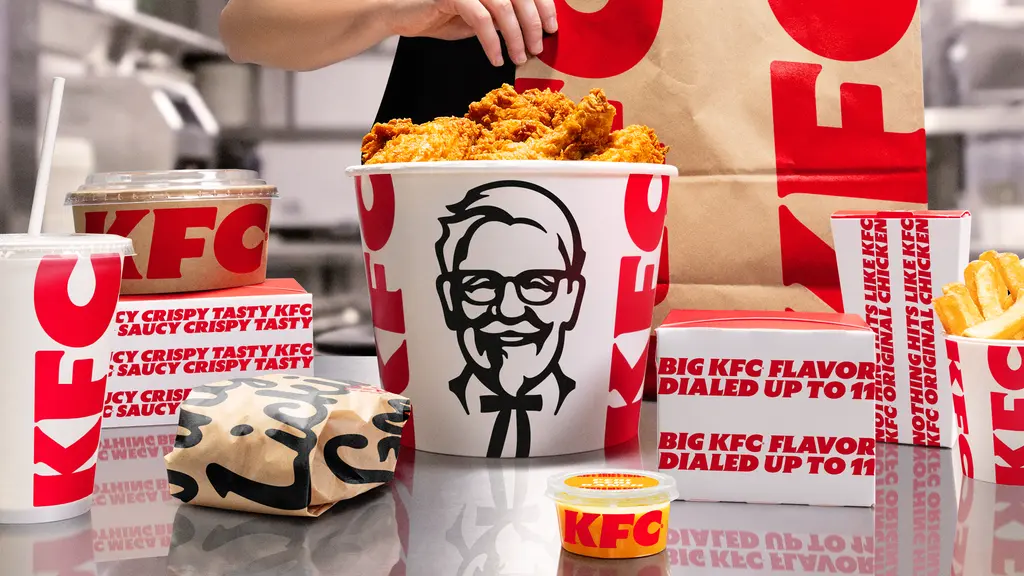
The ensuing comeback strategy encompasses much more than just a fresh coat of paint. It includes a thoroughly refreshed menu, an entirely new global brand platform, and a nostalgic advertising campaign that brings back the legendary Colonel Sanders to the forefront of the company’s messaging. However, the brand’s latest strategic pivot is perhaps its most ambitious undertaking yet. Through a high-profile creative collaboration with the global design and branding agency JKR, KFC is completely reimagining the physical architecture and interior design of its restaurants from the ground up, ensuring that the spaces where customers eat match the bold, modernized vision of the food they are serving.