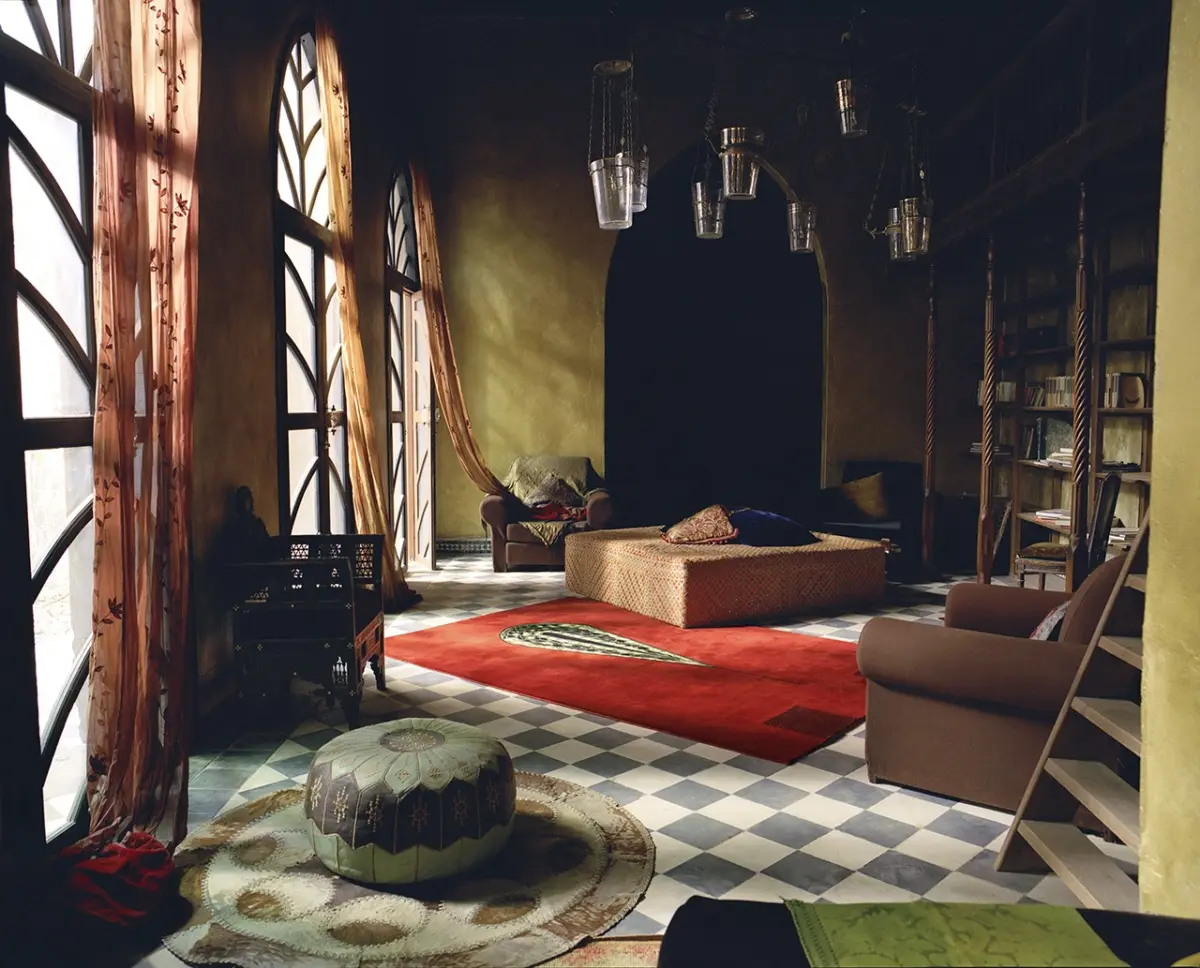
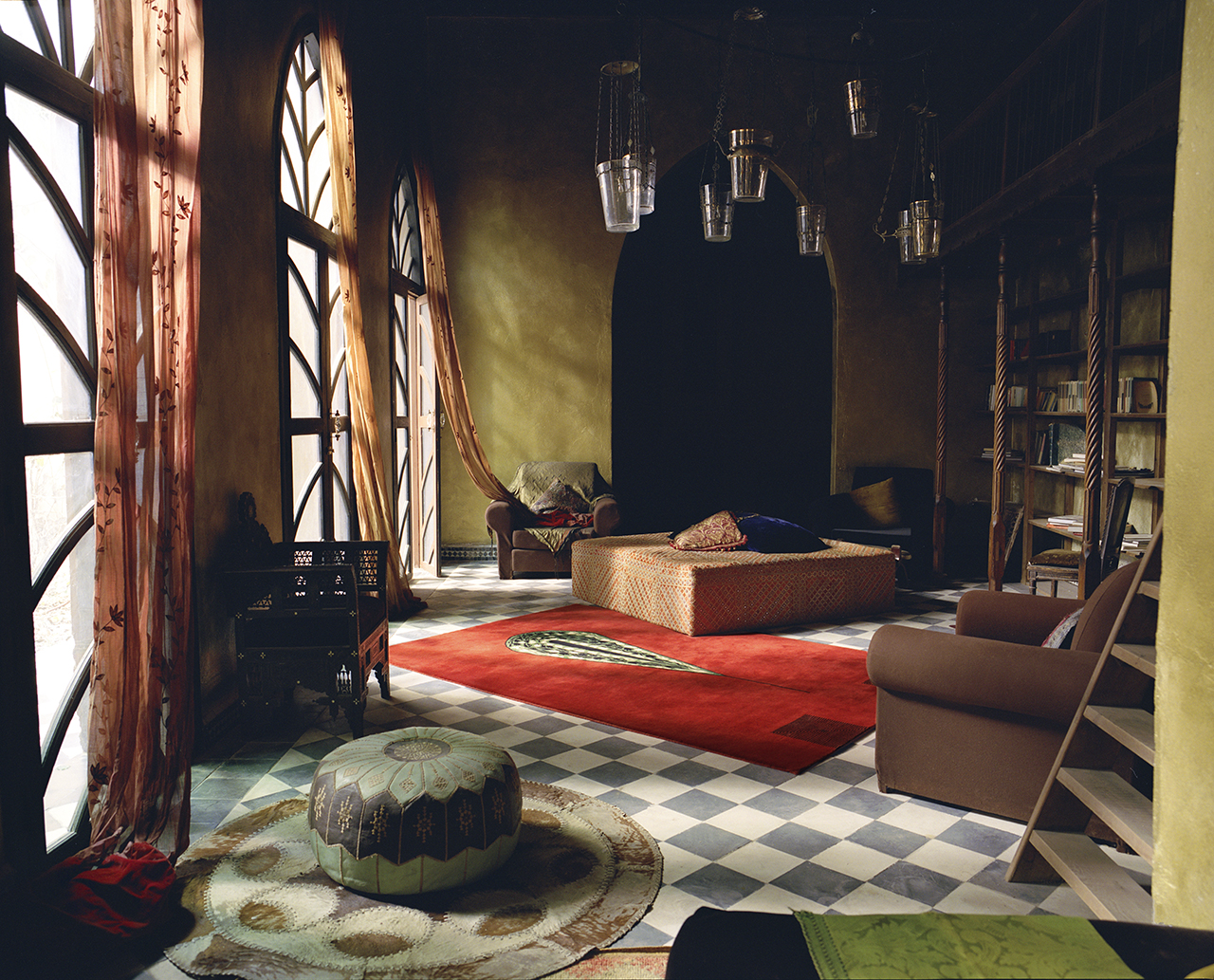
In contemporary interior design, the rug has quietly transcended its conventional role as a soft buffer between furnishings and hard floors. Today, recognizable names across architecture, design, and fine art are embracing the medium, reframing the floor as the room’s proverbial fifth wall: an expansive, horizontal canvas ripe for visual expression.
For both designers and homeowners, rugs offer a relatively low-risk way to experiment with bold colors, complex geometries, and rich textures. While painted feature walls or custom cabinetry can feel daunting, a removable floor covering can introduce depth and personality without requiring a permanent commitment. A rug can anchor an entire room or introduce an unexpected visual element, transforming the floor into a space for cultural and personal storytelling.
What makes this movement so compelling is the diversity of designs and production methods currently available on the market. The landscape ranges from bespoke, research-driven one-offs and small-batch heirloom weaves to scalable, high-performance collections. Across ten notable recent releases, historic ornamental details, personal memories, and traditional craft techniques meet computational design and innovative fiber technologies. Whether translated from works on paper, inspired by microscopic structures in nature, or knotted using techniques once reserved for royalty, these collections demonstrate that rugs can hold as much artistic and aesthetic weight as any framed piece on a gallery wall. Given the centuries-old tradition of hanging tapestries, perhaps they always have.
10 New Artful Rug Collections
1. Beni x Colin King: The Chelsea Collection
Morocco-based BENI’s ongoing collaboration with artistic director and self-described “placer of things” Colin King has produced The Chelsea Collection, an interpretation of heirloom construction once reserved for palace interiors. The eight designs are the first to feature Royale, Beni’s adaptation of an ancient hand-knotting technique historically practiced for Moroccan nobility. Requiring months of work by skilled artisans, the exceptionally dense weave allows for intricate patterns and a refined, tapestry-like surface.
Drawing inspiration from the hidden gardens of European cities, the collection translates architectural motifs such as wrought-iron gates, garden layouts, and ornamental details into contemporary compositions. The palette of deep blacks, browns, and greens further emphasizes the designs’ intricate geometries, demonstrating how centuries-old craftsmanship can produce something distinctly contemporary. The Chelsea Collection from Beni x Colin King is available directly through the manufacturer’s platforms.
2. Nordic Knots: Dancing Flower & Matches
Stockholm-based Nordic Knots introduces Dancing Flower and Matches, two expressive rug designs that draw inspiration from Swedish Grace, a design movement that emerged in the 1920s combining classical proportions with modern simplicity. Crafted primarily from wool, the designs translate botanical silhouettes and geometric motifs into rich, tactile surfaces.
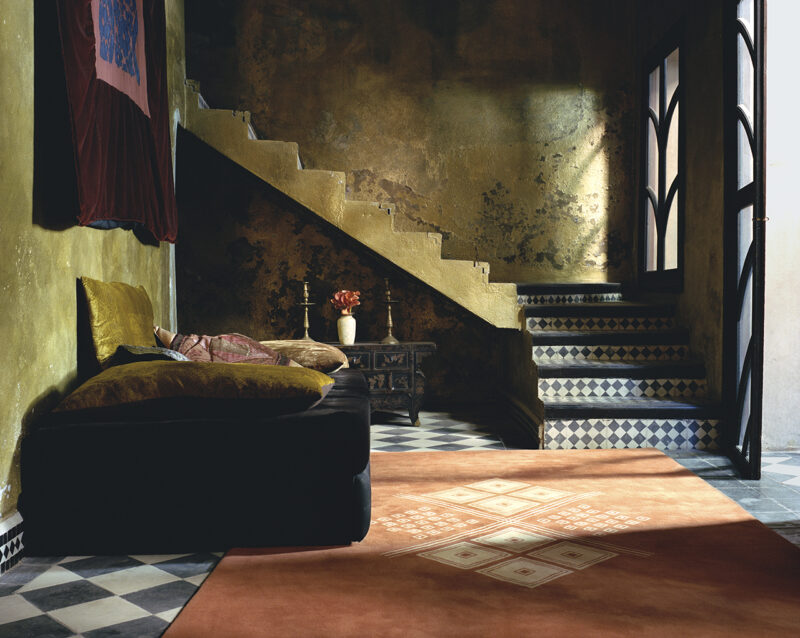
Dancing Flower features a playful, organic pattern, while Matches takes a more structured approach with rhythmic geometry and touches of bamboo silk. Balancing soft backgrounds with bold linework, the designs bring warmth, artistic character, and visual rhythm to contemporary interiors while celebrating Sweden’s decorative arts heritage. Both pieces are available through Nordic Knots’ online channels.
3. Armadillo: Venezia
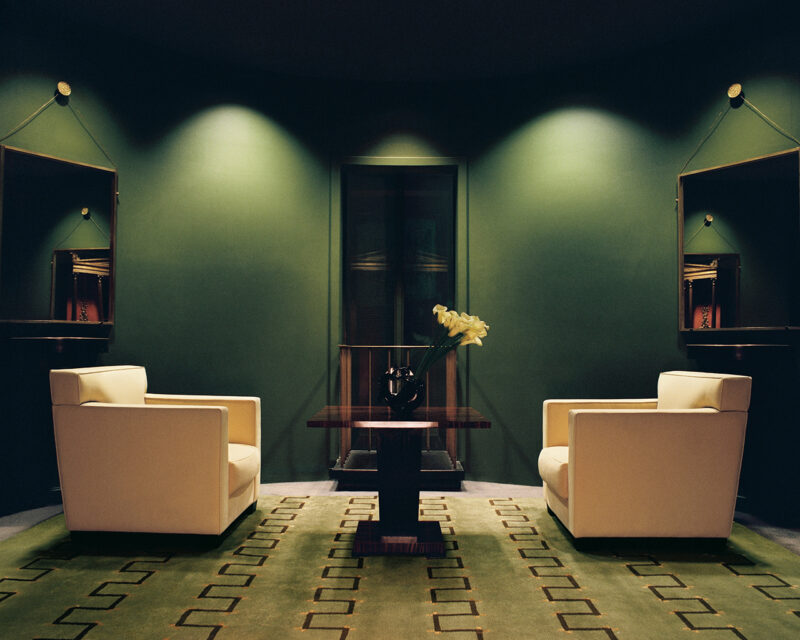
Marking a significant material milestone, Australian rug maker Armadillo introduces Venezia, its first collection crafted entirely from pure silk. Inspired by the shifting light of Venice and the way it plays across architectural and natural surfaces, each piece is hand-knotted in India to create a single, uninterrupted field of luminous color.
Defined by a low pile and refined profile, the collection shifts subtly in response to ambient light and perspective. Offered in five stocked colorways—Biscuit, Rosewood, Vermilion, Caper, and Serpentine—alongside fifteen made-to-order hues, Venezia demonstrates how monochromatic silk surfaces can anchor living spaces with subtle warmth and visual depth.
4. The Rug Company: Silk Textures
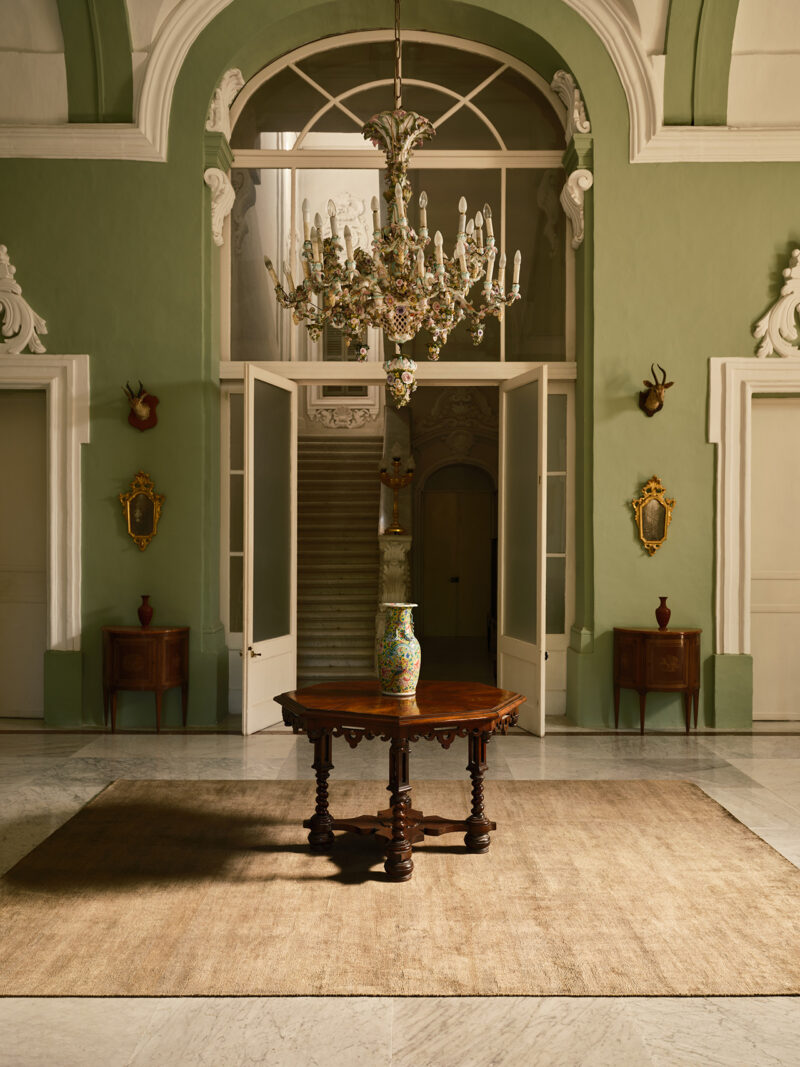
Part of The Rug Company’s Colour in Residence series, Silk Textures explores the expressive qualities of silk and nuanced tertiary color palettes. Comprising twenty handmade rugs across two distinct finishes—Vara, a handloomed wool-and-silk blend celebrating gentle irregularity, and Caliche, a luminous 100% silk weave—the collection was fittingly photographed at Malta’s historic Baroque Villa Bologna.
The rugs feature individually developed colors inspired by mineral tones, ranging from earthy clay to tranquil sage. Through subtle variations in texture, sheen, and color, Silk Textures offers a thoughtful exploration of how a seemingly simple surface can fundamentally influence the atmosphere of a room.
5. Patterson Flynn: Abstraction
Expanding the material possibilities of natural fibers in contemporary rug design, Patterson Flynn introduces Abstraction, a series crafted from durable abaca. Reframing the material through a modern lens, the collection reinterprets traditional decorative arts and artisanal techniques, such as Italian marbled paper and straw marquetry, through bold, graphic designs.
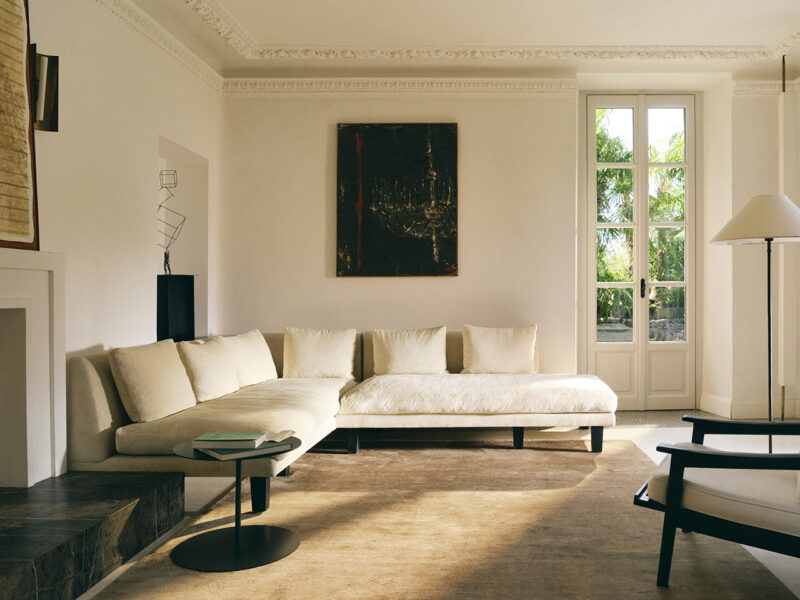
Conceived as individual works of art rather than conventional repeating patterns, each piece makes full use of abaca’s natural sheen, dimensional texture, and dynamic interaction with light. The result is a collection that successfully transforms a material historically associated with more traditional interiors into something distinctly avant-garde.
6. Sara Story x Christopher Farr: Hill Country
Interior designer Sara Story’s collaboration with esteemed rug maker Christopher Farr draws deeply from personal memory and artistic heritage. Titled Hill Country, the three-piece collection—encompassing Spider, Landscape, and Grid—translates the sun-washed terrain of Story’s Texas upbringing alongside subtle references to Louise Bourgeois’ monumental spider sculptures.
Hand-knotted in wool and silk, the collection balances architectural geometry with painterly abstraction. Spider, for instance, utilizes raised lines to suggest the form of an arachnid, referencing Bourgeois’ work without reproducing it literally. Rooted in both personal history and significant artistic influence, Hill Country demonstrates how rugs can introduce a narrative layer into contemporary living spaces.
7. Nanimarquina: Lucia Eames Collection
Spanish brand Nanimarquina partnered with the Eames Office and Form Portfolios to adapt seven original artworks by Lucia Eames, daughter of Charles Eames and stepdaughter of Ray Eames, into expressive floor coverings.
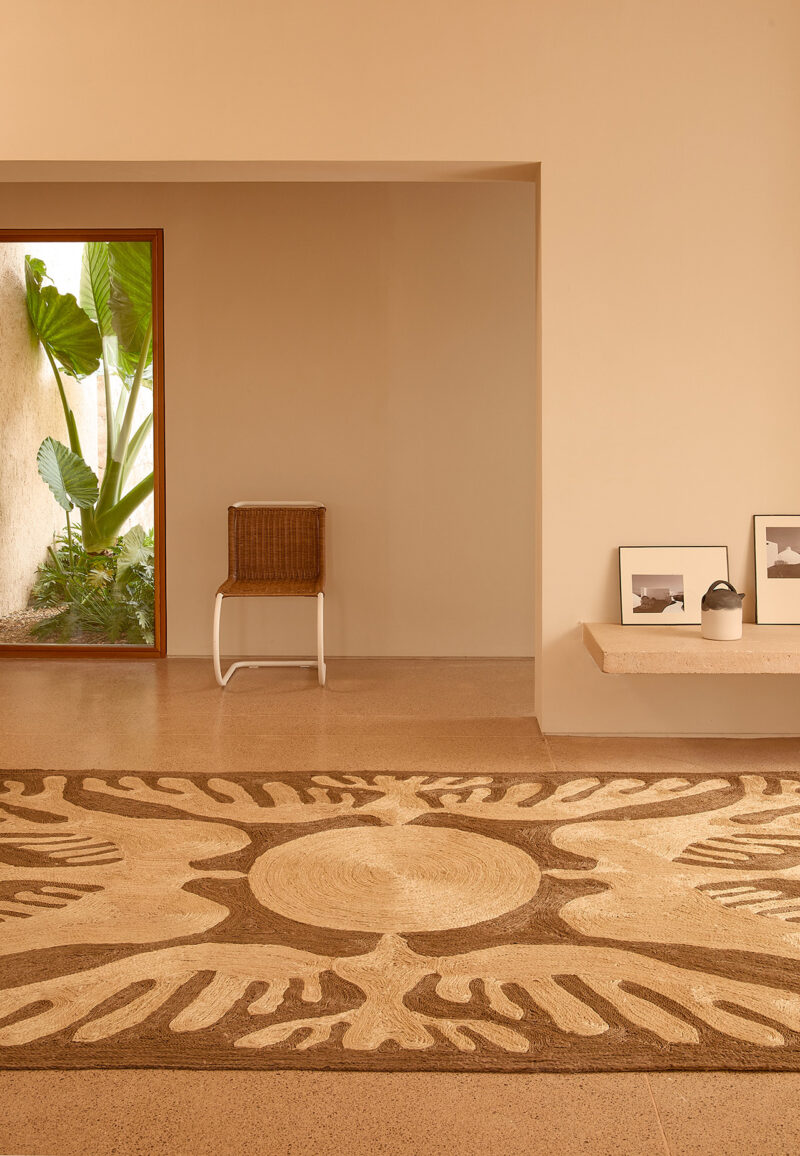
Rather than simply reproducing original graphics, designs such as Echo, Rooted, and Sunbirds translate Eames’ organic compositions into tactile surfaces using techniques including hand-tufting, hand-knotting, sculptural relief, and hand-braided jute. Defined by earthy tones and fluid silhouettes, the collection brings a lesser-known chapter of the broader Eames family creative legacy into contemporary interiors.
8. Jaipur Living: CallaLuxe
Demonstrating how expressive design can coexist with everyday practicality, Jaipur Living’s CallaLuxe line combines advanced performance materials with traditional craftsmanship. Spanning seventy-five designs, the series incorporates solution-dyed fibers to create durable, easy-care rugs that retain the softness and visual appeal of natural textiles.
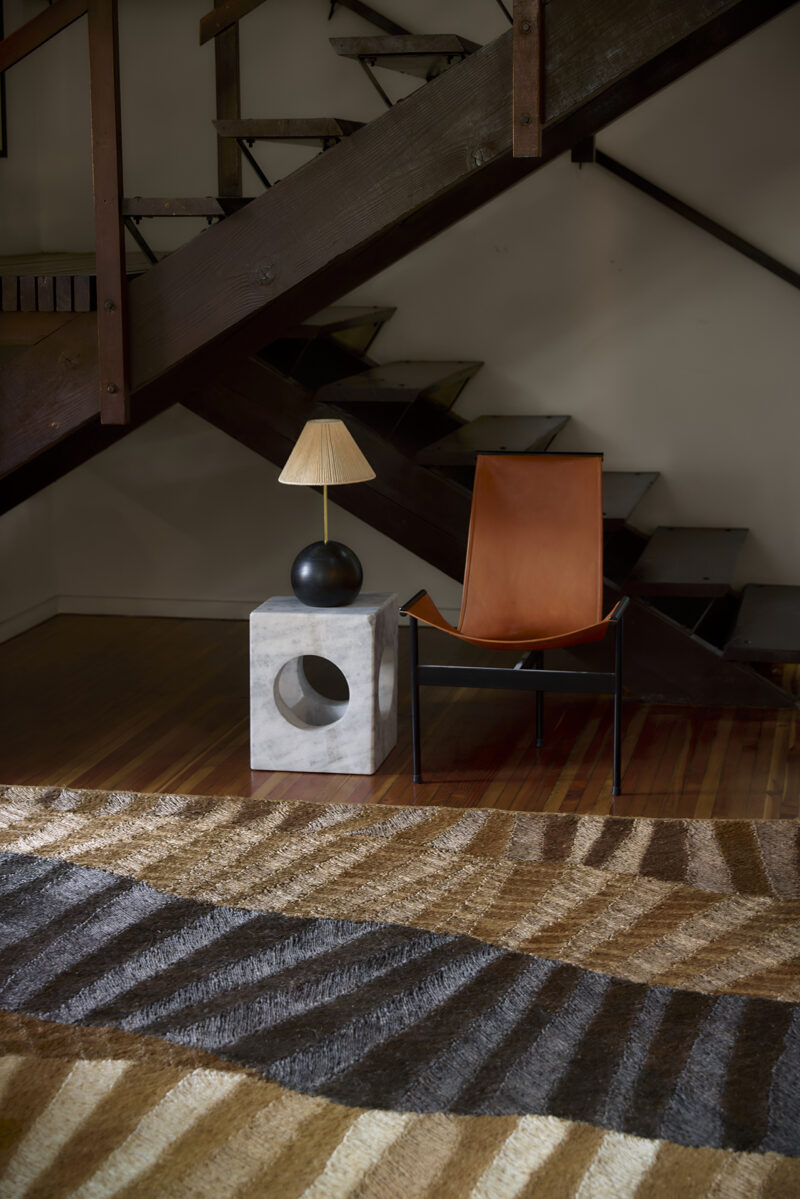
Produced through a combination of hand-knotting, hand-tufting, and handweaving, the collection offers rich patterns, subtle gradients, and dimensional textures without sacrificing utility. With options explicitly suited to high-traffic residential and commercial areas, CallaLuxe proves that visually compelling floor coverings need not be reserved exclusively for low-traffic sanctuaries.
9. Nomadory Rugs: Plot
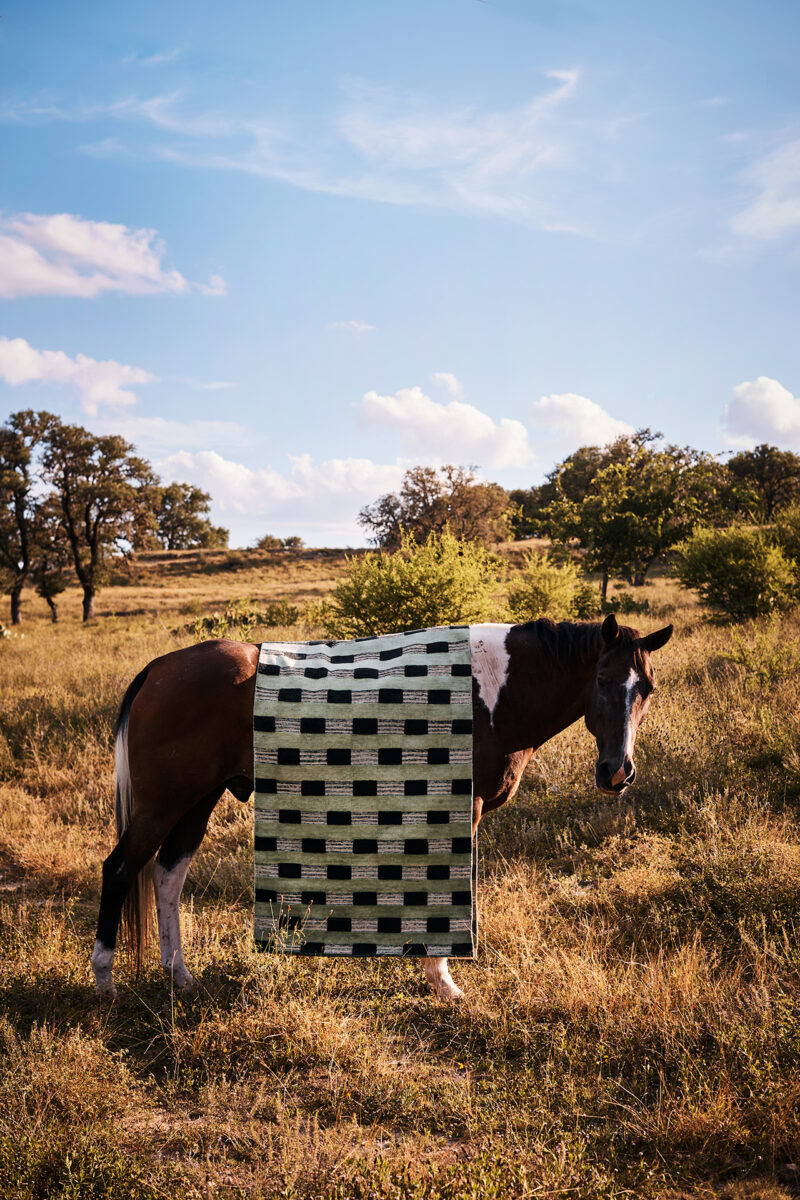
Created for the outdoor Verdant Phenomena group exhibition in Sonoma, California, the Plot rug by Nomadory responds directly to the complex relationship between natural growth and the rigid geometry of the built environment. Developed in collaboration with The Bureau and artist Gigi Allen, the design takes primary inspiration from rectangular planter boxes and the organic forms that emerge within them.
Subtle variations in pile height and contrasting stitch patterns emphasize this architectural juxtaposition, translating the dialogue between cultivation and structure into a woven surface. Fabricated from recycled polyester specifically for outdoor use, Plot suggests how the visual language of a garden can be seamlessly carried into exterior living spaces through advanced textile design.
10. Creative Matters x RDAI: Zoometry
Melding computational design with traditional craftsmanship, Toronto-based Creative Matters teamed up with Paris architecture practice RDAI to create Zoometry. Inspired by microscopic biological structures—including butterfly wings, spider webs, and intricate coral formations—the six distinct designs translate digitally generated compositions into intricately hand-knotted rugs.
Crafted in Nepal using a blend of Himalayan wool and Chinese silk, the collection uses material contrast and subtle shifts in color to evoke the natural iridescence and complexity of organic forms. Each digital composition serves as a highly detailed guide for master artisans, with approximately 1.8 million individual knots required to complete a single 2-by-3-meter rug. Positioned as an experimental, research-driven collection, Zoometry demonstrates how computational precision and artisanal expertise can work in tandem to transform natural geometry into tactile works of art.
The collection is produced under the creative direction of industry specialists and highlights a broader shift in the design world, where flooring is no longer treated as an afterthought, but as a primary medium for artistic expression.
The initiative is documented by Adrian Madlener, a Brussels-born, New York-based writer specializing in collectible and sustainable design, who focuses on makers pushing the boundaries of their respective disciplines.