Lacoste is continuing its aggressive global retail expansion strategy with a major new footprint in Asia, launching its very first Café Lacoste in South Korea alongside an expansive flagship store in Seoul’s vibrant and creatively charged Seongsu district. Unveiled on Friday, the four-level, 8,000-square-foot retail destination marries the French brand’s rich tennis heritage with the distinct industrial character of a neighborhood frequently referred to by locals and international visitors alike as the "Brooklyn of Seoul."
The opening marks another milestone in the brand’s ongoing international momentum under the leadership of Thierry Guibert, who returned as chief executive officer of the tennis-centric heritage brand in October. Guibert emphasized that the continuous development of flagship locations across key global markets directly reflects the company’s overarching ambition to strengthen Lacoste’s international presence and brand desirability, while simultaneously delivering increasingly distinctive, immersive experiences for consumers.
According to Guibert, the new Seoul flagship captures that exact momentum in a city that is universally renowned for its dynamic creative energy and powerful cultural influence. The launch builds upon a robust existing presence in the country, where Lacoste already operates more than 230 points of sale. The brand has also been actively engaging South Korean consumers through high-profile experiential activations, including a memorable summer takeover of the pool and outdoor lounge at the Mondrian hotel located in Seoul’s bustling Itaewon district.
The choice of the Seongsu district for this monumental retail concept is deeply intentional, tapping into the area’s rich industrial heritage and historic brick architecture. Originally emerging as a thriving footwear manufacturing hub in the 1960s, Seongsu was characterized by major producers, a dense network of skilled cobblers, and specialized materials suppliers. Following a period of economic shift, the neighborhood underwent a significant revitalization in the early 2000s, spearheaded by a major park project. In recent years, it has transformed into one of the city’s premier hot spots for cutting-edge pop-up shops, contemporary art spaces, and luxury brand flagships.

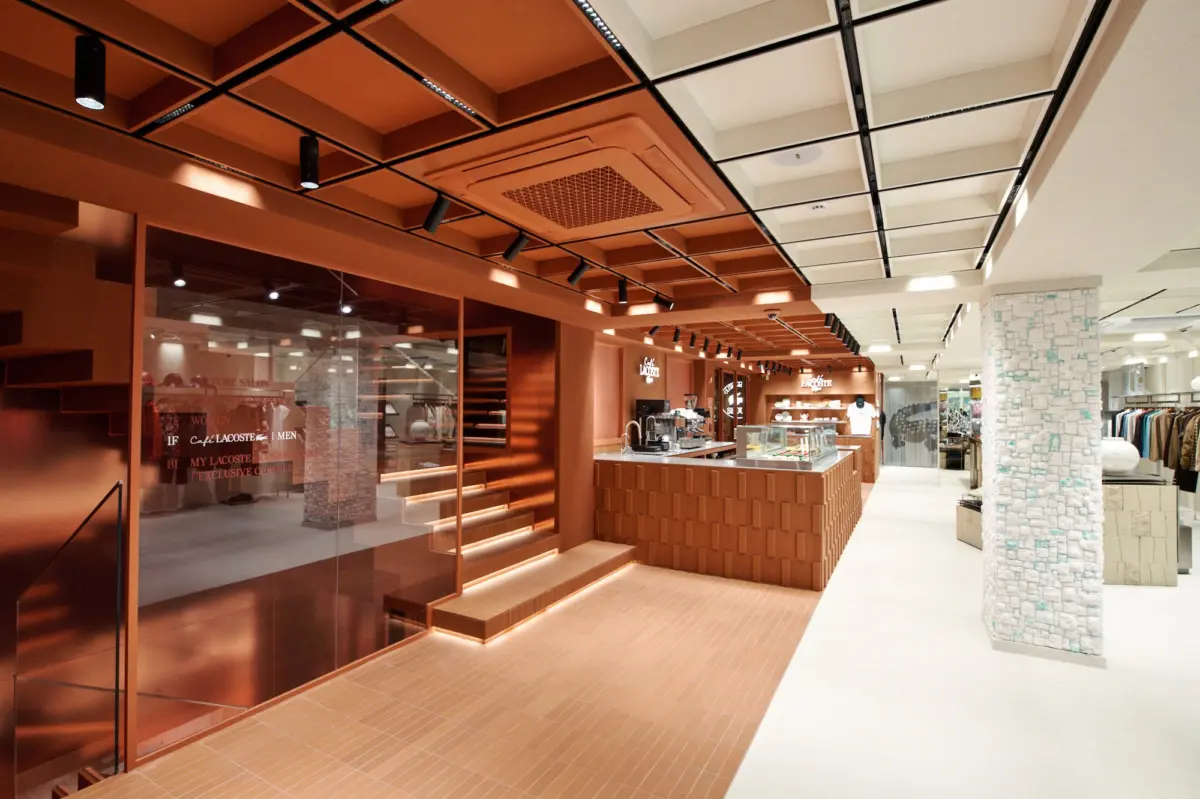
Spanning four distinct levels and covering over 8,000 square feet, the new flagship’s interior design pays homage to this localized industrial history while remaining deeply faithful to the brand’s athletic roots. The color palette heavily features warm terracotta tones, serving a dual purpose by simultaneously evoking the exposed brick walls of the Seongsu neighborhood and the classic red clay courts of professional tennis. These earthy tones are artfully balanced with crisp white elements, offering a clean, modern aesthetic that serves as a further visual reminder of the sport founded by French tennis legend René Lacoste.
Art and culture play a central role in the flagship’s design narrative, reinforcing Lacoste’s objective to establish the store as a true destination for the local creative community. Taking pride of place within the architectural layout is a monumental, eye-catching installation of tennis racquets captured in mid-motion, created by New York- and Mexico-based multidisciplinary artist Mauricio Alejo. Furthermore, the brand commissioned a series of works by local Korean artists, which are thoughtfully integrated and displayed throughout the various retail levels of the store.
The product assortment within the flagship is meticulously organized to offer a comprehensive brand experience. A dedicated feature of the store is the prominent Polo Wall, which places the brand’s signature, foundational polo shirt front and center. Surrounding this central display are curated selections from the women’s, men’s, and sports collections, catering to the diverse lifestyle needs of modern consumers. For shoppers looking for a bespoke touch, a dedicated personalization space allows a selection of pieces to be customized on-site.
Beyond fashion and retail, the flagship introduces the latest outpost of the Café Lacoste concept to the South Korean market, furthering the brand’s mission to create welcoming spaces for the local creative community. In addition to a specialized menu of beverages, the café offers a unique culinary experience featuring playful, brand-themed desserts such as the Polo Cake—a creative culinary interpretation of the label’s signature polo shirt. The café space also offers exclusive merchandise that cannot be found at standard retail counters, blending gastronomy and lifestyle merchandise in a seamless environment.
The introduction of the Seoul café follows the successful debut of the very first Café Lacoste in February, which launched as a 65-seat space situated on Avenue Franklin-Roosevelt near the prestigious Champs-Élysées in Paris.

The retail and café expansion comes on the heels of a broader, comprehensive brand refresh that began rolling out in April. This revitalization introduced a modernized visual identity, highlighted by an evolution of the brand’s iconic logo and deliberate nods to its historical archives. These heritage elements include subtle incorporations of René Lacoste’s personal handwriting and vintage graphics that pay homage to the original artwork of Robert George, the talented illustrator responsible for sketching the brand’s very first crocodile emblem. This visual reset was supported by the global rollout of a major marketing campaign invoking the "Life Is a Beautiful Sport" tagline, a memorable phrase that was first introduced to consumers during a prominent 2014 campaign.
The Seoul flagship and café opening follows a similar architectural and experiential playbook to another major international flagship launch earlier in the year. In May, Lacoste opened a new flagship in Hong Kong, thoughtfully designed to balance the distinct architectural cues of its host city with the brand’s enduring tennis heritage. That location found its home inside the historic 1920s Grade I-listed Pedder Building, situated in the heart of the city’s bustling Central neighborhood.
Through these carefully curated flagships, Lacoste continues to merge localized cultural narratives with its athletic legacy, cementing its position in key international markets like South Korea through physical spaces that blend fashion, art, and lifestyle hospitality.