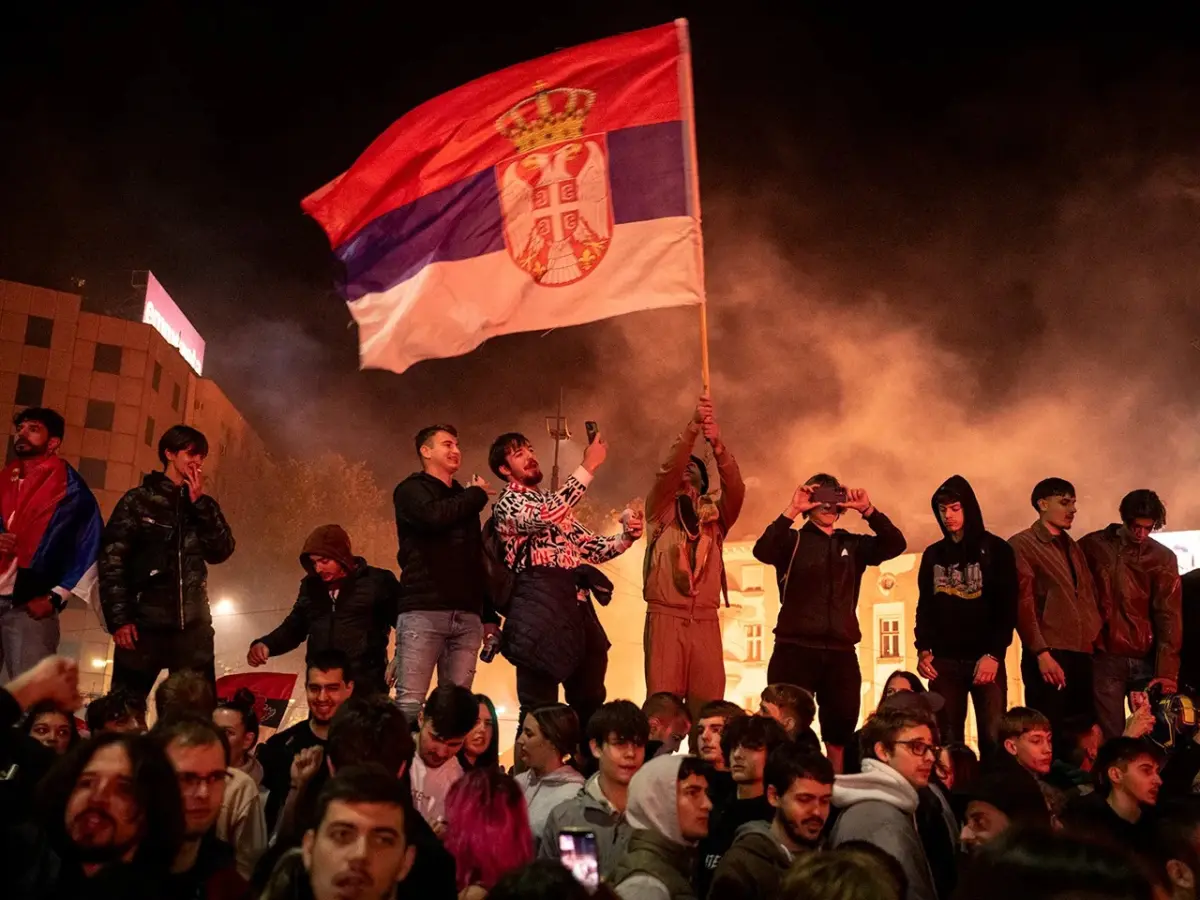
Anti-autocrat electoral wins in Serbia, Hungary, and Brazil are currently being celebrated across the international community as a powerful democratic resurgence. However, a closer look at what actually transpired at the ballot box reveals a far more complicated picture, one that offers both encouragement and a stark warning for pro-democracy movements worldwide.
In Serbia’s recent elections, the political odds were heavily stacked in the incumbent’s favor from the very beginning. During his 14 years in power, first serving as prime minister and subsequently as president, Aleksandar Vučić systematically seized control over the domestic media landscape and vital state institutions. Yet, despite this entrenched advantage, he has ultimately conceded defeat to a unified coalition composed largely of academics and political novices.
On the very same day in South America, Brazilian President Luiz Inácio Lula da Silva fought back masterfully after a challenging first-round loss to Flávio Bolsonaro, securing an unprecedented fourth term in office. Combined with the unexpected defeat of long-serving Hungarian Prime Minister Viktor Orbán earlier in April, these dramatic victories are increasingly being framed by commentators as concrete evidence of a sweeping global resurgence against the populist right.
However, the political reality on the ground is significantly more complex. These outcomes are less about a sudden, widespread ideological rejection of right-wing populism than they are about the residual, stubborn strength of electoral processes that—while heavily targeted and battered over years of political interference—have not yet been completely dismantled. Crucially, these victories do not serve as proof that entrenched autocrats elsewhere around the globe can be easily defeated simply by showing up at the ballot box.
To understand the limitations of these victories, one only needs to look toward Turkey, where President Recep Tayyip Erdoğan has assiduously followed the classic populist playbook. Over more than two decades, Erdoğan has systematically eradicated critical media outlets while filling vital government institutions and security forces with loyal partisans. With 23 years of uninterrupted power under his belt, he has enjoyed far more time to cement his control than either Viktor Orbán in Hungary or Aleksandar Vučić in Serbia.
The structural differences are stark. While Hungary’s opposition movement was still able to secure at least some marginal media coverage during its campaign, Turkey’s opposition cannot secure any meaningful airtime or column inches. Furthermore, while Serbia’s political opposition was able to successfully coalesce around a broad public protest movement, any attempts at unauthorized public demonstrations in Turkey are now summarily shut down—often violently—by heavily equipped security forces. Istanbul Mayor Ekrem İmamoğlu, who posed the single greatest electoral threat to Erdoğan’s continued rule, remains currently imprisoned on what international observers widely regard as spurious corruption charges. If Orbán and Vučić had each been granted another decade in unchecked power, political analysts suggest they might have grown just as thoroughly illiberal as Erdoğan.
Autocrats frequently exploit political ambiguity to their advantage. When election results are razor-thin, it does not take a massive amount of backroom tinkering or ballot manipulation to swing the final tally in the direction the incumbent desires, all while carefully maintaining a thin veneer of genuine democracy. In recent electoral contests, for instance, Erdoğan has repeatedly declared victory before the votes were fully and independently counted, sometimes actively stifling live results broadcasts or claiming manufactured irregularities in the voting process simply to force a tense rerun.
Conversely, in Brazil, Lula’s margin of victory proved wide enough that Bolsonaro’s political party was eventually forced to accept reality and concede defeat. In Hungary and Serbia, the opposition movements achieved decisive landslide victories, leaving practically no room for the incumbent leaders to successfully contest the outcomes through legal or administrative maneuvers.
The reality looks entirely different when examining the world’s most deeply entrenched autocrats, such as Russian President Vladimir Putin and Azerbaijani President Ilham Aliyev. These leaders have crushed their political opponents entirely, leaving no organized opposition to challenge them, and possess the absolute capability to fix election results precisely as they please. Much like Erdoğan, these leaders lean heavily on aggressive jingoism, which has proven to be a potent electoral force. Notably, all three figures have launched military attacks or sharp escalations against neighboring countries at critical political moments when domestic support appeared to be waning. With independent media and critical opposition voices completely silenced, it becomes remarkably easy for such leaders to frame themselves as the singular bulwark against external threats, while dismissing any domestic dissenters as enemies of the people.
Pro-democracy movements attempting to challenge entrenched leaders can draw several vital lessons from these recent election upsets. First and foremost, opposition movements must remain strictly united; fractured and bickering coalitions are remarkably easy for seasoned populists to divide and conquer. Second, aggressive and coordinated voter mobilization is vitally important, particularly in political environments where margins are predicted to be razor-thin. Third, opposition movements should strategically take aim at the specific weak spots of populists rather than fighting them on their own chosen cultural battlegrounds. In Hungary and Serbia, for example, successful opposition groups chose not to become bogged down by debating Orbán’s hardline anti-migrant stance or Vučić’s revisionist nationalism. Instead, they maintained a laser-like focus on pervasive corruption, economic mismanagement, and damaging domestic scandals.
Looking across the Atlantic, critics and opponents of Donald Trump should take heart from the resilience of constitutional frameworks. While the U.S. president has made concerted moves to assert control over federal institutions—and despite the fact that his supporters previously attempted to upend his defeat in the 2020 election—the nation’s fundamental democratic checks and balances remain sufficiently intact to counter any slide into genuine autocracy. Furthermore, thanks to a robust, independent media that retains the legal freedom and capability to scrutinize and criticize his policies, Trump’s handling of foreign policy and conflicts such as his administration’s war on Iran have notably cost him domestic support. Recent public opinion polls suggest that the ruling party is set to suffer heavy losses in upcoming midterm elections as a direct consequence.
Elsewhere across the globe, however, the broader political outlook remains considerably bleaker. Democracy is undoubtedly having a notable and encouraging year—but that success is largely confined to the specific places where the democratic apparatus was never fully dismantled to begin with.