For most of human history, cities grew by accident. Their initial locations usually made practical sense—nestled in defensible positions on hills or islands, clustered near extractable natural resources, or positioned at the confluence of bustling transportation routes. Yet what happened next was almost entirely ad hoc. Workers drawn to forts, mines, ports, and warehouses needed places to eat, sleep, and worship. Essential infrastructure threaded through the daily hustle and bustle, weaving water, sewage, roads, trolleys, gas, and electricity into vast, improvisational networks. While historical exceptions existed—such as Alexandria, planned Roman colonial towns, specific urban districts in major Chinese cities, and Baron Haussmann’s sweeping redesign of Paris—most urbanization was dictated by happenstance, sheer luck, and the constant layering of the new on top of the old.

At least, that was the operational reality for the vast majority of human civilization. Around the second decade of the 20th century, however, the paradigm shifted. Cities began to happen on purpose. Beginning with New York City’s landmark zoning laws in 1916, urban development began to occur by commission rather than omission. Laws and regulations dictated the physical shape of the architectural envelope, while functional decisions increasingly determined aesthetic outcomes—though not always to the benefit of urban dwellers.

More than a century after human ingenuity first turned toward designing cities as cohesive wholes, urban planning is entering a golden age. High-tech materials, sensor networks, emerging scientific disciplines, and advanced data analytics are empowering architects, designers, and urban planners to work smarter and with unprecedented precision. Consequently, cities are becoming more environmentally sound, engaging, and aesthetically pleasing. This evolution arrives just in time, as the majority of the human population now resides in urban environments rather than rural ones.

Examining projects ranging from intelligent streetlights and sacred urban spaces in flux to masterful museums and advanced bicycle infrastructure, modern urban design demonstrates that while the cities of tomorrow may still self-assemble haltingly, the process is no longer purely accidental. Every block, building, and brick represents innumerable deliberate choices. When executed thoughtfully, intentional urban design transforms cities into something truly remarkable.

LA Goes LED and Gets Connected
Los Angeles is systematically retrofitting 4,500 miles of its traditional orange-yellow sodium-vapor streetlights with a moonlight-hued matrix of energy-efficient light-emitting diodes. While this upgrade immediately renders roadways brighter, it also weaves them into a much larger digital network. Every energy-efficient lamp links wirelessly to the Bureau of Street Lighting, transmitting real-time operational status back to headquarters.

Looking forward, the city envisions adaptive lighting systems that respond dynamically to surrounding conditions. These smart streetlights could flash to signal the approach of police cars or ambulances, or brighten automatically to illuminate pathways for pedestrians pouring out of a stadium after a ball game. While cities across the globe deploy LEDs to cut municipal costs and introduce vibrant splashes of color, Los Angeles is building a connected infrastructure that extends far beyond immediate illumination, offering a real-time data pulse for the entire city.

An Airport Within an Airport for Elite Fliers
More than 70 million travelers passed through Los Angeles International Airport (LAX), navigating a jet-lagged gauntlet of rolling luggage and travel pillows. To address this congestion, LAX initiated an $8 billion overhaul encompassing everything from expanded concession areas to modernized moving walkways. Airline investments, such as Delta Air Lines’ $229 million revamp of Terminal 5, are reshaping the passenger experience. The centerpiece of this renovation is the Delta One lounge, effectively functioning as an exclusive airport within the airport tailored to celebrities and wealthy travelers, previewing a future where terminal spaces are better organized and far less dehumanizing.

Upon arrival, passengers are greeted curbside by an attendant who checks names in a private, velvet-rope-style procedure. From check-in, travelers retreat to a private lounge, shielding them from terminal chaos. When boarding time arrives, Delta escorts guide guests up a private elevator and through an exclusive corridor directly to the front of the line at a priority security checkpoint. Returning passengers can also utilize an express exit via the VIP Select service, which provides a chaperone directly to the tarmac where a hybrid Porsche whisks them across the airfield to waiting ground transportation.

To Beat the Drought, LA Turns to Less-Thirsty Landscapes
The iconic palm trees lining Hollywood Boulevard are deeply embedded in popular culture, yet they are not native to Los Angeles. As California battles persistent, severe droughts, landscape architects are actively replacing imported plants and water-intensive turf with native, drought-resistant flora. This emerging aesthetic—dubbed "California Dry"—relies on creative arrangements of textures and geometric shapes.

Property owners are increasingly ditching traditional lawns in favor of decomposed granite or decorative mulch, complemented by rocky pathways, modern planters, and bridges that introduce visual variety to a less verdant environment. Designers are also utilizing structural architectural plants, such as bold, pointy foxtail agave and spiraling echeveria, arranged in disciplined rows, while soft native plants introduce natural color and textural balance.

A Mobile Opera Cruises Downtown LA
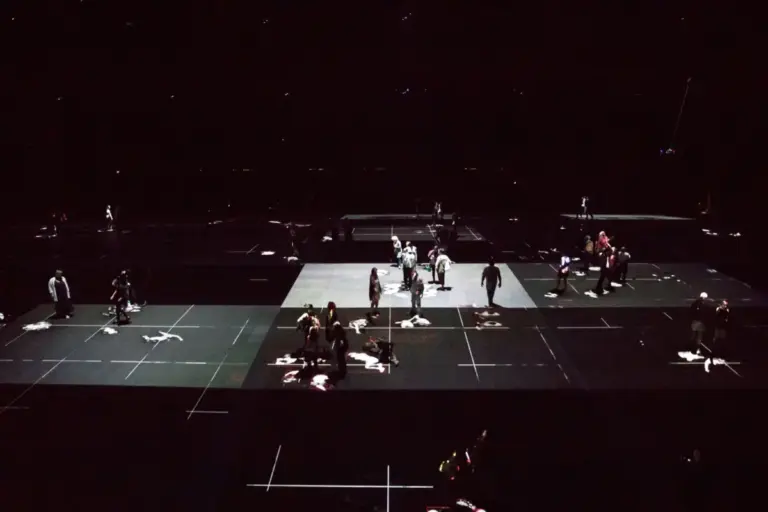
Audiences experiencing Hopscotch, an innovative opera staged inside 24 limousines and SUVs traversing downtown Los Angeles, sit knee-to-knee with vocalists and musicians. Throughout its multi-week run, the vehicles follow three distinct routes tracing a narrative about the pursuit of lost love. Actors and dancers equipped with wireless microphones perform on sidewalks and inside moving vehicles, seamlessly blending theatrical performance with the everyday ballet of urban life.

As artistic director Yuval Sharon of opera company The Industry notes, Los Angeles effectively functions as the central character of the production. Limited to just 96 audience members per performance, attendees periodically exit the vehicles to enter buildings and public spaces, with each transit leg recounting one of 36 distinct chapters of the story.

An Evolving Museum Spirals Between Past and Present
Shanghai has experienced staggering vertical growth, marked by rows of bristling skyscrapers. Amid this ultra-modern backdrop stands the Shanghai Natural History Museum, located in a park near the Pudong financial district. Rather than reaching upward, the building spirals down into the earth, evoking an excavation of the city’s pre-urban roots. A central courtyard inspired by the classical water gardens of Suzhou pays homage to ancient Chinese reverence for natural beauty, while a honeycombed glass wall modeled after plant cell structures floods the interior with natural sunlight.

Architect Ralph Johnson of Perkins+Will drew inspiration for the building’s shape from the nautilus shell, a geometry that also serves a practical crowd-control function. Because Chinese museums frequently experience heavy attendance, the descending architectural ramps naturally guide visitors through a chronological exhibition of life on Earth. Along the way, guests encounter approximately 11,000 specimens, including a towering Mamenchisaurus skeleton and fauna indigenous to Shanghai’s historic wetlands. Integrated with advanced green climate and water systems, the museum bridges Shanghai’s exuberant futurism with a tangible reminder of natural history.

Medellín’s New Cable Cars Unify a Fractured City
Nestled within a high Andean valley, Medellín historically forced many of its poorest residents into informal comunas constructed along steep hillsides. During the 1990s, drug cartels and guerrilla fighters dominated these narrow, disconnected streets. As violence subsided and residents began venturing outward, they confronted a severe logistical barrier: geographical isolation made basic mobility exceedingly difficult.

To knit the fractured city together, former Mayor Luis Pérez proposed an ambitious transit solution: cable cars. Rather than navigating perilous hillsides on foot, residents could board gondolas and soar directly to metropolitan transit stations. The inaugural Metrocable line opened in 2004, paving the way for subsequent expansions.

According to urban planning experts, the profound success of the Metrocable lies in its direct service to impoverished populations, granting them reliable access to employment and civic opportunities. As citizens from diverse socioeconomic backgrounds utilized the cable cars to traverse historically marginalized neighborhoods, public investment in the city’s collective future surged, sparking a decade of globally recognized urban innovation.

Combining Libraries and Parks into Safe Spaces for All
Building upon the connective success of the Metrocable, former director of urban projects Alejandro Echeverri pursued aggressive architectural interventions in Medellín’s low-income districts between 2004 and 2008. Believing that dignified public architecture generates a powerful psychological sense of civic inclusion, his administration constructed five architectural libraries surrounded by public greenery. These "library-parks" established unprecedented safe public spaces within vulnerable neighborhoods.

Echeverri’s department simultaneously executed granular improvements, upgrading streetscapes, planting trees, and rebuilding dilapidated schools. By ensuring these initiatives operated as a cohesive network co-created with local communities rather than isolated municipal projects, Medellín cemented its reputation as a pioneer in holistic urban development.

Community Activists Fight Back With Graffiti
Grassroots community movements have played an essential role in Medellín’s broader cultural transformation. In neighborhoods like Comuna 13, local artists and activists have utilized muralism and urban art to reclaim once-neglected public spaces. Led by local figures such as Daniel Felipe Quiceno, community initiatives like the Graffitour bring visitors into historically troubled areas by covering aging walls with murals that document local history and honor victims of past violence. Paired with the establishment of community gardens, these grassroots efforts complement major municipal infrastructure projects by instilling local pride and resilience.

The Hovenring Lets Cyclists Pedal Over the Traffic Jam
Eindhoven transitioned from a sleepy provincial manufacturing town into a vibrant technology and research hub following the growth of lighting giant Philips. This rapid economic expansion drew thousands of commuters from sprawling suburbs, creating congested intersections that posed significant hazards for cyclists. To integrate bicycle transit safely into the urban fabric, the city commissioned design firm ipv Delft to engineer an elevated solution.

Completed in 2012, the $8 million Hovenring is a dedicated cycling bridge suspended by 24 steel cables from a central pylon. Outfitted with integrated LED lighting, the 1,000-ton steel deck allows thousands of daily commuters to cycle seamlessly above vehicular traffic without encountering stop-and-go congestion.

How Saudi Arabia Tried to Prepare for 3 Million Pilgrims
For five days annually, the population of Saudi Arabia swells by approximately 3 million people as Muslims converge on Mecca for the sacred pilgrimage of the Hajj. Few cities possess the surge capacity required to safely host such massive gatherings. To accommodate these populations while preserving religious traditions, the Saudi government has continually enlisted world-class architects and designers to engineer massive infrastructure projects.

Among these developments is the Hajj Terminal at King Abdulaziz International Airport. Inspired by traditional Bedouin tents, the 2.8-million-square-foot facility features massive Teflon-coated fiberglass roofs. While baggage claims are climate-controlled, natural ventilation in open-air waiting areas maintains tolerable ambient temperatures despite extreme external heat, accommodating pilgrims during extended pre-transit wait times.

To manage the immense waste generated during the gathering, authorities implemented an underground pneumatic tube network. This system sucks approximately 600 tons of daily refuse through subterranean pipes at speeds reaching 40 miles per hour, transporting waste to remote collection stations for landfill processing.

Simultaneously, expansions at the Masjid al-Haram, the Great Mosque of Mecca, have sought to accommodate swelling crowds surrounding the Kaaba. Architects from Gensler proposed multi-level, eight-sided platforms encircling the central shrine to double visitor capacity and improve traffic flow without compromising the spiritual experience.

Other developments, such as the expansive tent city in the Mina Valley, utilize more than 100,000 air-conditioned, fireproof fiberglass structures protected by permanent hydrant networks to house pilgrims safely during the midpoint of the Hajj. Additionally, engineering modifications to the Jamarat Bridge transformed the site of historical stampedes into a sprawling multi-level structure equipped with dedicated exit ramps to expedite pedestrian clearing during the symbolic Stoning of the Devil ritual.

Taming a Chaotic Minibus Network With an Orderly Map
In Nairobi, public transit relies heavily on privately operated minibuses known as matatus. While inexpensive and abundant, these vehicles historically operated without fixed schedules or formal route maps, making navigation challenging for daily commuters.

To address this informality, a collaborative research and design initiative termed Digital Matatus deployed local university students to track routes and stops using smartphone applications. Publishing the resulting transit map provided riders—particularly women traveling after dark—with critical navigational certainty. The initiative culminated in Nairobi’s matatus becoming the first informal transit system integrated directly into Google Maps, lending formal legitimacy to the micro-transit network and offering a blueprint for developing cities worldwide.

Coworking Spaces Deliver Much More Than a Desk and a Phone
The modern professional workspace has evolved far beyond traditional corporate offices, with remote teams and startups operating out of diverse environments. Co-working enterprises such as WeWork have capitalized on this shift by establishing full-service shared environments that combine open-plan collaborative areas, private offices, and communal amenities. By prioritizing natural light, architectural openness, and operational flexibility, these spaces offer startups scalable alternatives to rigid, long-term commercial real estate leases while fostering cross-industry networking and creative collaboration.

Dubai’s Turbine Interchange: Where Design and Velocity Intersect
Emirates Road in Dubai formerly relied on a congested roundabout that required motorists to come to a complete stop before merging into intersecting traffic. To eliminate these chronic bottlenecks, city officials authorized a major infrastructural redesign in 2006, opting for a modern turbine interchange configuration over traditional cloverleaf models.

Devised in the United Kingdom during the 1960s, the turbine interchange allows vehicles approaching from four directions to execute turning maneuvers without stopping or weaving dangerously across active lanes. Requiring fewer vertical tiers than complex stacked interchanges, the turbine design minimizes material costs while supporting high-speed, high-capacity traffic flow. Although the configuration consumes a significant amount of land—spanning nearly a third of a mile wide—ample space in Dubai allowed for the successful completion of the $111 million Arabian Ranches Interchange, which features 11 bridges extending a total of 1.5 miles to streamline regional connectivity.