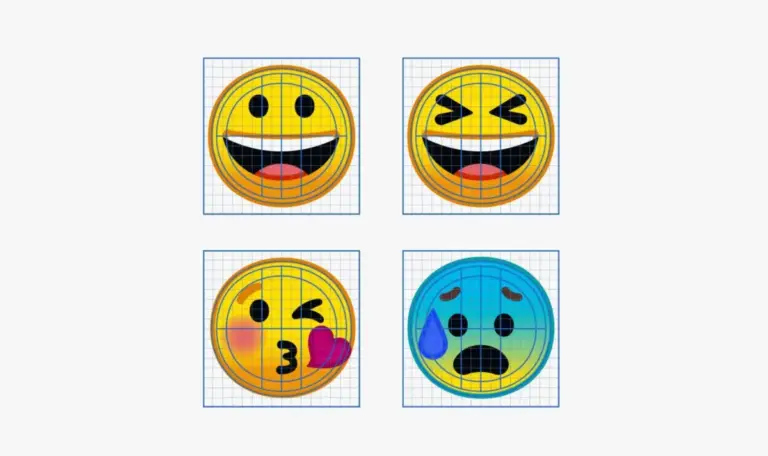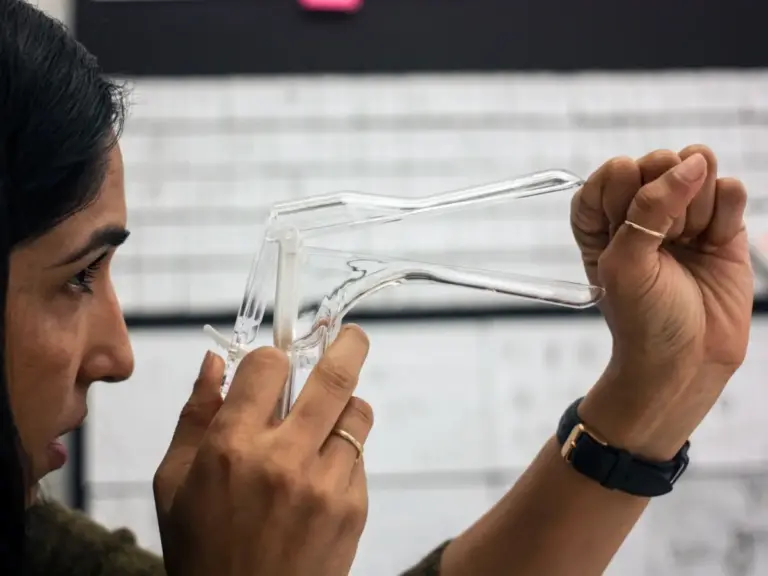
The feature wasn’t so much a clever salve for an ergonomic oversight as it was a pragmatic acknowledgment of an unfortunate and fundamental truth in product creation: when you are building something intended for millions of diverse people, one size can never truly fit all. As Luke Westra, a designer at the Chicago-based design studio IA Collaborative, points out, that double-tap workaround stands out as the most obvious human factors adjustment in modern consumer technology.
When designers like Westra talk about human factors, they are referring to a specialized field of study concerned primarily with how the human body interacts with its physical environments, a discipline more commonly known as ergonomics. All good, thoughtful designers consider human factors when they are actively developing a new product. Those who fail to do so often end up with products that miss the mark entirely, resulting in real-world consequences like furniture stools that are cut too short for the dining table or poorly designed office chairs that leave hard-working employees with chronic backaches.
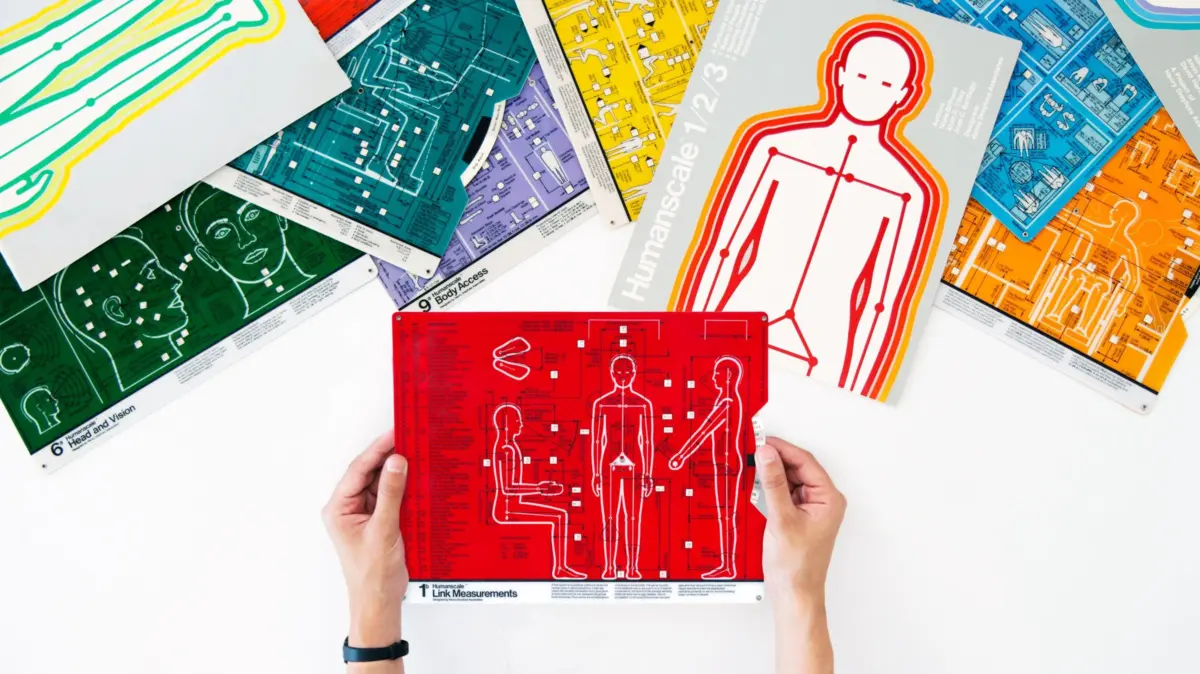
While iconic modern tech leaders like Steve Jobs and Jony Ive relied heavily on advanced computers and computer-aided design, or CAD, software to shape the final form factors of devices like the iPhone, industrial designers decades prior had to depend on a vastly different, analog tool to help them thoroughly understand the intricate dimensions of the human body. This critical tool, known as Humanscale, was a clever set of nine rotating disks packed with more than 60,000 specific data points. By simply spinning the selector wheel in any direction, a series of precise numbers would align neatly inside small viewing windows, instantly showing the correct measurement values for whatever specific subject the designer happened to be working on at the time.
During the 1970s and 1980s, industrial designers routinely used this reference tool as a reliable cheat sheet to pull quick data points without having to dig through massive libraries of research. But after MIT Press stopped printing the physical sets in the mid-1980s, the physical books and rotating disks gradually transformed into sought-after collector items, with original copies sometimes selling for upwards of $2,000 on online marketplaces like eBay. Now, Humanscale is officially making a major comeback, thanks to Westra and a dedicated team at IA Collaborative’s Venture arm, who have worked to create faithful reprints of the classic design tool, pricing them at $79 per individual print or $199 for the complete comprehensive set.
The original Humanscale system was the proud product of Henry Dreyfuss & Associates, often abbreviated as HDA, which was the legendary design firm behind such mid-century iconic objects as the Honeywell round thermostat and Bell’s classic tabletop telephone. Its visionary founder, Henry Dreyfuss, had been an early and vocal champion of human-centered ergonomic design, and his studio notoriously approached the practice almost like an exact science. In their eyes, form strictly followed function, and function itself followed data—lots and lots of reliable data.
No product was ever manufactured by the firm without first consulting a comprehensive laundry list of detailed bodily statistics. These included everyday measurements like average human height, total arm span, sitting hip width, and the ideal viewing angle from a standard office desk. According to Bill Crookes, who worked as a designer at HDA from the early 1970s until the firm ultimately closed its doors in the early 2000s, the big problem back during those decades was that the necessary data simply wasn’t organized in a nice, easily accessible, or usable form for working creators.

While plenty of useful data existed out in the world, it was scattered piecemeal across unrelated industries and academic studies. If a designer wanted to know the exact dimensions of the average North American man’s leg, for instance, they had to dig through historical military records. If they wanted to understand the maximum decibel level comfortable to the human ear, they had to hunt down environmental statistics published by government agencies like the EPA. Recognizing this massive workflow inefficiency, one of the firm’s talented partners, Niels Diffrient, became deeply determined to consolidate all of this fragmented ergonomic data into a single, cohesive, and easy-to-use physical tool that working designers could comfortably pack up and bring with them right out into the field.
Diffrient and his dedicated team, which included Crookes, spent years painstakingly gathering human engineering data from every corner of society. Through their relentless research, they learned specific, highly practical details—such as the fact that the average height of a traditional fedora hat was precisely two inches, a crucial measurement when taking doorway clearances into consideration for public architecture and vehicle design. They combed through official demographic sources to map out the exact reach and height requirements of wheelchair-bound men and women. They meticulously measured the distinct physical variations in gripping posture when a human hand was holding a cylinder, a sphere, or a pencil, and then brilliantly organized all of this complex data onto Humanscale’s themed rotating disks.
As Nathan Ritter, a design researcher at IA Collaborative, notes, the team laid out every single piece of information on these physical tools entirely by hand, using standard square triangles and compasses on large drafting tables. Illustrations printed directly on the front and back of the disks clearly showed human figures and various body parts positioned in realistic postures, with arrows carefully annotating dozens of specific measurement points. Simply rotating the disks filtered the underlying data sets so that designers could view information specific to women, men, and children across their various demographic percentiles.
Ultimately, Humanscale stood out as a genuine masterpiece of information design and can reasonably be regarded as one of history’s very first interactive data visualizations. While the physical disks are widely considered a design relic today, they are still deeply revered among veteran industrial designers as the gold standard of human engineering statistics. Over the subsequent decades, the physical disks were largely replaced by more technologically advanced tools, such as proprietary digital ergonomics databases that modern design corporations license for thousands of dollars annually.
Even so, for the team at IA Collaborative, simply letting the legacy of the Humanscale disks fade quietly into complete obscurity would have represented a massive missed opportunity. Ritter emphasizes that the core concepts behind the tools remain just as relevant today as they were when they were first introduced to the industry decades ago. The designers are beginning their revival effort by reissuing the original disks and accompanying books, but their long-term roadmap includes digitizing the vast trove of information to build a modern, interactive digital interface for the data.
Ultimately, the team believes that most contemporary designers could benefit immensely from having a simple, tactile tool to help anchor their creative processes directly to the real needs of the people they are designing for. As Westra aptly points out, it is possible for a creator to design virtually anything inside an isolated vacuum, but if they are not actively considering the physical reality of the human beings who are actually going to use the product, those end users are simply not going to have a great, comfortable experience.