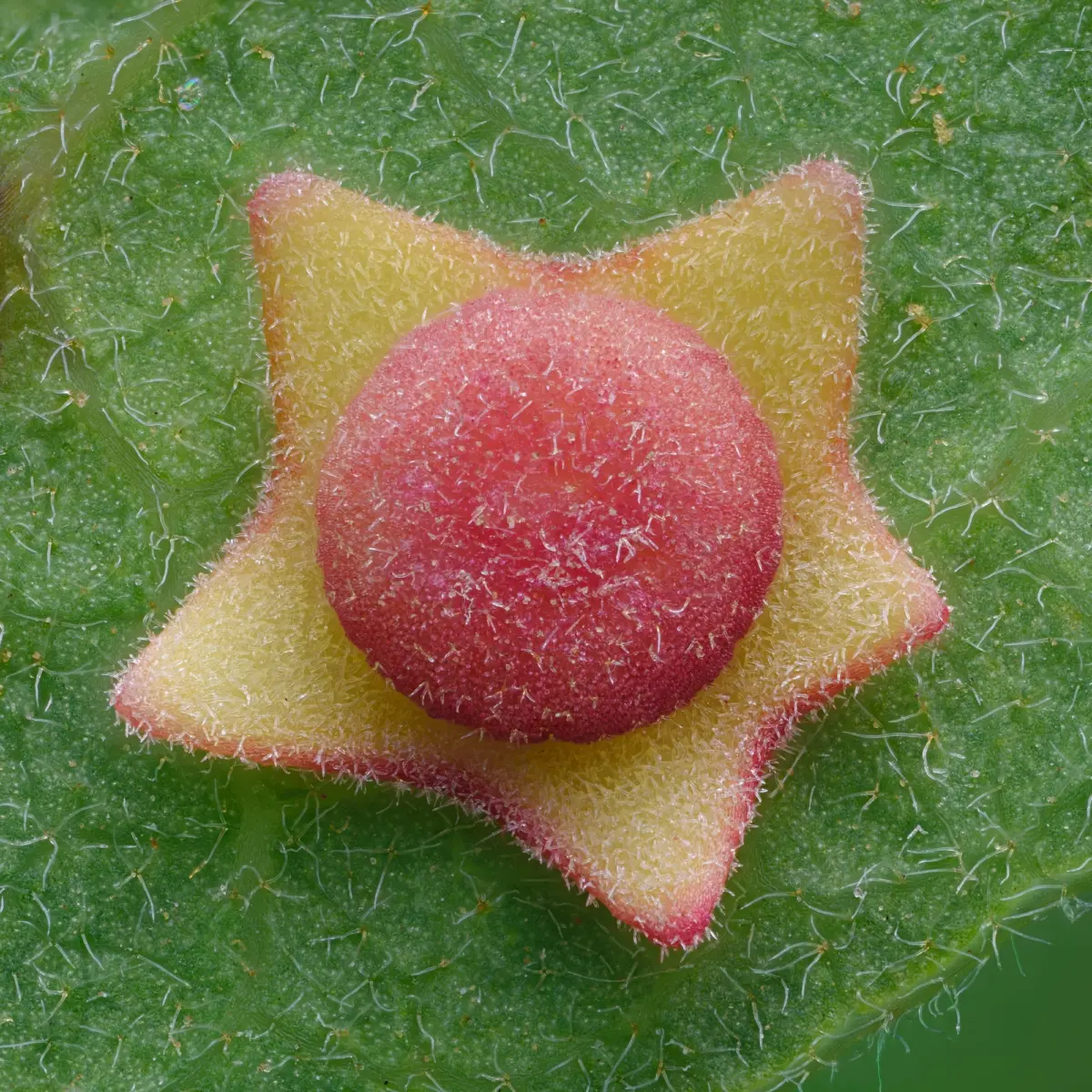
Deep within the oak woodlands of California, a microscopic architectural world unfolds largely unseen by the human eye. Here, a specialized group of insects engages in an intricate biological partnership with host plants, reshaping leaves and twigs into bizarre, brightly colored growths. These peculiar formations, known as galls, serve as both nursery and pantry for the developing offspring of cynipid wasps. While many people pass these botanical anomalies without a second glance, nature photographer Timothy Boomer has dedicated himself to capturing their astonishing geometries, revealing an alien landscape thriving right in our own backyards.
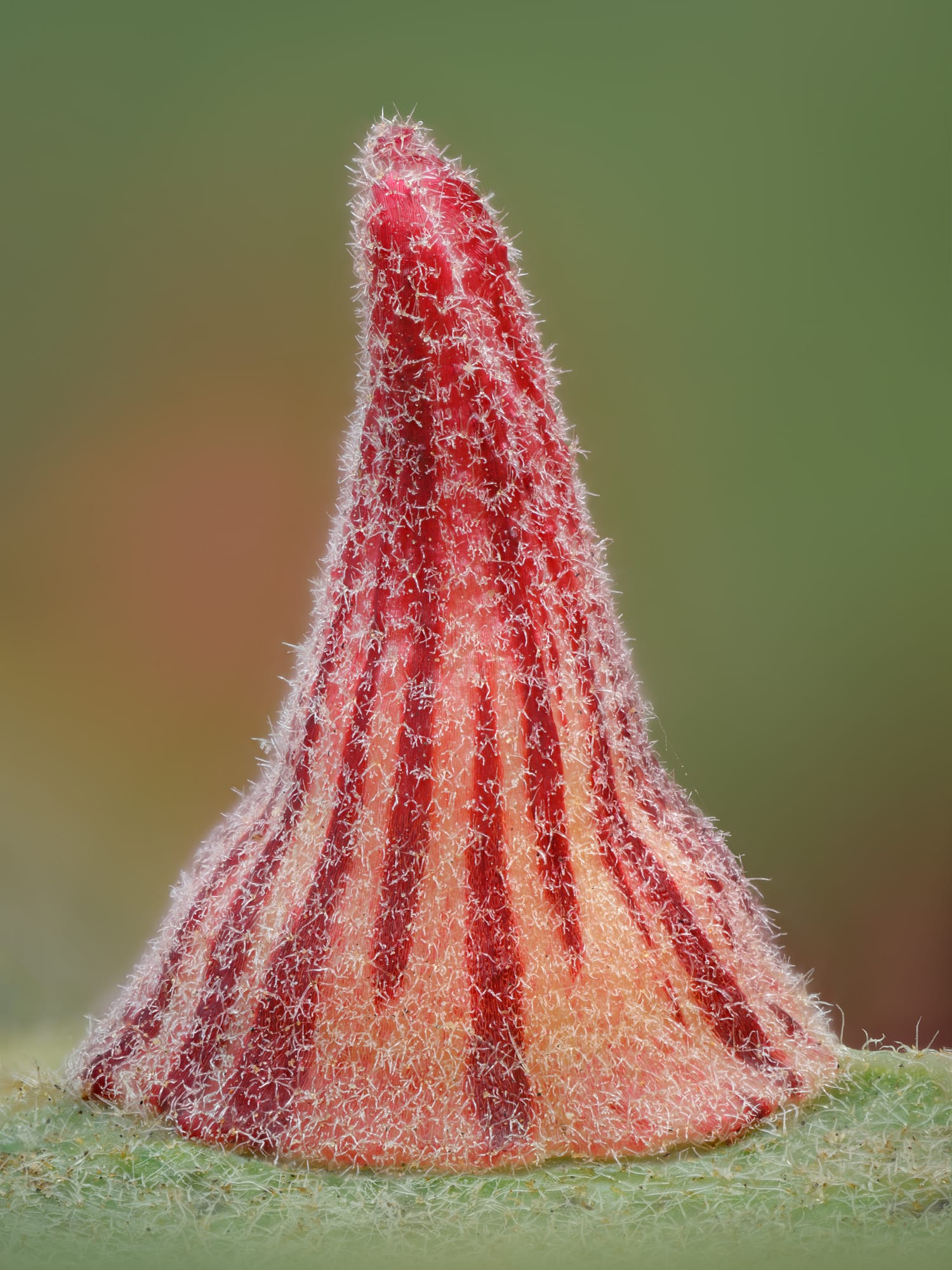
Gall wasps, scientifically classified as cynipids, maintain a unique mutual relationship with the plants they inhabit. Their common name is derived directly from the distinctive deposits—or galls—that they induce on host plants to support their growing larvae. These benign growths are initiated when larvae or ovipositing females introduce specific chemical compounds into the plant tissue, effectively hijacking the plant’s biological machinery to draw upon its resources. Ranging in color from ruddy browns to vibrant, saturated pinks and yellows, these phenomena often appear in tiny clusters that mimic miniature volcanic calderas, spiky urchins, or intricate architectural flanges. For Boomer, a dedicated macro photographer operating in regions like Solano and Napa counties, the visual allure of these structures is irresistible.
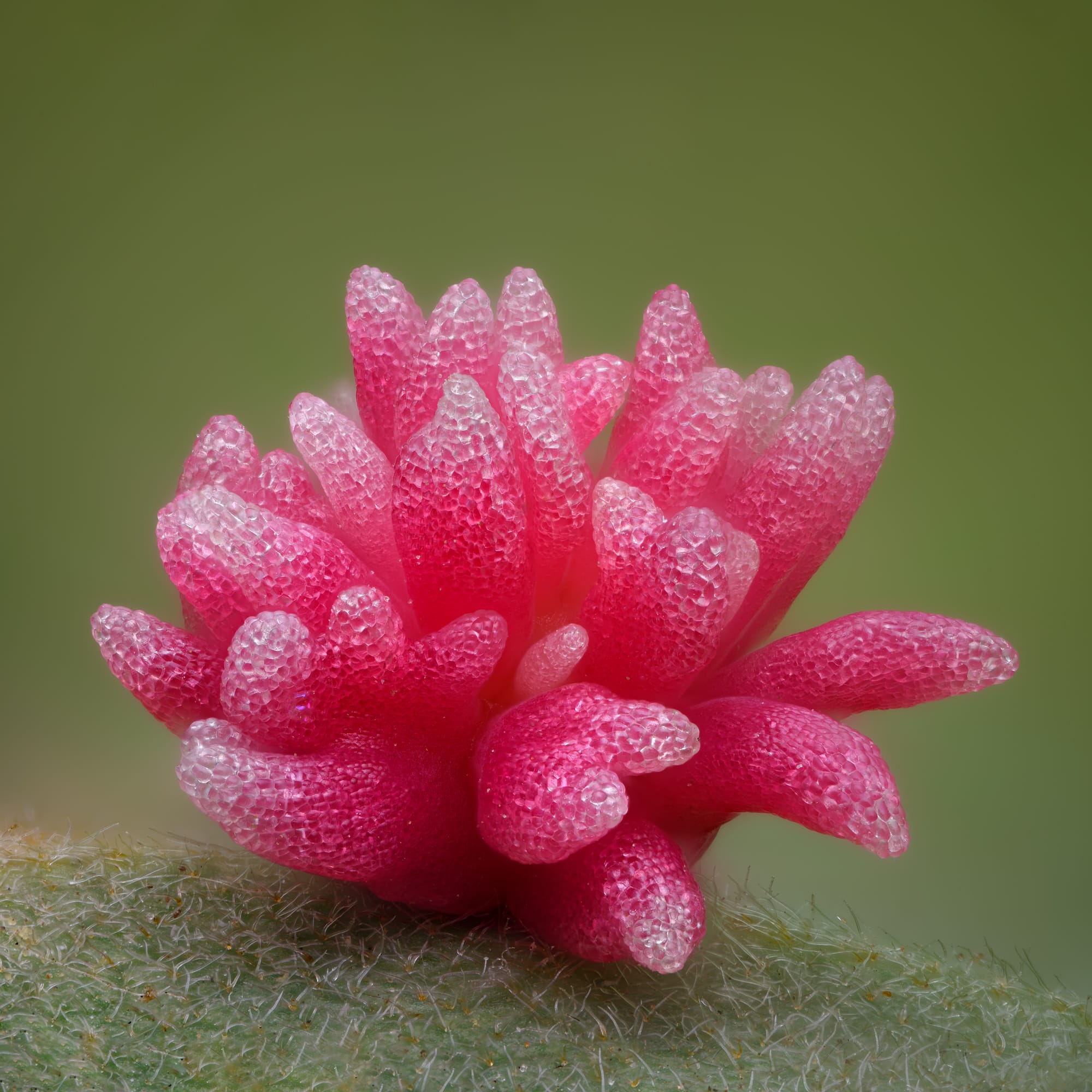
“Galls can be brought about by many different organisms, but I tend to focus on the ones induced by cynipid wasps because they are the most visually stunning, at least in my opinion,” Boomer explains.
To understand these structures is to appreciate a marvel of evolutionary biology. Within the natural world, a gall serves a dual purpose: it provides absolute physical protection while functioning as a localized food source for the insect growing inside. If everything proceeds according to biological design, the cynipid larva remains safely shielded from external predators, absorbs a steady supply of concentrated nutrients, and successfully matures into an adult wasp. Once fully developed, the adult chews its way out of the botanical enclosure, emerges into the open air, and continues the generational cycle. Entomologists estimate that there are at least 1,300 distinct species of cynipids globally, each adapted to target specific parts of particular host plants with remarkable precision.
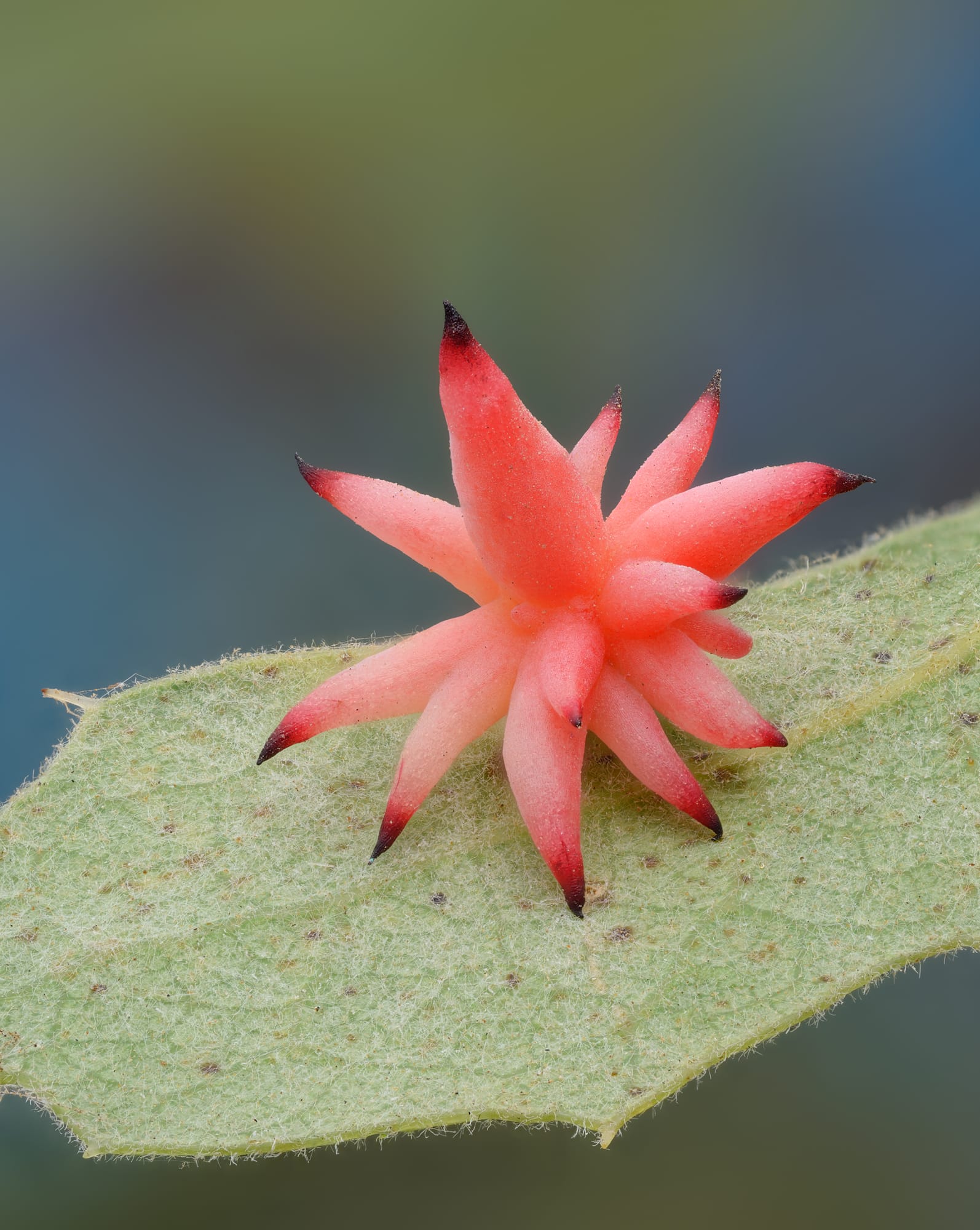
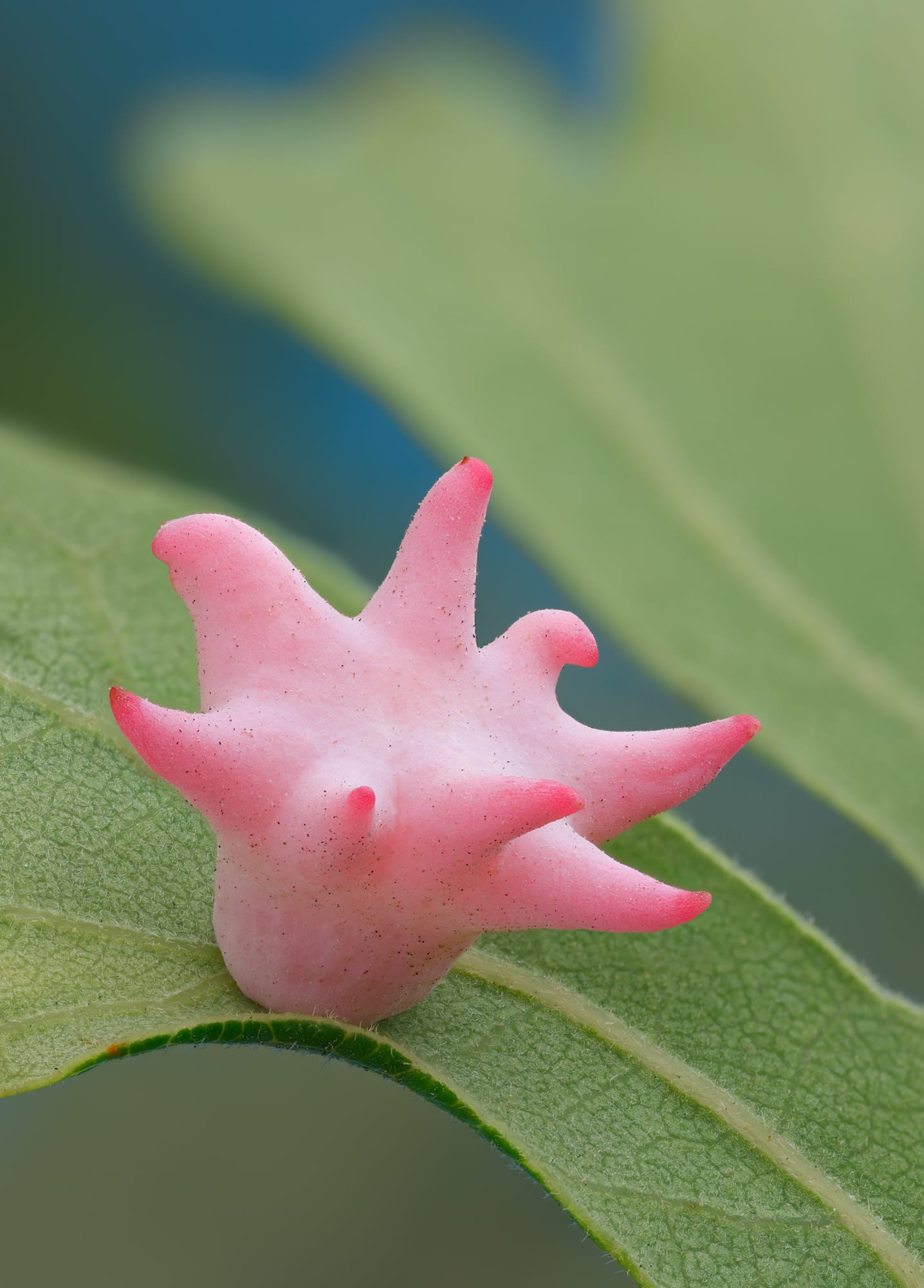
The complexity of these interactions occasionally yields unexpected variations driven by environmental pressures and ecological interlopers. Boomer points to the spined turban gall, a formation that typically displays a striking bubblegum-pink hue accompanied by delicate spines protruding from a relatively flat central disc. However, he has also documented atypical specimens exhibiting darker pink coloration, scorched-looking blackened tips, and chaotic spikes scattered across the entire surface. These visual mutations provide a window into the unpredictable dynamics of the woodland ecosystem.
“In this case, normal development was interrupted by a non-inducer entering the gall at an early stage,” Boomer notes, describing the ecological disruption. “I’m not a scientist, so I won’t pretend to fully comprehend the intricacies of how all this plays out, but I think of it as a home invasion that actually alters the home.”
Documenting subjects at such a minuscule scale presents severe technical hurdles. Operating at extreme magnification results in an exceptionally shallow depth-of-field, meaning only a fraction of a millimeter of the subject can be kept in sharp focus in any single exposure. To overcome this limitation, Boomer utilizes a meticulous focus-stacking technique. This process requires capturing hundreds—and occasionally thousands—of individual frames at incremental focus distances, which are then digitally layered together to render the tiny, complex objects with absolute clarity across the entire frame.
Despite the heavy digital processing required to stack the imagery, Boomer maintains a strict ethical boundary regarding post-processing. He employs minimal editing in Photoshop, deliberately preserving the authentic integrity of the original scene. His overarching artistic and documentary mission is to share only what occurs naturally in the wild, allowing the bizarre, beautiful geometries of the insect-plant interactions to speak for themselves without artificial embellishment.
“Nature does not need to be enhanced,” Boomer asserts, reflecting a philosophy that honors the inherent wonder of the natural world over digital manipulation.
From the striped volcano galls of Solano County and the urchin galls on blue oaks near Lake Berryessa to the intricate red cone galls and woollybear formations, Boomer’s catalog offers a rare glimpse into a hidden ecological theater. Enthusiasts and admirers interested in following his ongoing documentation of cynipid wasps, alongside other forest floor phenomena like slime molds and native flora, can find his detailed macro photography featured on his Instagram account under the handle @wildmacro.