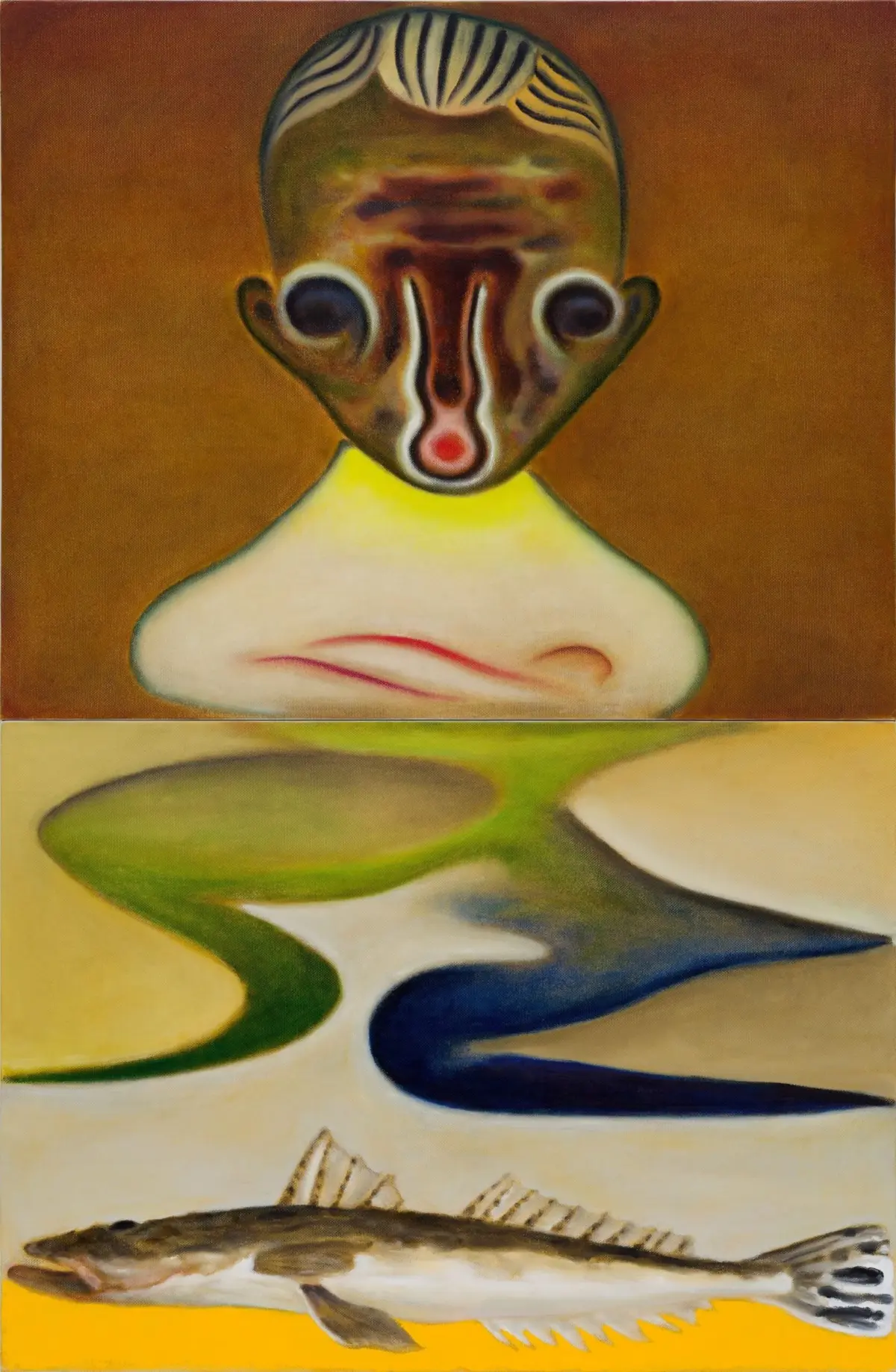
In the surreal and otherworldly pictorial universe crafted by artist Izumi Kato, stones appear to defy gravity by floating through space, human bodies dissolve and submerge into liquid expanses, and feet seamlessly transform into delicate fish tails. These uncanny transmutations and dreamlike visual paradoxes anchor the artist’s new eponymous solo exhibition, which opened recently at Perrotin in New York City. The exhibition presents a striking convergence of two- and three-dimensional works, creating an immersive, atmospheric grouping where traditional notions of linear time slip away, physical forms morph fluidly, and space is simultaneously flattened, compartmentalized, and stretched into unfamiliar configurations.
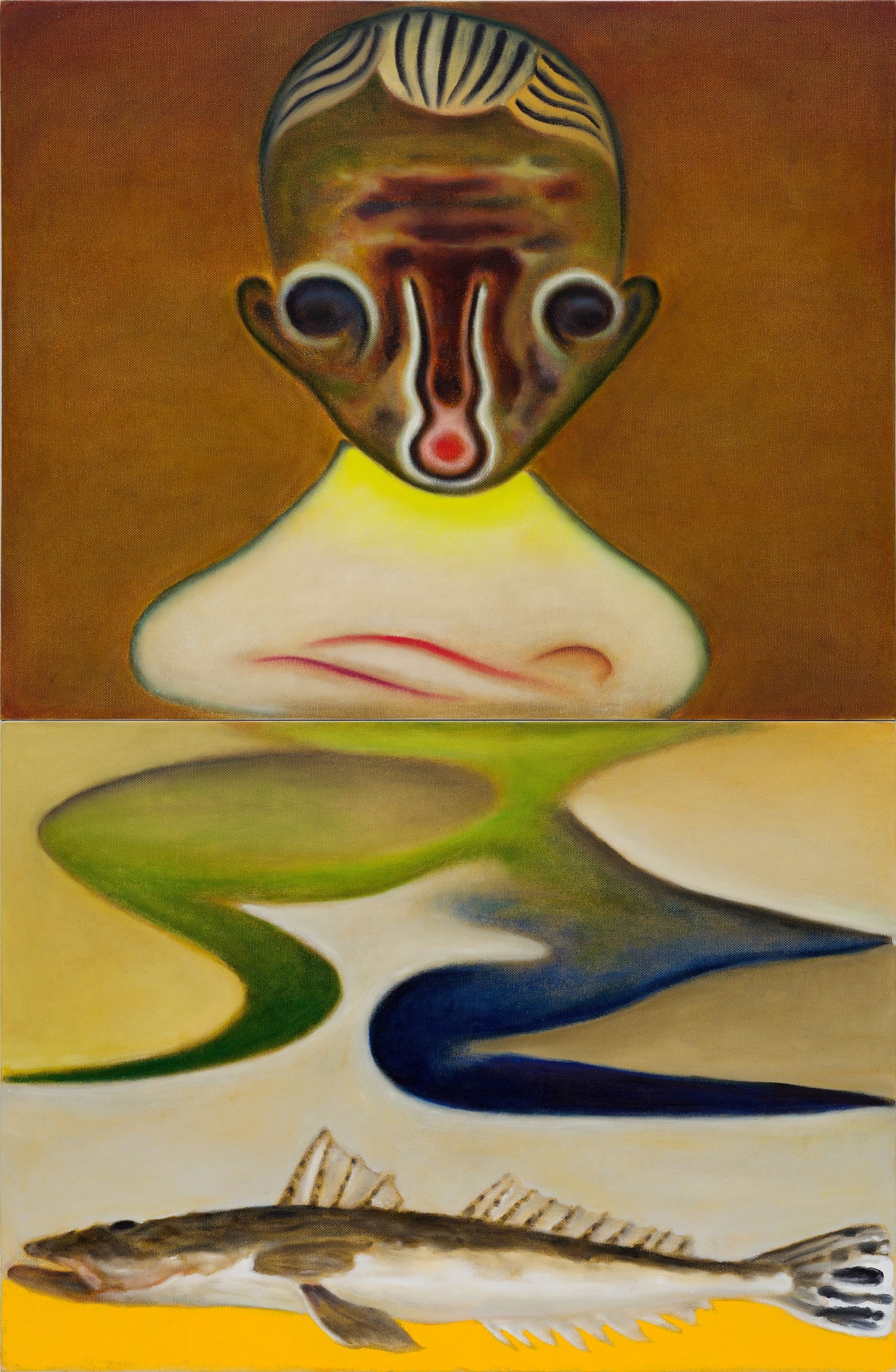
The Tokyo- and Hong Kong-based artist has seen his artistic practice evolve significantly over the years. While he initially established widespread recognition primarily through his distinctive paintings, his creative output has steadily expanded to encompass carved wood forms, soft vinyl sculptures, and intricate cast metal objects. As Kato continues to explore and push the boundaries of materiality, his sculptural creations emerge from the very same almost alchemical approach he applies to his flat canvases. He paints tiny wooden figures with the precise technique and textural sensitivity he uses for a traditional two-dimensional surface. Similarly, the rocks and boulders featured in his installations are frequently lightweight cast aluminum pieces, which the artist at times suspends delicately from the ceiling to create a playful, disorienting disruption of the viewer’s spatial perception.
For years, Kato has continuously returned to painting what he frequently refers to as hitogata, a term that literally translates to "dolls" in the Japanese language. These evocative, humanoid figures frequently emerge from totem-like stacks composed of multiple canvases arranged vertically. This distinctive compositional choice powerfully evokes the historic surrealist drawing technique known as cadavre exquis, or the exquisite corpse, where disparate elements combine to form a unified yet deeply uncanny whole. In Kato’s works, the figures’ eyes swirl hypnotically like tiny, deep pools of water, while their noses and mouths merge in unsettling harmony, blending into nebulous, atmospheric forms that cluster around the forehead or suggest deep internal mental states.
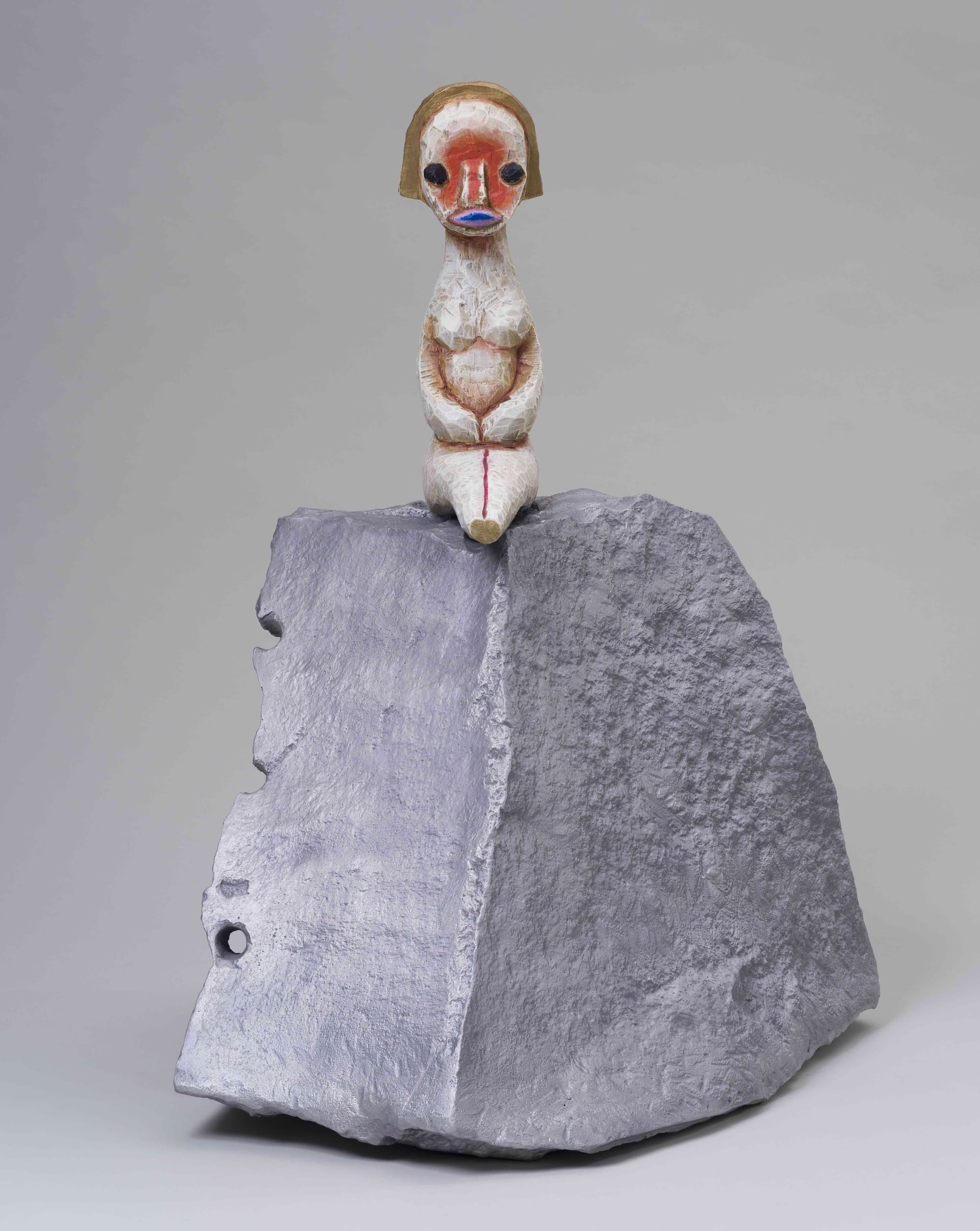
At times, the limbs or torsos of these strange figures undergo a complete metamorphosis, transforming into amphibious legs or capturing the brilliant, fractured refractions of light playing across the surface of water. Their deeply enigmatic features and vacant, haunting stares seem to transcend the constraints of chronological time entirely. When gazing upon them, a viewer is left to wonder whether these entities are visitors arriving from a distant, unknown future, or if they are ancient ancestral spirits echoing from the dawn of human history.
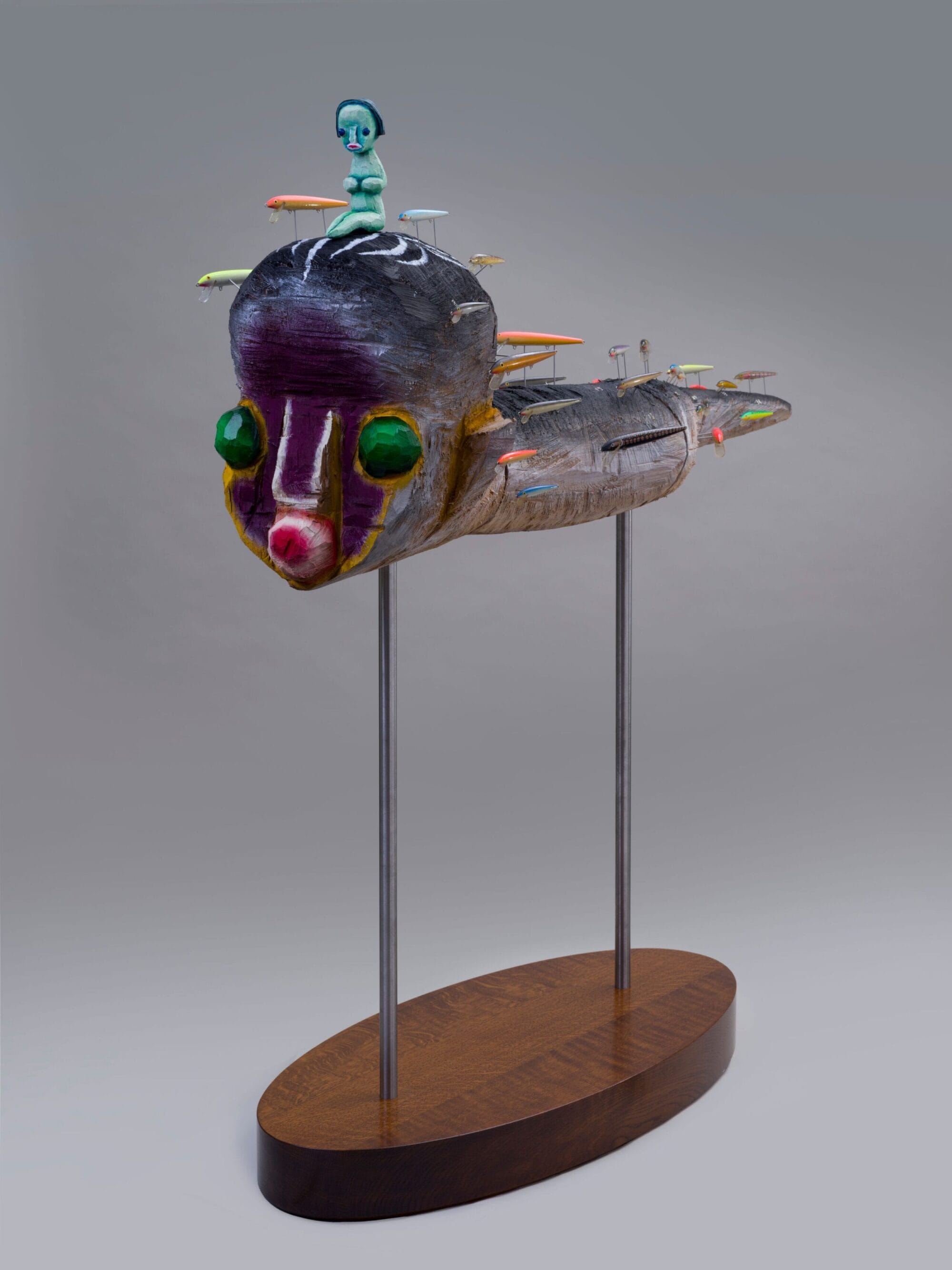
A recurring motif of marine and aquatic creatures interwoven throughout the exhibition pays direct homage to Kato’s longtime, personal passion for fishing—an activity that stands as a deeply primordial human endeavor connecting modern life to ancient survival practices. An uncanny wooden sculpture, for instance, is perched precariously on a specialized stand constructed from two thin metal rods. This piece possesses the striking, trophy-like appearance of an aquatic animal or a specialized fishing lure, complete with a small rider perched atop it that evokes a profound, almost spiritual or metaphysical connection bridging the gap between humankind and the vast, mysterious sea. Other compositions within the gallery space incorporate layered, simultaneous perspectives of pelagic ecosystems viewed from both above and below the waterline, complete with depictions of delicate coral formations, drifting jellyfish, and sharks.
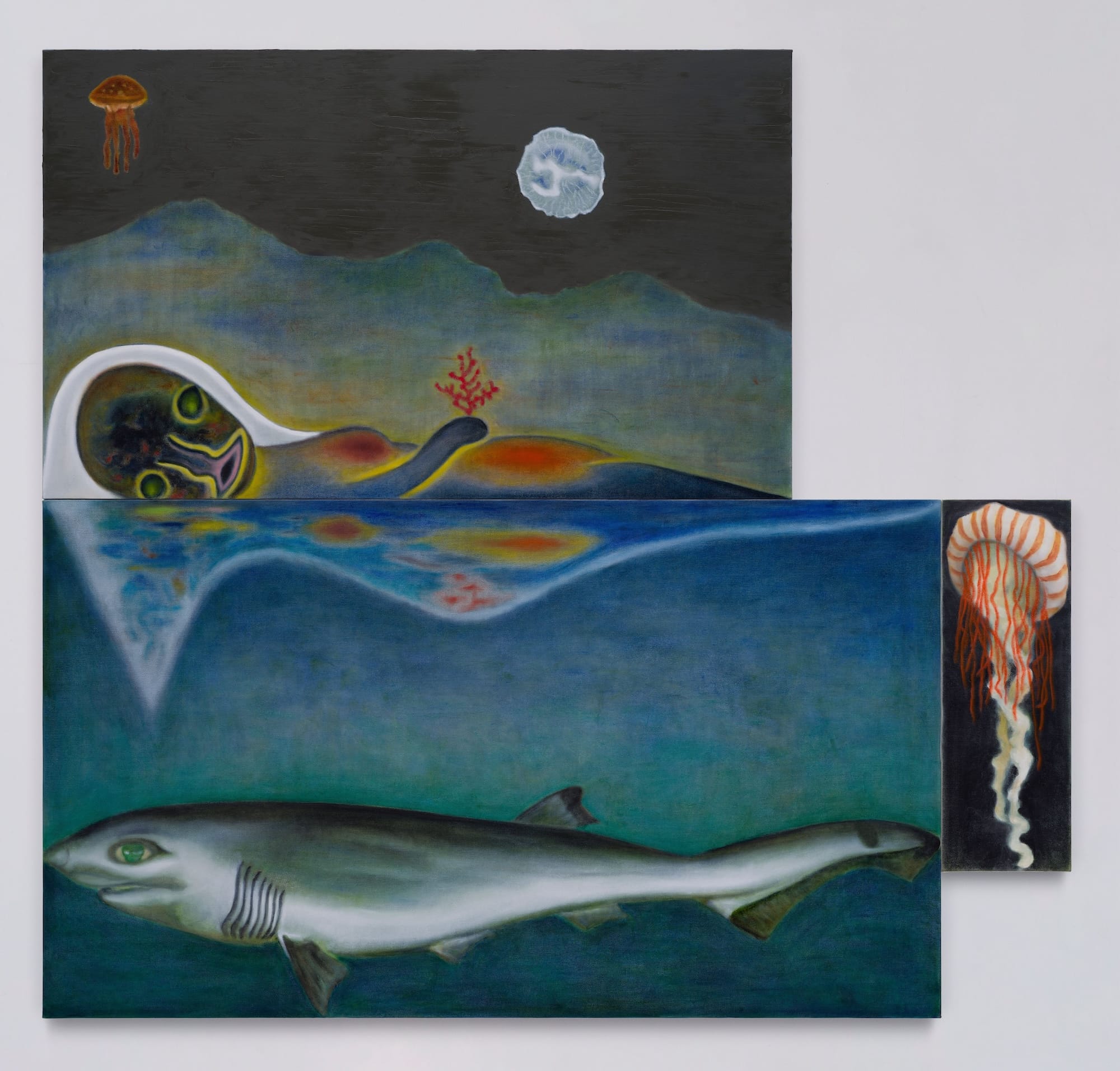
Throughout the exhibition, Kato’s enigmatic protagonists seem to constantly alternate between appearing resolutely in the foreground and completely dissolving or disappearing into their surrounding environments, their facial expressions remaining entirely inscrutable. Viewers are left to ponder fundamental questions about their emotional states: Do these figures feel threatened by their surreal surroundings? Do they harbor a quiet sense of hope? Or are they burdened by deep concern?
Addressing the profound resonance of these works in an official exhibition essay, Michelle Yun Mapplethorpe, director and chief curator of the Katonah Museum of Art, offers thoughtful insight into the collection. "When considered as a whole, this new body of work affirms the undeniable bond between humanity and nature, and the enduring continuum of the creative impulse across chronologies and geographies to seek the answer of what it means to be human," Mapplethorpe writes.
The comprehensive exhibition officially opened to the public and runs through December 19 at Perrotin’s New York City gallery location, inviting art enthusiasts, critics, and casual visitors alike to immerse themselves in Kato’s singular vision of materiality, memory, and metamorphosis.