Apple has spent years meticulously refining the iPad to be exceptionally thin and remarkably lightweight, yet the fundamental physics of holding a flat glass-and-aluminum slab for an extended period remain unchanged. Whether you are settling in to read a novel for a chapter, browsing through digital magazines, or catching up on long-form articles, supporting a tablet purely by pinching its edges can quickly lead to hand fatigue. Traditional protective cases often add substantial bulk to the device, but they rarely address the underlying ergonomic challenge of how a user actually grips and sustains the weight of the tablet over time.
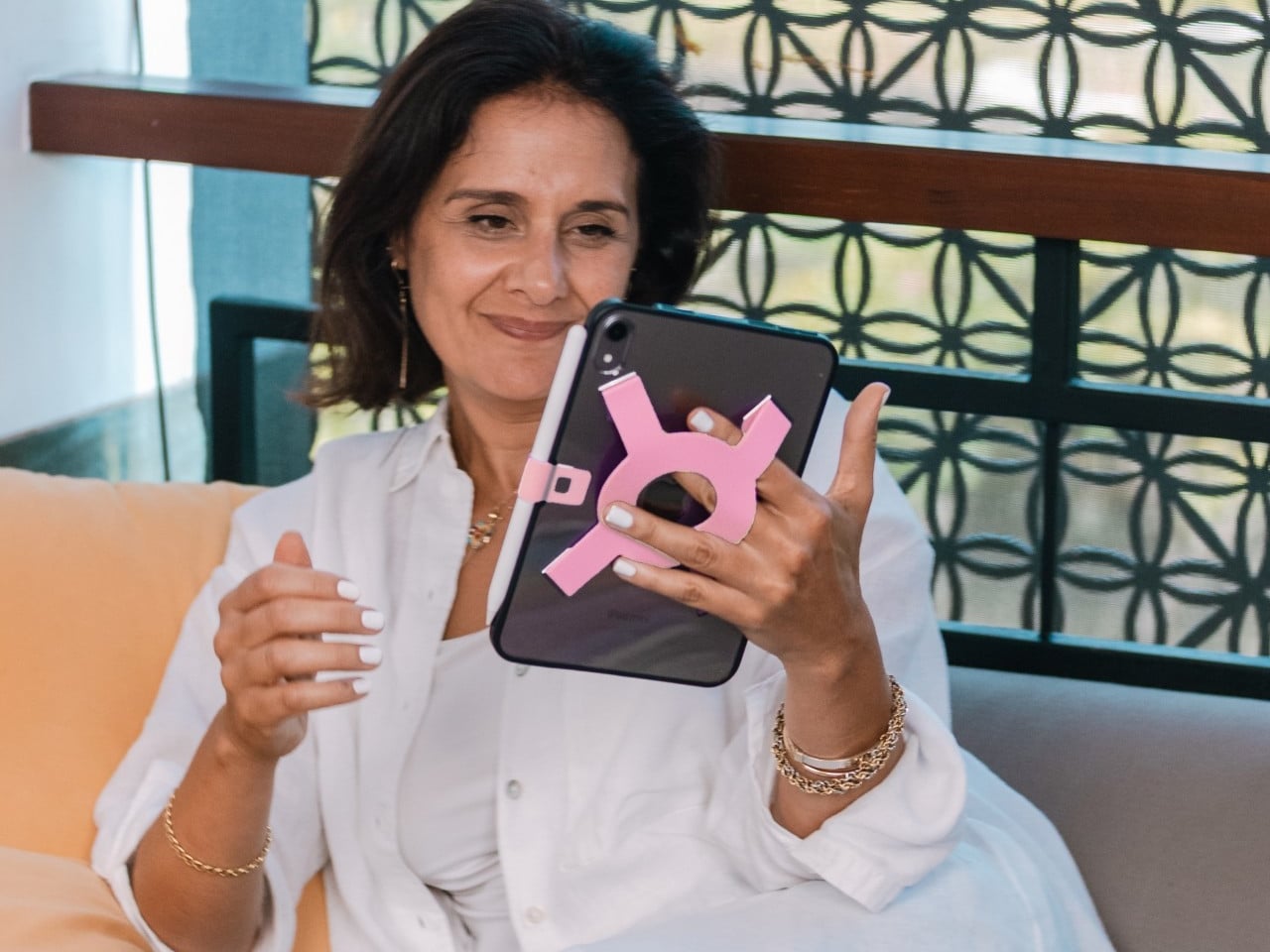
Addressing this common user pain point, accessories brand Strapsicle has introduced a novel line of iPad cases that fundamentally rethink how users interact with their devices. Rather than forcing users to constantly squeeze the perimeter of the tablet or rely on cumbersome carrying handles, the new cases incorporate an integrated silicone hand strap. This clever design shifts the burden of support from the delicate fingertips to the back of the hand, offering a more secure, balanced, and comfortable way to hold an iPad for long periods.
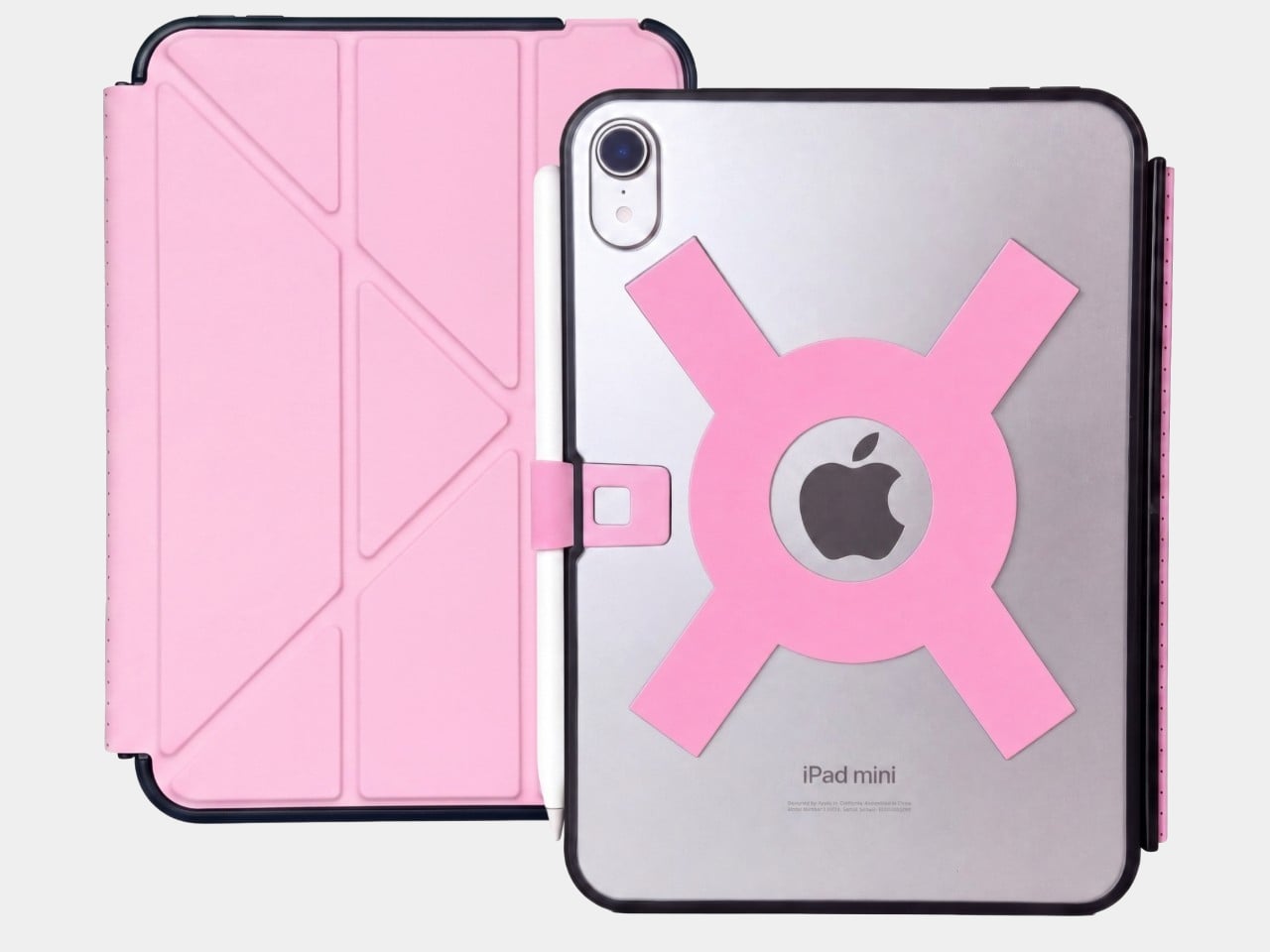
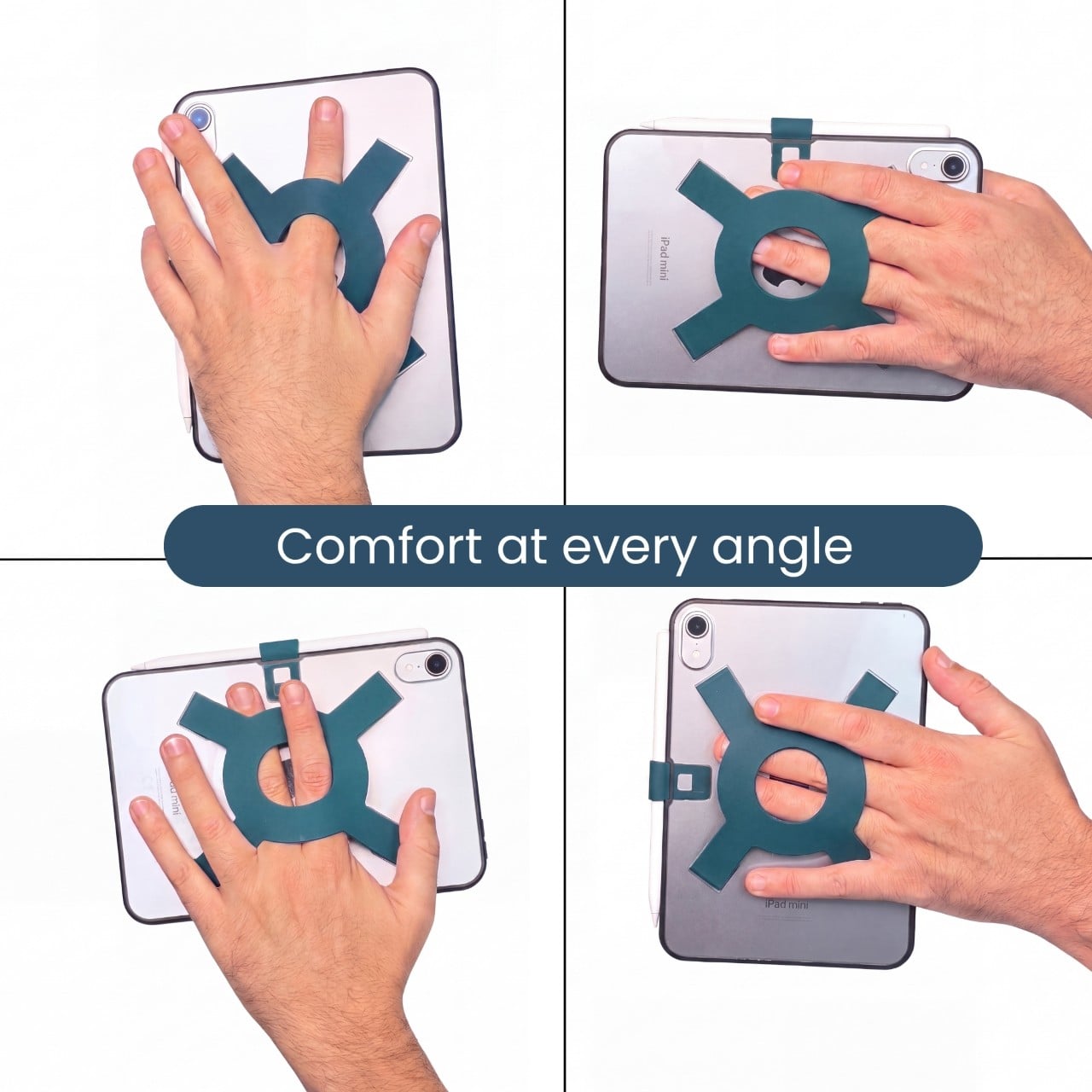
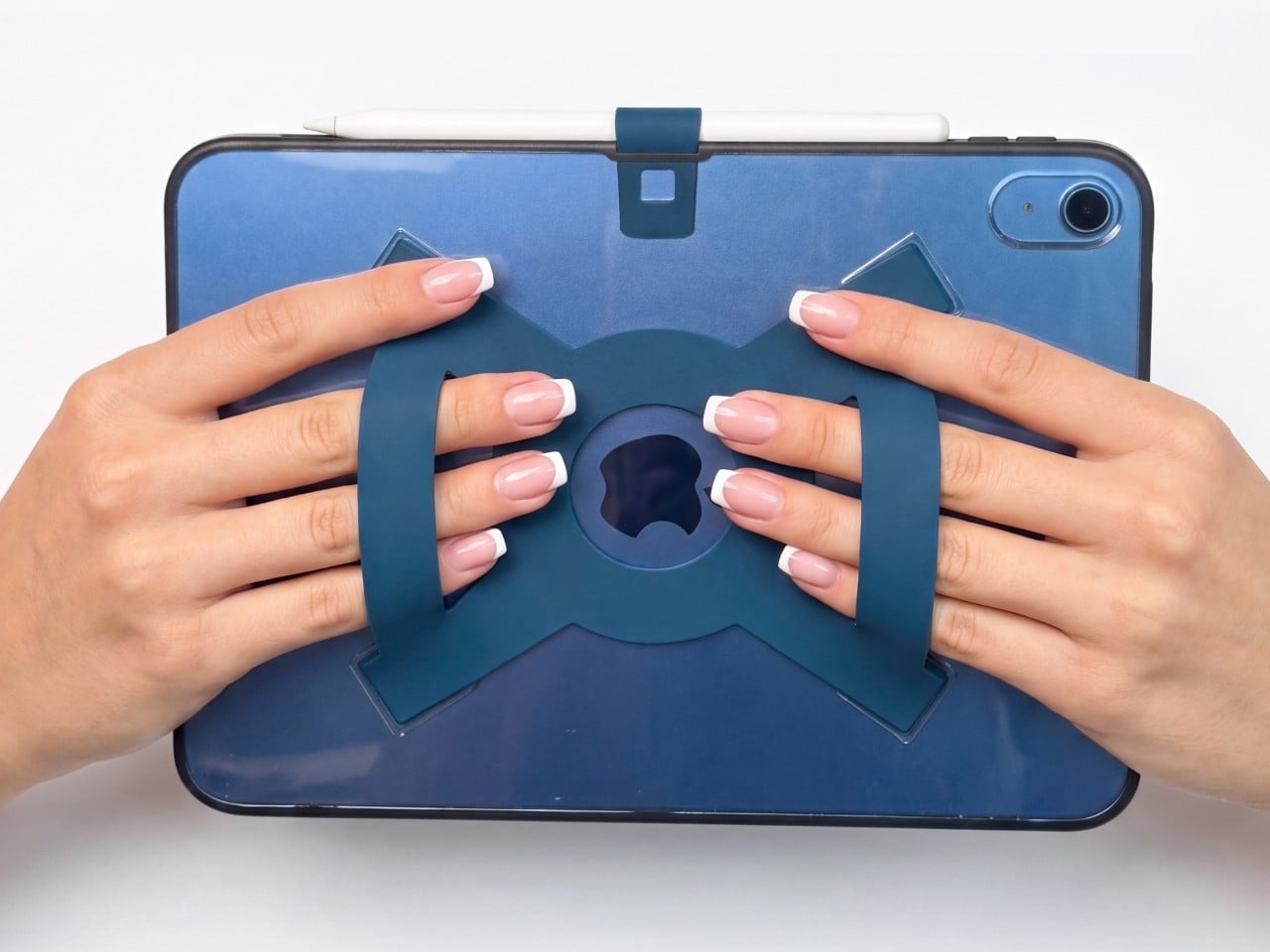
The most conspicuous and functionally significant element of Strapsicle’s design is what the company terms the XO strap. This distinctive feature consists of a circular central hub anchored to the rear of the case by four diagonal arms. When a user slides their fingers underneath the flexible silicone bands, the material rests securely across the back of the hand. This configuration introduces an entirely new point of physical support, effectively distributing the weight of the tablet across the hand instead of concentrating pressure on the edges. Crucially, this is achieved without turning the streamlined device into an unwieldy or aggressive piece of industrial hardware.
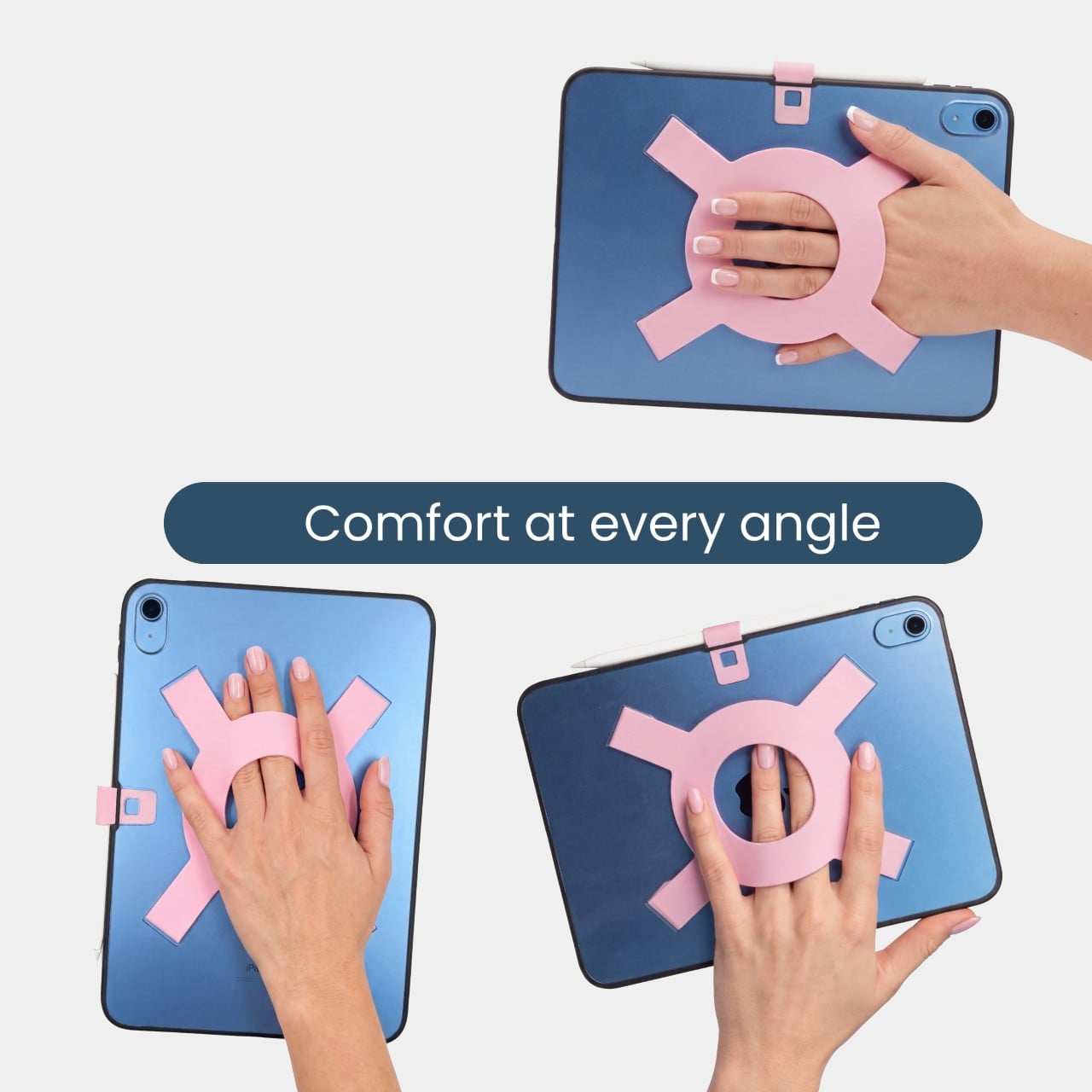
This thoughtful arrangement also introduces a high degree of versatility in how the tablet can be held during daily use. Because the diagonal arms create multiple entry points and angles, users can easily slip their fingers under different parts of the strap depending on whether they are reading in a vertical portrait orientation or browsing and watching media in a horizontal landscape mode. Furthermore, switching hands is completely effortless, allowing users to alternate support without needing to readjust a rigid or specialized grip. Strapsicle is careful to note that the case does not magically render the iPad weightless; rather, it is engineered to eliminate the tiring necessity of constantly pinching the edges, fundamentally altering the physical strain associated with extended tablet sessions.
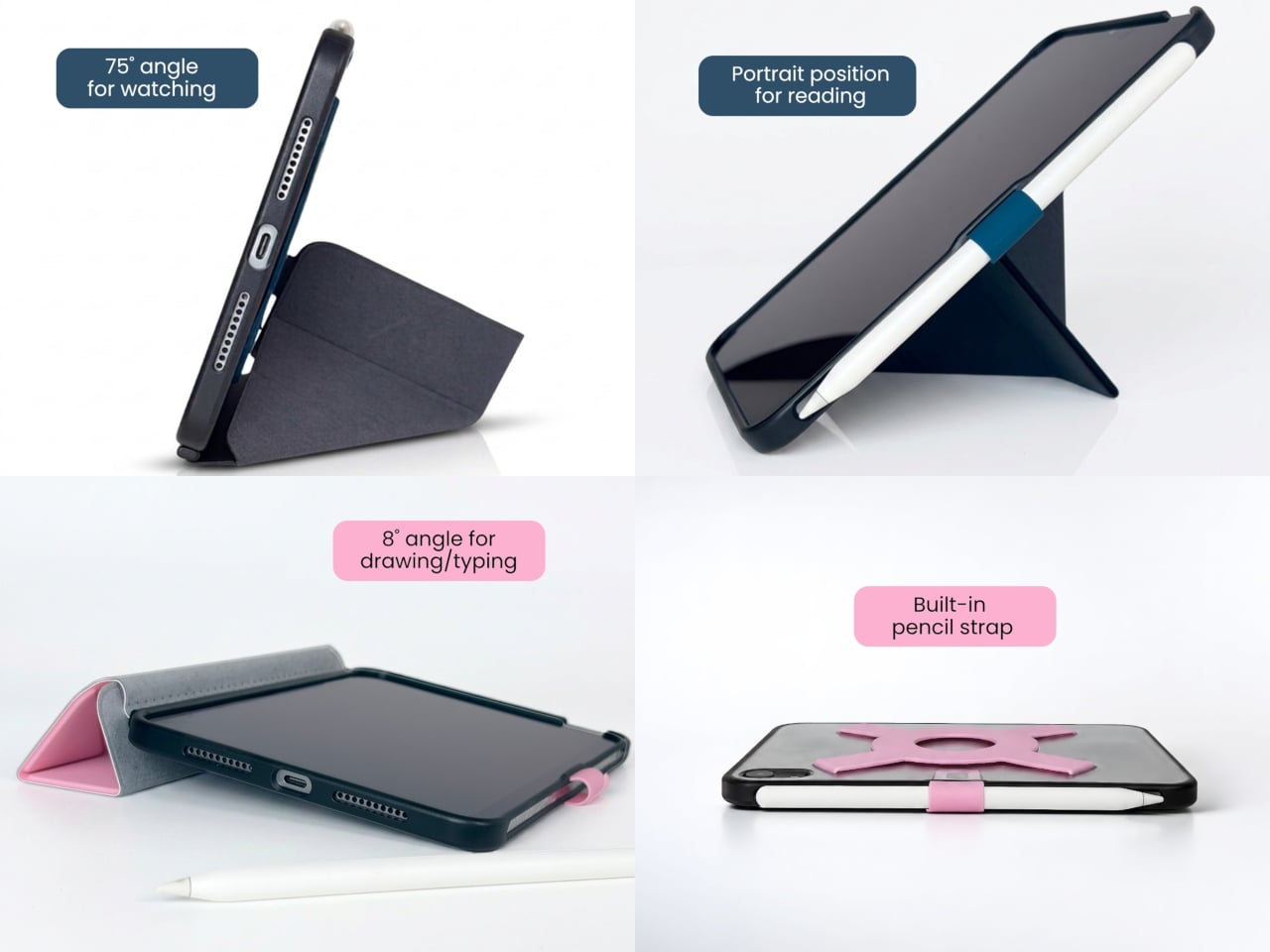
Of course, mobile computing and reading involve more than just holding a device in mid-air. When it is time to set the tablet down on a desk, kitchen counter, or table, the case adapts through a versatile front cover. This protective lid features geometric creases that allow it to fold effortlessly into multiple distinct stand configurations. Users can utilize the portrait support option for reading documents or web pages, or shift to a steeper 75-degree landscape position, which is ideal for streaming video content or participating in video calls. Additionally, the case provides a lower 8-degree setup tailored specifically for typing and drawing. This shallower angle brings the screen much closer to the tabletop surface, providing a stable, ergonomic workspace rather than holding the display in an awkward, nearly upright posture.
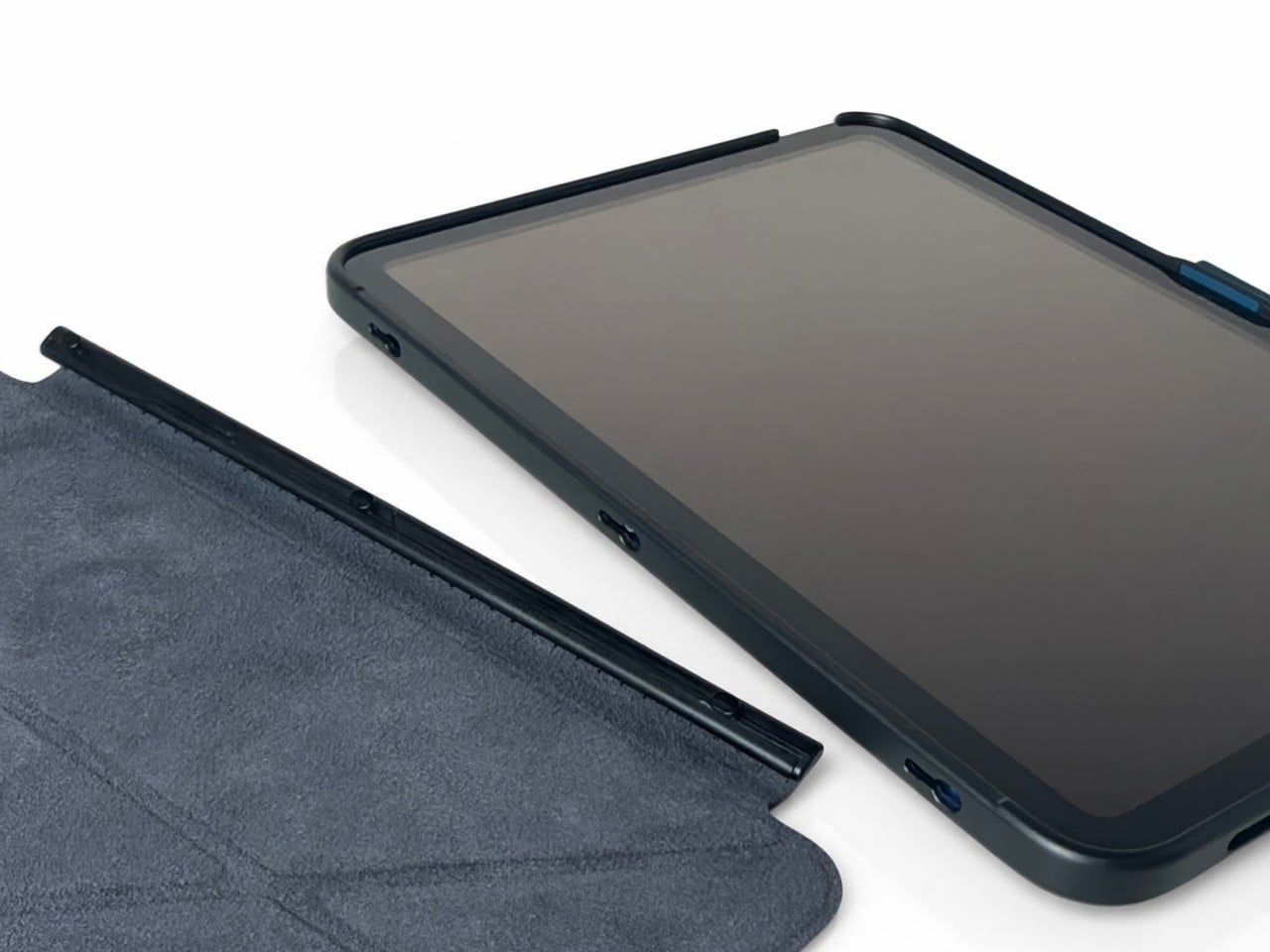
Fortunately, the front cover is not permanently fixed, meaning it does not need to accompany the user through every single activity. The cover can be detached completely when desired, leaving the rear silicone hand strap fully accessible without a folded flap competing for physical space behind the user’s hand. To ensure a secure yet deliberate detachment mechanism, Strapsicle utilizes small mechanical connection pins rather than traditional magnets. This design choice means removing the cover requires a conscious step, preventing it from accidentally separating during vigorous use. Once an activity is finished, snapping the cover back into place ensures the sensitive glass screen remains fully protected during transit or storage.
Complementing the core protective and ergonomic features, the case includes thoughtful additions for everyday workflow management. A smaller silicone loop positioned neatly along the edge of the case secures an Apple Pencil, ensuring that the stylus remains firmly attached to the tablet rather than rolling around loosely in a backpack or briefcase. Personalization is also a key component of the product ecosystem; the main straps are fully interchangeable, allowing users to switch colors without purchasing an entirely new case shell. Available colorways such as pink, dark teal, and black inject a subtle splash of personality onto the unconventional rear architecture, while a transparent back panel ensures that Apple’s original device finish remains visible underneath.
The new cases are offered in two distinct size configurations tailored to specific Apple hardware lineups. One version is designed to accommodate the sixth- and seventh-generation iPad mini, while the second model fits the standard 10th-generation iPad and the iPad powered by the A16 chip. In terms of retail availability and pricing, Strapsicle has announced a US launch price of $69.99 for the iPad mini variant and $79.99 for the larger standard iPad version. The products officially commenced shipping to coincide with their retail debut at B&H, with broader availability through DataVision scheduled to roll out in the subsequent month.

Naturally, introducing added structural functionality and physical components comes with minor trade-offs, particularly regarding weight. According to specifications provided by Strapsicle, the complete case package for the iPad mini weighs approximately six ounces, while the larger standard iPad version comes in at 9.8 ounces, inclusive of both the protective cover and the silicone straps. This does mean a slight increase in the overall mass of a device that users ultimately still have to support with their own strength. However, the modular nature of the design offers a practical workaround; users can easily detach the heavy front cover while relaxing on the couch for a reading session, provided they remember to reattach the protective flap before heading out for the day.