In a Mediterranean metropolis where the pressures of mass tourism are increasingly viewed as a severe threat to local culture and neighborhood identity, an unexpected urban phenomenon is quietly unfolding. Even as classic cinemas draw their curtains for the last time and small live music venues disappear from the streetscape due to rising overheads and shifting commercial tides, Barcelona’s independent bookshops are not merely surviving—they are thriving.
According to data compiled by the Catalan Guild of Booksellers, the city’s total count of bookshops has climbed to an impressive 140. This figure represents a robust 30 per cent increase since 2008, a timeline that encompasses severe economic turbulence and a global pandemic. In recent years, new shop openings have comfortably surpassed closures, driven by a fiercely loyal readership and a renewed appreciation for physical, community-oriented retail spaces.
Yet, this cultural renaissance is not without its trials. The pressures of skyrocketing urban rents, the declining everyday use of the Catalan language in certain public spheres, and the heavy economic strain that a tourism-driven model places on ordinary life remain constant talking points among residents. This delicate balancing act came to a head in 2024, when the threatened closure of the historic Llibreria Sant Jordi triggered weeks of intense public mobilization. While that historic shop ultimately closed its doors temporarily, the outpouring of grief and activism underscored just how deeply ingrained these institutions are in the social fabric of Barcelona. Ultimately, the shop reopened under a new operational model, proving that when local culture faces an existential threat, the community is willing to rally.
Today, while an increasing number of retailers stock contemporary titles in English and other global languages to cater to a cosmopolitan audience, Catalan-language publishing is concurrently experiencing a parallel wave of growth. Barcelona’s evolving landscape of independent bookshops has thus cemented itself as a vital refuge for locals and expatriates alike, acting as cultural hubs where literature, gastronomy, and community discourse intersect.
1. Ona
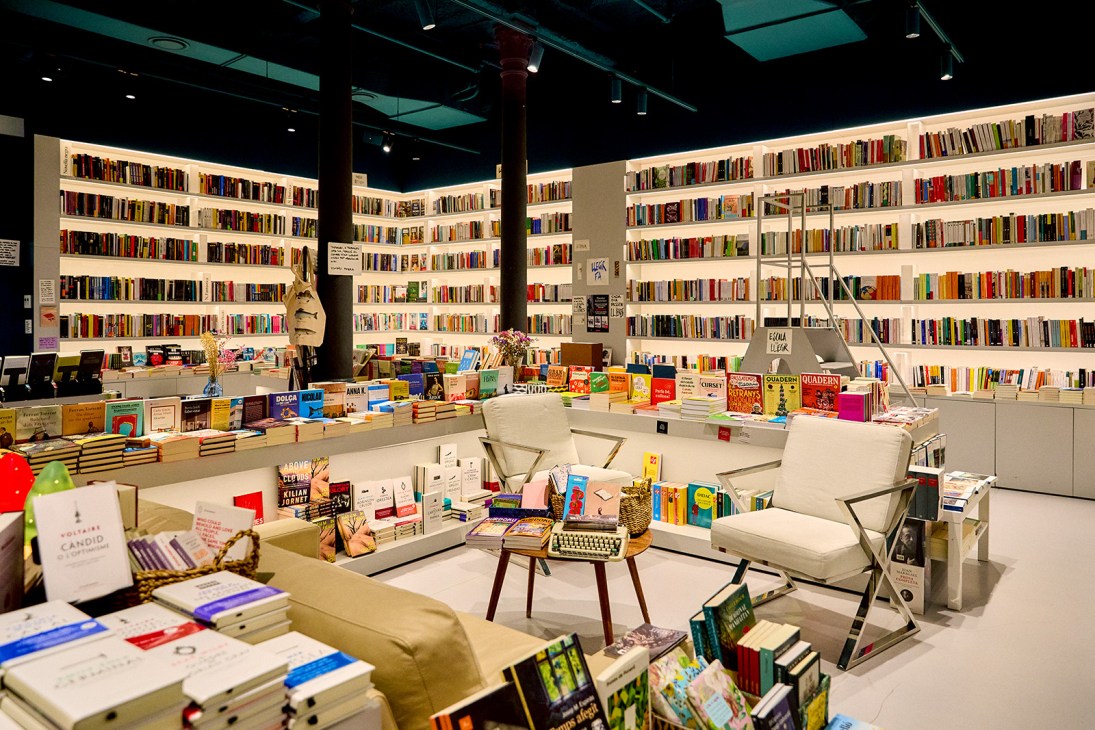
Since launching as a modest, independent shop in the neighborhood of Gràcia back in 1962, Ona slowly and methodically built a sterling reputation for its peerless curation of Catalan literature. A few years ago, second-generation owner Montse Àbeda teamed up with entrepreneur Tatxo Benet to vastly expand the enterprise. Upon opening a sprawling 900-square-metre space on Carrer Pau Claris in 2020, Ona achieved a monumental milestone: it became the world’s largest bookshop entirely dedicated to Catalan-language books.
Beyond its core inventory of domestic works, the expansive boutique also stocks a carefully curated selection of Catalan literature translated into 15 different languages, ranging from English to Mandarin. Explaining the meticulous nature of this collection, Ona’s director, Iolanda Batallé, notes the dedication required to maintain such an international bridge.
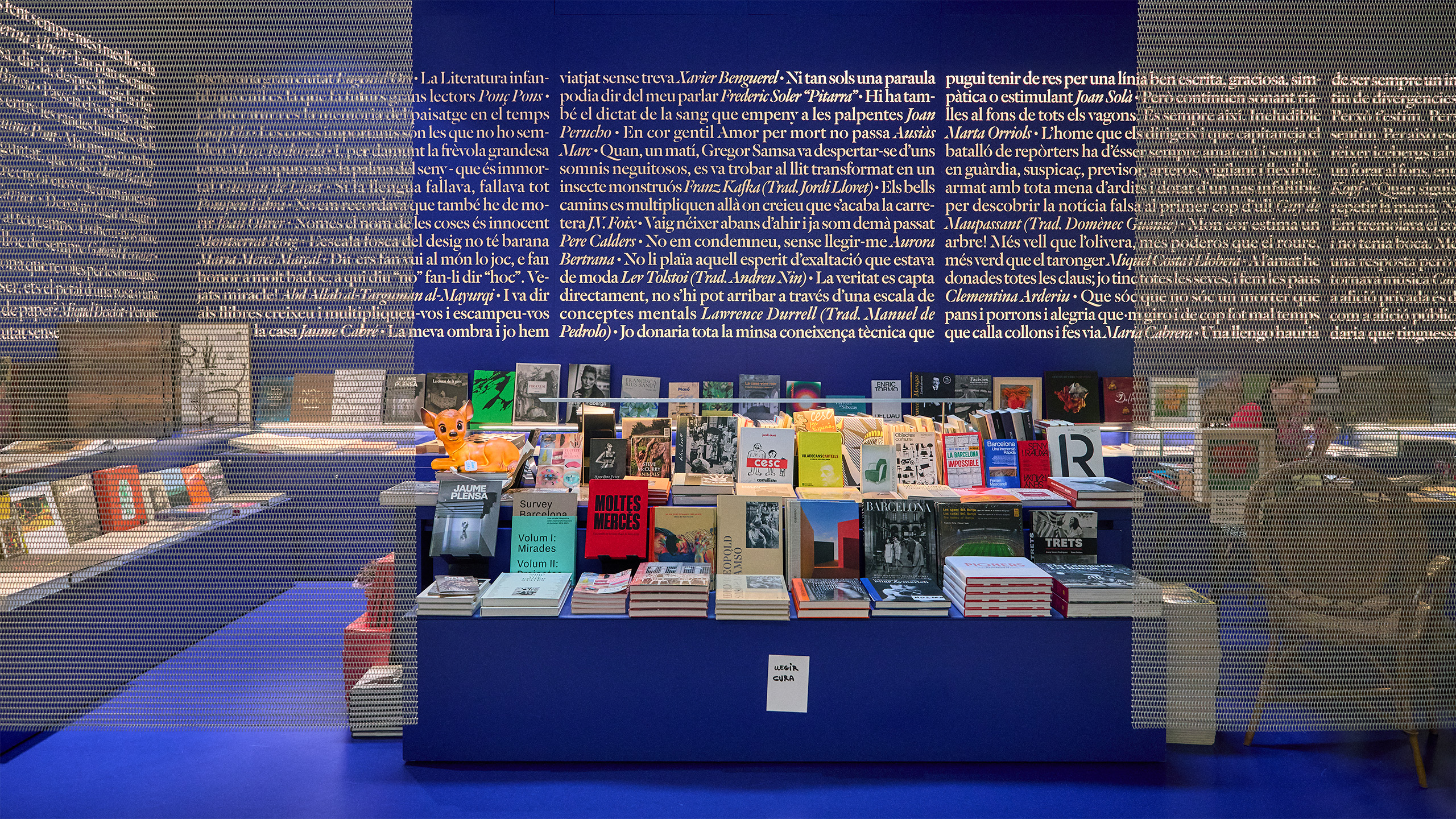
"We stock 1,500 references by authors who write in Catalan that have been translated into other languages," says Batallé. "It’s painstaking work because we have to go publisher to publisher, but we’re very proud of it."
Ona has grown fivefold over the past six years, evolving far beyond a traditional retail outlet. It regularly hosts book clubs, intellectual talks, and live music performances within its dedicated café space, alongside a bustling, year-round schedule of events tailored to its vast children’s literature section.
"Most bookshops have only about 30 per cent of books in Catalan because Spanish takes over," Batallé observes. "Shops like Ona are very important for the growth of the Catalan publishing industry."
2. Llibreria Sant Jordi
When the longtime owner of Llibreria Sant Jordi, Josep Morales, passed away in 2024, the historic bookshop tucked away in Barcelona’s Gothic Quarter announced that it would be permanently closing its doors. The news sent shockwaves through the neighborhood. Following an urgent public appeal urging local book lovers to help clear out its remaining stock, hundreds of people turned out in droves to purchase discounted books on art, photography, design, and illustration.
What began as a liquidation sale quickly morphed into a spontaneous, deeply emotional tribute to a local business which—with its protected, listed 19th-century wooden shopfront—had been an architectural and cultural fixture of the street since the early 1980s.
"The neighbours made it clear that they didn’t want yet another shop to close," recalls Alba Biliotti, who now helps run the business under an innovative new management model.
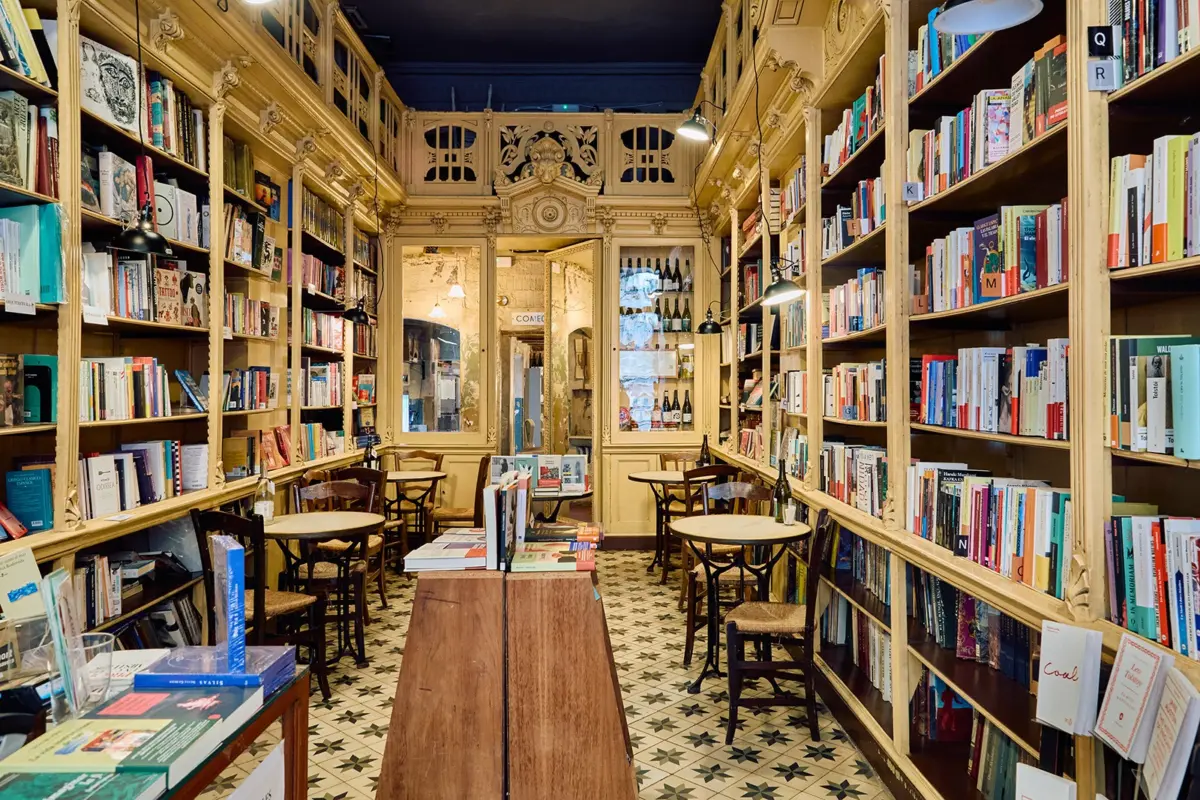
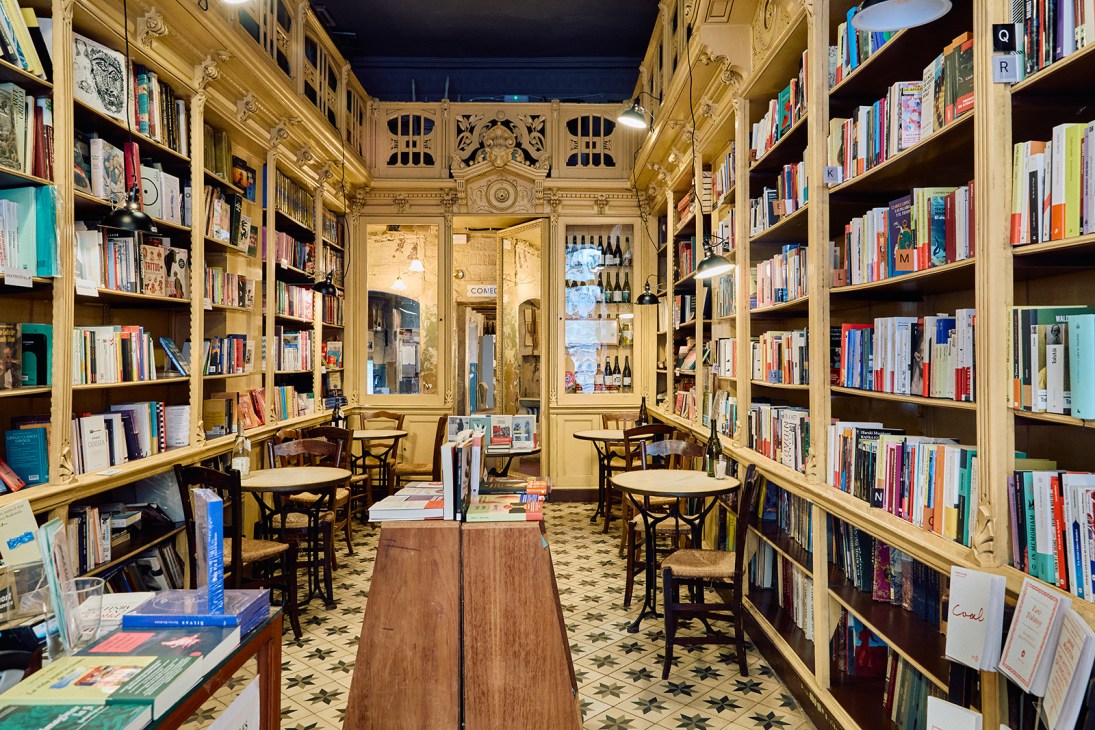
To the immense delight of the local community, Llibreria Sant Jordi reopened its doors with the vast majority of its atmospheric historic interiors completely unchanged. In a modern twist, however, the space undergoes a transformation in the evenings after daytime shoppers have departed: the bookstore transitions into an intimate restaurant that hosts book clubs, literary discussions, and sit-down dinners with visiting authors.
"Most people still come because it’s their local bookshop," says Biliotti. "But now it has two different atmospheres. Some people come for dinner and walk out with a book, while others come to buy a book and end up staying for a drink."
3. Laie
In 1980, four young women opened the doors of Laie on Barcelona’s Carrer de Pau Claris without any fanfare or media attention.
"Back then it wasn’t customary to announce the opening of a bookshop; it wasn’t considered particularly newsworthy," co-founder Conxita Guixà wrote in an essay commemorating the shop’s 40th anniversary in 2020. "Perhaps three or four people came in during the first few hours."
Four decades later, that quiet opening has blossomed into a major cultural enterprise, with Laie operating 35 distinct outposts all over Spain, stretching from Santiago de Compostela in the northwest to Palma de Mallorca in the Balearic Islands.
Fresh out of university when they launched the venture, co-founders Conxita Guixà and Montse Moragas wanted to create a dedicated sanctuary for the humanities and critical thinking. The shop rapidly evolved into an essential meeting point for the city’s intellectual elite. Local lore recalls how regular patrons would playfully hide their favorite books in obscure sections of the shelves so they could safely return to purchase them later without interference.
In the 1990s, the enterprise expanded its offerings by opening a café and restaurant on the first floor. On any given day, visitors can still spot prominent journalists, authors, playwrights, and politicians conducting interviews or hammering out book deals over a plate of traditional ham croquetas or hearty fish soup.
"Gustavo Petro, the president of Colombia, walked in the other day and I had to act normal," says literary director Damià Gallardo, reflecting on the shop’s unique gravity. "Laie has become a nerve centre of Barcelona’s culture; people have made it their own."
4. Llibreria Byron
Huygens, an independent publisher dedicated to academic and educational titles, was originally planning to debut its very first physical bookshop in April 2020. The launch, however, collided directly with the onset of the coronavirus pandemic and Spain’s ensuing strict lockdowns. When the doors finally opened months later, the store was warmly embraced by neighborhood residents who had collectively rediscovered the slow, immersive pleasure of reading during months of confinement.
Founded by editor Mariana Sarrias and law professor Víctor M. Sánchez, Llibreria Byron—named in honor of the famed British romantic poet—opened with an integrated café, quiet reading nooks, and a flexible space for cultural events. The founders harbored a clear ambition: to give local residents a dedicated physical space to reconnect after a period of profound social isolation.
"We decided to call it a bookshop, but right from the start, we wanted it to be more than that: a place where culture is brought to life, not just sold in the form of books," explains Sarrias.
Byron features a comprehensive children’s and young-adult section alongside a tightly packed calendar of community-driven programming. Every Friday, a dedicated group of neighbors from the surrounding El Raval district gathers for a philosophical coffee hour to debate broad questions, ranging from the psychological dangers of modern consumerism to the role of personal uncertainty in daily life.
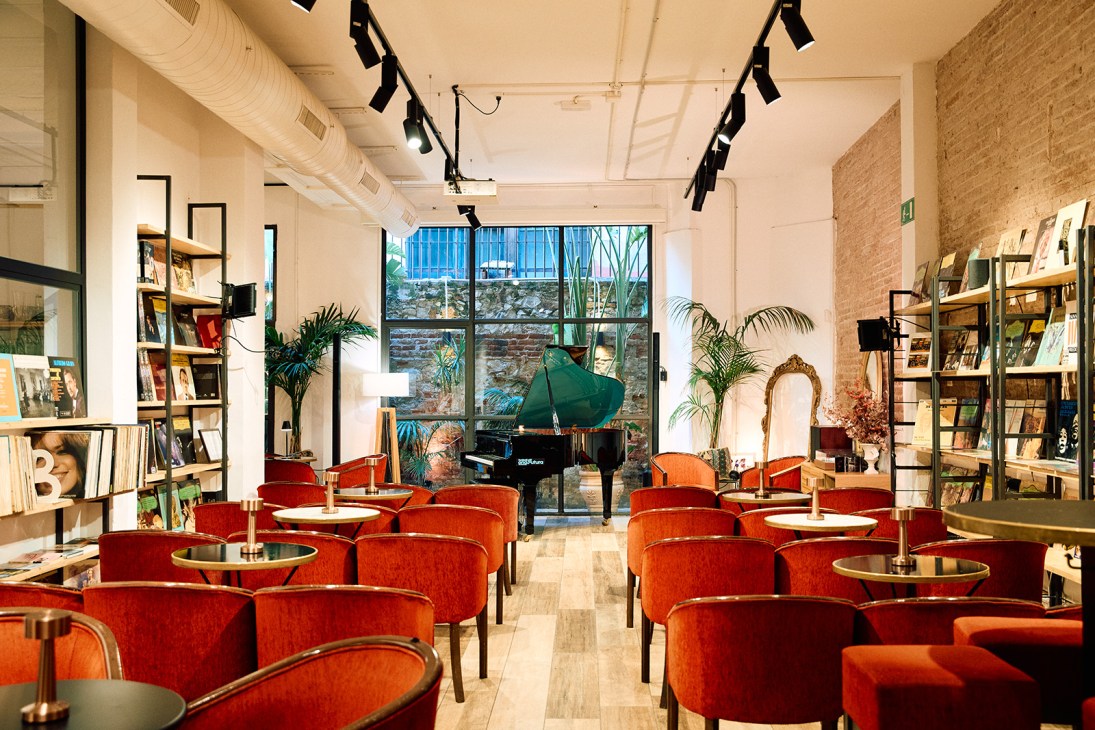
These spirited discussions frequently take place directly around a walnut-panelled fireplace that Sarrias personally salvaged from an antiques shop, had professionally restored, and placed at the architectural heart of the store. Though powered safely by electricity to comply with modern urban regulations, the fireplace successfully fulfills its intended purpose: cultivating a cozy, welcoming atmosphere that encourages lingering. In the evenings, Byron frequently repurposes its café floor for live music, utilizing its grand piano for everything from jazz performances to intimate renditions of Puccini’s opera Madama Butterfly.
5. Llibreria Finestres
Llibreria Finestres—whose Catalan name translates directly to "windows"—made its debut in 2021 within a striking modernist building designed by renowned Catalan architect Enric Sagnier. Located just a few steps away from the bustling Passeig de Gràcia, the interior was meticulously designed by Quintana Partners, featuring plush carpets, comfortable sofas, well-lit reading nooks, and an inviting fireplace. The founders positioned the business as "a bookshop for reading," explicitly inviting patrons to curl up indoors with a newly purchased volume or linger on the outdoor terrace with a traditional glass of vermut.
The concept proved so immediately popular that a second location opened shortly thereafter, dedicating its square footage exclusively to comic books, graphic novels, and specialized publications on illustration and contemporary art. Building on this momentum, the enterprise continued its urban expansion, opening another coastal outpost in the town of Palamós, followed by the launch of Finestres Palestina in the Gràcia neighbourhood. Designed by Valencia-based Palestinian architect Malek Murad Mateu, this latest specialized outlet is dedicated entirely to Palestinian culture and literature, featuring striking bright green sculptural bookshelves, hand-woven rugs, and an indoor water fountain inlaid with an intricate mosaic map of Palestine.
Run under the umbrella of the Finestres Foundation, the bookshop also serves as an active patron of the arts, funding several literary awards and writers’ residencies. Its impressively multilingual inventory encompasses titles in English, French, Italian, German, Portuguese, Galician, and Basque, standing proudly alongside extensive sections in Spanish and Catalan.
6. Llibreria Calders
In the wake of the 2008 global financial crisis, which hit Catalonia’s retail and cultural sectors hard and triggered a wave of bookshop closures, journalist Isabel Sucunza and historian Abel Cutillas decided to fight back. In 2014, the pair teamed up to open a dedicated space designed specifically to showcase the underrepresented work of emerging, independent publishing houses.
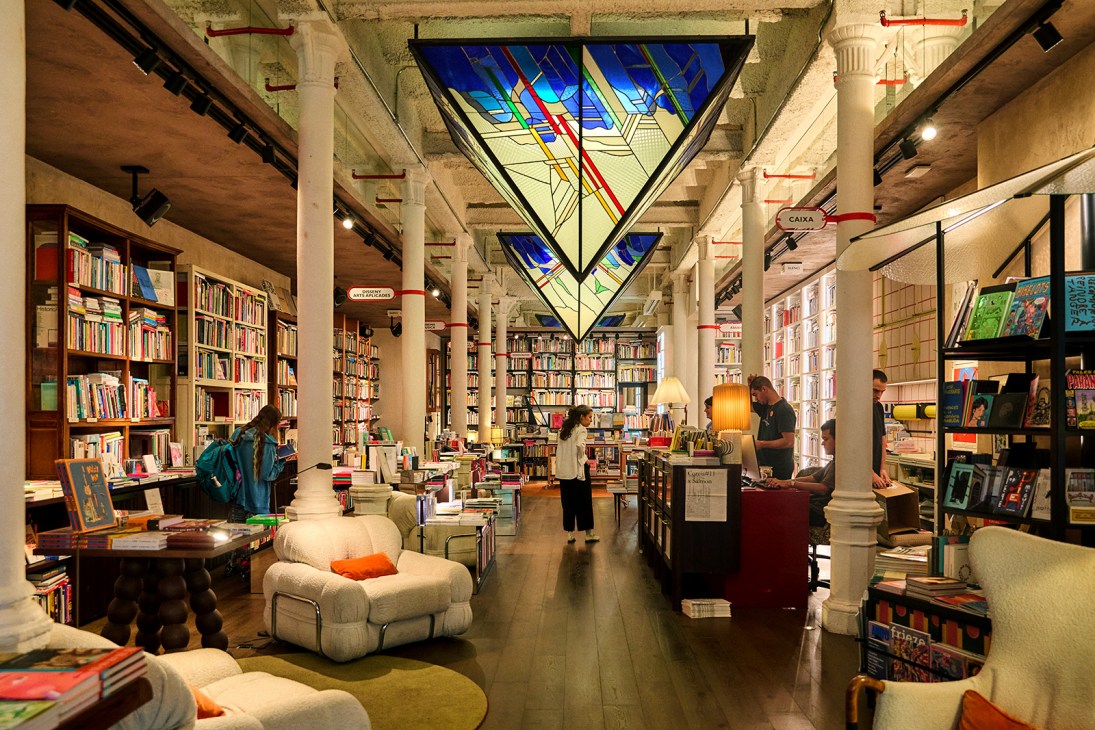
Named in honor of acclaimed Catalan writer Pere Calders, who spent his later years living in the vibrant Sant Antoni neighborhood, Llibreria Calders occupies a former button factory tucked down a quiet alleyway. Over the years, it has cultivated a fiercely loyal following by deliberately prioritizing local authors and small presses over commercial bestsellers.
"At the time there were very few independent bookshops in Barcelona," recalls Sucunza. "There also wasn’t a single one named after an author."
The physical space bears a strong architectural resemblance to a grand wine cellar, characterized by dark wooden bookcases set against raw, bare stone walls. Customers routinely seek out the shop for its exceptionally well-stocked poetry section, as well as its deep catalog of titles covering theatre and dramatic theory.
"Poetry wasn’t so central to the bookshop at first, but as soon as we started hosting recitals, we noticed that there was a huge demand for it," notes Sucunza.
Readers looking to extend their cultural pilgrimage can pay further homage to one of Catalonia’s most celebrated literary figures by visiting the nearby neighborhood bar, appropriately named Calders. The establishment serves a menu of "dishes of exile," culinary creations directly inspired by the author’s forced banishment to Mexico following the Spanish Civil War.
7. Llibreria Terranova
A specialized bookshop focusing entirely on contemporary art publications occupies a former shoe boutique situated on the corner of a grand 19th-century building in Sant Antoni. When the commercial real estate space became available in 2020, it immediately caught the attention of Lucía Bonet and Luis Cerveró, who had long harbored a shared dream of opening a permanent physical flagship for their independent publishing house, Terranova.
With the creative assistance of furniture design studio Owl, the pair successfully restored the listed modernist building’s original architectural features, including its soaring ceilings and original white wooden floorboards. The historic shelving units, which once served to store neatly boxed shoes decades prior, were carefully restored and painted back to their original olive-green finish. Meanwhile, a custom-made central display island was painted the exact shade of bright red as the Vico Magistretti Carimate chairs scattered throughout the room.
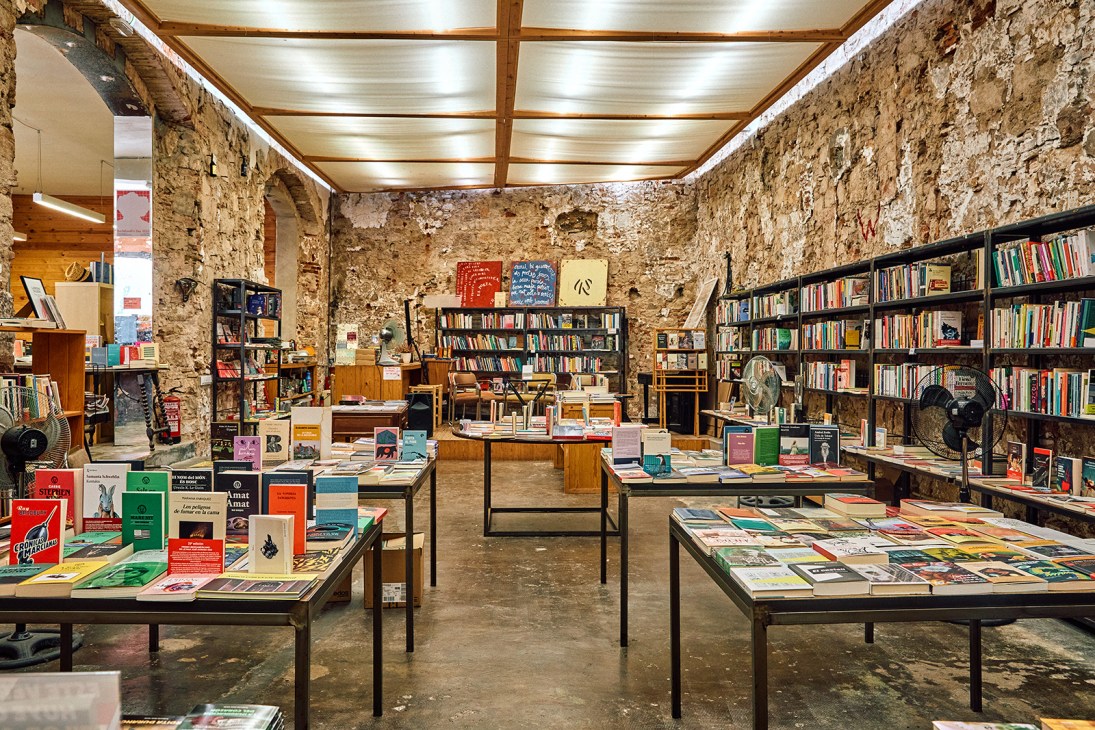
The shop prominently features Terranova’s own design-focused catalog, alongside a broader, highly curated selection of international titles covering contemporary art, fashion, and visual design. Notable highlights on the shelves include Servilletas, a photographic monograph by Felipe Hernández documenting discarded paper napkins gathered from bars across Spain, alongside Sofia Coppola’s visual history of Chanel’s haute-couture collections.
Departing from traditional retail models that sort books rigidly by conventional genre categories, Bonet and Cerveró chose to arrange their inventory with a degree of serendipity, encouraging customers to stumble upon unexpected discoveries as they browse. In addition to its retail operations, the shop hosts monthly rotating art exhibitions and houses a restricted collection of rare books available for viewing by appointment.
8. Altaïr
Given the steady stream of international visitors passing through Catalonia’s capital year-round, it is perhaps unsurprising that Barcelona hosts Europe’s largest travel specialist bookshop. In 1979, Pep Bernadas founded Altaïr—taking its evocative name from one of the brightest stars in the night sky—in a modest venue located within the historic El Raval district, where he initially began collecting rare guidebooks.
The enterprise quickly outgrew its original home. For the past two decades, it has occupied a vast, three-story commercial space in the Eixample district, where global travelers can peruse an unparalleled collection of maps, comprehensive travel guides, and anthropological titles covering virtually every corner of the planet.
"The only country that we haven’t been able to get any books on is San Marino," remarks Altaïr’s director, Helena Bernadas.
Within the store, books are meticulously organized by country in order of their geographical proximity to Spain, beginning with an extensive collection of local publications dedicated to Barcelona and concluding with a dedicated section on Oceania located on the lower level. Since 1992, the business has also incorporated an in-house travel agency and an online literary magazine sharing the same name, both of which are grounded in a distinctly "more anthropological than touristic" approach to global exploration.
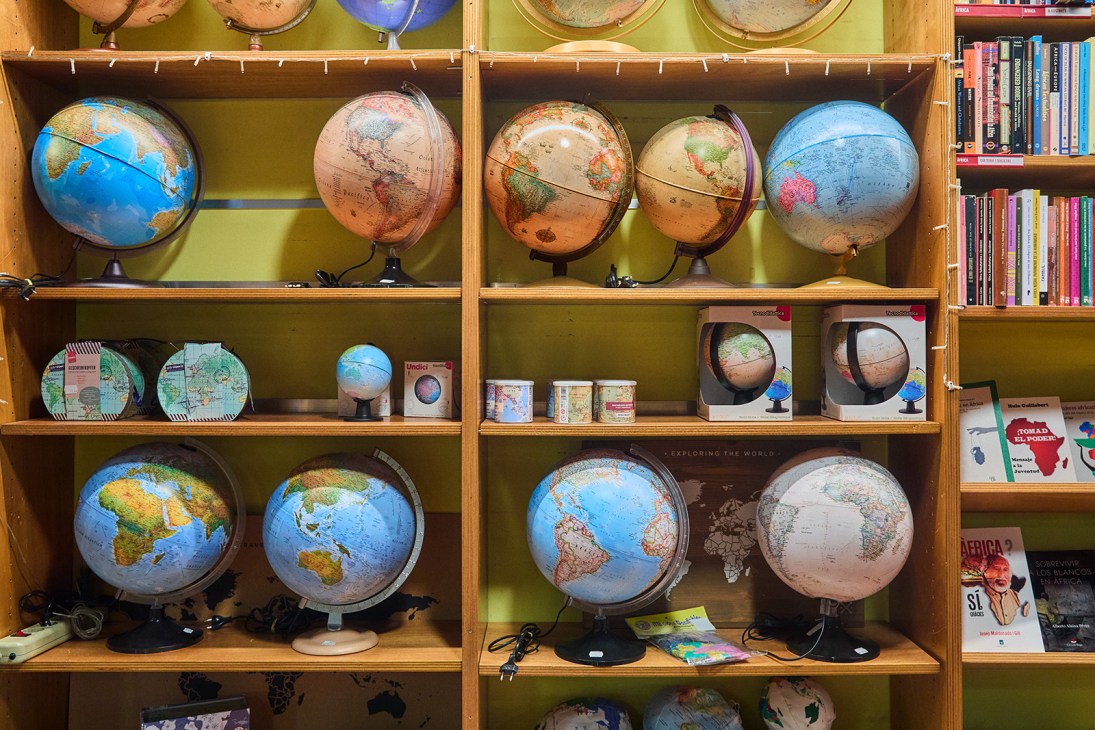
However, it remains the physical bookshop that plays the most fundamental role in preparing travelers for their journeys.
"We like to put together a curated reading list for our customers that includes guides but also fiction or poetry," says Bernadas. "There are a million different ways to engage with Japanese culture, for example, so we try to find the titles that best reflect our customers’ specific interests."
9. Llibreria +Bernat
During his teenage years, Carles Armengol earned money to support his family’s business by serving tables at their neighborhood restaurant in L’Hospitalet de Llobregat. When the family establishment finally closed its doors in 2012 after operating for eight decades, Armengol turned to writing to process the life change. His debut book, Collado: La maldición de una casa de comidas (Collado: The Curse of a Diner), was published in 2022 and explores his complex, bittersweet relationship with the hospitality industry.
Today, Armengol has successfully merged his two lifelong passions—food and literature—under a single roof. After presenting his novel at +Bernat, the bookshop’s owner, Montse Serrano, offered him the unique opportunity to establish a working café directly inside the store. Today, +Bernat promotes itself as a place where "literature feeds you."
Walls lined with the latest literary releases completely surround the dining tables, where Armengol serves a concise, daily lunch menu featuring classic Catalan comfort dishes, such as fideuà casserole and chickpea stew with calamari. He spends the remainder of his working day assembling specialty sandwiches named after canonical literary works, crafted entirely with local artisan produce. Options include "Crime and Punishment"—featuring spicy sobressada, Minorcan cheese, roasted eggplant, and honey—and "Il Gattopardo," combining Bolognese mortadella with cashew pesto, scamorza cheese, and fresh spinach.
"A café and a bookshop are destined to work well together," says Fernando Pelayo, who manages the day-to-day operations of the bookshop while Armengol tends to the kitchen. "They make each other stand out."