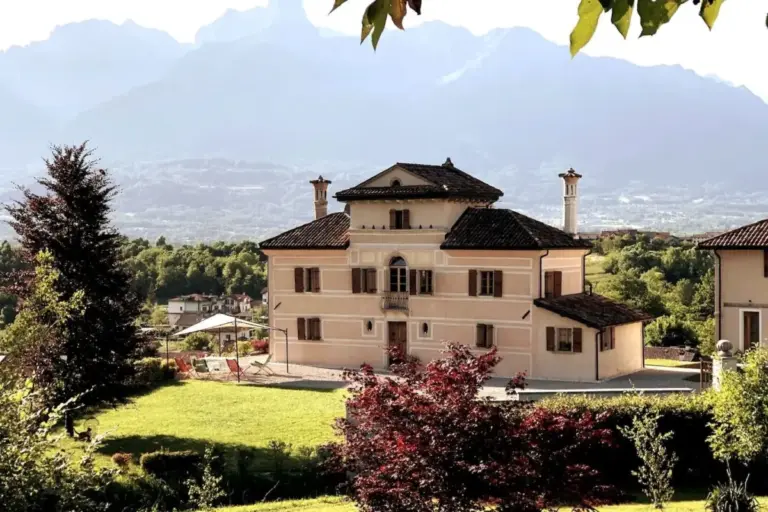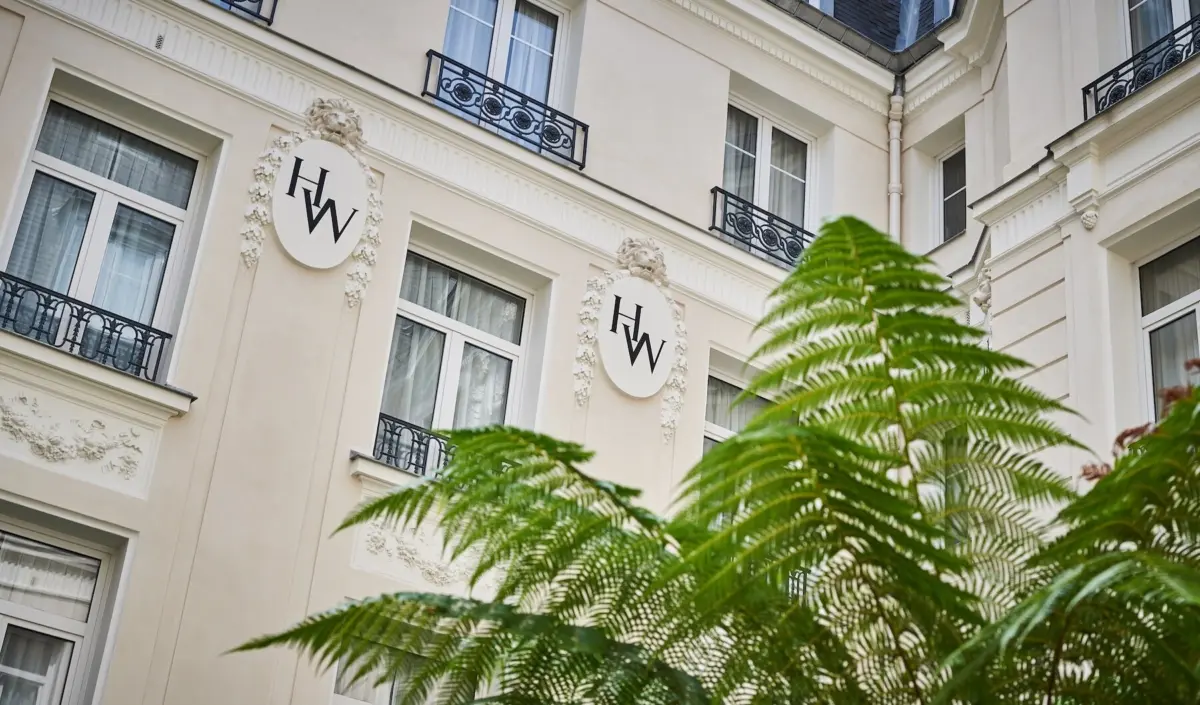
Nestled on the prestigious rue de la Paix between the iconic Place Vendôme and the magnificent Palais Garnier, the historic Hotel Westminster has long stood as a quiet witness to the shifting tides of Parisian life. Having recently celebrated its newly minted five-star status, awarded in 2025, this legendary Parisian address has successfully navigated a major chapter in its long-standing history. The comprehensive transformation, completed a year ago, bridges more than two centuries of rich architectural heritage with contemporary luxury. Spearheaded by interior architect Laurent Maugoust, who meticulously revived the building’s historic interiors, alongside British designer Helen Stephens, who reimagined its signature restaurant Le Céladon, the project breathes new life into a property that has always danced between two distinct cultural worlds.
The Westminster enters its latest incarnation with a remarkably unique distinction: it proudly maintains a distinctly British character while situated in one of the most recognizably French corners of the capital. This cross-channel identity is not a modern marketing conceit, but rather a deeply rooted historical reality that has evolved over generations. In a city where historic hotels are abundant, the Hotel Westminster stands out for the sheer depth of its heritage, capturing a transatlantic spirit that has defined its doors for over two hundred years.
From Napoleon’s Paris to a British Haven
The story of the Hotel Westminster traces its origins back to 1802, a pivotal era when Napoleon Bonaparte ordered the sale of land belonging to a former Capuchin convent. He commissioned renowned architects Charles Percier and Pierre Fontaine to develop an ambitious new urban district in the heart of Paris. The street itself was originally named rue Napoléon before being officially renamed rue de la Paix in 1814. It was here that the Hôtel Wagram opened its doors in 1807, serving as the direct predecessor to the modern Westminster.
As the nineteenth century progressed, British travelers, aristocrats, and expatriates increasingly settled in the surrounding neighborhood. Over time, the area acquired a distinct reputation for feeling like a small piece of London nestled squarely within the French capital. This cultural crossover eventually influenced the hotel’s eventual renaming and identity. The physical structure of the building continued to expand and transform through successive architectural interventions. The most defining structural shift occurred between 1905 and 1907, when architect Jacques Marcel Aubertin gave the property the grand Haussmannian silhouette that continues to define its appearance along the streetscape today.
Laurent Maugoust Restores Haussmannian Interiors
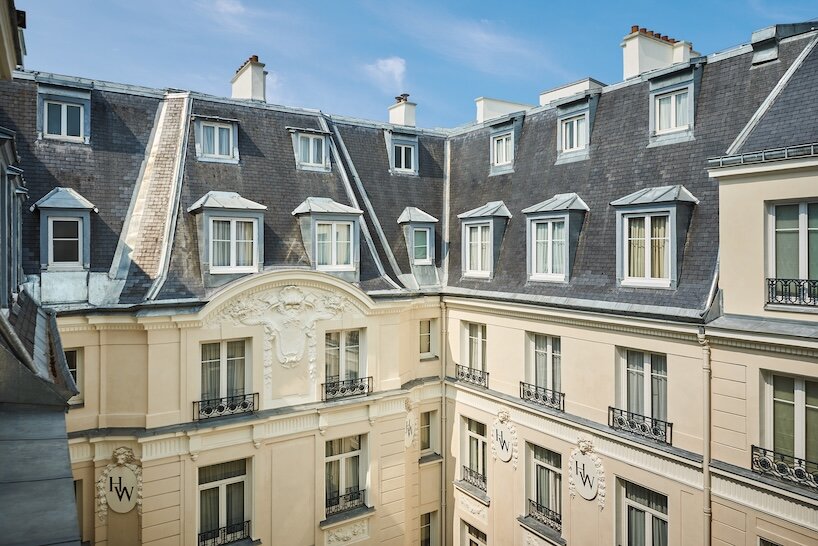
For interior architect Laurent Maugoust, undertaking the restoration of the Westminster meant engaging in a delicate conversation with architectural elements that span multiple centuries, rather than attempting to freeze the property in a single, artificial historical moment. Across the hotel’s 102 rooms, which include 20 expansive suites, Maugoust’s design intervention deliberately preserves surviving historical features. Magnificent marble fireplaces, intricate decorative mouldings, and classic herringbone oak parquet floors have all been carefully restored.
These authentic period details are thoughtfully paired with contemporary bespoke furnishings and a sophisticated textile palette dominated by calming shades of beige, deep green, and subtle violet. Maugoust’s design philosophy draws heavily from his extensive professional experience with classic Haussmannian interiors, where rigorous proportions, high-grade materials, and traditional craftsmanship establish a seamless visual continuity between the past and the present.
"I set out to reinterpret its style by bringing different eras into dialogue," Maugoust explains, summarizing an approach that honors the building’s existing architecture instead of trying to replace or erase its layered history.
Additional interior details underscore how the Westminster has organically accumulated its own unique collection of decorative objects and historical artifacts over the decades. Antique clocks, some dating back to the nineteenth century, remain thoughtfully scattered throughout the guest rooms and suites. They sit comfortably alongside period paintings, historical photographs, and furnishings tied directly to the property’s storied past.
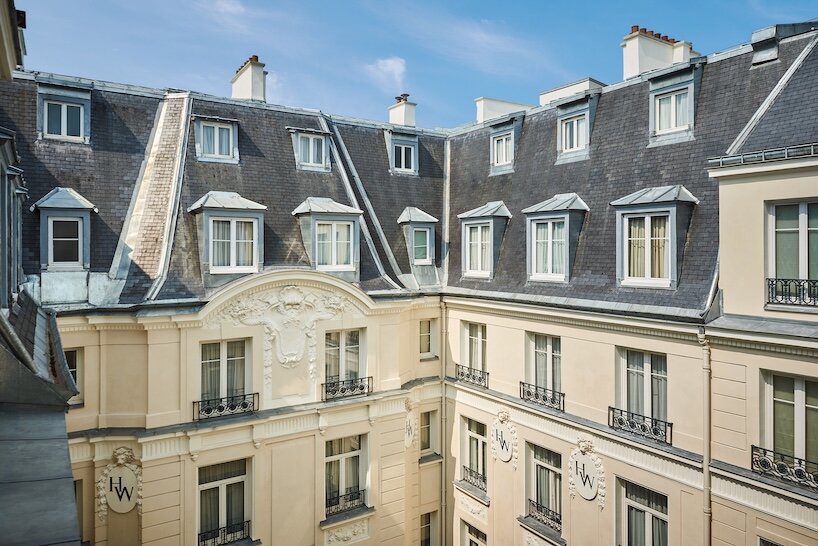
Guests staying at the hotel enjoy varied perspectives of the city; some suites offer sweeping views directly onto the bustling rue de la Paix, while others face a tranquil, flower-filled inner courtyard, providing a peaceful contrast to the urban energy just outside. These surviving architectural and decorative features reflect the building’s long trajectory of transformation, spanning from its early nineteenth-century expansions to the major early twentieth-century reconstruction that established its current aesthetic. Even the supposedly timeless Haussmannian setting of the Westminster has quietly adapted to change over the years.
Duke’s Bar Preserves the Hotel’s British Heritage
Perhaps the most famous and enduring physical connection to Britain survives inside Duke’s Bar. Defined by rich dark wood panelling, deep, welcoming armchairs, subdued lighting, and an original working fireplace, the space evokes the classic atmosphere of an exclusive traditional English club. During the Roaring Twenties, the bar transformed into a lively rendezvous point for British aristocrats, diplomats, and prominent political figures, eventually drawing writers, artists, and leading personalities from the wider Parisian cultural scene.
According to the hotel’s historical archives and records, British Prime Minister Winston Churchill was among its most regular and devoted visitors. He was joined over the decades by an extraordinary roster of legendary literary and artistic figures, including Coco Chanel, mystery writer Agatha Christie, Sherlock Holmes creator Arthur Conan Doyle, and acclaimed French novelist Françoise Sagan. Today, historical black-and-white portraits of Churchill, Chanel, author Rudyard Kipling, and the Duke of Westminster line the wood-panelled walls. These images preserve the evocative atmosphere that once made the bar a legendary meeting point where British and French high society effortlessly converged.
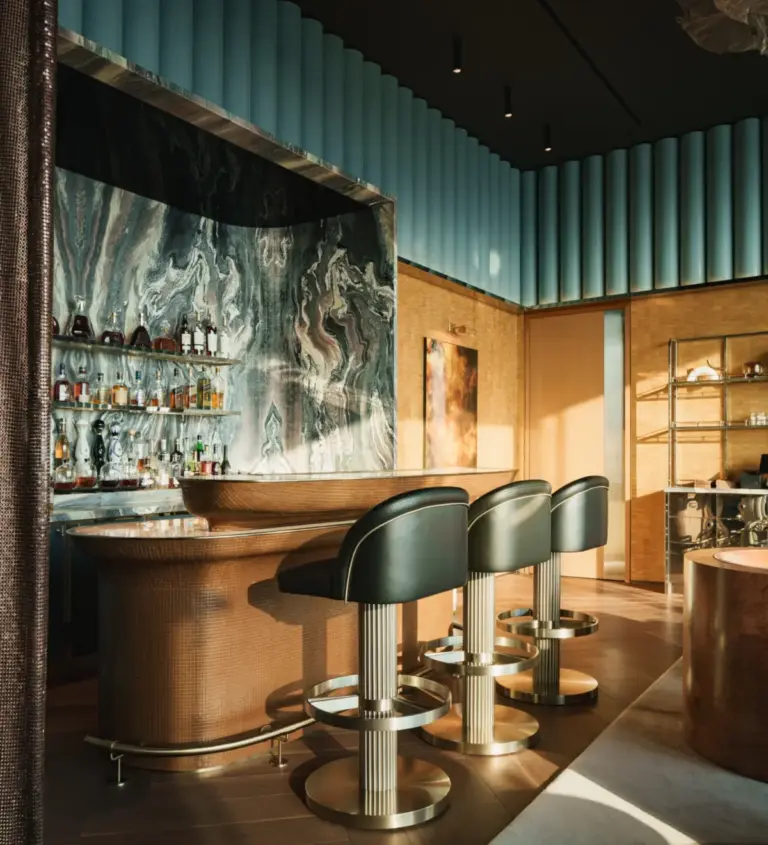
A different yet complementary interpretation of the hotel’s dual heritage unfolds nearby at Le Céladon, the property’s signature restaurant. Redesigned by British designer Helen Stephens, the dining room establishes a deliberate visual and thematic connection with the adjacent Duke’s Bar. Sophisticated shades of green weave through the space, serving as a subtle nod to both the aged bronze of the nearby Vendôme Column and the lush foliage of the adjacent Tuileries Garden, thereby bringing the natural elements of the surrounding urban landscape directly into the restaurant’s interior.
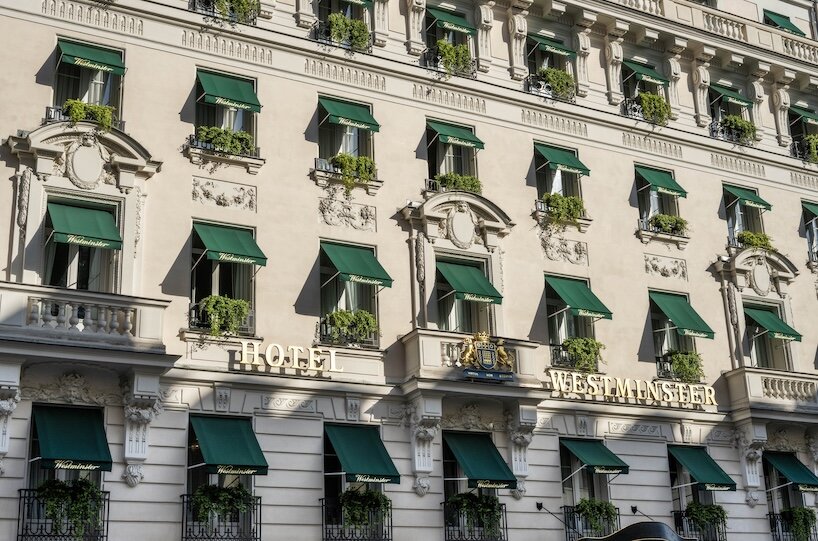
Beyond its physical spaces, the Hotel Westminster actively maintains its deep-rooted relationship with contemporary Parisian cultural life. The establishment regularly hosts intimate musical evenings and curated literary events, staged in proud collaboration with Galignani, the city’s historic and beloved English-language bookshop located nearby.
More than two centuries after the very first hotel opened its doors on the rue de la Paix, the Westminster endures as a fascinating and harmonious intersection of classic Parisian architecture and enduring British tradition. Through careful stewardship and sensitive architectural restoration, these two distinct cultural identities remain beautifully intertwined, proving impossible to separate within the storied walls of this landmark Parisian address.