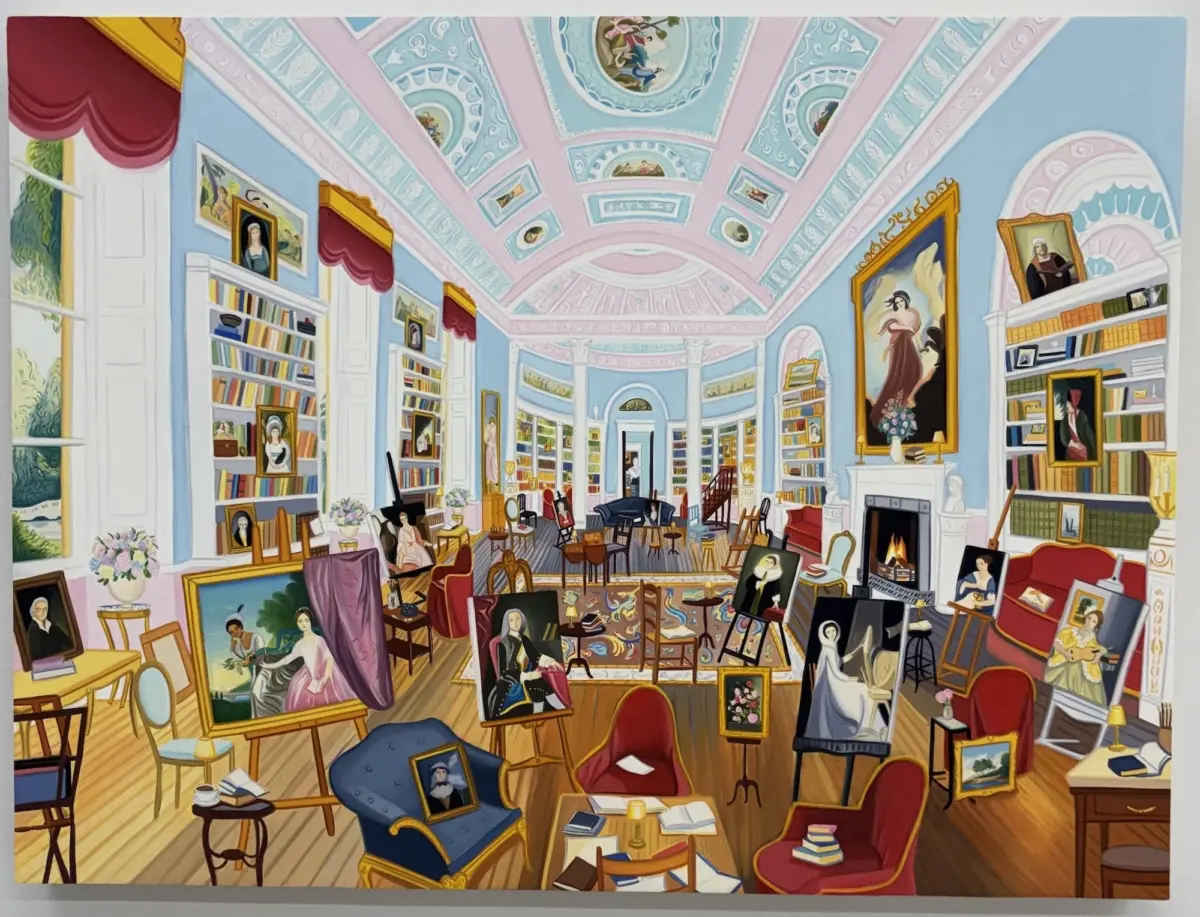
For visitors attending her latest solo exhibition, In Time, currently on view at the Monya Rowe Gallery in New York, the experience is one of continuous discovery. When the eye homes in on one particular detail—be it a delicate floral arrangement, the intricate carving of a gilded picture frame, or the rich upholstery of a period piece of furniture—a perceptual shift occurs. Suddenly, there appears to be an exponential increase in the amount of visual information waiting to be explored. This new body of work deepens the artist’s ongoing fascination with historical interiors, ranging from grand art museums and intimate drawing rooms to palatial halls and sacred ecclesiastical spaces.
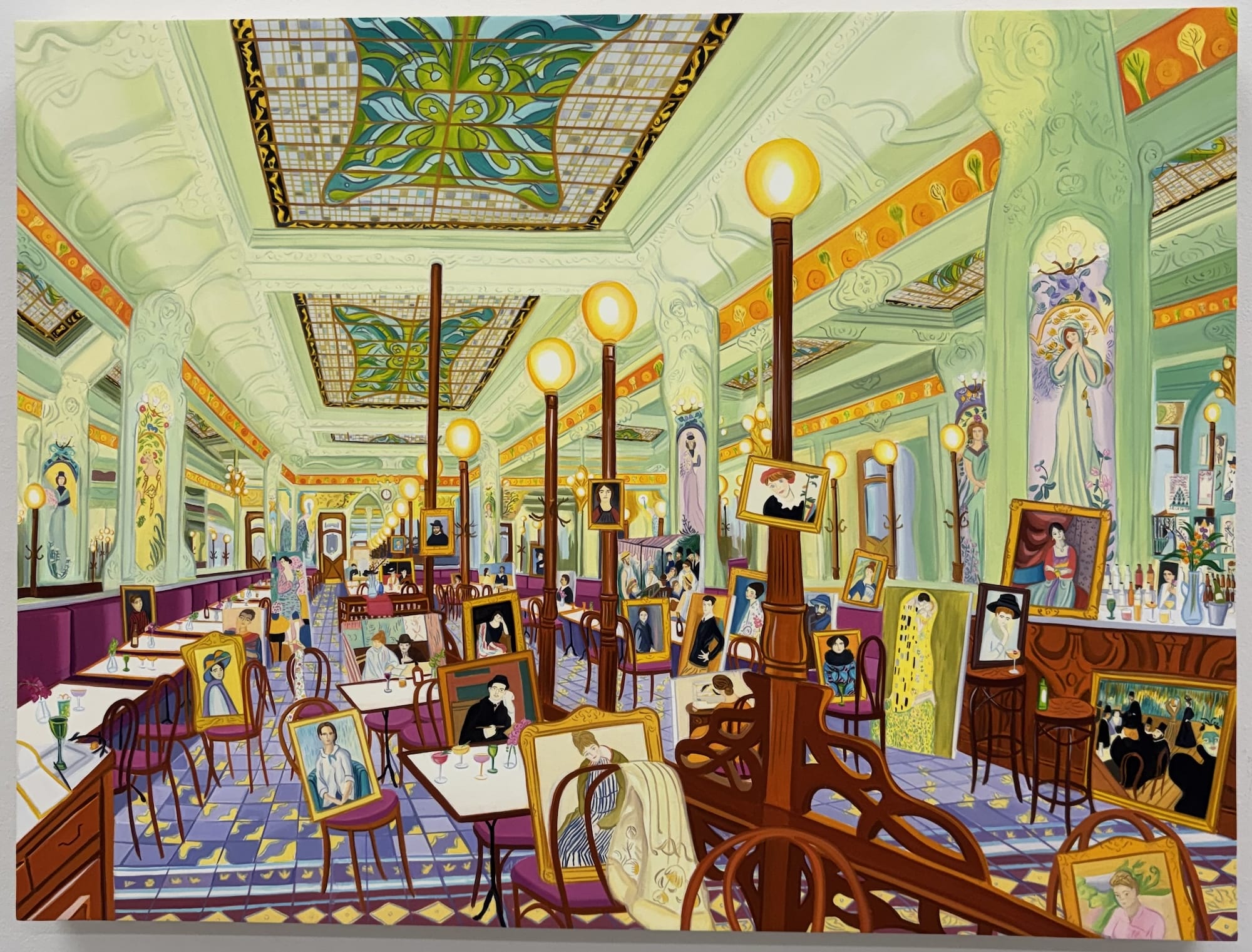
Although her canvases are entirely devoid of living human figures—save for the subjects depicted within the portraits hanging upon the walls—there is a palpable, lingering sense of human presence. Viewers are left with the distinct impression that someone has just been very busy in the room, curating, living, and breathing within the space. Scherer leans heavily into a form of visual escapism, channeling a collective longing not only for elegant, luminous surroundings, but for a desire to immerse oneself, quite literally, in the rich, tactile world of art. In an era dominated by the stark geometries of steel, glass, concrete, and ubiquitous "contractor gray" interior design, Scherer’s work stands out as a vibrant celebration of traditional craftsmanship, ornate detail, and unapologetic beauty.
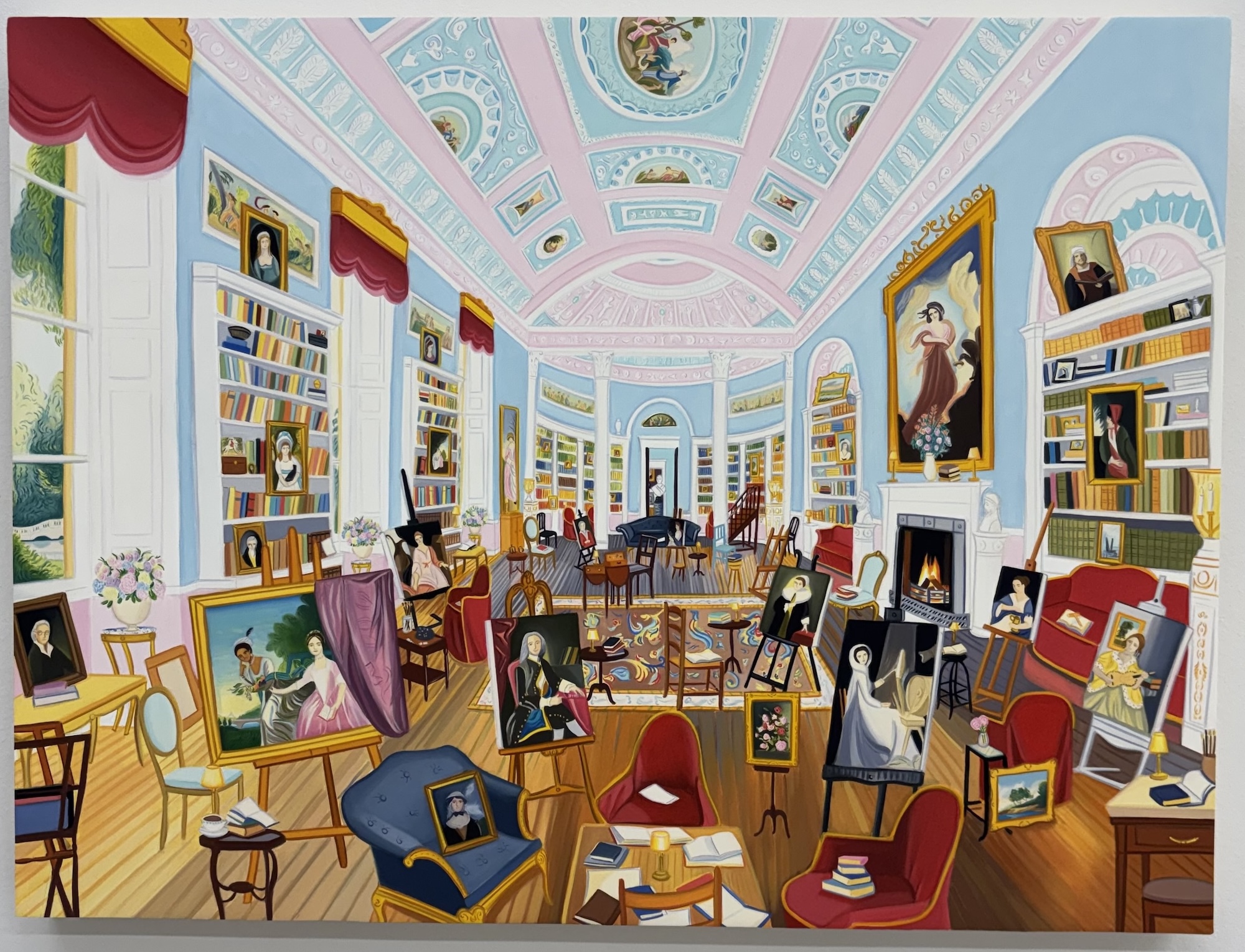
These fantastical convergences of art history and interior architecture are perhaps most evident in pieces such as "A French Cafe with Paintings," created in 2026 using oil and acrylic on panel. In this work, a classic Beaux-Arts interior is playfully transformed into an ad hoc gallery space where myriad world-famous masterpieces are casually strewn about, defying chronological and institutional logic. Gustav Klimt’s iconic masterpiece "The Kiss," painted between 1908 and 1909, leans haphazardly to the right against a richly decorated wall, while Henri Toulouse-Lautrec’s famous 1892-95 post-Impressionist scene "At the Moulin Rouge" sits nearby. By mixing high-culture milestones into domestic or commercial fantasy settings, Scherer creates a dialogue across centuries, inviting viewers to reconsider how art is displayed, consumed, and integrated into our living environments.
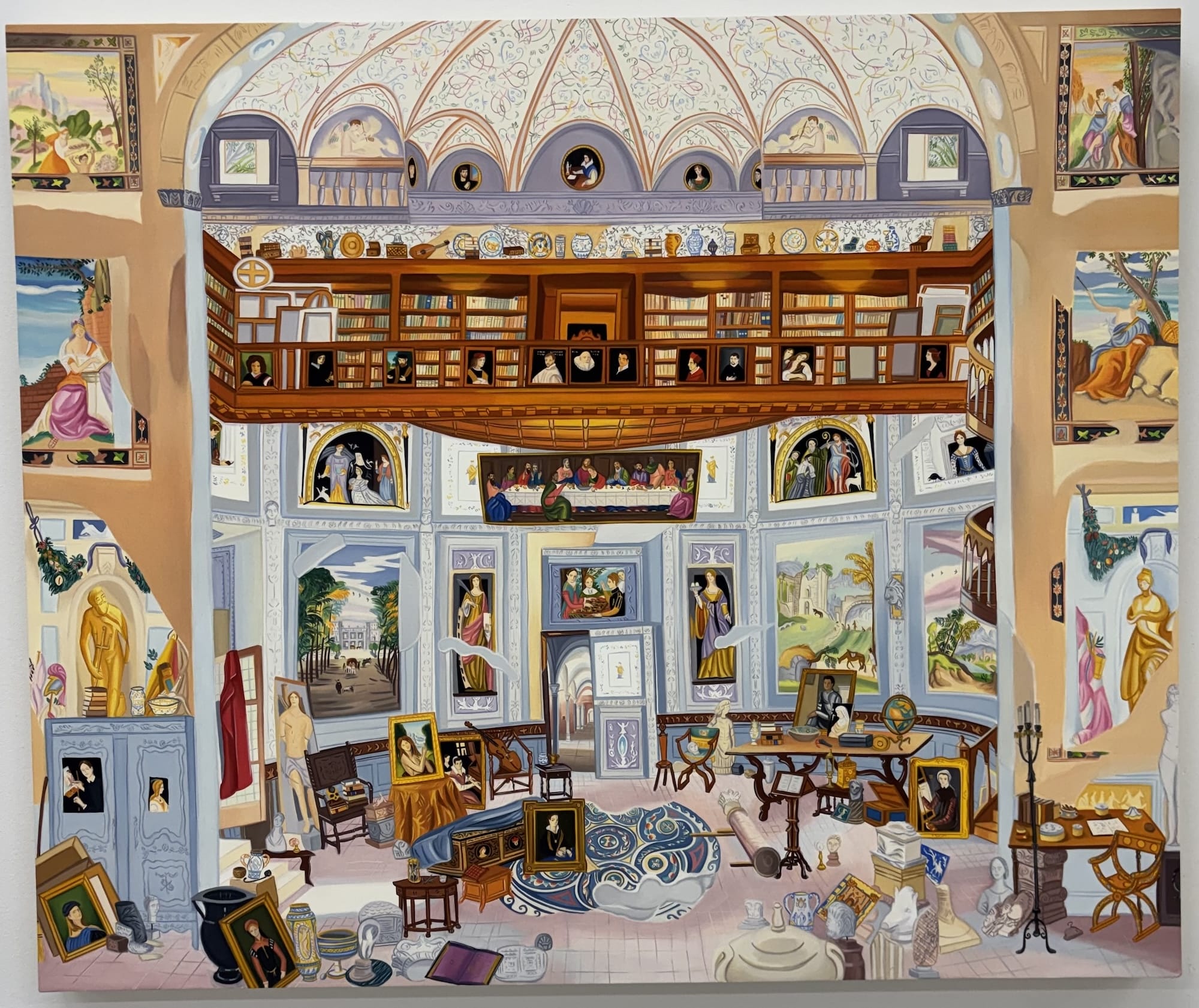
Working primarily in oil, Scherer’s deliberate choice of media pays direct homage to the traditional materials used to create many of the historical masterworks she playfully incorporates into her compositions. This material continuity is especially poignant in the contemporary moment. As society increasingly contends with an endless barrage of digital information, algorithmic feeds, and the rapid rise of generative artificial intelligence, the artist inundates her audience instead with the purely analog, deeply tactile, and meticulously handmade. Her paintings prompt a quiet, lingering philosophical question: in another one hundred years, what will humanity have produced in our current era that merits the same kind of awe, preservation, and deep cultural respect that we afford to these earlier creative achievements?
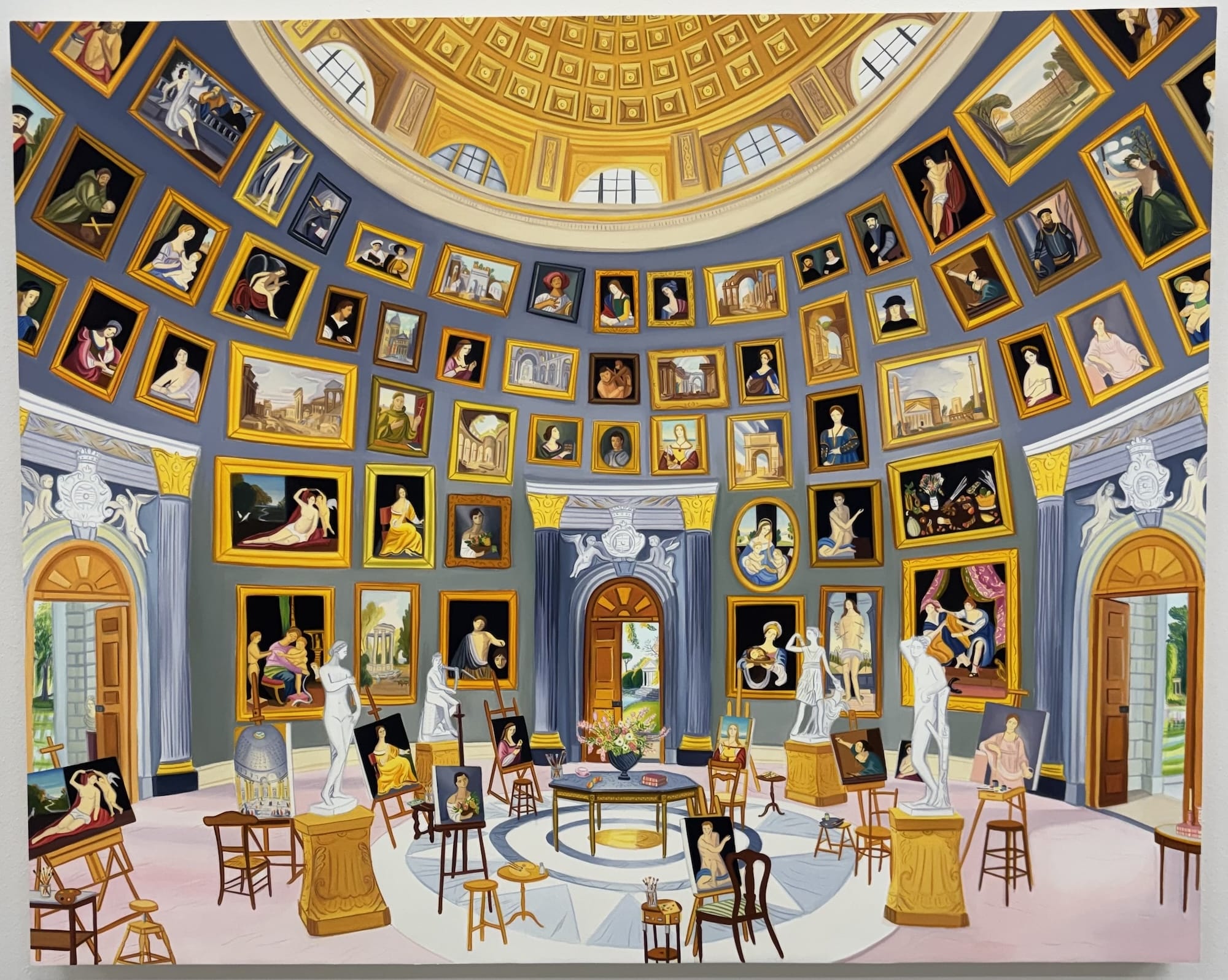
The exhibition In Time opens today and continues its run through January 9 in New York, offering local art enthusiasts a chance to immerse themselves in Scherer’s detailed, multilayered worlds. Those unable to visit the gallery in person can explore additional examples of her intricate painting practice through her official Instagram account. Alongside "A French Cafe with Paintings," the exhibition features a striking array of works on panel that further demonstrate her meticulous technique and architectural scope. Among these is "A Secret Room, Beneath the Ambrosiana Library" (2025), a 30-by-36-inch oil and acrylic piece that captures the shadowed grandeur of palatial, aristocratic spaces. Other notable works include "Kenwood House, Library" (2026), "A Sepulcher Chamber with Paintings, Rome" (2026), and the intimate "Wilanow Palace, Painting Room" (2026). Additionally, pieces like "The National Gallery at Night" (2026) and "Petit Trianon, Reception Room" (2026) continue her exploration of light, shadow, and dense artistic accumulation, rounding out a cohesive and transportive collection that bridges historical reverence with contemporary contemplation.