Hit hard by Donald Trump’s policies, Maine should theoretically be a guaranteed midterm victory for the Democrats. Yet, as the state approaches next week’s crucial US midterm elections, the political reality on the ground proves far more complicated. Democrats may find that they need much more than a grassroots challenger in faded denim to disrupt the final two years of the Trump administration, especially in a state known for its fierce political independence.
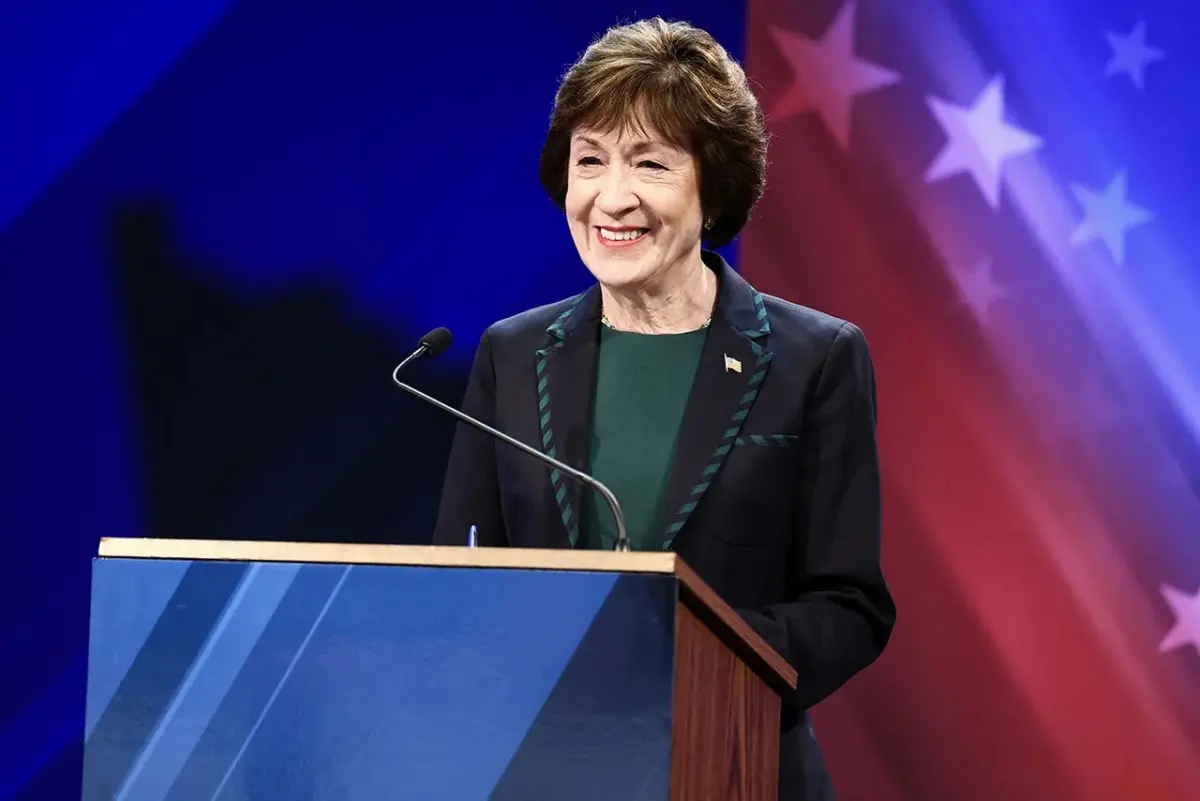
With the national electoral landscape dominated by rising economic anxieties and intense partisan battles, Republican Senator Susan Collins and Donald Trump are locked in an intriguing, high-stakes political dance. Collins frequently and openly criticizes the president’s policy decisions, while Trump responds with targeted measures designed to help her secure re-election. For a national leader who famously demands absolute personal loyalty and frequently punishes any form of dissent from within his own party, Trump displays a surprising and calculated tolerance for criticism from the 73-year-old, five-term senator.
Maine itself is a unique case study in American politics. While it is solidly blue at the presidential level—having last voted for a Republican president when George H.W. Bush carried the state in 1988, and currently represented in the House by two Democrats—its senatorial representation tells a different story. Maine’s two Senate seats are held by an Independent who caucuses with the Democrats and by Collins, who has occupied her seat since 1997. Over nearly three decades in Congress, Collins has accumulated immense institutional influence, most notably holding a seat on the powerful Senate Appropriations Committee, which oversees federal spending and resource allocation. As the Democratic Party orchestrates a nationwide push to flip at least four Senate seats in order to regain control of the upper chamber, Maine is rightfully hosting one of the most closely watched and fiercely contested races of the election cycle.
According to conventional political wisdom, the plummeting approval ratings of the Trump administration—exacerbated by an unpopular war with Iran that has steadily hiked the cost of living—should spell disaster for Republicans, leading to a sweeping rout in the midterms. However, in communities like Jackman, situated far to the north along the Canadian border, Mainers offer a distinct word of caution to analysts relying entirely on national polling trends. Predominantly a logging town, Jackman has fallen on hard times as the regional timber industry has suffered successive setbacks over the years. These long-standing economic pressures have now been severely compounded by international trade tariffs and the soaring cost of diesel fuel.
"We don’t really fall for smoke and mirrors up here," observes chef Jason Shaw, who works at one of only a handful of restaurants still operating in the struggling community. "We’re probably in the hardest economic area that there is, so we read the bottom line. We don’t really get caught up in the big political mess."
In theory, working-class voters like Shaw should be holding the Republican Party directly responsible for their ongoing economic woes and flocking in droves to Collins’s Democratic challenger, Troy Jackson. A fifth-generation logger hailing from Allagash—a similarly remote rural community nestled close to the Maine-Quebec border—Jackson carefully cultivates his image as the quintessential working-class Mainer. On the campaign trail, he cuts a distinct figure, wearing worn-out denim and faded baseball caps while speaking in a thick northern Maine accent about the hardships of his hardscrabble childhood.
Given these dynamics, it would be easy to assume that Jackson has a clear path to victory. This assumption is further reinforced by the fact that Trump’s trade war with Canada disproportionately impacts northern US states that share a border with the country. Mainers who work in key foundational industries, such as commercial logging and coastal fishing, are currently struggling simply to stay afloat amid skyrocketing operational expenses. The cost of diesel fuel, for instance, has risen by approximately 75 per cent since the outbreak of the conflict involving Iran. Additionally, aggressive Immigration and Customs Enforcement (ICE) operations within the state have proven deeply unpopular, drawing widespread public backlash following an incident in July where a Colombian man was killed by an ICE officer.
Despite these severe headwinds, Susan Collins possesses a formidable track record of defying national trends and winning tough political campaigns. From the dense logging forests of the interior to the lobster fishing piers dotted along the rugged coast, there are very few local industries in Maine that have not directly benefited from her legislative interventions and federal advocacy over the years.
"They can point fingers all they want, but she’s got a 30-year record and the most votes ever in a row by a senator—just go with that alone," says Rick Moody, a local lobster boat captain who points to her deep roots in the state.
Troy Jackson’s campaign has consistently struggled to undercut the enduring voter perception of Collins as a pragmatic, centrist, and bipartisan politician who tirelessly champions Mainers’ best interests in Washington. Nevertheless, Jackson’s supporters frequently point to a single statistic to challenge her moderate branding: 96 per cent, which represents the frequency with which Collins has voted in alignment with Donald Trump’s legislative agenda.
In response, Collins has continually fought back, using recent televised debates to voice public criticism of everything from the administration’s war with Iran to the controversial ICE enforcement operations inside the state. Recognizing the critical importance of the Maine Senate seat to the broader balance of power in Washington, Trump has avoided his usual public grievances and instead responded pragmatically, announcing plans to lift specific tariffs on select Canadian goods. Republicans across the board are mobilizing every possible resource to push Collins across the finish line and ensure the seat remains out of Democratic hands.
With just a week remaining before election day, final pre-election polls show the two candidates locked in a dead heat. While some surveys give Jackson a remarkably slim lead, veteran political observers recall the exact same narrative from 2020, when Collins was consistently trailing in public polls. Ultimately, while Joe Biden carried Maine by a comfortable nine percentage points that year, Collins went on to defeat her Democratic challenger by that exact same nine-point margin. Mainers have a long history of independent voting behavior and may still hold a few political surprises, proving that Democrats who take a victory in the state for granted do so at their own peril.