Ever since childhood, aspiring artists have had a familiar adage drilled into their minds: practice makes perfect. For generations working in traditional mediums, that philosophy held an undeniable truth. When working with paint, ink, or charcoal without the luxury of a "command-z" shortcut, rote repetition and endless sketching were the only paths to mastering muscle memory and refining line work.
However, professional digital illustrator Dave Arcade argues that this traditional wisdom no longer holds an absolute monopoly on artistic growth, particularly in the modern digital age. In a recent commentary detailing his alternative workflow, Arcade challenges the fundamental assumption that artists must constantly practice drawing to elevate their craft. Instead, he suggests that contemporary creators can achieve higher-level execution by shifting their focus away from endless sketching and toward conceptual ideation, technical tooling, and strategic planning.
The argument arrives at a time when modern illustrators face unprecedented demands on their time. Between managing social media platforms, handling client communications, and spinning the various operational plates required to survive in the competitive freelance marketplace, contemporary artists rarely enjoy the luxury of endless hours devoted purely to sketching practice. Arcade contends that rather than viewing these time constraints as a disadvantage, digital artists should leverage the sophisticated tools available to them—and rely more heavily on the underutilized power of the human brain.
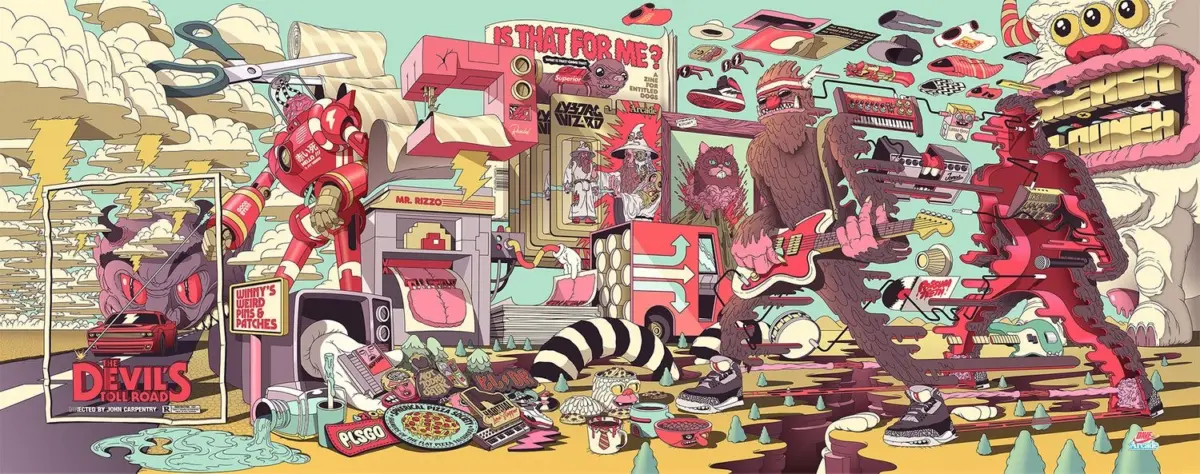
This perspective might sound paradoxical to traditionalists, but Arcade points to his own commercial body of work as proof that the concept yields tangible results. While he spends plenty of time on personal projects, he rarely spends that time sketching. Instead, he focuses his creative energy on executing finished digital pieces, beginning not with the physical muscle memory of his drawing hand, but with the cognitive practice of generating and organizing ideas.
According to Arcade, illustrations improve significantly when creators spend more time upfront ideating through a rough concept rather than rushing through the drawing phase just to build drawing speed. While jotting down a rough idea takes mere seconds, developing that idea visually can consume hours. By prioritizing ideas first and sketching second, artists can streamline their workflow. This often involves taking a full day or two to type out concepts, review visual references, and curate mood boards before ever touching a drawing tool.
Another foundational element of Arcade’s methodology involves establishing concrete technical parameters early in the process. He emphasizes the importance of securing exact specifications—such as aspect ratios, pixel density, and overall document dimensions—directly from producers or project directors before attempting any composition. Understanding the precise boundaries of the digital frame allows an artist to plan their visual space effectively from the outset.

To navigate spatial planning without relying on raw drawing practice, Arcade advocates for the integration of technical aids like perspective grids, describing them as an artist’s crystal ball. By establishing a clear sense of three-dimensional space first, creators can more easily map out where their conceptual ideas belong.
Furthermore, Arcade addresses the long-standing industry stigma surrounding reference materials and digital assistance. He firmly defends the use of visual references, reminding creators that looking at real-world subjects is a completely legitimate practice, distinct from plagiarism. He also offers a pragmatic stance on digital tracing tools, drawing a sharp line between copying another artist’s unique style and utilizing digital assets to overcome notoriously difficult drawing challenges. Whether employing 3D models to scale and rotate complex architectural perspectives or manipulating digital mannequins to master tricky human anatomy like hands and feet, Arcade argues that leveraging modern software tools is a smart way to bypass repetitive frustration.
This philosophy extends to software and hardware selection. Arcade warns against wasting valuable creative time manually executing repetitive tasks within a single program when alternative applications might offer more efficient solutions. Utilizing specialized vector tools for clean curves before transferring assets into a painting program, for example, prevents hours of tedious fine-tuning. Similarly, choosing the right physical gear—whether deciding between a mobile tablet or a large desktop display—should be driven by what best supports an artist’s personal process and final execution.
While Arcade’s approach champions a reduction in traditional sketching, he does not advocate abandoning the sketchbook entirely. Rather, sketching remains a crucial diagnostic tool reserved for moments when a specific part of a composition fails to cohere. In those instances, he recommends pausing, returning to brief planning and rapid ideation, and then returning to the digital tools necessary to finish the piece cleanly without falling into the trap of endless, unproductive tweaking.
Ultimately, Arcade’s perspective offers a liberating alternative for digital creators who find traditional sketching tedious or misaligned with their workflow. By shifting time away from redundant practice and reinvesting it in conceptual planning, strategic tooling, and technical problem-solving, freelance illustrators can make their creative hours more predictable, productive, and ultimately impactful.