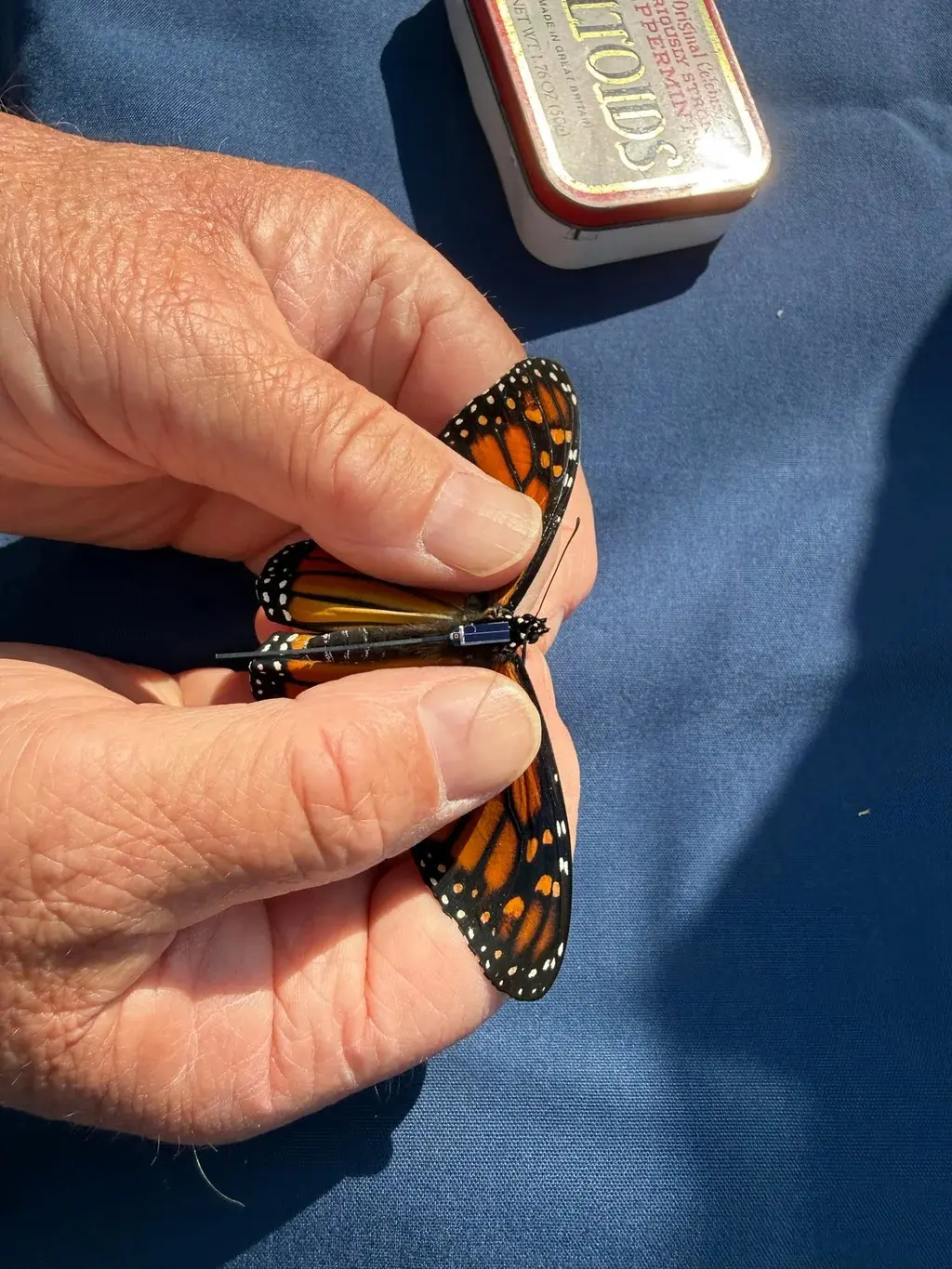
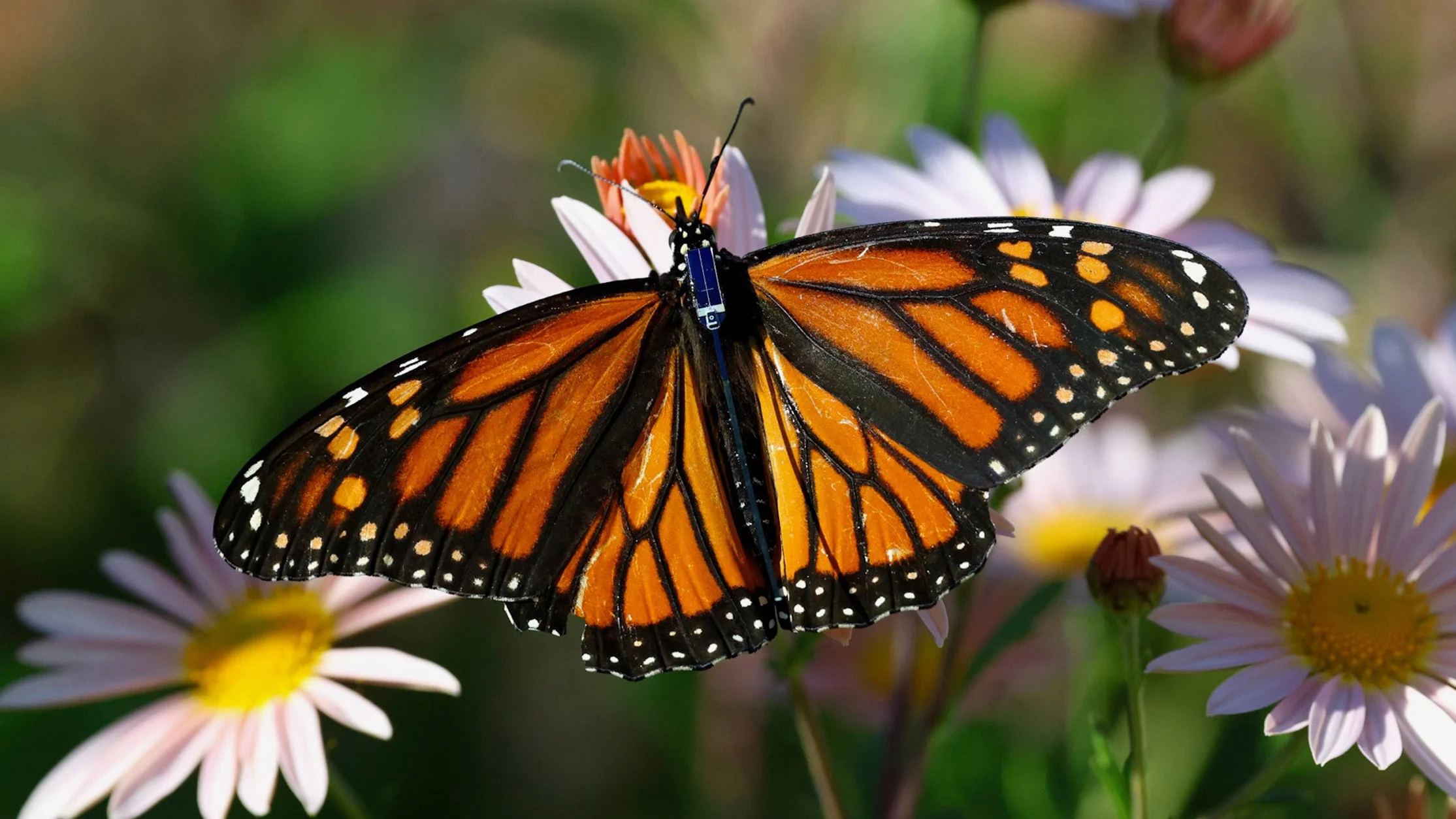
To solve this puzzle and build a device tiny and light enough for a monarch butterfly, designers and engineers had to push the boundaries of modern manufacturing to create what is now recognized as the smallest wildlife tracking device on the planet. Developed by New Jersey-based Cellular Tracking Technologies (CTT), a tiny transmitter engineered specifically for butterflies has been officially named the BlëMorphous. Measuring just three and a half centimeters, or about 1.4 inches, in total length, the device weighs roughly as much as a single grain of rice and, crucially, operates entirely without a battery.
Cellular Tracking Technologies has built a strong reputation in the field of wildlife telemetry, manufacturing sophisticated devices designed to track the movements and migration patterns of wild animals across various ecosystems. However, the journey toward creating the BlëMorphous required a complete rethinking of how such technology is produced. After bringing its manufacturing operations entirely in-house during the disruptions of the COVID-19 pandemic, the company gained the unique capability to fabricate minuscule, highly specialized parts on its own, bypassing the limitations of external suppliers and traditional manufacturing processes.
David La Puma, CTT’s vice president of global market development, explains that the company has operated as a dedicated telemetry firm since 2007, working primarily with birds where minimizing weight is always an absolute priority. Yet, designing a tracking instrument specifically tailored to the fragile weight class of a butterfly presented an unprecedented engineering challenge. According to La Puma, designing for a butterfly’s weight was an extreme constraint that required significant financial and intellectual investment, ultimately demanding the complete reinvention of traditional electronic components to achieve a functional product.
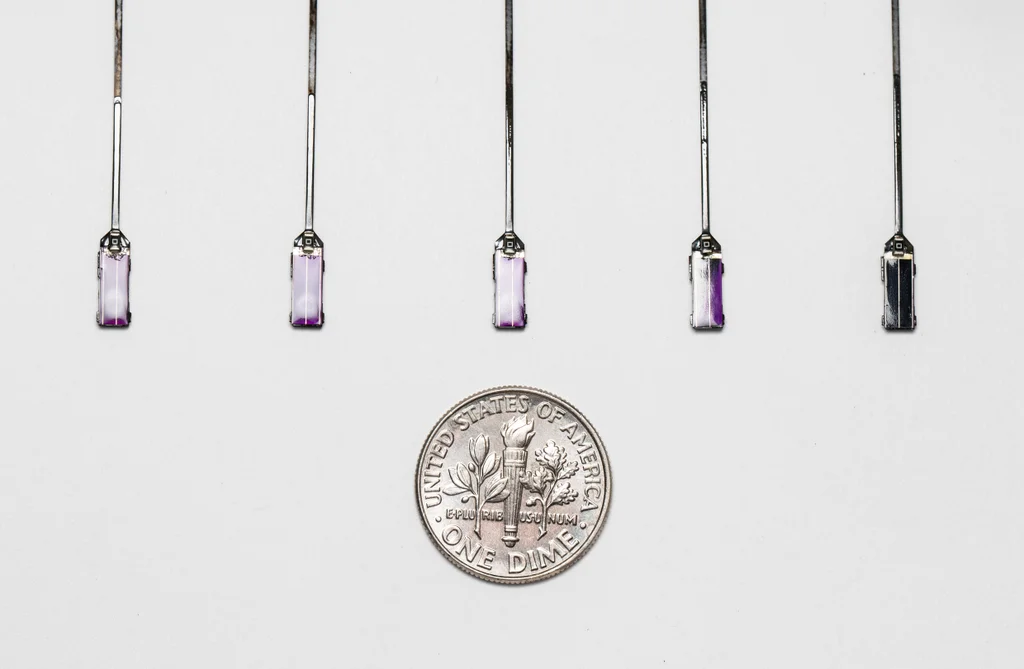
In conventional wildlife telemetry, power supply remains one of the heaviest and most cumbersome components. Batteries add bulk, weight, and operational limits that simply cannot be sustained by an insect that weighs less than a gram. To overcome this hurdle, the BlëMorphous completely discards the traditional battery model. Instead, the tracker relies on an exceptionally tiny solar panel located at the very top of the transmitter. This solar panel is so remarkably small that it measures less than the torch emblem located on the back of a standard dime.
The vast majority of the device consists of a remarkably skinny antenna that runs gracefully down the body of the insect model, maintaining an aerodynamic profile that avoids disrupting flight dynamics while continuously transmitting vital information to fixed receiver stations scattered across the landscape. By harnessing ambient sunlight to power its transmissions, the device bypasses the heavy constraints of chemical batteries while maintaining a functional operational lifespan capable of supporting ongoing scientific research.
The practical deployment of these micro-trackers represents a monumental leap forward for ecological research and conservation initiatives. In the spring of 2025, a milestone initiative saw 30 butterflies equipped with the BlëMorphous released from Ontario, Canada, by Environment and Climate Change Canada. This release was conducted to monitor their arduous migration journey southward as part of a broader, highly coordinated research collaboration known as Project Monarch.
The scale of this tracking effort has expanded dramatically over a remarkably short period. While more than 400 butterflies were successfully tagged and tracked during the fall season prior to the major rollout, that number grew rapidly to approximately 1,500 individuals this year. Organizers and researchers have set an ambitious goal to surpass more than 2,000 tagged butterflies following additional tagging operations planned over the winter months. Gaining these granular, real-time insights has become increasingly urgent at a critical historical moment when butterfly populations are experiencing sharp declines driven by mounting environmental threats, including widespread habitat loss and the escalating impacts of climate change.
Conservationists and researchers at institutions such as the Vermont Center for Ecostudies are actively utilizing these advanced trackers to answer long-standing scientific questions about monarch migration dynamics. Specifically, the technology allows researchers to determine precisely how many Vermont monarchs successfully complete the grueling journey south to their overwintering grounds in Mexico. Furthermore, if individual butterflies fail to make the journey, the trackers help scientists identify where the critical threats, ecological barriers, and geographic bottlenecks are located along their traditional migratory routes.
Beyond mapping migration corridors and mortality points, researchers are also employing the trackers to evaluate life-history strategies and survival probabilities. Specifically, the data gathered by the BlëMorphous is helping conservationists determine whether monarch butterflies possess a significantly higher statistical chance of survival if they initiate their southward migration earlier in the calendar year. As these datasets continue to grow and mature, conservation scientists hope to utilize the unprecedented clarity provided by the world’s smallest wildlife tracker to shape effective policy, protect vital stopover habitats, and secure a sustainable future for one of nature’s most iconic migratory species.