Few chief executive officers in modern corporate history have cultivated as distinct, carefully curated, and widely recognized a public image as Jensen Huang, the co-founder and longtime leader of Nvidia. For years, Huang’s personal brand stood as a masterclass in modern executive positioning. There were the signature black leather jackets worn across countless keynotes and product launches, the viral social media cameos capturing his genuine enthusiasm for local street food, and the theatrical, boundless optimism about an artificial intelligence-driven future powered in large part by the specialized microchips manufactured by his company.
For a remarkably long time, Huang’s personal brand was extraordinarily effective and winning, helping transform both his public standing and his company’s market footprint. But now, the sudden and stunning revelation of a sprawling scandal has thrown the 63-year-old executive’s reputation into an irreversible tailspin, ultimately costing him his job as he was forced to resign under intense pressure from Nvidia’s board of directors. The central crisis revolves around an extramarital affair with a woman alleged to be a Chinese spy, alongside another separate affair with a direct subordinate within the company. In a cruel twist of corporate irony, the very potent, larger-than-life personal brand that Huang spent years constructing may well have worked directly against him, magnifying the fallout and accelerating his dramatic downfall.
Huang is far from the first high-profile business figure to aggressively cultivate a larger-than-life public image, only to watch that carefully constructed aura crash violently back to reality when confronted with professional or personal crises. The modern technology sector, in particular, has a long history of elevating charismatic leaders to mythical proportions. Elon Musk famously rode a quirky, eccentric mad-genius persona all the way to hosting Saturday Night Live in 2021, though his contemporary public reputation remains deeply polarized and mixed. Elizabeth Holmes once graced countless magazine covers as a revolutionary healthcare innovator, instantly recognizable by her trademark black turtleneck and manufactured husky voice; today, she serves a federal prison sentence for massive fraud.
The ongoing artificial intelligence boom appears uniquely fueled by these kinds of outsized, theatrical characters. Figures such as OpenAI chief Sam Altman and Anthropic leader Dario Amodei have already seen their own demigod-like industry status challenged and undermined by shifting public perceptions, regulatory scrutiny, and corporate governance pressures. Yet, among all these contemporary tech narratives, the specific arc of the brand known as Jensen Huang stands out as uniquely dramatic.
Just a few short years ago, Huang’s public profile was remarkably modest, far removed from the global adoration and intense scrutiny he would eventually face. Born in Taiwan, Huang was sent away by his family to a boarding school in the United States at the tender age of nine. He subsequently pursued a career in Silicon Valley as a traditional chip designer before taking the entrepreneurial leap to co-ordinate and co-found Nvidia in 1993. For decades, the company operated primarily as a specialized powerhouse for high-end computer graphics and gaming hardware, remaining relatively obscure to the general public while retaining immense respect within engineering circles.
It was only in the past couple of years, as the generative artificial intelligence boom took off with unprecedented speed, that Nvidia’s industry-leading graphics processing units became universally coveted across nearly every sector of the global economy. This sudden, explosive demand turned Nvidia into a household name overnight—and thrust Jensen Huang directly into the center of the global public sphere as an icon of the modern technological age.
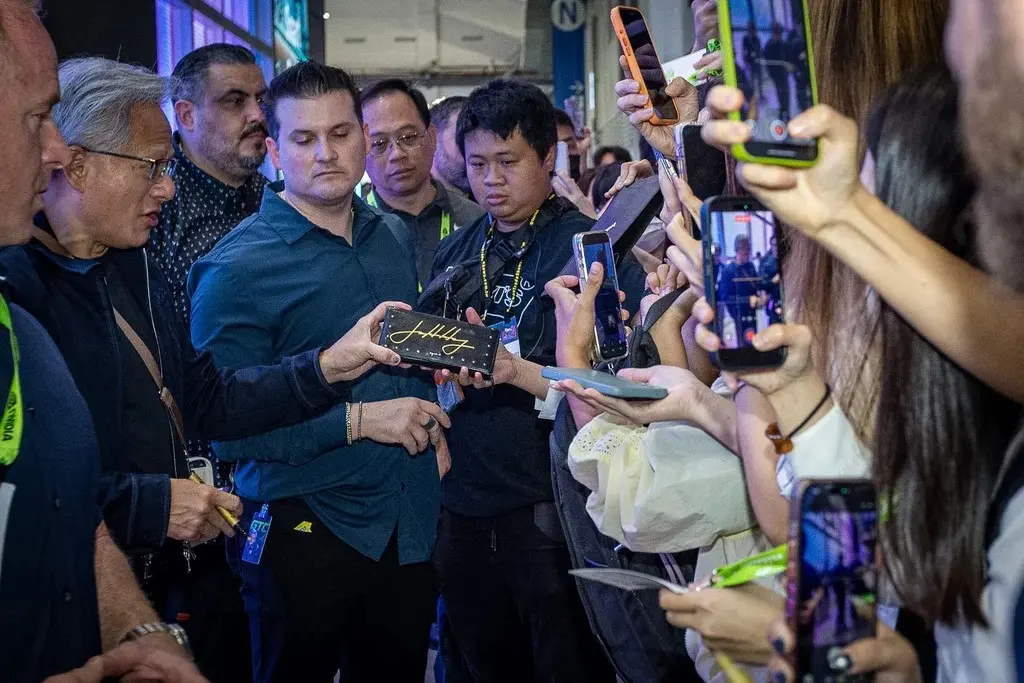
Despite crafting a narrative around relatable, down-to-earth attributes such as tireless hard work, operational resilience, and an admitted, persistent fear of failure, Huang evolved into a profoundly powerful and influential presence in the broader societal and economic debate surrounding artificial intelligence. While he frequently leaned into a regular-guy persona, demonstrating a genuine taste for local street food and happily mingling with everyday fans and admirers, his reception abroad reached astonishing heights. In Taiwan, in particular, Huang was frequently treated less like a traditional corporate executive and more like a pop star, routinely mobbed by enthusiastic crowds seeking autographs, handshakes, and selfies.
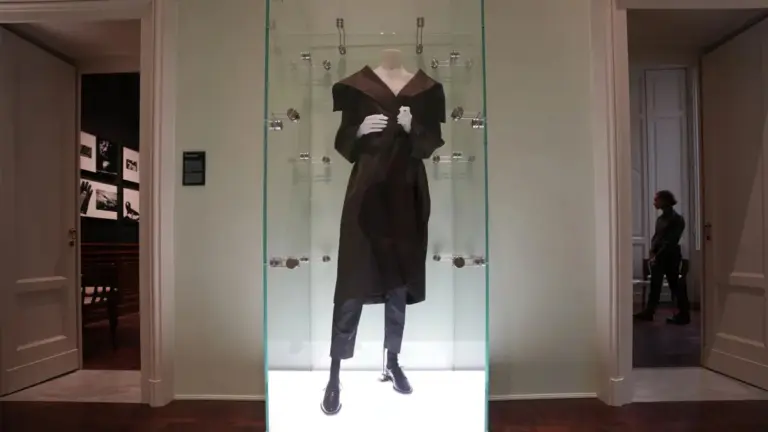
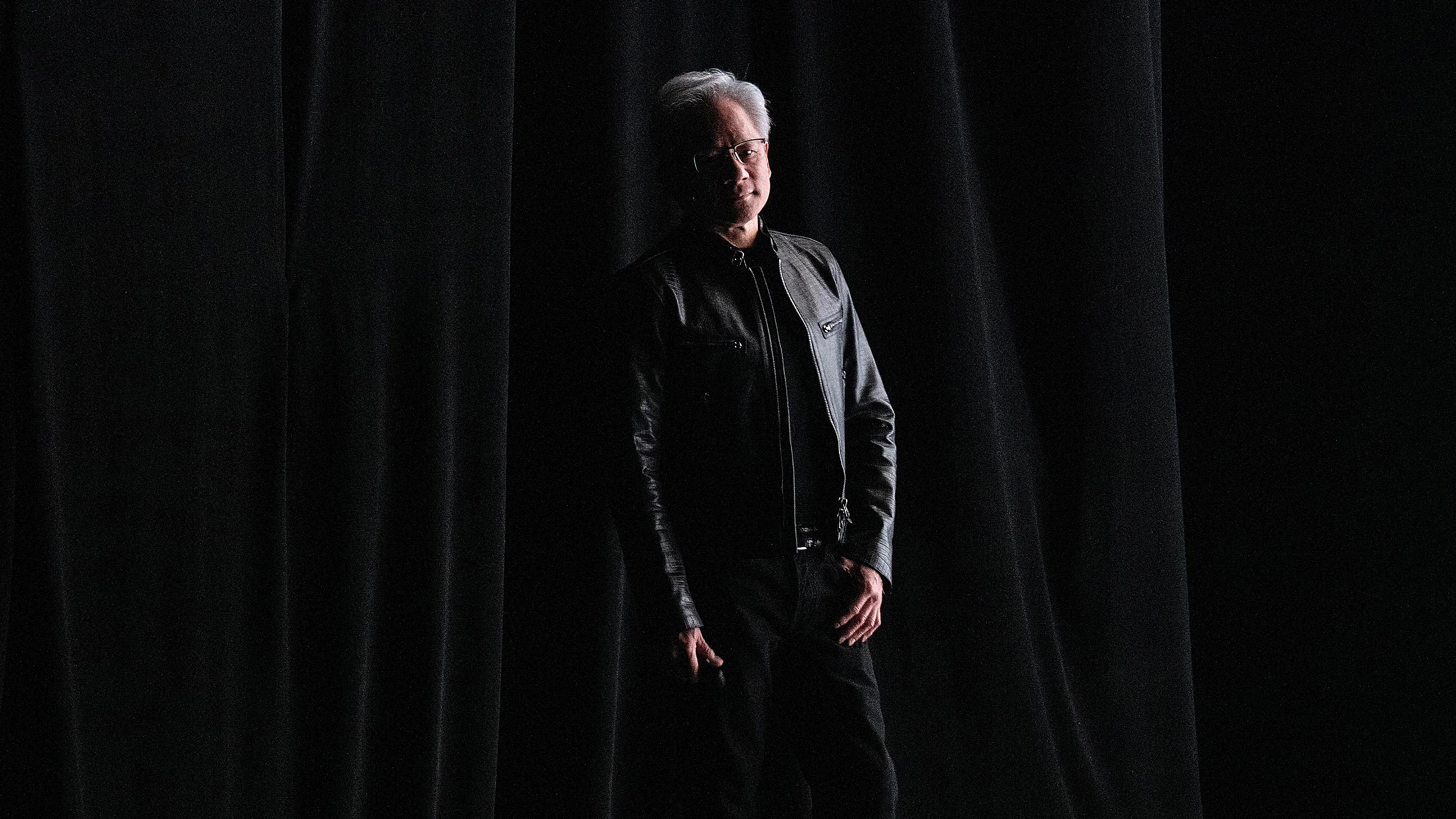
Central to this carefully constructed persona were the leather jackets that became his ubiquitous calling card. Huang reportedly wore a signature black leather jacket and simple T-shirt to public events and keynotes for more than a decade, eventually accumulating a collection of at least 30 identical or similar garments. The cult of the jacket reached a surreal crescendo in July when a bespoke "Jensen Jacket"—designed by Tom Ford, personally worn by Huang, and bearing his signature—was put up for sale through Sotheby’s auction house. To the astonishment of market observers, the item fetched a staggering $960,000 at auction, vastly outperforming its initial pre-sale estimate of $40,000 to $60,000.
The official Sotheby’s catalog entry for the high-profile auction described the garment in reverent terms, calling it an iconic piece of apparel associated directly with some of the most consequential moments in modern technology history. Highlighting Huang’s habit of wearing the exact same style of jacket during major product launches and casual street-corner meals alike, the auction house declared that the piece was far more than a simple article of clothing. Instead, they framed it as the official uniform of a visionary first believer—a tangible symbol of a leadership style that supposedly embodied authenticity, ingenuity, persistence, courage, and joy, while serving as a broader cultural touchstone for the cutting-edge vision driving the global AI revolution. Today, with Huang forced from office by his own board in the wake of cascading security and personnel scandals, that once-revered uniform serves as a stark reminder of how quickly an executive’s manufactured mythology can collapse under the weight of reality.