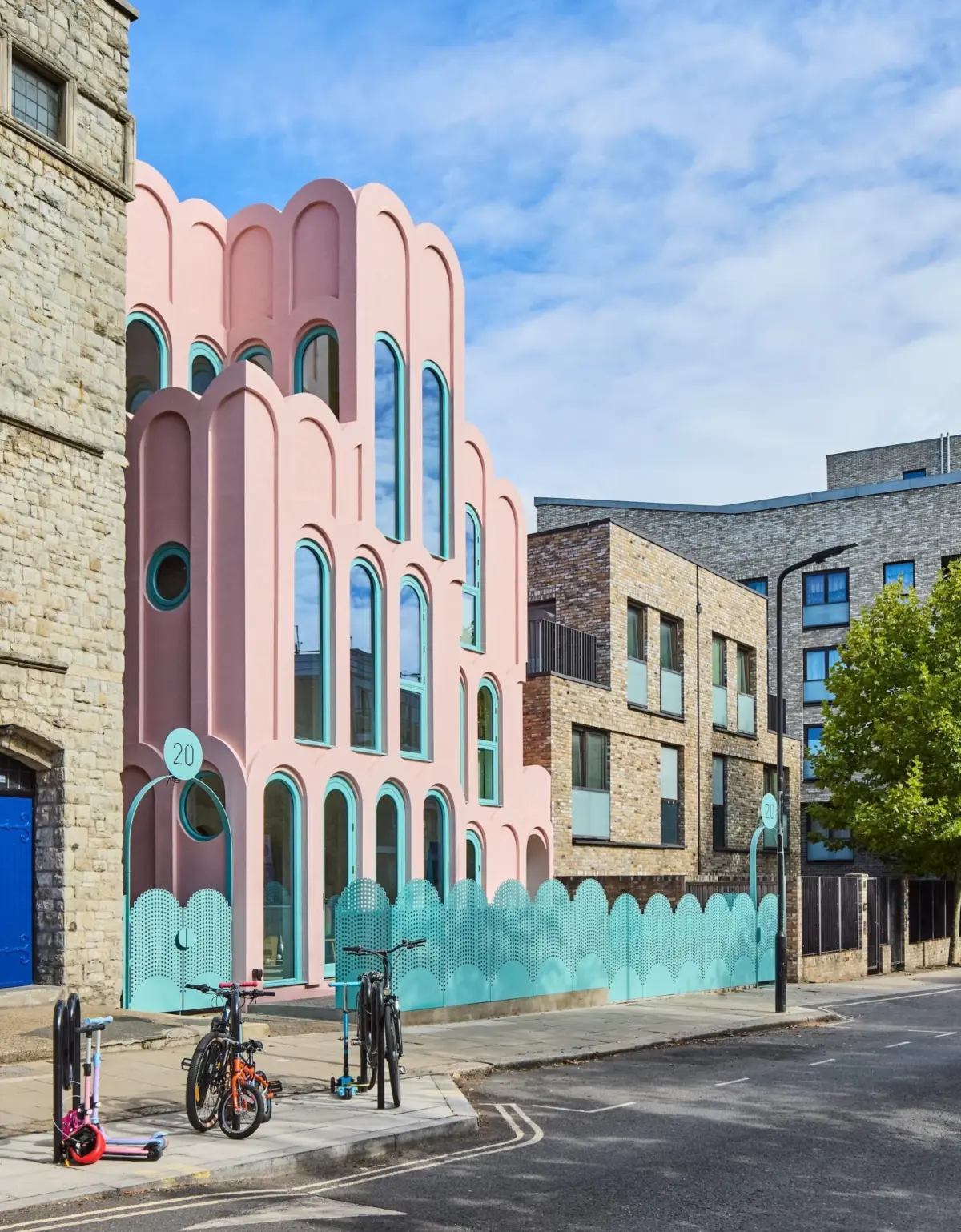
In the diverse and historically rich neighborhood of Gospel Oak in Camden, northwest London, a striking new architectural landmark has materialized. Known as "The Cloud House," this confectionery of soft curves, rhythmic arches, and pastel hues stands as a testament to imaginative urban design and an unusual, collaborative approach to residential ownership. Conceived by Peter Morris Architects, the project spans two side-by-side townhomes that practically seem to bubble up from their foundations, bringing a playful yet sophisticated burst of color and geometry to the London streetscape.
The realization of The Cloud House is as much a story of community consensus as it is of design innovation. The project is jointly held through a unique collaborative ownership model: one half of the dual townhome is occupied by the architect himself alongside his partner, Emily, while the adjacent half is owned by an independent resident. Rather than resisting a bold architectural statement, the neighboring co-owner fully embraced the stylistic potential of the venture, agreeing upfront to a unified exterior design and sharing the same construction contractor to bring the cohesive vision to life.
Ten years in the making, the decade-long journey to completion reflects the meticulous planning and careful execution required to bring such a distinct structure into an established urban environment. Morris conceived the design as a direct and lighthearted response to the eclectic, historically varied architecture of the surrounding neighborhood. Gospel Oak is already home to a rich tapestry of built forms, notably featuring the quirky, ornate Victorian architecture of St. Martin’s Church directly across the street, as well as a neighboring school whose imposing stone exterior mimics the features of a medieval castle.
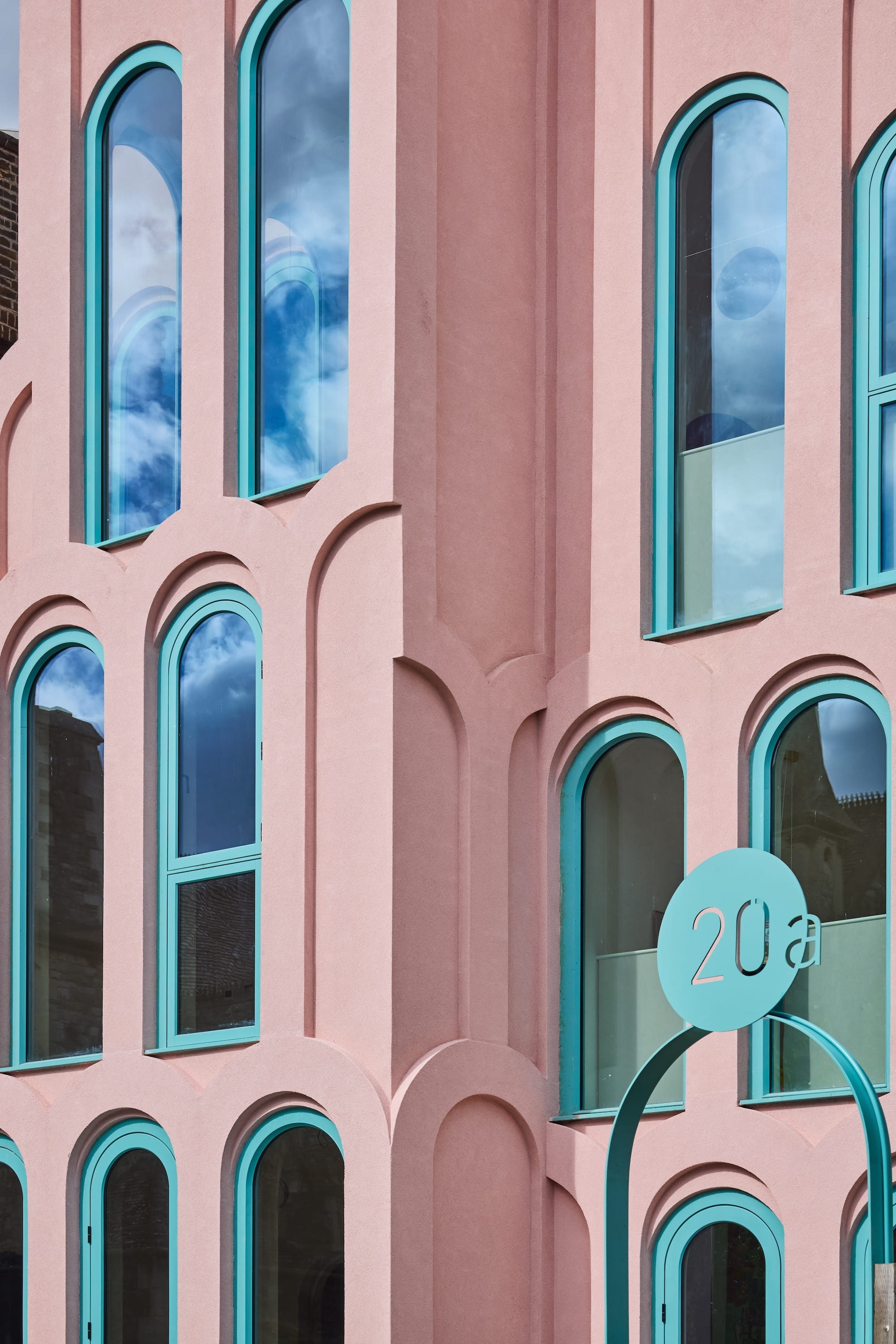
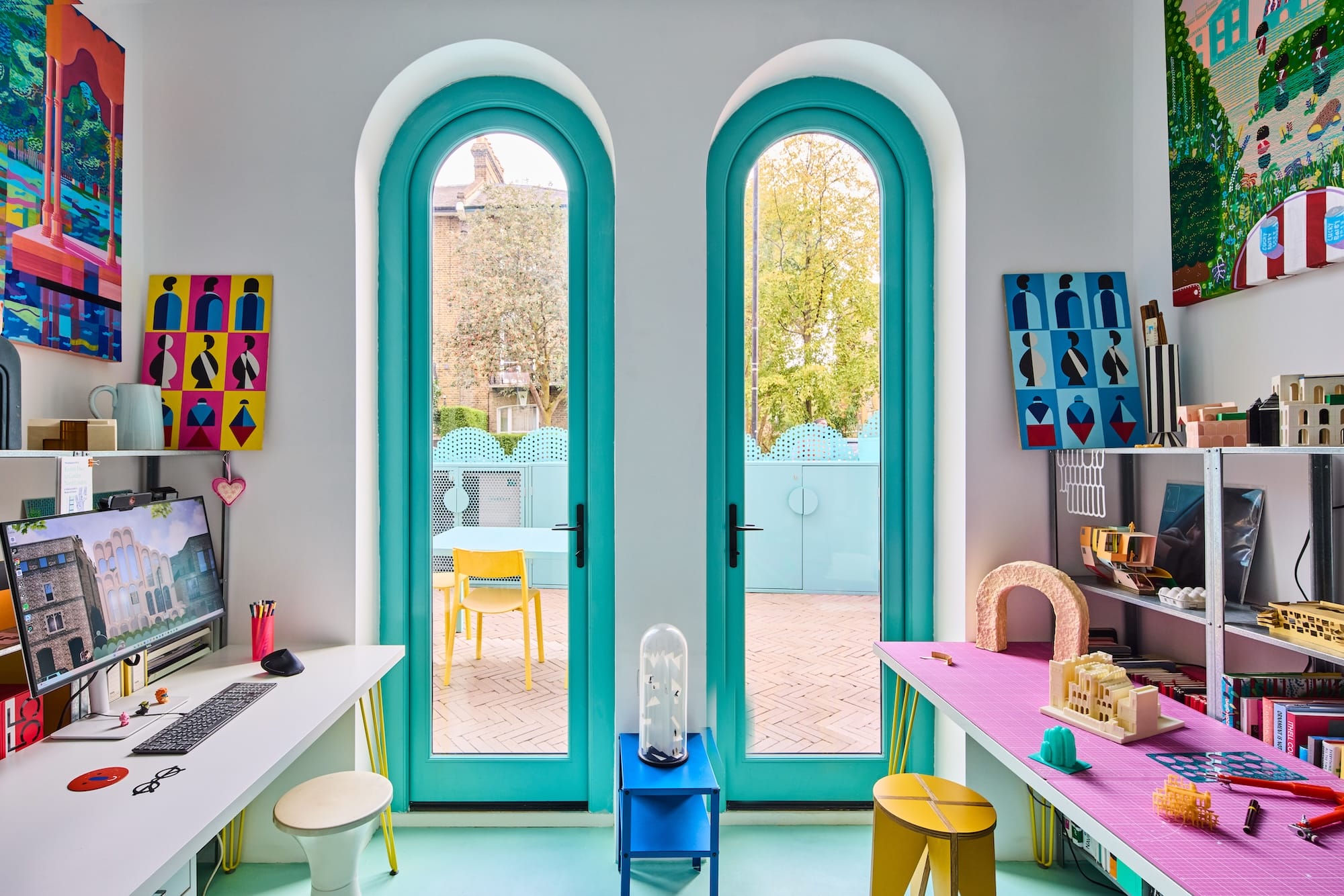
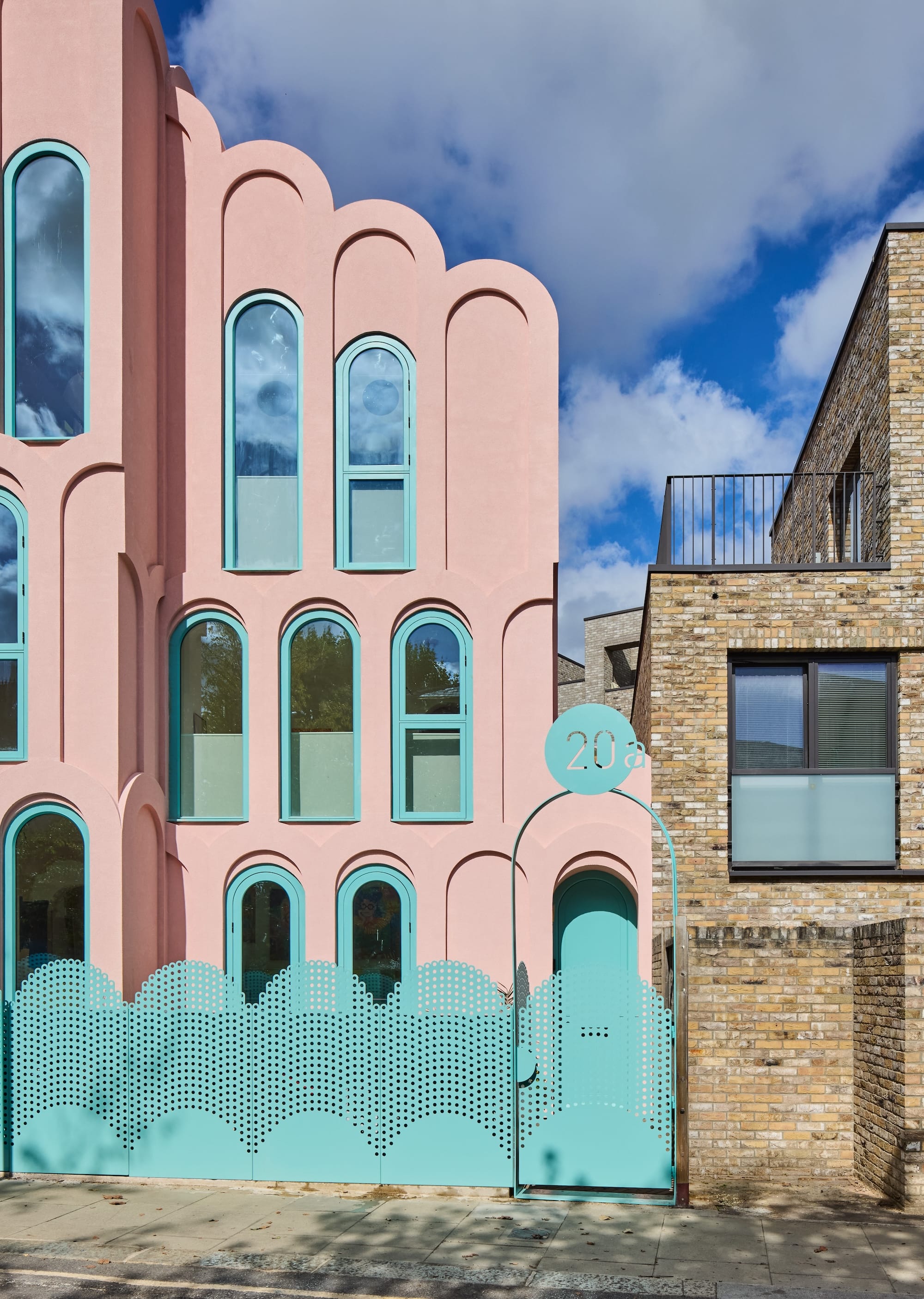
Rather than clashing with these heavy historical references or retreating into anonymous modern minimalism, The Cloud House engages in a lively architectural dialogue with its surroundings. Morris introduced a bright, whimsical palette characterized by warm pink walls contrasted sharply against robin’s egg-blue window frames and matching doors. The most defining exterior feature, however, is the undulating roofline and repetitive facade details. Using arched elements in relief crafted from a dense, recyclable polystyrene material, the architects successfully mirrored the grand structural arches of St. Martin’s Church, translating ecclesiastical grandeur into a domestic, human-scaled residential context.
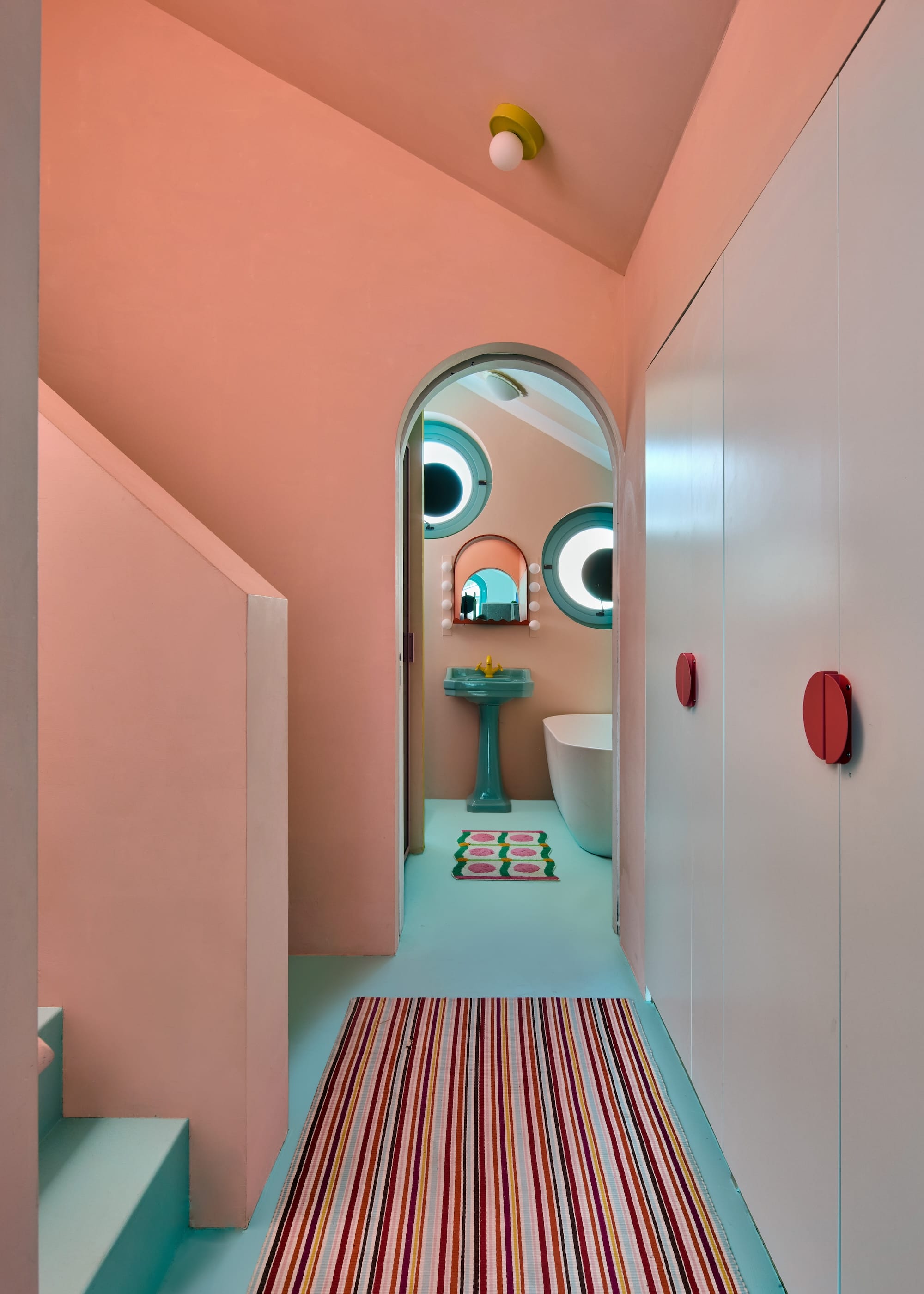
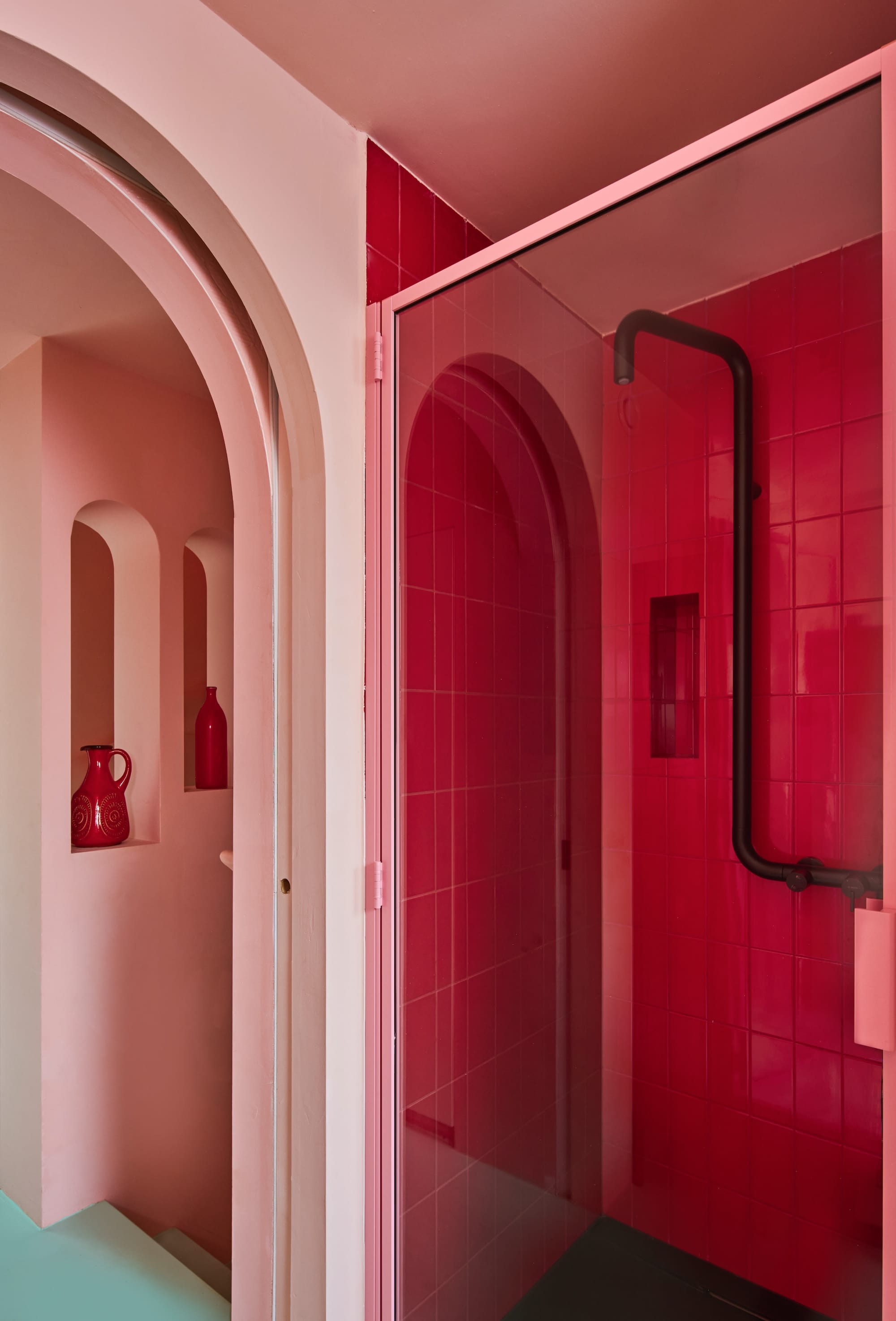
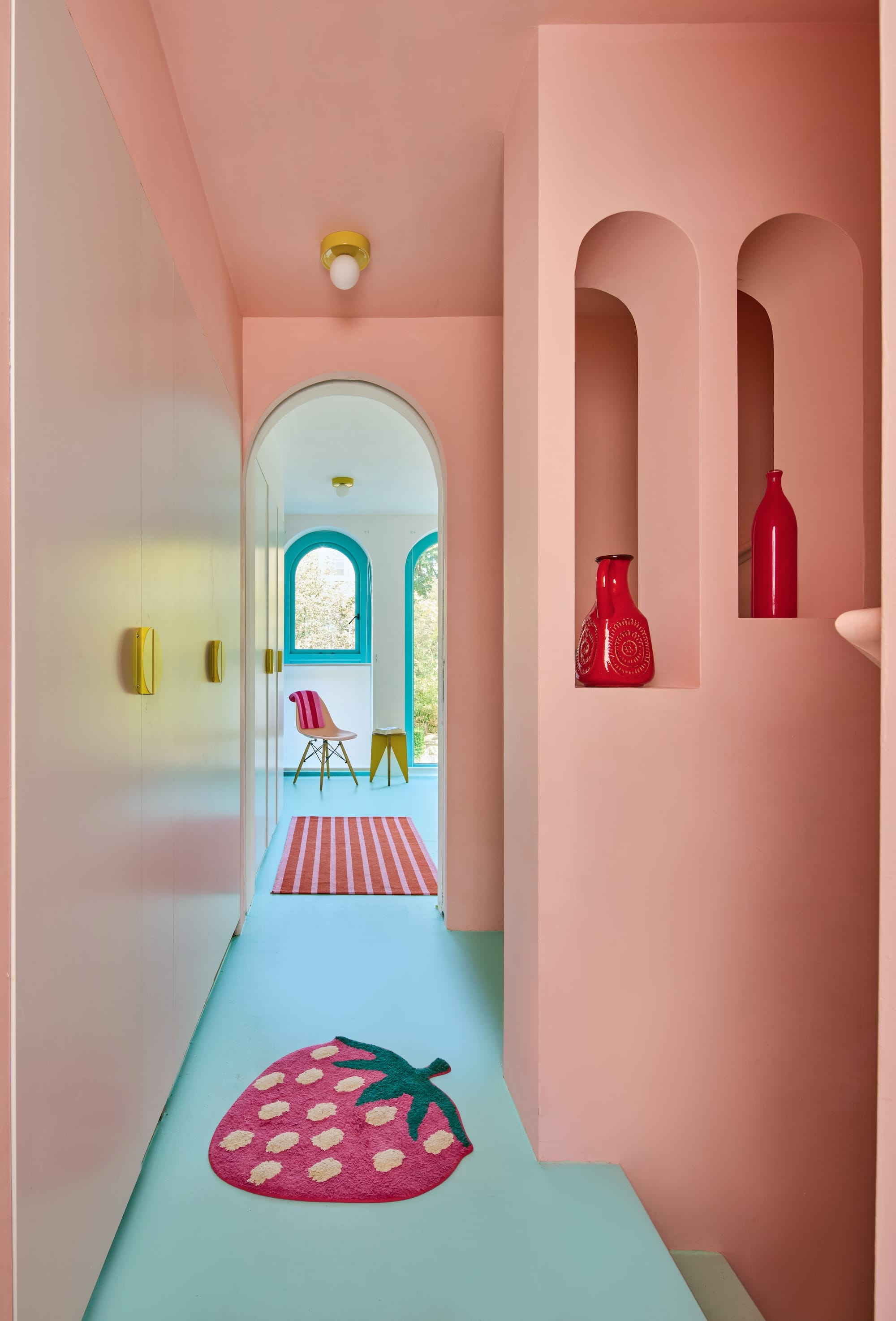
This dedication to curved geometries and vibrant color does not stop at the threshold. Inside, The Cloud House maintains an immersive, theatrical interior landscape that continues the exterior’s thematic language. Rooms flow seamlessly through a series of arched doorways and niches carved into pink-hued walls, creating a continuous spatial experience that feels both cozy and expansive. Splashes of rich color—ranging from vivid blues on the flooring to unexpected accents like a bold red shower unit—further define the interior zones. Whimsical touches abound, including circular windows punctuated with black dots that playfully evoke cartoonish eyes, casting curious glances out toward the street and welcoming natural light deep into the home’s multi-level core.
The long-term development of the project has been meticulously documented by the architectural firm, drawing considerable attention from design enthusiasts and urban observers alike. Through updates shared on platforms like Instagram, Peter Morris Architects has provided a transparent window into how a decade of conceptualization, material testing, and collaborative neighborly agreement culminated in one of London’s most talked-about contemporary residential builds.
By bridging the gap between personal artistic vision and collective urban development, The Cloud House demonstrates how contemporary housing projects can successfully challenge conventional aesthetic boundaries in historic city settings. As it stands fully realized in Gospel Oak, the dual townhome offers a refreshing reminder that architecture can be simultaneously rigorous in its execution and profoundly joyful in its spirit.