The world of macro and micro photography has once again captured the imagination of nature enthusiasts across the globe, drawing a historic level of participation for one of the medium’s most prestigious international contests. More than 15,300 submissions made their way to the judges for this year’s Close-Up Photographer of the Year, officially setting a new benchmark for the highest number of entries in the competition’s history. The staggering volume of work underscores the growing popularity and technical evolution of close-up photography, as both amateur hobbyists and seasoned professionals push the boundaries of what can be seen through a lens.
From uncanny insects and intricate slime molds to unexpected and sometimes startling animal interactions, the photographs submitted this year highlight the diverse, complex, and frequently surreal flora and fauna that exist all around us, often hidden in plain sight. The competition serves as a global showcase for the unseen details of the natural world, celebrating patience, technical precision, and artistic vision. While the official contest winners are scheduled to be announced in January, organizers have released a striking shortlist of favorites that offer a breathtaking preview of the extraordinary imagery under consideration by the judging panel.
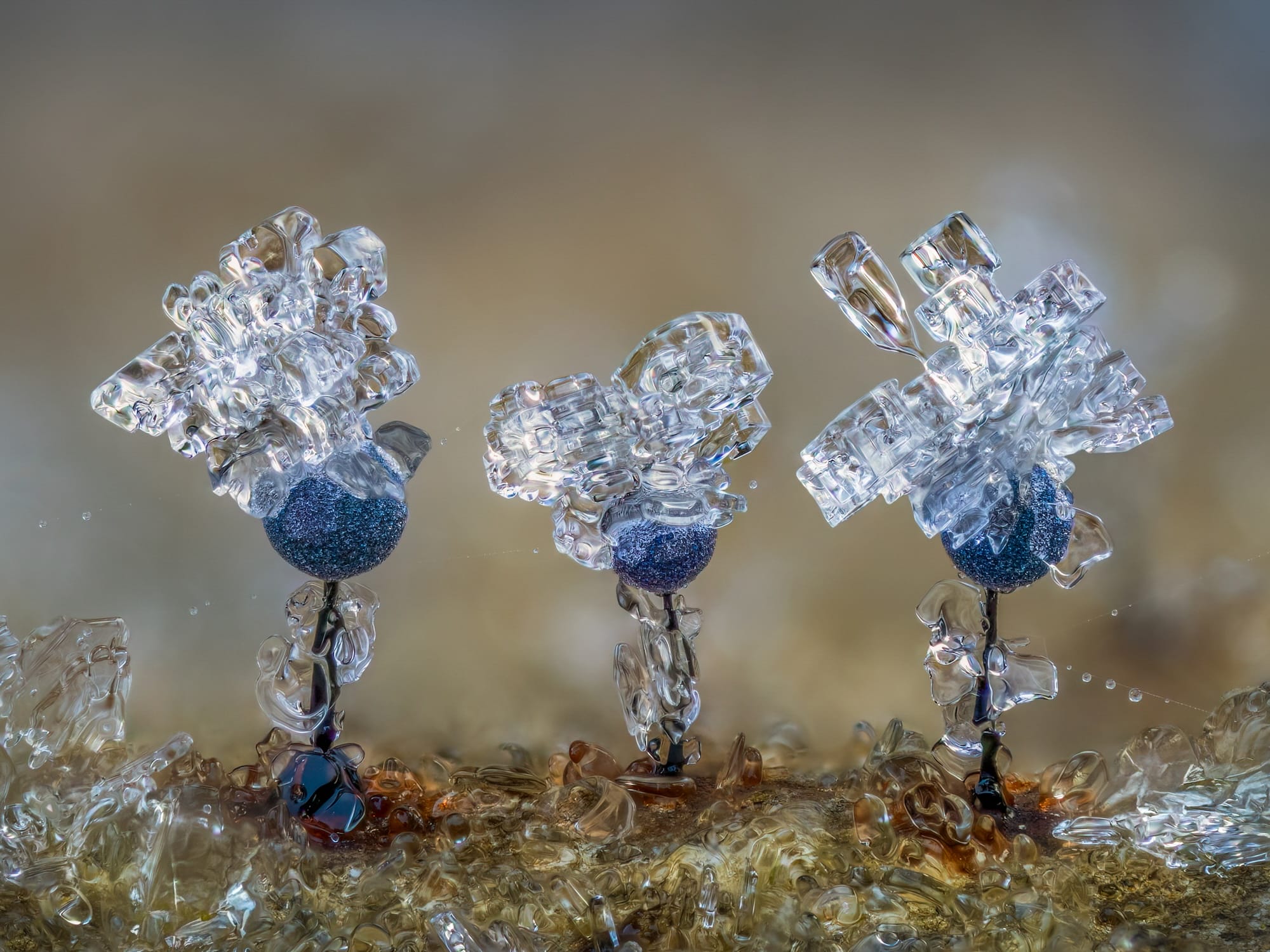
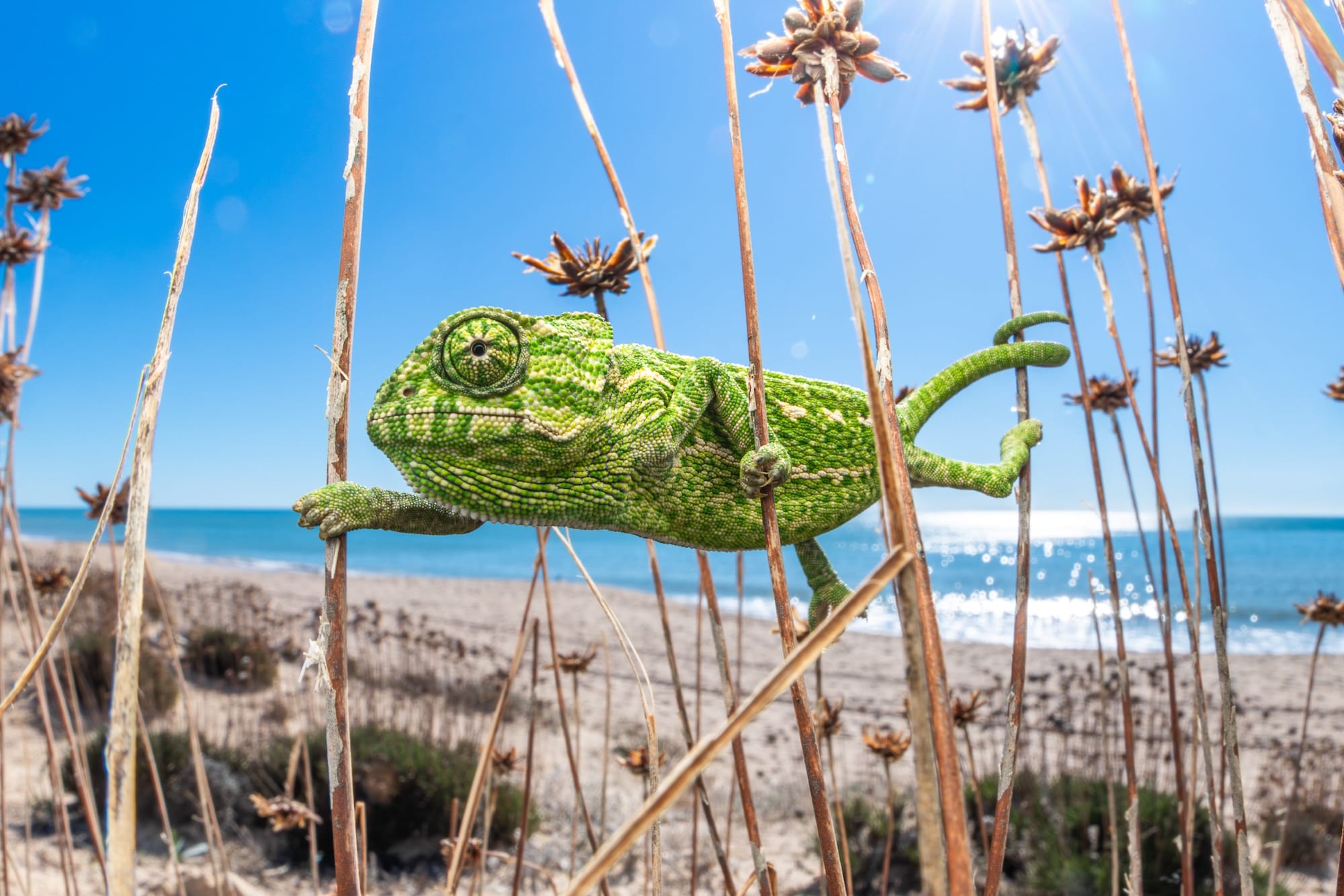
The incredible breadth of subjects captured in this year’s shortlist demonstrates the boundless possibilities of macro photography. Among the standout selections is Joao Pontes’s image titled "Suspended," which presents a serene and perfectly timed close-up photograph of a frog suspended delicately between reeds on a sunny shoreline. The play of light and the stillness of the subject evoke a quiet moment in a vibrant ecosystem. In contrast, Barry Webb turns the viewer’s attention to the microscopic realm with "Frosted Lamproderma," capturing delicate slime molds adorned with intricate, crystalline-like formations on their tops, revealing a world of geometric beauty that most people walk past every day.
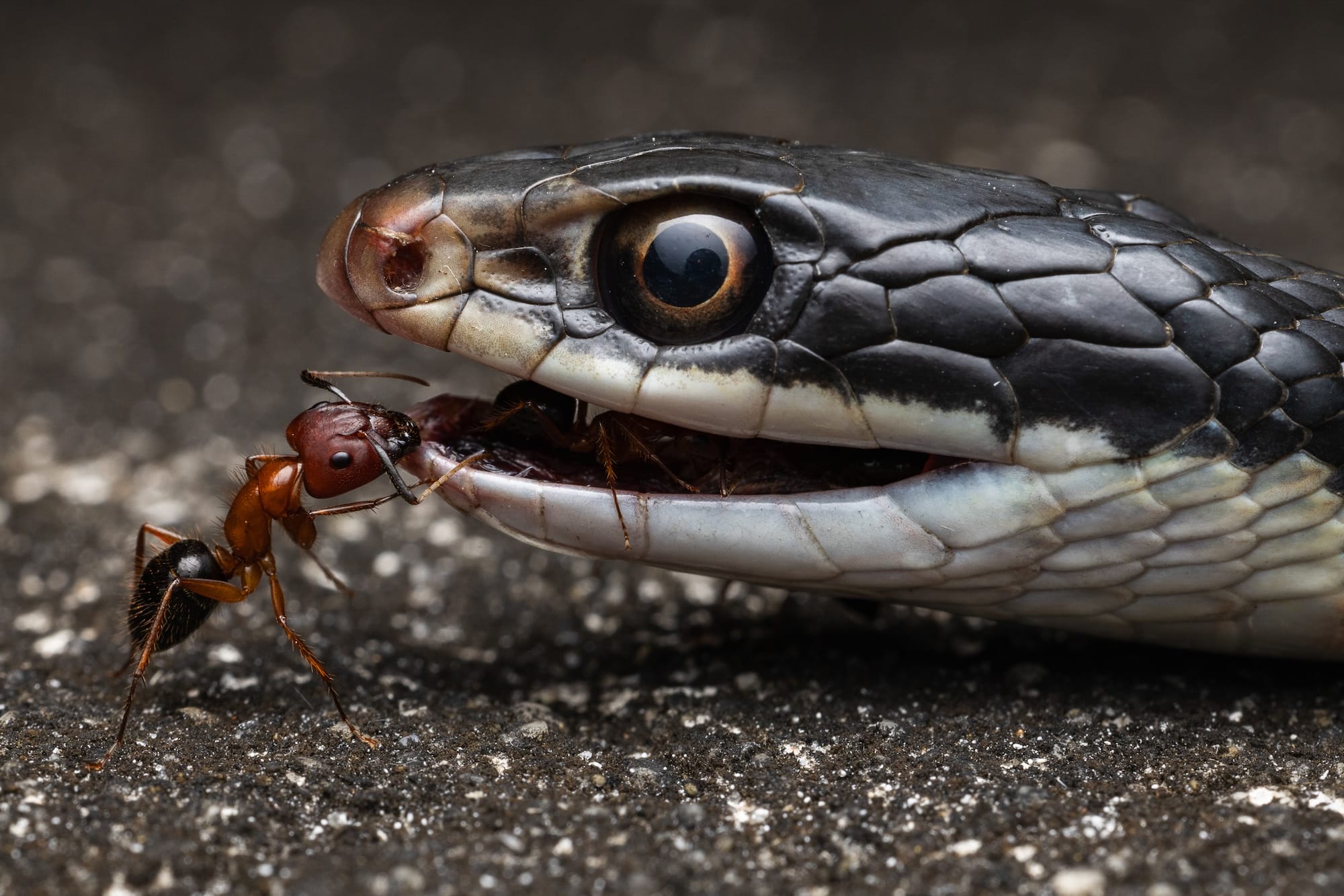
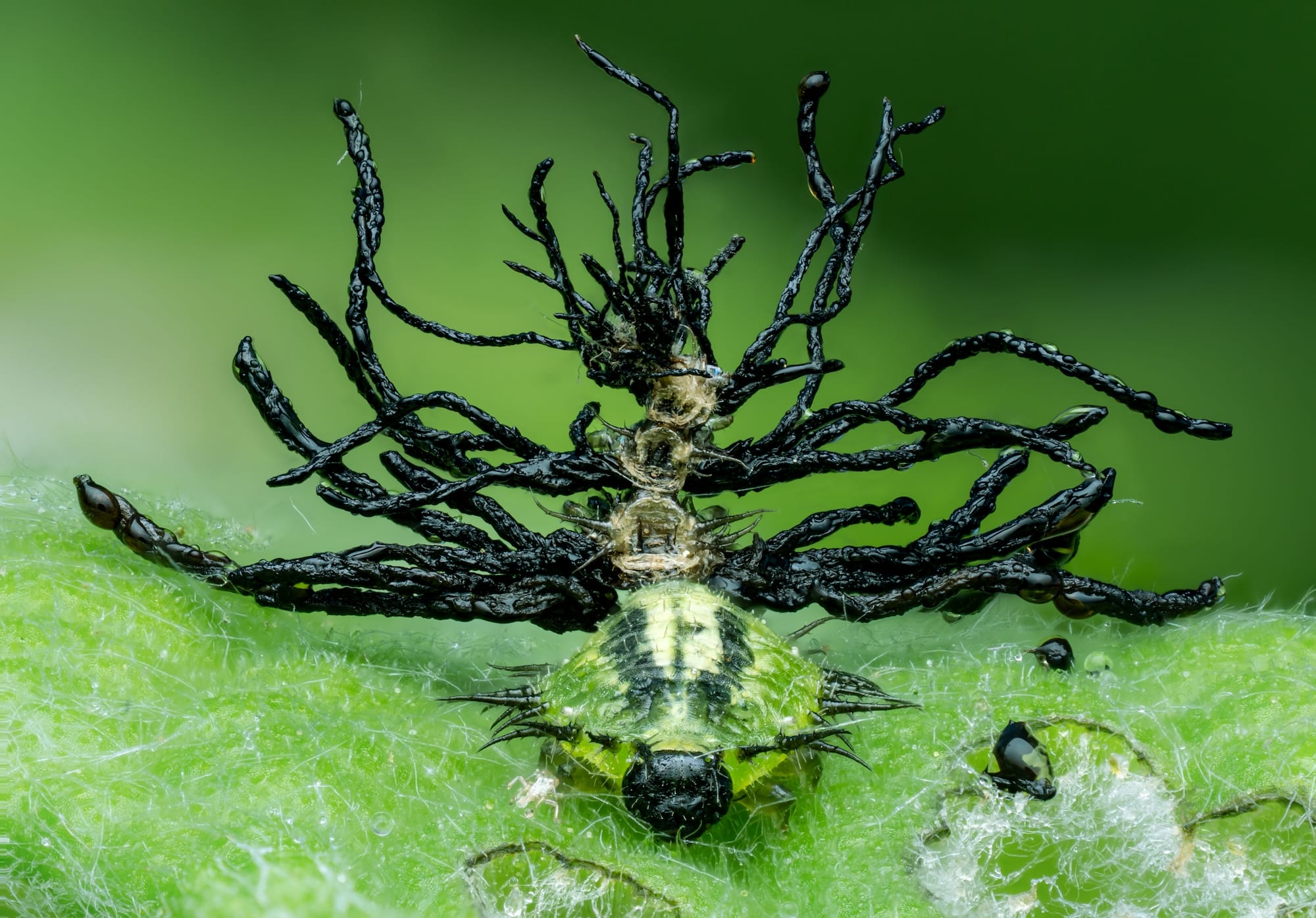
The raw realities of nature are equally represented in the shortlist, capturing dramatic and sometimes brutal interactions between species. Parks Marilla’s photograph, "Ants Eating Racer," offers an intense, unvarnished look at a micro-ecosystem at work, featuring a close-up perspective of ants crawling in the mouth of a snake. Similarly, Wayne Sayers directs the spotlight toward the early life stages of an unusual insect in "Fleabane Tortoise Beetle larva," showcasing the distinctive and bizarre morphology of a larva featuring black, branch-like extensions protruding from its back, an adaptation that highlights the eccentricities of evolutionary design.
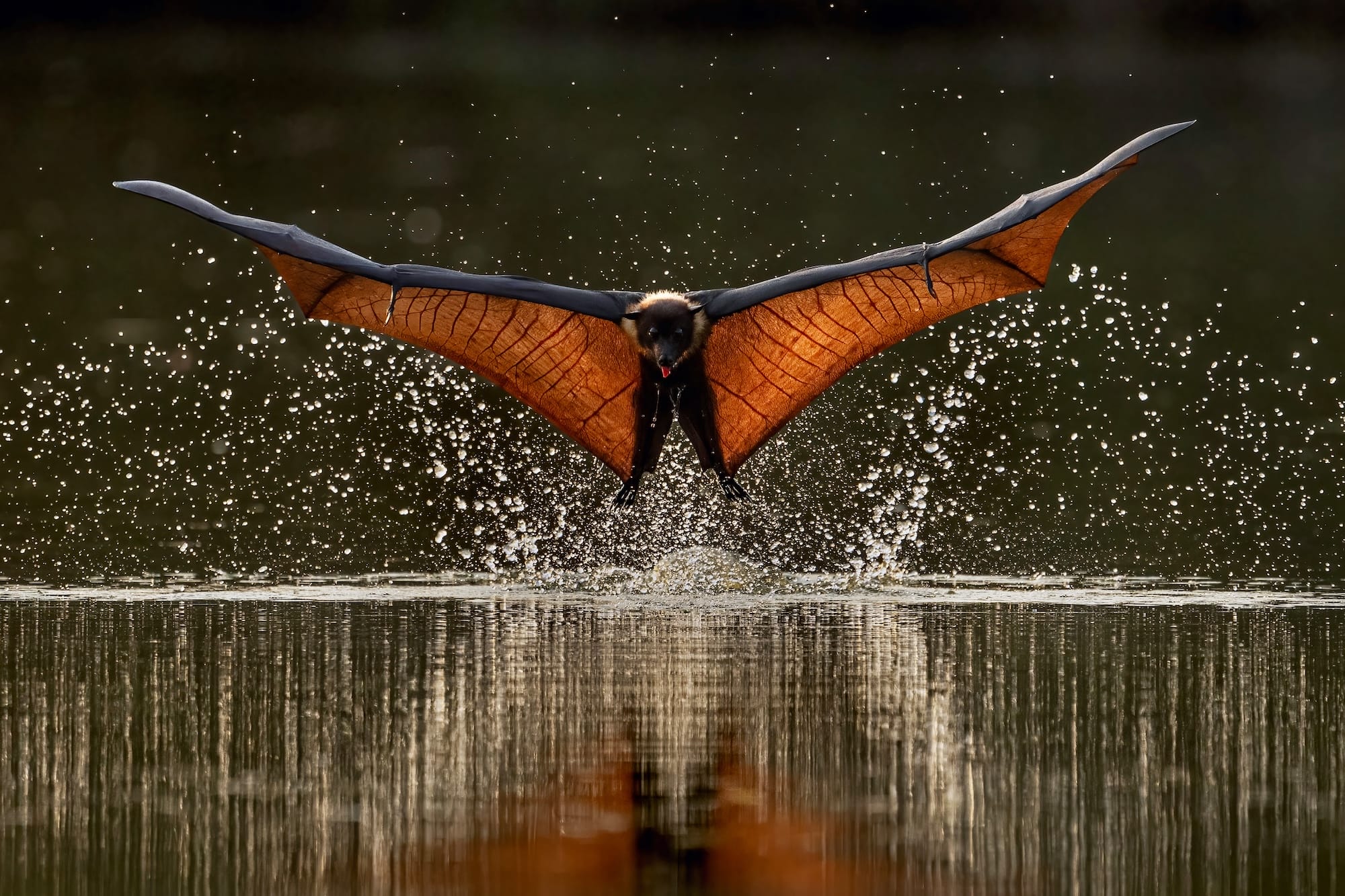
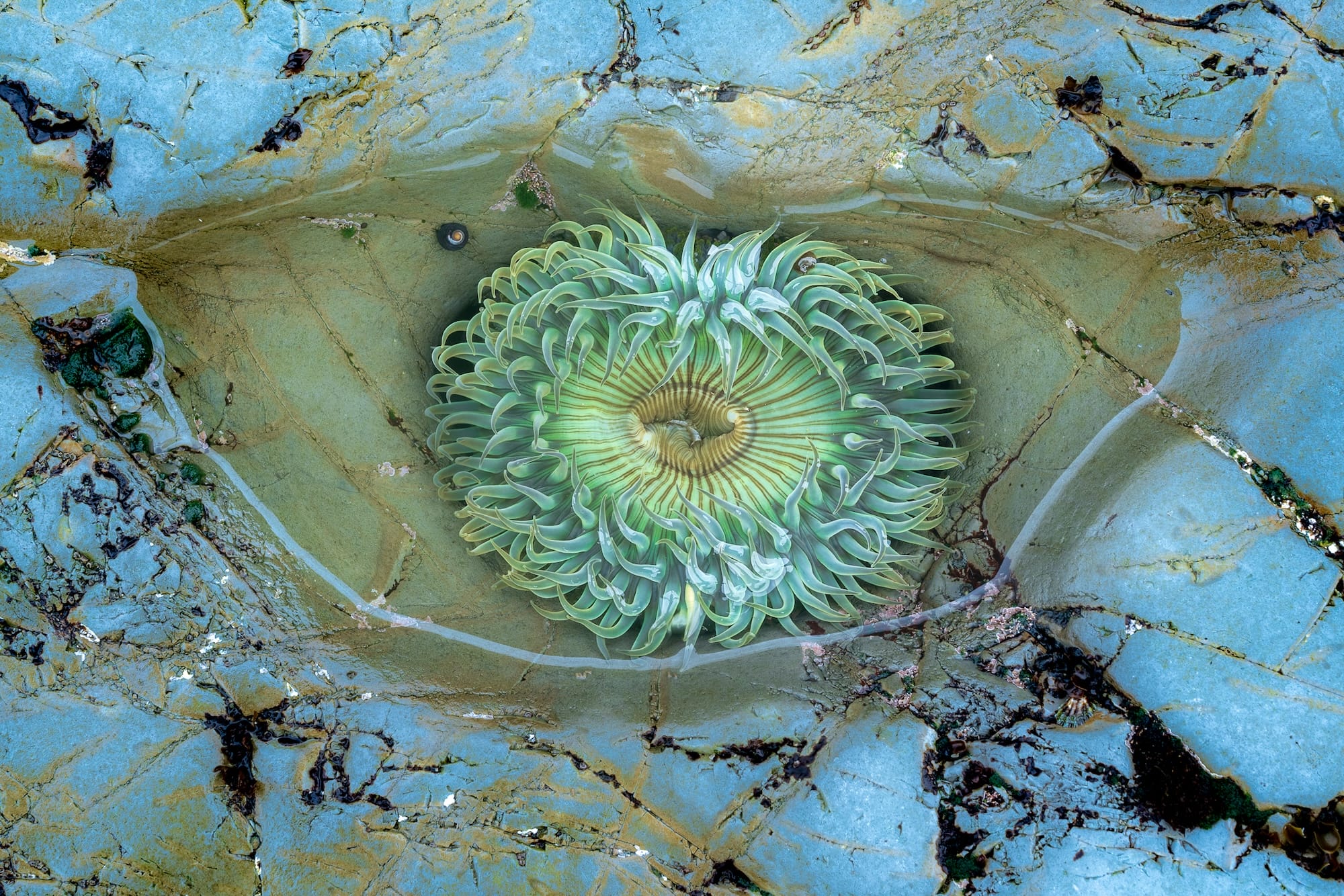
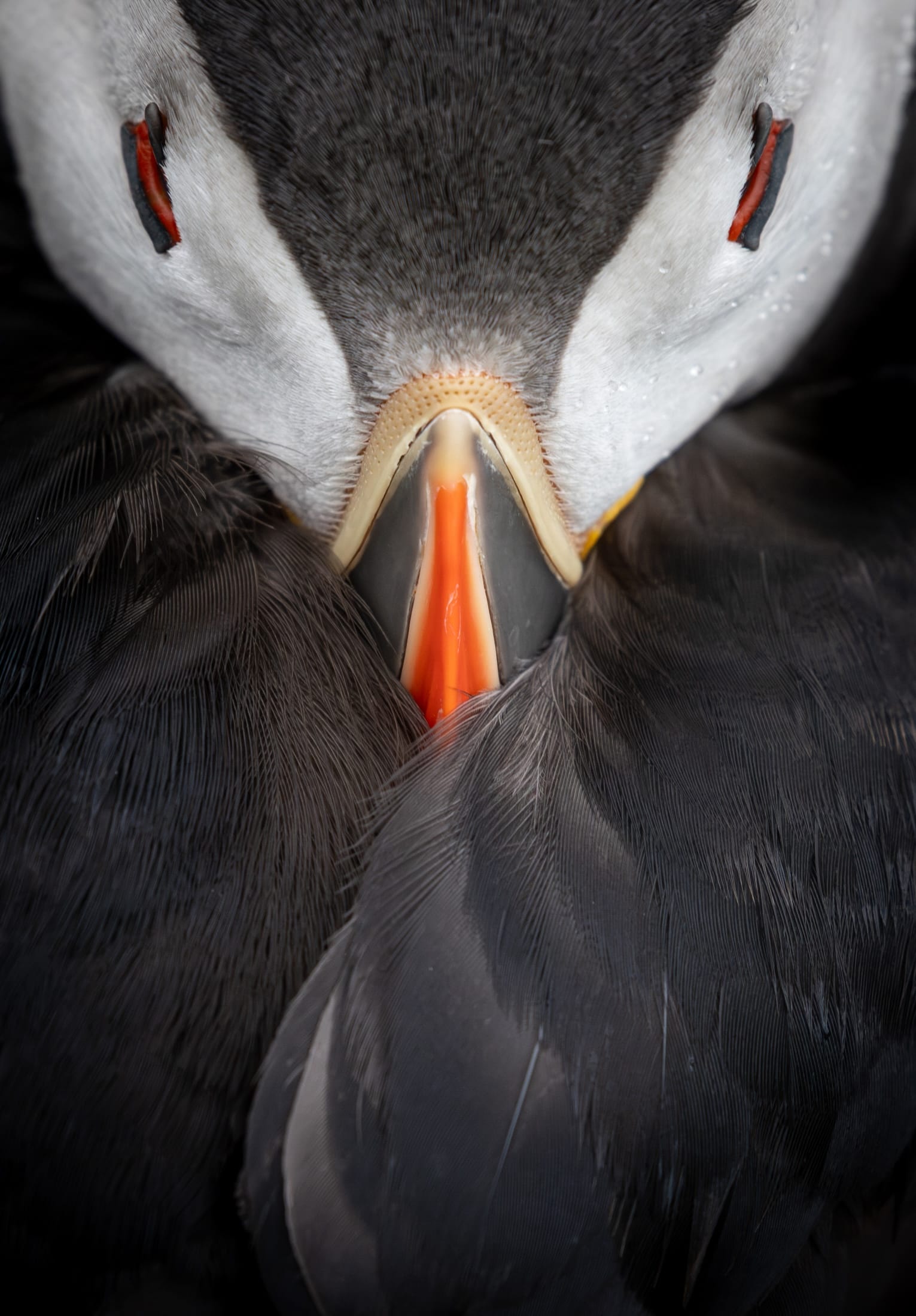
Animal behavior and unique perspectives continue to dominate many of the shortlisted entries. Hira Punjabi’s "Bat Bath" freezes a fleeting, high-speed moment as a large bat skims the surface of the water, capturing the ripples and the dynamic posture of the mammal in mid-flight. Delving beneath the waves, David Hunter’s "Sea Eye" offers an hypnotic, mesmerizing close-up photograph of a sea urchin, revealing the intricate patterns and textures of marine life. Meanwhile, James Rogerson captures a moment of quiet repose in "Cloaked Auk," framing an auk’s face half-tucked comfortably inside its wing, balancing a sense of vulnerability with the rugged resilience of coastal seabirds.
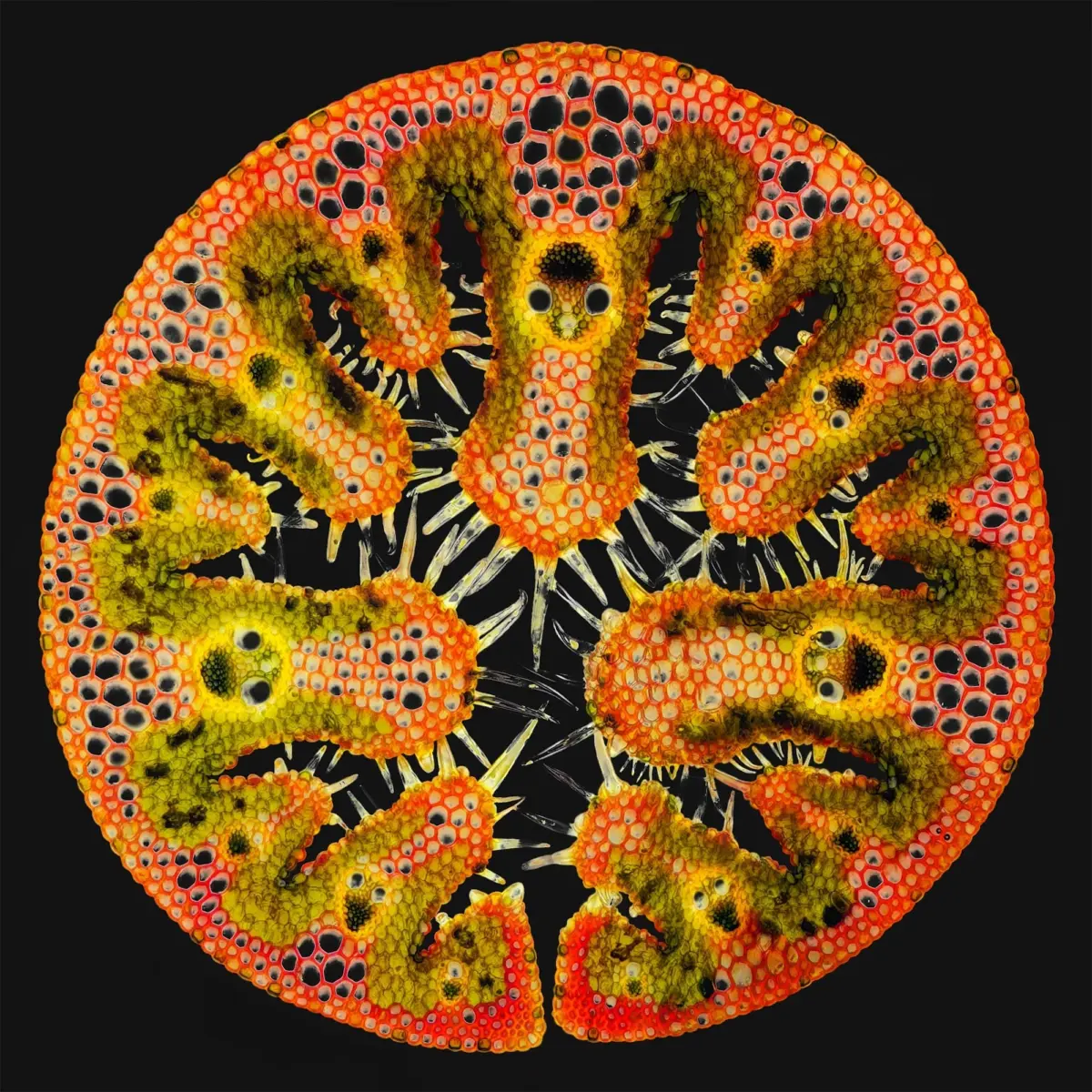
The coastal and marine themes extend further with Lisa Skelton’s "Rockpool Sanctuary," a tender close-up photograph of a baby sea lion basking in the shallows of the water, capturing the gentle interplay of light and liquid textures. Shifting from macro wildlife to the microscopic study of plant anatomy, Adalbert Mojrzisch presents "Beachgrass," a microscopic close-up revealing the complex, hidden geometry of a cross-section of beachgrass, illustrating that botany holds just as much visual wonder as zoology.
The insect and arachnid worlds also yield fascinating glimpses into reproductive cycles and defensive traits. Oliver Lacey’s "A Little Punky" captures the fierce and textured features of a spider in striking detail, while David Myles returns to the mesmerizing world of fungi and myxomycetes in "Dewy Physarum album," photographing dewy slime molds glistening under morning moisture. Expanding on the theme of arachnids, Craig Loechel’s aptly titled "This didn’t happen overnight" presents an intimate look at a mother spider carrying a multitude of tiny spiderlings on her back, capturing the immense scale of parental investment in the miniature world.
As anticipation builds for the official announcement of the contest winners in January, the conversation surrounding macro and micro photography remains vibrant. In the meantime, the competition has launched a concurrent photography challenge centered around the theme of "Close to Home," inviting photographers to find extraordinary details in their immediate surroundings. Submissions for this thematic challenge remain open through the end of the month, encouraging creators everywhere to look closer at the nature thriving in their backyards, local parks, and urban environments.