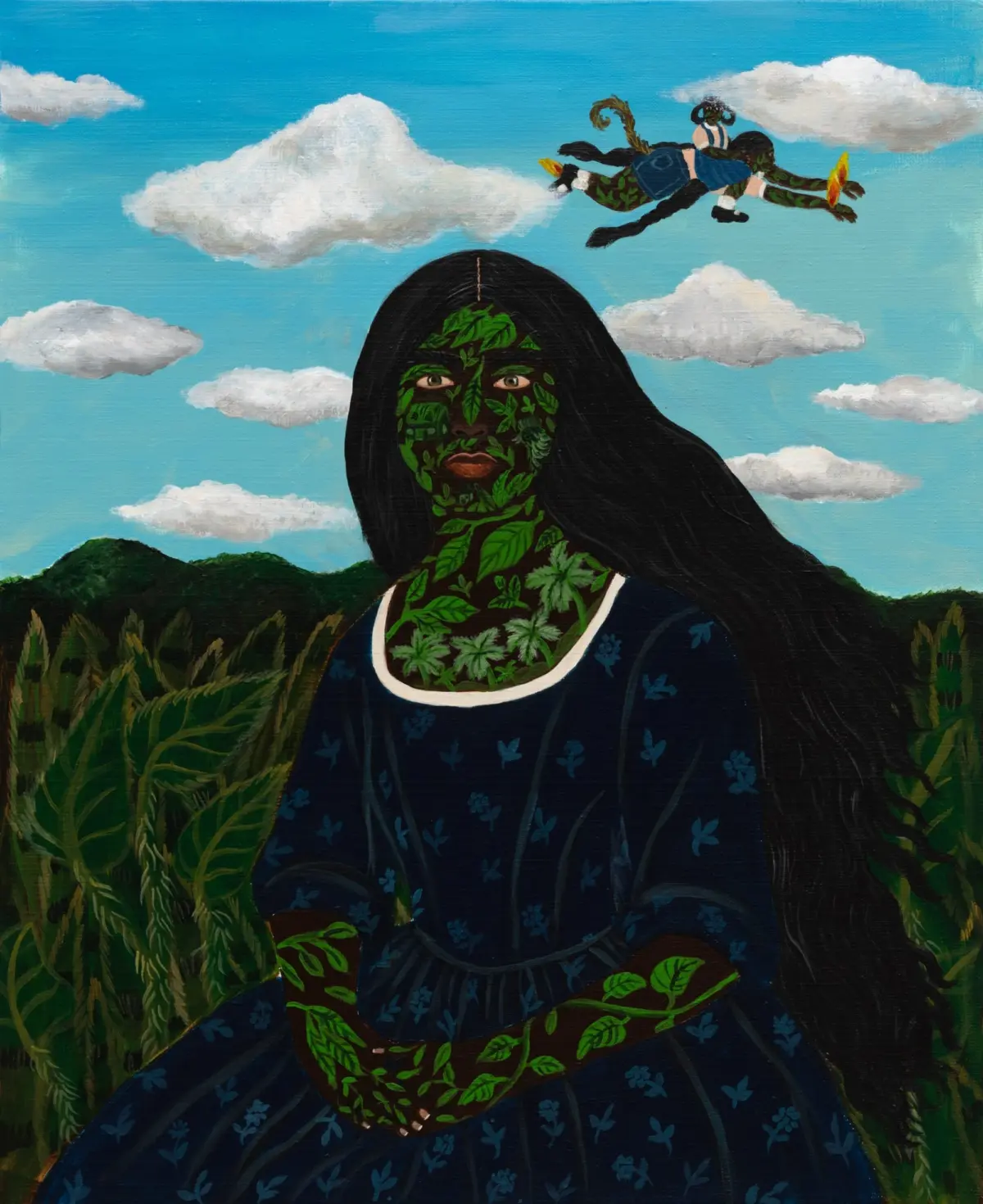
Tattooed with verdant foliage, the central figures in Kelly Sinnapah Mary’s captivating portraits exist in a liminal space where humanity and nature are inextricably bound. In these surreal acrylic canvases, the human form is simultaneously a product of, and entirely subsumed by, the surrounding plant life. Born in the French Caribbean territory of Guadeloupe, the contemporary artist conjures the mythic stories, folklore, and complex histories of her tropical home through uncanny, richly textured compositions. In her universe, humans, flora, and fauna find a delicate, unsettling, yet harmonious hybrid existence that invites viewers to reconsider humanity’s place within the wider ecosystem.
At the heart of many of Sinnapah Mary’s interconnected bodies of work is a recurring, subversive protagonist named Sanbras. The artist derived the name from a derogatory children’s book popular during the 19th and 20th centuries, reclaiming and transforming the moniker into a vehicle for resistance and storytelling. Through compositions that rely heavily on saturated, vibrant color palettes and delicate organic textures, Sanbras morphs across various scenes, acting as a silent witness and an active participant alike. This enigmatic figure serves as a visual anchor for the artist’s enduring philosophical and political questions: how relationships between all living beings manifest, and the profound ways in which historical political forces—most notably European colonialism and anthropocentrism—shape those very connections.
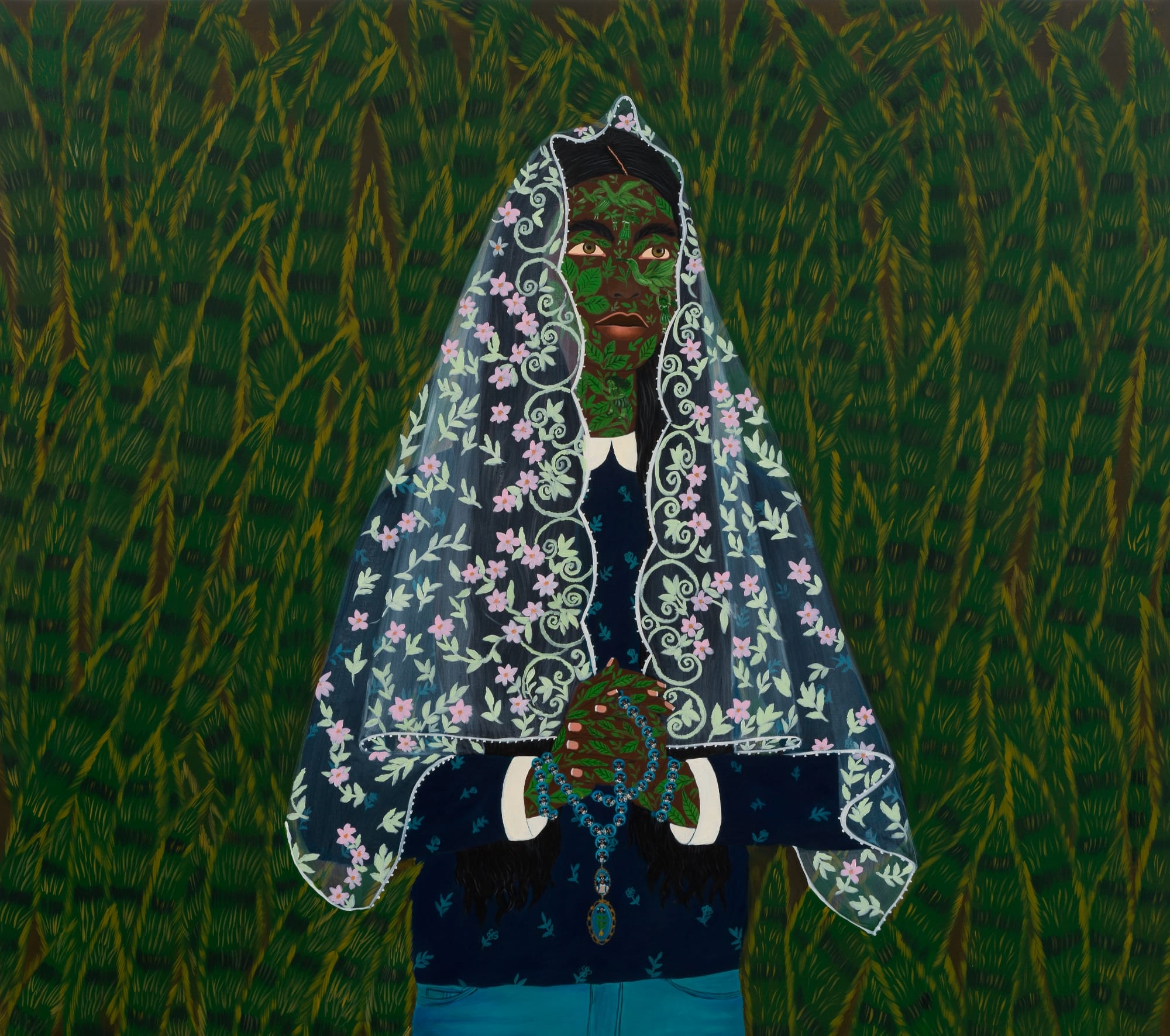
Melding diverse forms of knowledge, ancestral folklore, and cultural symbols is foundational to Sinnapah Mary’s artistic practice, which continuously evolves alongside her understanding of her own complex family history. As her gallery, Norr Cohan, notes in an official statement, the artist initially identified simply as Afro-Caribbean during her childhood. In later years, however, she made a vital discovery regarding her lineage: she is a descendant of indentured workers from the South Indian state of Tamil Nadu who were transported to the Caribbean following the abolition of slavery to replace enslaved labor on plantations.
This revelation of a diaspora bridging South Asia and the Caribbean deeply informs her current body of work. How such a layered familial history influences an individual’s understanding of place, displacement, and personal identity is powerfully explored in the tender, narrative-driven portraits of The Book of Violette. Named in honor of the artist’s grandmother, this expansive series unfolds through a deeply personal lens, utilizing local folklore and rich visual metaphors to reference the ways ancestral memory is preserved and passed down through generations.
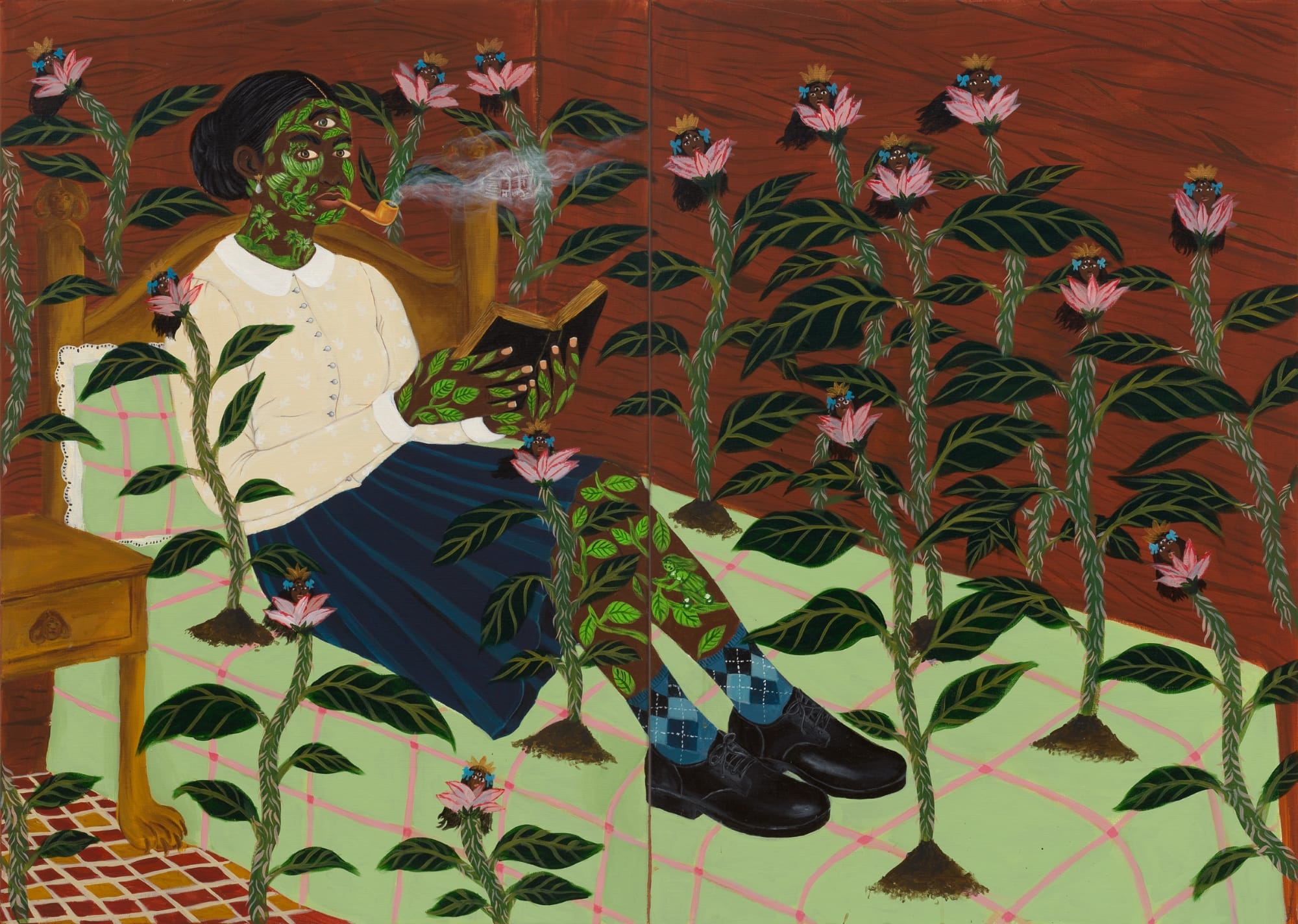
Sinnapah Mary has frequently spoken about her grandmother’s magical garden, a verdant sanctuary filled with medicinal plants and tropical growth that left an indelible mark on the artist’s imagination. This botanical wonderland comes to life in paintings like “Violette’s Garden: My Father’s Shoes” (2026), where luscious flowers topped with human heads sprout dramatically from a brightly patterned plaid coverlet. In the scene, a schoolgirl protagonist holds a book with gleaming, gilded pages while smoking a pipe, her gaze locking onto the viewer with the addition of a third eye—an ancient symbol of profound wisdom, spiritual awakening, and inner vision deeply rooted in Hinduism.
By merging these disparate cultural touchstones, the artist crafts a visual language that speaks simultaneously to personal memory and collective history. “When I paint, I am channeling both my family mythology—the stories that have been told to me, the memories I have—and broader histories and cosmologies to imagine a new world,” the artist explains.
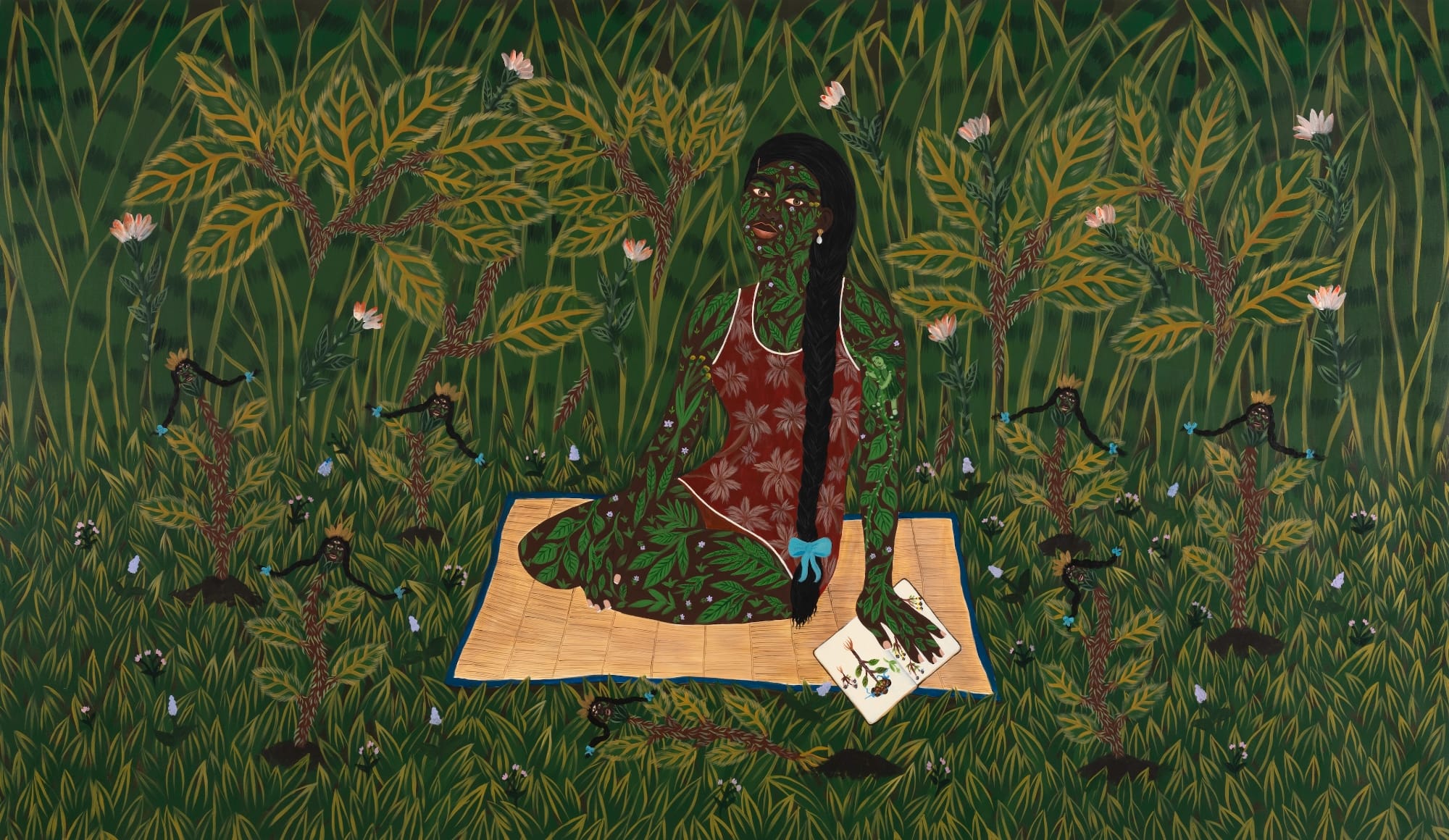
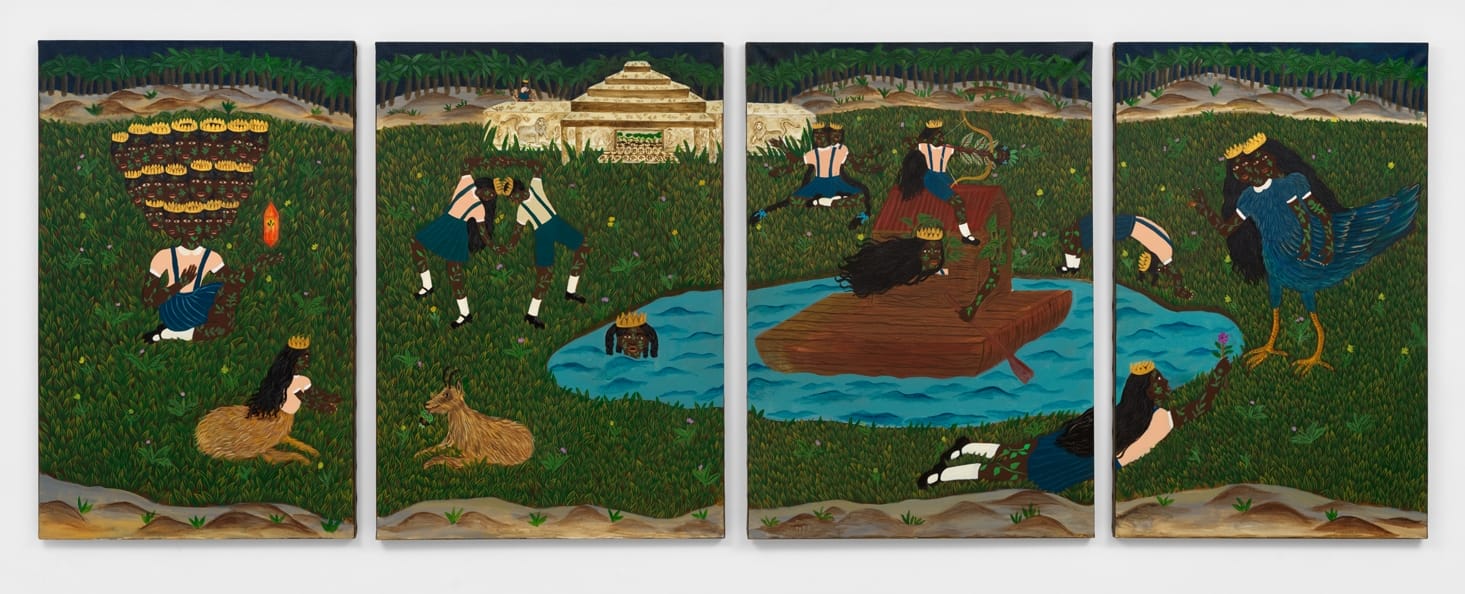
The striking scale and meticulous detail of these works invite audiences to slow down and immerse themselves in richly layered narratives. In canvases such as “The Book of Violette: Marie-Anne” (2025), measuring over eleven feet wide, a female figure rests on a blanket surrounded by dense, encroaching foliage, her skin seamlessly tattooed and interwoven with plant patterns that blur the boundary between body and environment. Similarly, the multi-panel landscape “The Book of Violette: This earth, ours, can only be what we want it to be” (2025) expands the artist’s vision outward, depicting human-animal hybrid creatures, a quiet pond featuring a figurative wooden raft, and a mysterious stone pyramid-like structure looming in the distant background.
Other intimate works in the series, including “The Book of Violette: Invisible Vegetation of Desire” (2025), “Emilie” (2025), and “The Book of Violette: Hélène” (2025), continue this exploration of psychological landscapes and somatic integration. In each portrait, whether set against a domestic interior or an expansive open-air vista, the subjects are marked by the natural world, suggesting that human identity cannot be separated from the ecological and political landscapes we inhabit.
Art enthusiasts and collectors looking to experience these intricate canvases in person will soon have the opportunity. Sinnapah Mary’s upcoming institutional exhibition, titled Between earth and sea, is scheduled to open in February at The Aldrich Contemporary Art Museum in Ridgefield, Connecticut. Until then, admirers of her work can follow her ongoing studio practice and view additional pieces through her official Instagram account.