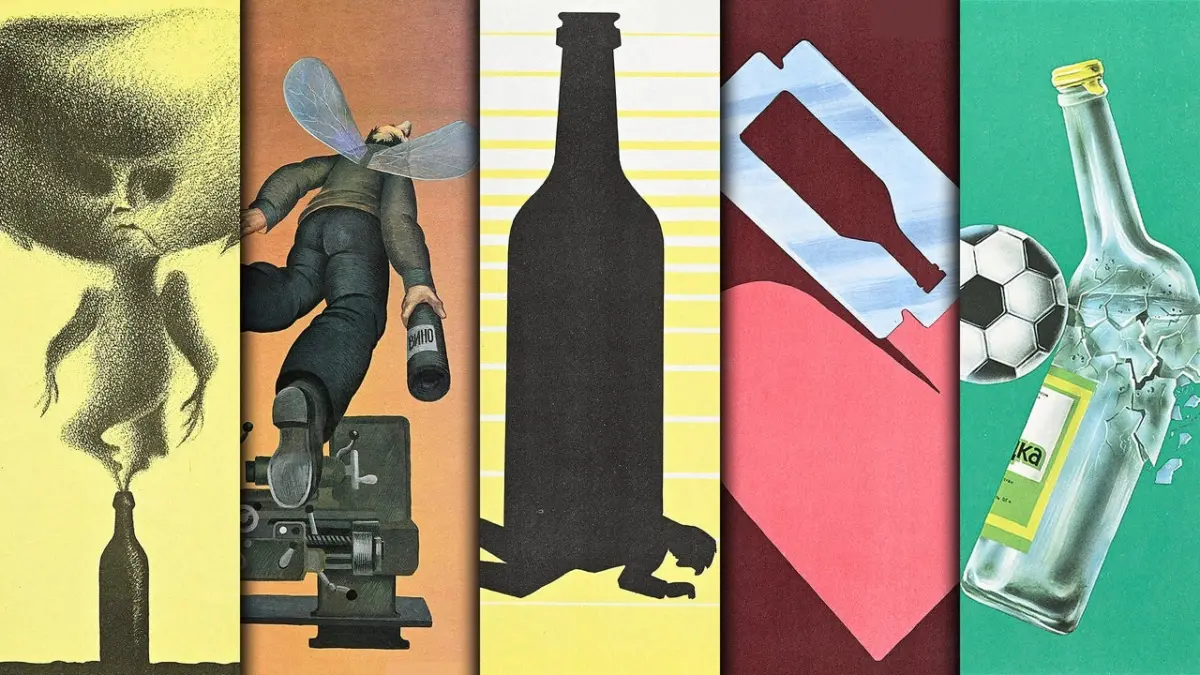
In the final, turbulent years of the Soviet Union, the government launched an aggressive public health campaign aimed at curbing widespread alcoholism by visualizing alcohol quite literally as death itself. A newly announced exhibition titled Just Say Nyet collects the most striking and evocative examples of these posters from the late 1980s, revealing a visual style that looks remarkably different from what people typically associate with traditional Soviet propaganda.
Curated by B.A. Van Sise, the exhibition runs from November 12 to April 11, 2027, at Poster House in New York City. The artwork featured in the show demonstrates a distinct departure from the iconic design movements of Russia’s earlier political history. It breaks entirely from the early-20th-century Russian constructivist style, which was characterized by big, bold, blocky typography paired with striking geometric grids and dynamic diagonals. It also steers far away from socialist realism, the artistic style most heavily associated with mid-20th-century Soviet propaganda. That older style typically showed images of heroic workers striving together in collective solidarity or depicted the labor of the individual as something executed purely for the greater good of the whole state.
By contrast, the visual language of Soviet public health public service announcements from the 1980s relied on much simpler symbols. Common imagery featured everyday alcohol bottles and stark warning labels centered squarely within the messaging. The overarching design philosophy was to make visual metaphors about why drinking is deadly as minimal, direct, and easy for the general public to understand as possible, stripping away the complex ideological framing of previous decades.
Reflecting on the unique cultural and historical positioning of these artifacts, Van Sise explains that the collection echoes, in many ways, all the various reforms and social shifts happening during the waning days of the Soviet Union. He describes the campaign as presenting a notably humanist view of the problem—using the term for lack of a better phrase—primarily because these later PSAs focused much more intensely on individual health and personal wealth rather than emphasizing a person’s economic or political value to the state.
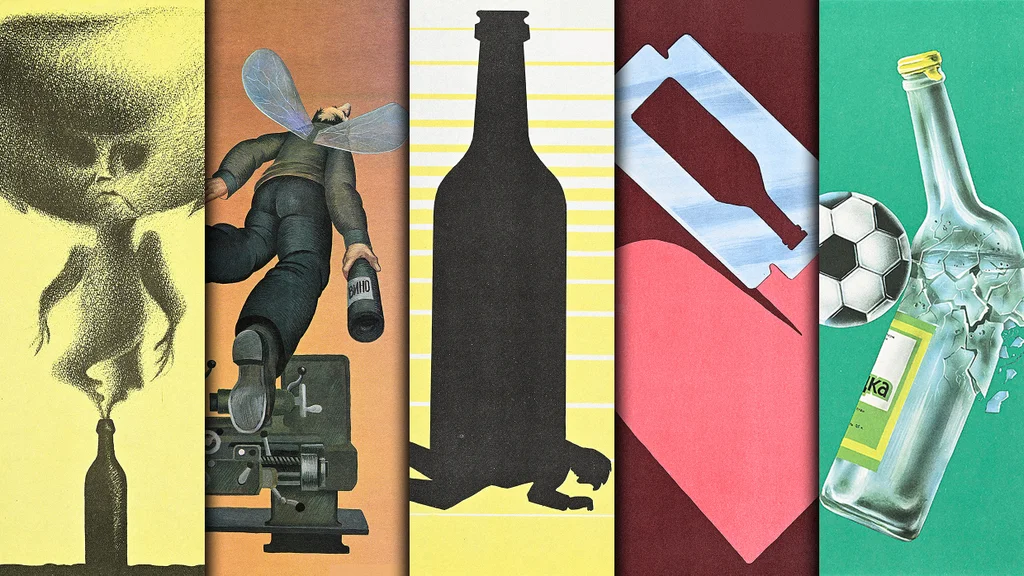
This more humanist approach to government-sponsored propaganda was not isolated strictly to anti-drinking campaigns; it could also be witnessed across other antidrug and general morality public service announcements that saturated the media landscape during the final decade of the Soviet experiment.
According to Van Sise, the fundamental shift in this era of messaging lies in a departure from old authoritative tactics. What is different here, he notes, is that observers can see the underlying conceptual framework move away from the traditional stick and toward a form of carrot, even within the context of state-run media warnings.
Rather than depicting alcoholism primarily as a systemic drag on the wider society or an affront to communist productivity, these late-era posters directly asked everyday viewers to consider why quitting drinking would be demonstrably better for them as individuals. The underlying message was remarkably individualistic, marking a sharp break from decades of collectivist dogma. For instance, the artist behind one particularly haunting poster titled Don’t Lose Face graphically replaced a young person’s actual face with an alcohol bottle, serving as a stark and personal warning that uncontrolled drinking could literally cost them their personal identity, dignity, and individual future.