In an era defined by the rapid spread of misinformation and digital polarization, the global press finds itself at a historic crossroads. The fundamental question of how the world’s media organizations can reclaim genuine press independence is no longer merely an academic debate; it is an urgent democratic imperative. Nowhere is this crisis more starkly visible than in France, where the deadly convergence of unchecked billionaire media ownership, unbridled far-right rhetoric, and institutional paralysis has shaken the foundations of the republic.
The human cost of this toxic media ecosystem was laid bare on a somber Saturday in Trappes, a densely populated suburb located west of Paris. Hundreds of local residents gathered in the autumn chill to mourn the life of Pengo Bossio Wangi, a 26-year-old man who was shot dead in a horrific attack on October 23. According to investigators, a gunman opened fire indiscriminately from a moving vehicle, abruptly ending Wangi’s life and leaving seven other individuals severely injured. Among the wounded was a 12-year-old girl. French law enforcement authorities have officially classified the shooting as a terrorist act explicitly motivated by racism.
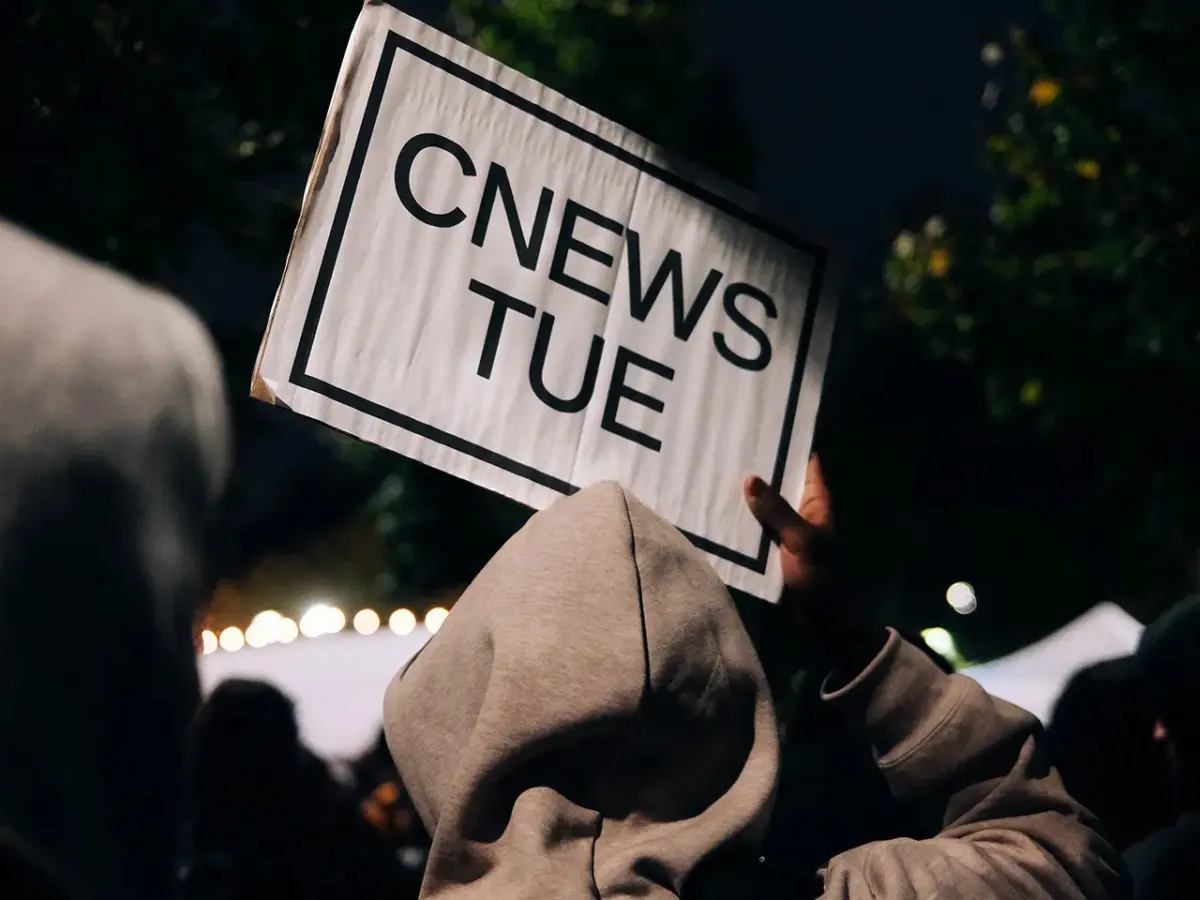
As mourners and community members filled the streets to pay their respects, the grief quickly turned into political fury, directed not only at the perpetrator of the violence but at the media apparatus that many believe manufactured the ideological climate enabling it. Prominently displayed among the sea of banners at the vigils was a stark and accusatory message: "CNews Kills."
The broadcaster in question, CNews, operates as one of France’s most-watched rolling-news and commentary channels. Over recent years, the station has consistently and deliberately portrayed Trappes as a dangerous Islamist hotbed, framing the multicultural suburb as a breeding ground for extremism. Investigators probing the shooting revealed that the suspect confessed to choosing Trappes specifically because he intended to target Muslim and African people. In interviews with the investigative newspaper Mediapart, friends of the suspect described a disturbing transformation, recounting how he became increasingly radicalized and consumed by the relentless racist rhetoric broadcasted day after day on his television screen.
In the immediate aftermath of the tragedy in Trappes, public outrage quickly coalesced around tangible political action. A massive national petition demanding that Arcom revoke the broadcasting license of CNews and ban the channel entirely gathered more than one million signatures in record time. The sheer volume of public anger forced the issue into the political mainstream, triggering urgent calls for a comprehensive parliamentary debate within the Assemblée Nationale.
For critics, the petition represents a long-overdue reckoning with a channel that has fundamentally altered the standards of French broadcasting. CNews features relentless, polarizing punditry, regular deployments of misinformation, and a programming philosophy that systematically normalizes guests holding extreme racist views. Modelled closely on Rupert Murdoch’s Fox News in the United States, the channel underwent a dramatic editorial transformation under the ownership of billionaire media mogul Vincent Bolloré. Bolloré’s sprawling media empire, which also includes the prominent television network Canal+, has long been steered by what industry insiders describe as an avowed strategy to shift the French political landscape rightward and bring the far right to power.
Despite flagrantly breaching France’s strict anti-hate legislation on numerous occasions, CNews has been uniquely insulated from existential threats. The network easily weathers the storm of financial penalties thanks to the seemingly bottomless pockets of its billionaire owner. To date, Arcom, the country’s independent media regulator, has issued a series of cumulative fines totaling €630,000 against the channel—a figure that critics argue is entirely negligible for a media enterprise backed by such immense corporate wealth.
The regulatory challenge is further compounded by recent precedents. In 2024, Arcom did take the unprecedented step of revoking the broadcasting license of C8, a major entertainment channel also under the ultimate ownership of Vincent Bolloré, citing its repeated promotion of misinformation and conspiracy theories. However, media experts and legal scholars argue that attempting to apply the same blunt instrument of a total ban to CNews is not only constitutionally problematic within France’s legal framework, but it would also arrive far too late to undo the damage.
The inflammatory rhetoric pioneered and amplified by CNews has already metastasized across the broader French media landscape. Its polarizing tone has steadily permeated other rolling-news channels, progressively dragging formerly trusted public broadcasters into a race to the bottom for ratings and engagement. Furthermore, industry analysts warn that a heavy-handed state ban on a major news network could inadvertently backfire politically. It could provide a potent narrative weapon for figures like Marine Le Pen, potentially paving the way for an authoritarian, Viktor Orbán-style assault on media freedom should the far right capture the presidency in upcoming elections.
Instead of relying on reactionary bans that threaten freedom of expression, media watchdogs and legal experts argue that regulators must fundamentally rethink their approach. Structural reform is urgently required, beginning with rigorous scrutiny applied to corporate media acquisitions. Policymakers must introduce robust legislative safeguards against excessive ownership concentration, while simultaneously establishing financial protections to help independent outlets survive and thrive without having to rely on the whims of billionaire benefactors.
Convincing the broader public that supporting independent journalism is not merely a philanthropic endeavor, but an essential investment in the future of democratic governance, remains a vital challenge. In an age characterized by sophisticated information warfare and targeted polarization, media pluralism must be treated as a core component of national security.
For those communities already bearing the devastating human consequences of systemic institutional and media failure, the stakes could not possibly be higher. As darkness fell over the vigils in Trappes on Saturday, the town’s mayor, Ali Rabeh, stepped forward to address the somber crowd with a direct and impassioned plea to the country’s professional journalists.
"To the free press of this country," Mayor Rabeh told the gathered citizens and reporters, urging them to recognize the gravity of the moment. "Refuse them the right to call themselves peers of your wonderful calling and to let far-right activists hide behind a press card. Realize that you are their next target. Open your eyes, before it is too late."