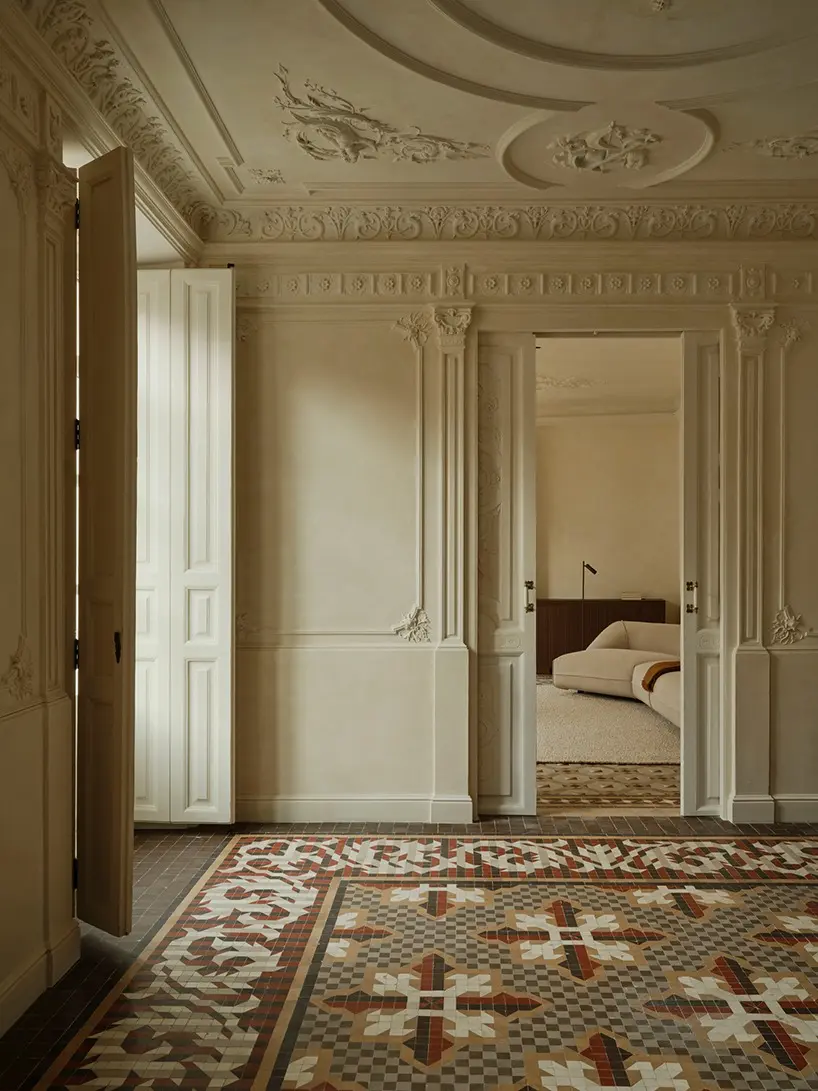
In the heart of the historic Ciutat Vella district in Valencia, Spain, local architecture studio Balzar Arquitectos has completed a sensitive and striking interior renovation of a late-19th-century residence. Originally built in 1890, the apartment offers a masterclass in how historic preservation can transcend the boundaries of a static museum display to become an active, breathing framework for contemporary domestic life. Rather than wiping the slate clean or hiding the passage of time, the design team chose to honor the building’s storied past, weaving together original 19th-century craft, a wabi-sabi material philosophy, and curated modern design.
The urban context surrounding the Ciutat Vella Apartment is one defined by layered historical traces, narrow streets, and centuries of architectural evolution. Working within this dense and culturally rich fabric, Balzar Arquitectos approached the project with a deep respect for the apartment’s surviving architectural DNA. Instead of imposing a contemporary layout that disregarded the historical compartmentalization of the Victorian-era home, the architects allowed the original footprint and spatial rhythm to dictate the intervention.
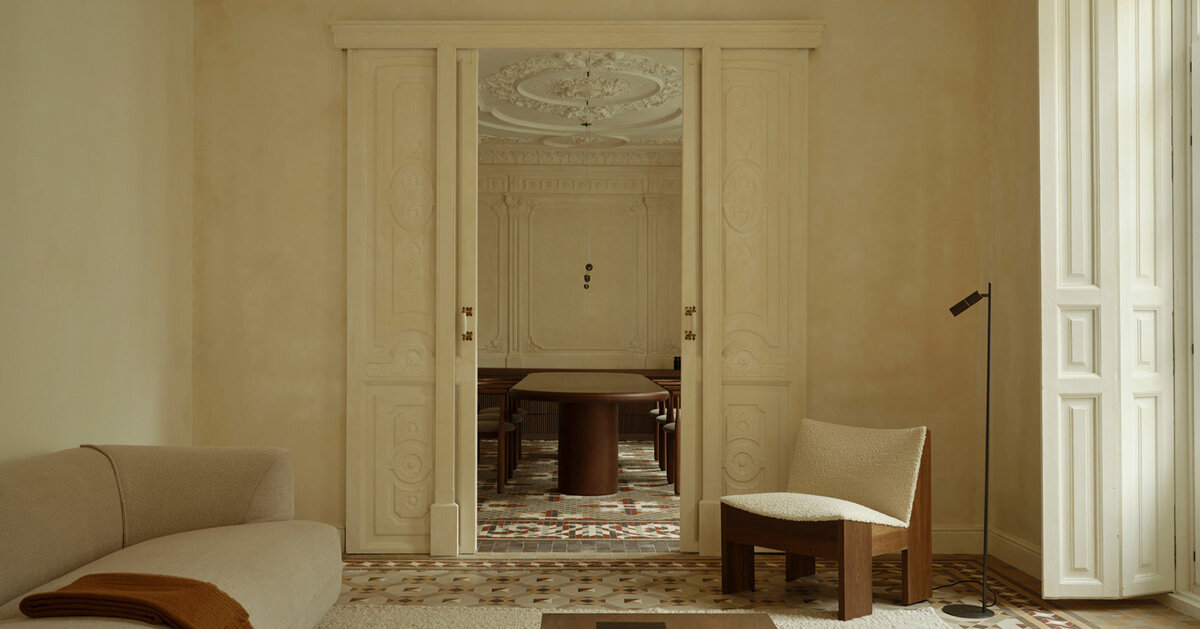
Crucial to this approach was the meticulous preservation and restoration of the apartment’s original features. Among these are the intricate geometric Nolla mosaic tile floors, which form the primary decorative and chromatic foundation across the various living spaces. These historic tiles, renowned for their fine ceramic craftsmanship and vibrant patterns, sit alongside original wrought ironwork, elaborate decorative ceiling moldings, solid timber doors, and surviving fragments of polychrome wall painting. Rather than being treated as fragile relics, these elements are fully integrated into the daily experience of the home, anchoring the residents in a tangible sense of place and history.
Restored Mosaics and Lime Plaster Anchor Wabi-Sabi Materiality
Guided by a wabi-sabi philosophy—an aesthetic framework that prioritizes material patina, authenticity, and the beauty of natural imperfection—the intervention by Balzar Arquitectos introduces a restrained, tactile palette. The design relies heavily on lime plaster, unfilled travertine, solid wood, linen, and wool. In this interior landscape, surface textures and tactile qualities take precedence over bold color statements. The materials are left in states that allow their natural characteristics to shine through, creating a quiet, contemplative atmosphere that complements the historic bones of the 1890s building.
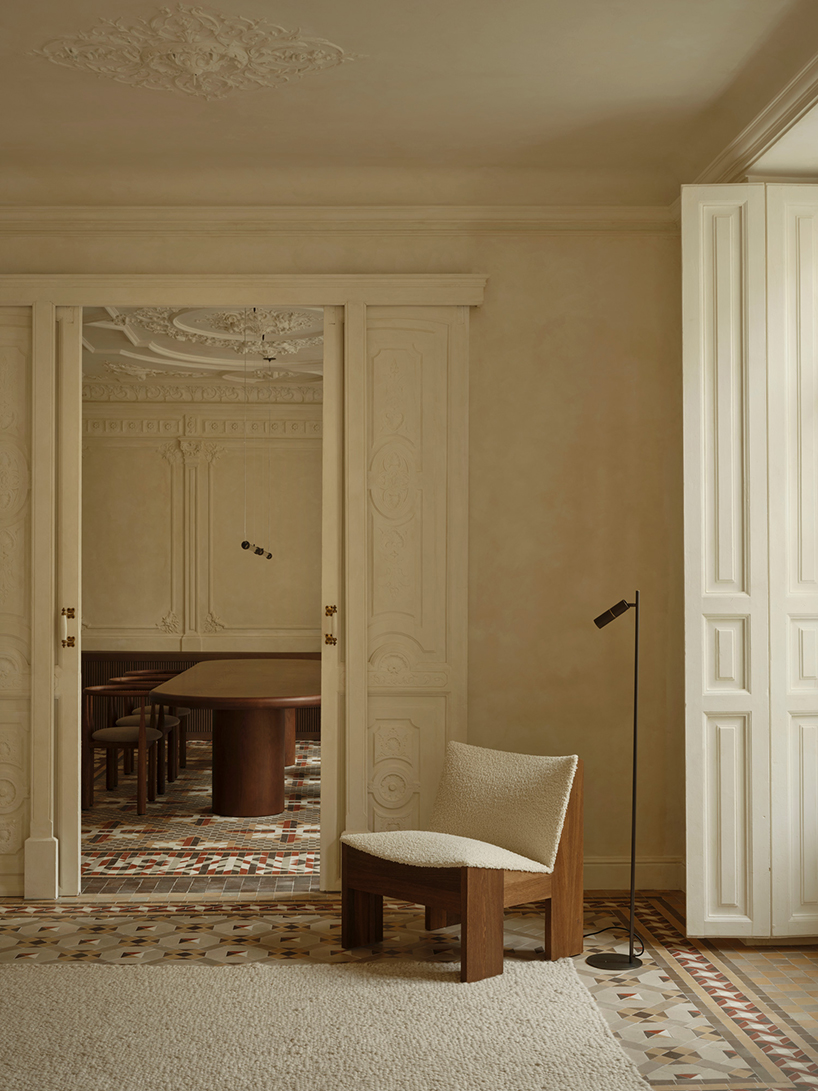
This interplay of old and new is further enhanced by the strategic play of natural light. Diffused daylight filters softly through historic apertures, casting gentle shadows across the lime-washed walls and highlighting the subtle variations in the unfilled travertine and the intricate patterns of the restored Nolla mosaics. The lighting strategy avoids harsh contrasts, instead working in harmony with the materials to foster a serene, grounded domestic environment.
The interior curation bridges the gap between historical craft and contemporary minimalism through a careful selection of furniture and art. Vintage pieces, thoughtfully sourced from Nekonato Gallery, bring a sense of collected depth to the rooms. These are paired with expressive artworks from CLC Arte, establishing an engaging dialogue between past eras and modern creative expression. To ensure the architecture feels cohesive and tailored to its occupants, Balzar Arquitectos designed custom, site-specific joinery that responds directly to the apartment’s unique proportions and quirks.
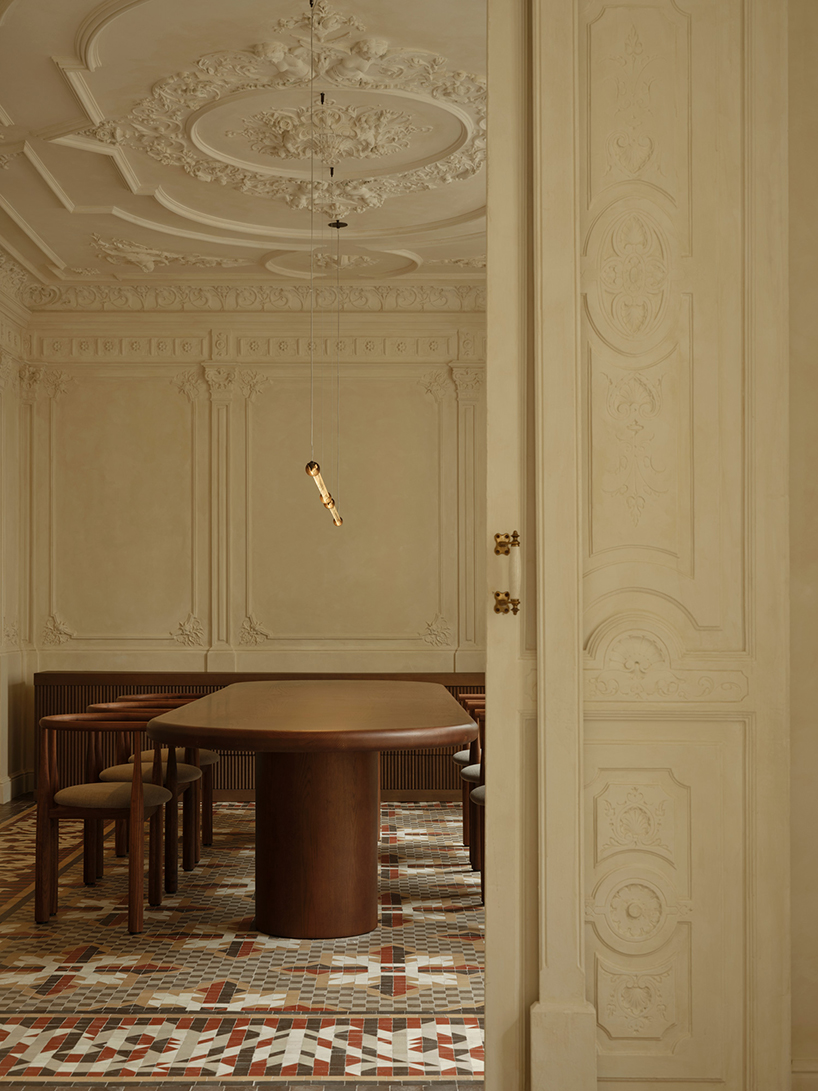
Completing the interior landscape are contemporary furnishings that reflect the best of modern design thinking. Seating elements by New Works introduce clean lines and sculptural silhouettes that contrast softly with the ornate 19th-century plaster moldings overhead. Meanwhile, refined luminaires by Venicem cast a warm, ambient glow across the spaces, accentuating the rich materiality of the wood, stone, and plaster. Through this careful balancing act, Balzar Arquitectos has transformed an aging 1890 residence in Valencia into a harmonious sanctuary where the craftsmanship of the past and the quiet minimalism of the present coexist in seamless equilibrium.