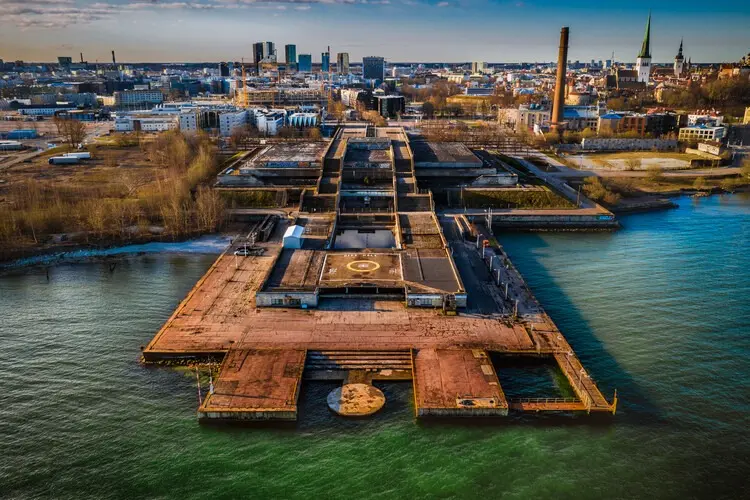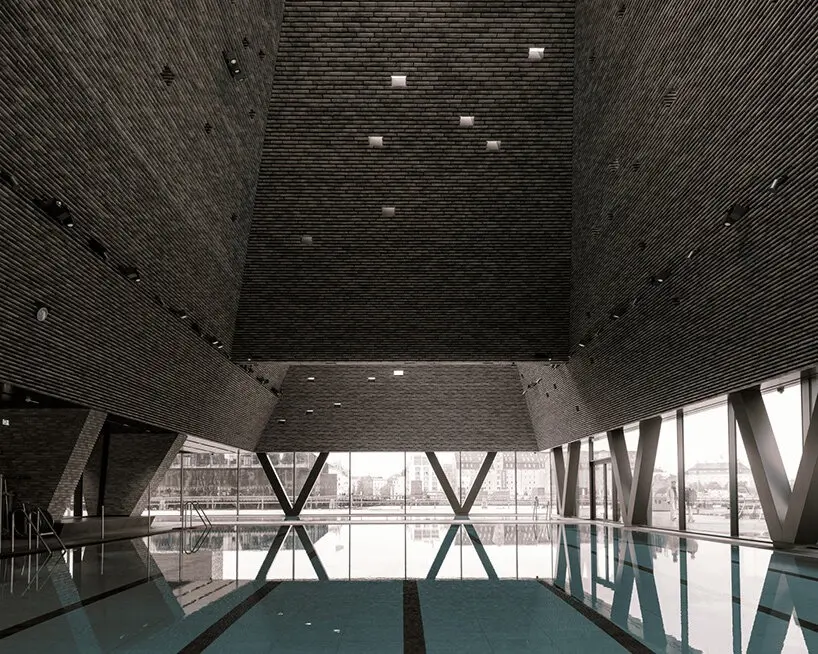
Copenhagen is preparing to welcome a striking new architectural and recreational landmark to its evolving harborfront. The KAI Water Culture House, designed by world-renowned Japanese architecture firm Kengo Kuma & Associates, is officially scheduled to open its doors on December 5, 2026. Situated on Papirøen, more commonly known as Paper Island, the 5,800-square-meter spa and public bathhouse introduces an innovative paradigm for urban swimming and aquatic recreation. The facility brings ten distinct swimming pools to the waterfront, further cementing the Danish capital’s reputation for inventive public architecture and its continuous transition of former industrial zones into vibrant, community-focused public spaces.
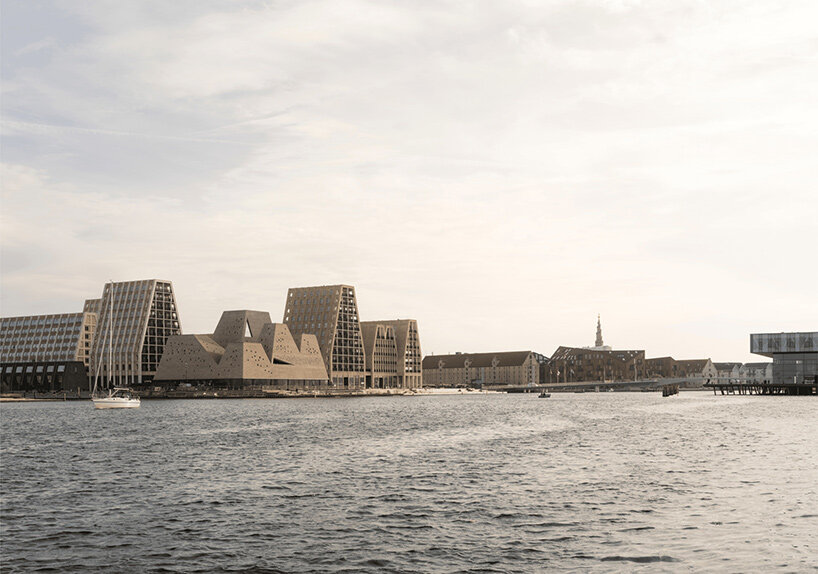
From the moment visitors approach the site, the building establishes a commanding yet ethereal visual presence. It is immediately recognizable by its five irregular brick towers, which rise dynamically above a continuous, transparent band of glass at the ground level. These sloping walls form a clustered, sculptural silhouette along the quay, carefully engineered so that the spaces between the individual volumes open dramatically toward the sky. Viewed from the harbor, the heavy masonry appears to hover weightlessly over the transparent base, lending the massive structure a surprising sense of lightness and fluidity despite its monolithic scale.
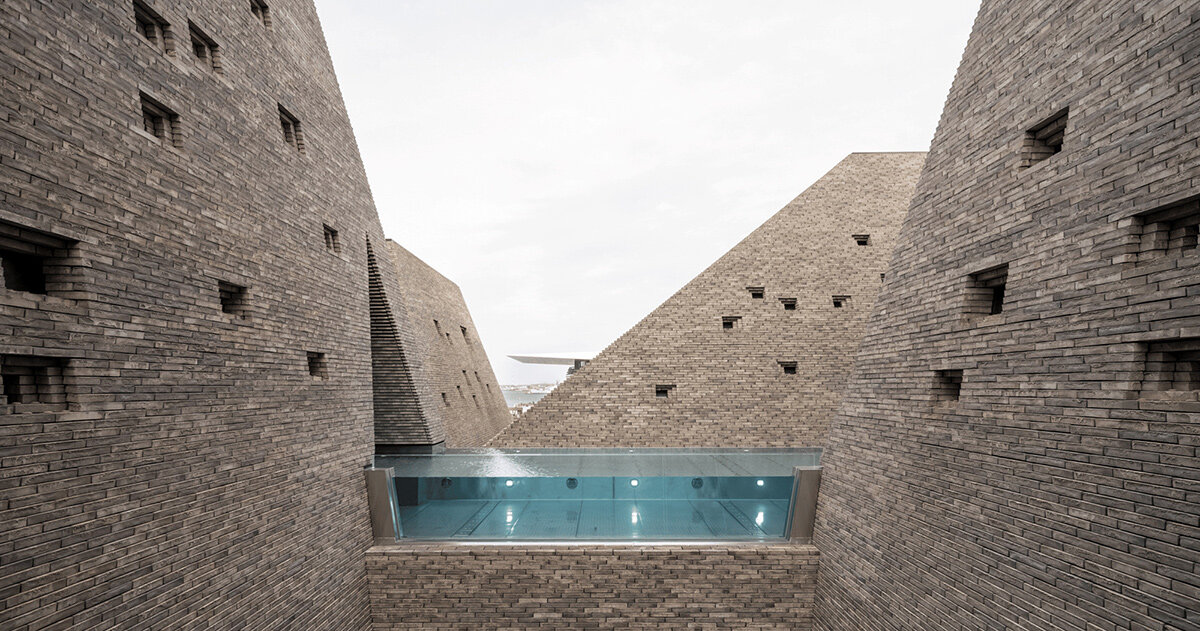
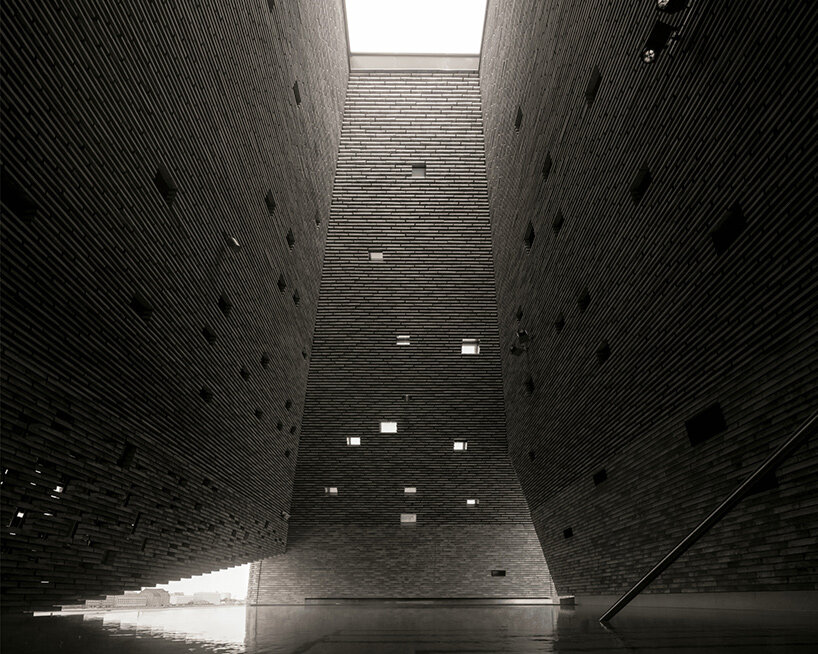
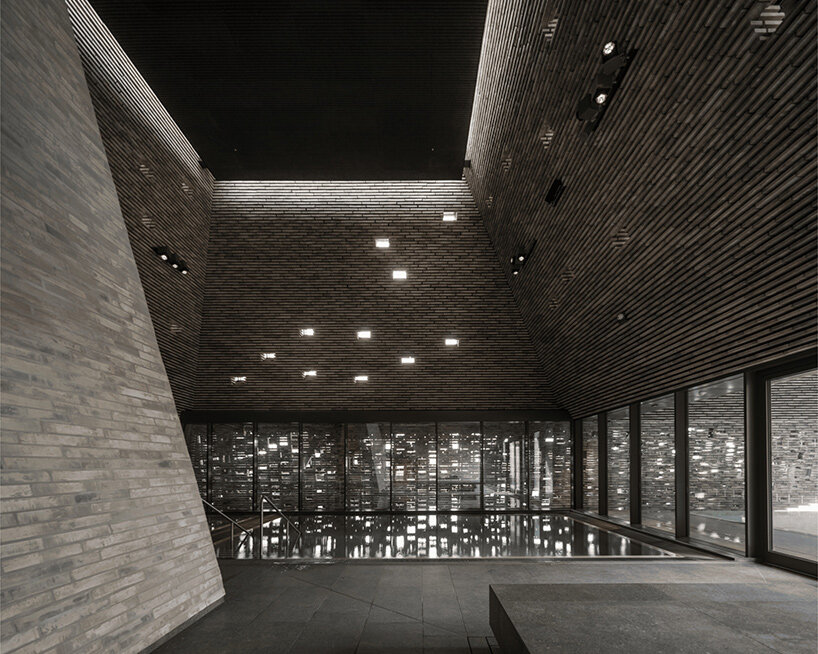
The design of the five towers is intimately tied to the functions housed within them, with each volume taking its precise form from the swimming pools and cultural spaces located beneath and inside it. Approximately 300,000 handmade bricks clad the angular surfaces, featuring varying gray tones that harmonize with the surrounding historic and modern architecture of the Copenhagen harbor. The masonry is meticulously laid in a stepped pattern, granting the sloping walls a rich, textured finish that reacts dynamically to the shifting Nordic daylight throughout the day.
Piercing these expansive brick facades are 403 windows of varying dimensions, puncturing the walls to create intimate visual connections with the surrounding city. While some openings are strategically placed to channel deep daylight into the subterranean and ground-level bathing chambers, others are positioned to frame sweeping, picturesque vistas across the harbor. Inside, the interior walls rise steeply above the water at sharp angles, forging towering bathing chambers where the enclosed architecture takes on an almost geological, canyon-like atmosphere. Among these volumes, the tallest stands out as the Culture Tower, dedicated entirely to cultural activities, community gatherings, and public events, reflecting Kengo Kuma’s ongoing philosophy of architecture as a communal connector.
Perhaps the most breathtaking architectural feature of the KAI Water Culture House is the Valley Pool, an open-air swimming basin positioned on the first floor directly between the building’s five angular brick towers. In this unique outdoor sanctuary, visitors can float beneath the open sky, completely surrounded by textured masonry while remaining fully exposed to the elements. This setup allows bathers to experience Copenhagen’s ever-changing weather firsthand, turning rain, wind, and even winter snowfall into memorable parts of the aquatic experience.
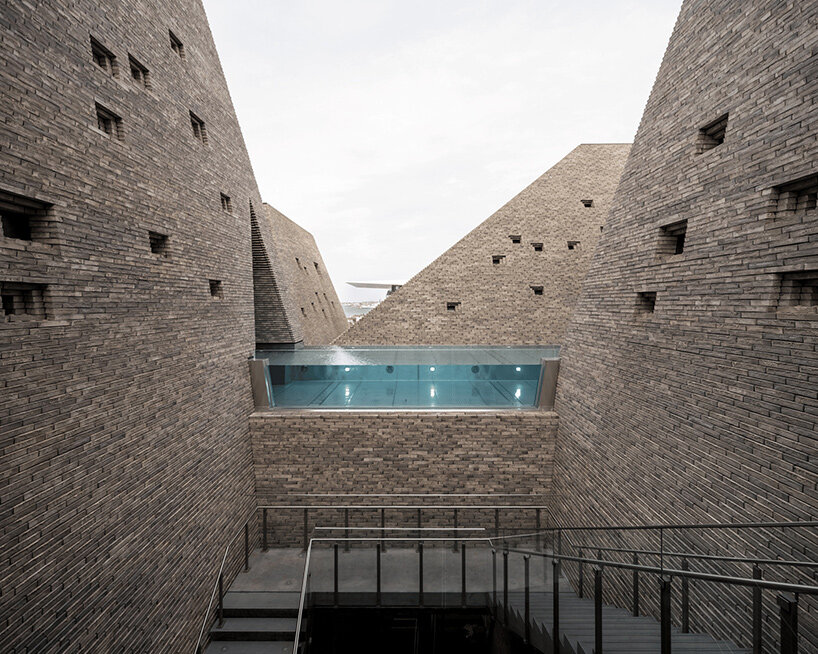
Adjacent to the Valley Pool on the same level is a heated outdoor onsen, which bridges Japanese bathing traditions with the unique Scandinavian waterfront setting. Both outdoor pools are engineered for comfortable, year-round operation, sustained by a sustainable ground-source heat pump system connected to ten deep boreholes plunging 250 meters into the earth. This sophisticated engineering underpins the architecture’s core duality, allowing visitors to move seamlessly between enclosed, cave-like brick interiors and expansive pools open directly to the sky and elements.
At ground level, the KAI Water Culture House caters to a wide spectrum of athletic and recreational needs, housing a standard 25-meter fitness pool alongside a dedicated teaching pool and three smaller pools tailored for children. Ascending to the upper levels reveals warmer therapeutic bathing areas accompanied by a bracing cold plunge pool, traditional saunas, and a steam bath. The transparent ground floor acts as a visual filter, opening up expansive views toward the surrounding maritime environment and knitting the indoor swimming activities directly into the fabric of the harbor life outside.
The integration with the waterfront extends well beyond the building’s interior. Outside, a newly constructed timber boardwalk will lead visitors to designated harbor swimming and dipping areas, offering direct access to the clean waters of the port with striking views toward the nearby Royal Danish Playhouse and Opera Park. These surrounding public bathing facilities are slated to open in early 2027, closely following the main building’s December inauguration.
The realization of the KAI Water Culture House is the culmination of a decade-long civic journey that began with a city-led ideas competition in 2015. At the time, Copenhagen residents submitted 160 distinct proposals for the future development of Paper Island, with the overwhelming majority calling for the establishment of a public swimming facility in the heart of the harbor. Responding to this grassroots civic desire, Kengo Kuma & Associates won the subsequent architectural competition in 2017. The firm collaborated closely with Cornelius Vöge Atelier for Architecture during the foundational early design stages, while Vilhelm Lauritzen Architects steered the project through the rigorous demands of detailed design and construction.
Nearly ten years after those initial citizen proposals were submitted, the project brings the original public vision to life at the water’s edge. Set against the backdrop of a transformed industrial waterfront, the KAI Water Culture House stands ready to redefine urban wellness in Denmark, merging traditional craftsmanship, contemporary sustainable engineering, and cutting-edge architectural design into a singular public amenity for Copenhagen.