When Pool of Radiance: Ruins of Myth Drannor launched back in 2001, it arrived under a cloud of technical disaster so profound that it left an enduring scar on PC gaming history. Not since the ill-fated debut of Ion Storm’s Daikatana had the release of a single video game generated such intense indignation and frustration from early buyers. Contemporary reviews did not hold back, detailing a multitude of outrageous bugs that plagued the dungeon crawler from the moment it was installed.
Among the most egregious technical failures were bugs that corrupted save files, made essential quest items completely disappear, and, most infamously of all, deleted critical system files when a player attempted to uninstall the game. These catastrophic issues transformed what should have been a triumphant return to a legendary tabletop role-playing franchise into a notoriously hazardous software experience that many players wisely chose to avoid entirely.
More than two decades later, publisher SNEG has brought the title back to modern platforms, launching a rerelease now available on Steam and GOG. Crucially, this new version leaves behind the catastrophic technical nightmares of the past. The rerelease introduces modern quality-of-life enhancements designed to make the game playable on contemporary hardware without threatening the integrity of a player’s operating system.
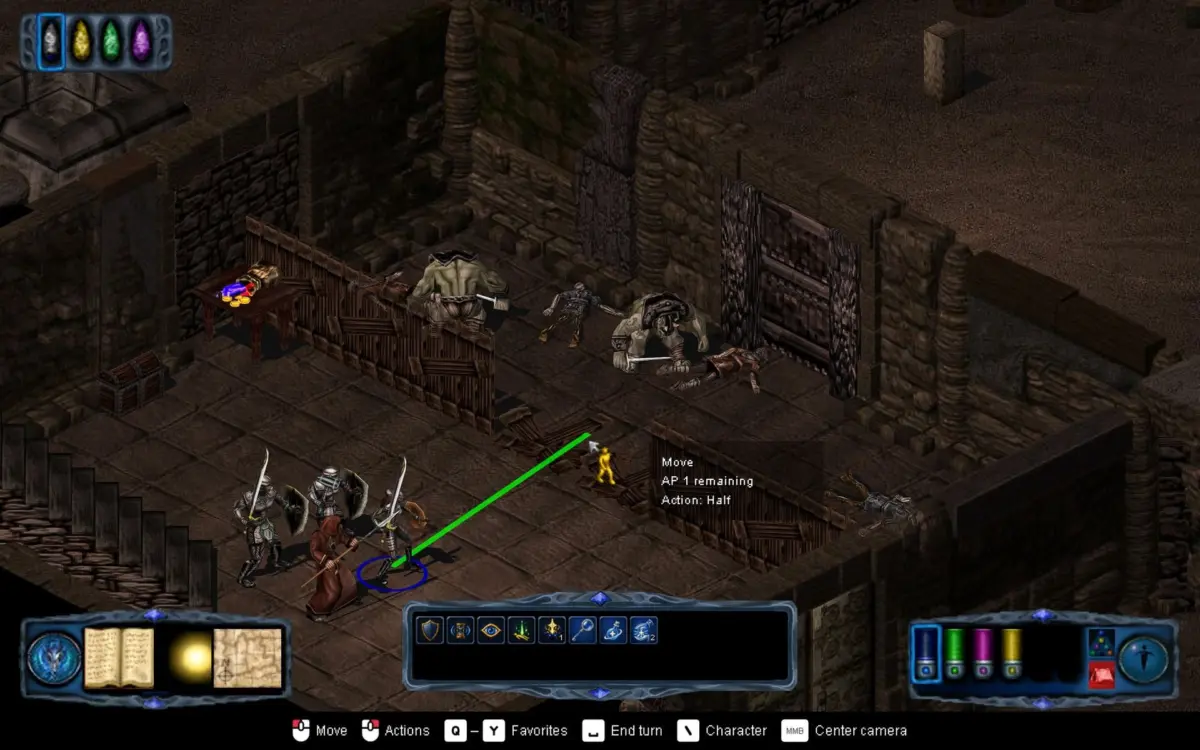
The updated version adds widescreen display support, controller compatibility, adjustable combat speed, helpful tooltips, an introductory action bar, and sharpened visual assets. For players who skipped the title during its original run due to its fearsome reputation for being a persistent hassle to play—even after the eventual release of patches and community fixes—the new edition offers a smooth, problem-free experience. Early hours spent with the rerelease show that key items remain securely in inventories and save files load reliably without a single instance of corruption.
However, modernizing the technical foundation does not transform the underlying design into a lost masterpiece. Ruins of Myth Drannor is not a hidden gem on the level of Vampire: The Masquerade – Bloodlines—an ambitious RPG masterpiece held back solely by a notoriously buggy release. Instead, it is a relatively simplistic, turn-based dungeon crawler that is primarily notable for serving as a spiritual successor to the first Gold Box Dungeons & Dragons game, simply titled Pool of Radiance, and for attempting to adapt the then-brand-new third edition of the D&D ruleset.
At the time of its original development, the transition to the 3.0 rules represented a massive structural step forward for tabletop adaptations. Under the new system, any character could choose any class, and Armor Class calculations were fundamentally inverted so that armor values went up instead of down. For veteran players of older editions, the shift required breaking years of mental conditioning, as explaining to newcomers that a lower Armor Class was better than a high one—and that players ideally wanted a negative number—had long been a tedious drag. The 3.0 system also formalized the central mechanic of rolling a twenty-sided die and adding a modifier to beat a set difficulty score, establishing a mechanical baseline that anyone familiar with the modern fifth edition will instantly recognize.
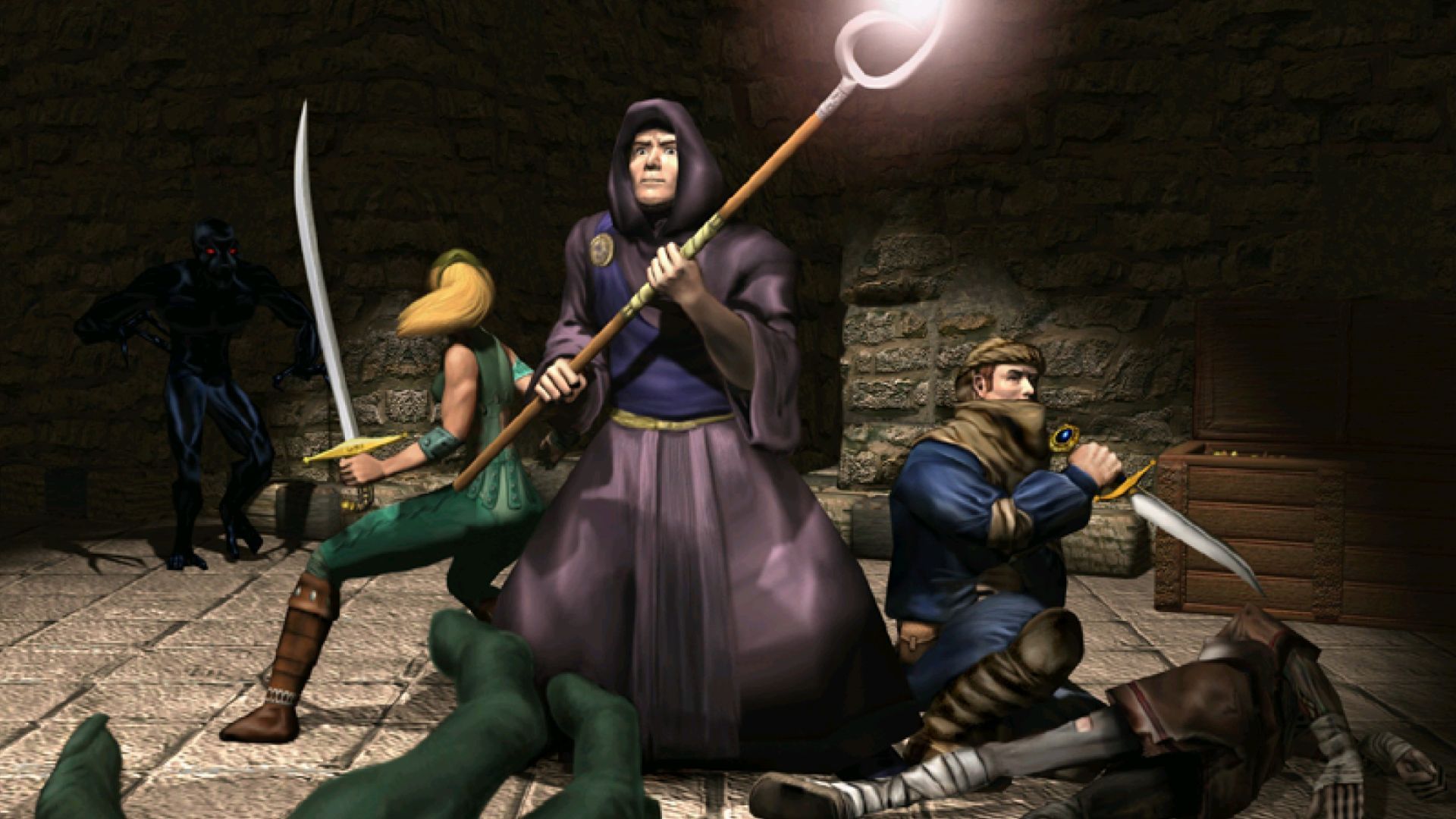
This historical significance makes it all the more disappointing that Ruins of Myth Drannor implemented a heavily restricted and incomplete adaptation of those groundbreaking rules. Players cannot choose to play as a wizard, leaving the sorcerer as the sole option for arcane spellcasting, nor are races like halflings or gnomes available for selection. While players choose which class to improve when advancing a level, they are given no agency over where individual skill points are allocated or which specific feats to acquire. Just a couple of years later, titles like The Temple of Elemental Evil would arrive to adapt the subsequent 3.5 rules update with far greater depth and fidelity, making Ruins of Myth Drannor feel decidedly rudimentary by comparison.
Beyond its mechanical limitations, the game offers a relatively thin narrative framework. Set a decade after the events of the original Pool of Radiance, the plot revolves around the emergence of a new magical pool within the ruined elven city of Myth Drannor. An evil sorceress and a dracolich featured prominently on the original box art set up shop to execute various villainous schemes, prompting the legendary sage Elminster to dispatch a party of adventurers to put a stop to them.
The narrative features one clever twist to an otherwise straightforward plot: the player characters are not actually that primary party of elite adventurers. Instead, the player controls a backup squad—a literal B-team. Due to a mishap with a magic portal, this backup party arrives too late to rescue the primary group and finds themselves forced to inherit their abandoned quest by default.
This narrative justification explains why a party consisting of four level-one nobodies must suddenly embark on a grueling campaign to clear out hundreds of orcs and skeletons from a repetitive series of dungeon chambers. The progression is characterized by a slow-paced slog, particularly within the echoing main halls of Myth Drannor. Players earn a conservative drip-feed of experience points and meager gold coins by defeating hordes of zombies and ghouls, constantly running the risk that a random orc might score a critical hit and drop a party member in a single devastating blow.
Despite these clear shortcomings, the rerelease offers a distinct, undemanding charm for players willing to meet it on its own terms. It functions as an unpretentious, low-stakes role-playing experience that relies on simple tactical pleasures. Moments where a player is suddenly ambushed by skeletons, only to realize their cleric is perfectly positioned to decimate the undead horde with a well-timed Turn Undead ability, provide genuine satisfaction. Blocking narrow doorways to protect a vulnerable sorcerer while rushing enemy spellcasters before they can unleash devastating area-of-effect spells creates engaging tactical micro-decisions.
For many, Ruins of Myth Drannor occupies the specific space of junk-food fantasy gaming—a casual pastime akin to playing tabletop sessions around a table covered in pizza boxes and beverages. As a low-stakes guilty pleasure to be enjoyed between more demanding, complex modern releases, its return offers a welcome opportunity to revisit a fascinating, deeply flawed piece of digital role-playing history now that its infamous technical hazards have finally been laid to rest.