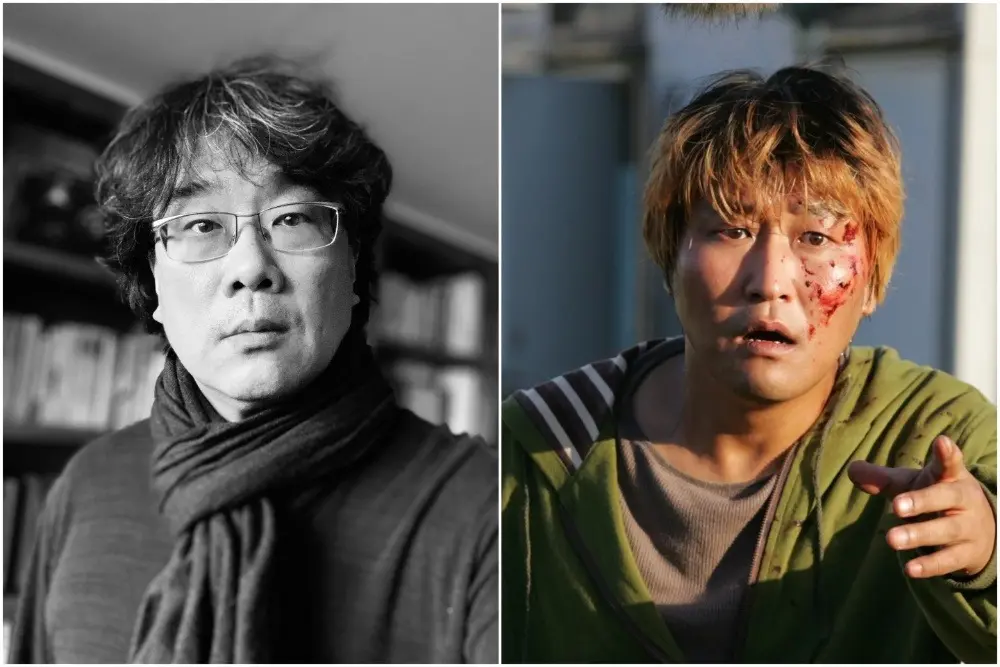
Two decades after it first terrorized audiences and redefined the monster genre, Bong Joon Ho’s critically acclaimed feature “The Host” is returning to the big screen in a pristine 20th-anniversary 4K restoration. Magnolia Pictures has announced plans to bring the remastered film back to theaters nationwide on Nov. 20, offering both longtime fans and a new generation of moviegoers the chance to experience the visionary South Korean creature feature in high definition. As part of the theatrical rollout, exclusive screenings on Nov. 21 and 23 will feature a special recorded conversation between Bong and acclaimed filmmaker Edgar Wright, adding further depth to the milestone cinematic event.
Reflecting on the passage of time since the film’s initial premiere, the Oscar-winning director admits that the milestone feels almost surreal. “I can’t believe it’s been 20 years since the release of the film. Time flies,” Bong tells Variety. Yet, alongside the disbelief at how quickly the years have passed, the director notes that the central themes of the 2006 movie—particularly its biting satire of official misinformation, bureaucratic incompetence, and government overreach—feel newly pertinent in today’s sociopolitical landscape.
For those familiar with the film’s narrative arc, “The Host” begins along the scenic banks of Seoul’s Han River. Song Kang-ho stars as Gang-du, a hapless and perpetually exhausted man who nods off on the job at his modest snack kiosk. Suddenly, a terrifying, mutated creature crawls out of the murky water, wreaks havoc among the unsuspecting crowds gathered on the riverbank, and snatches his young schoolgirl daughter, Hyun-seo, played by Ko A-sung.
In the chaotic aftermath, government and military authorities step in, but instead of offering genuine protection or transparency, they declare the creature to be the carrier of an unknown, deadly virus. Panic ensues, and the area is sealed off under quarantine. However, when Gang-du receives a desperate phone call from Hyun-seo, realizing she is terrified but miraculously still alive, he resolves to defy the authorities, slip into the heavily guarded, sealed-off zone by the river, and rescue her himself.
The emotional core of the film is anchored by Gang-du’s eccentric, fiercely loyal family members, who band together to aid in the rescue mission. Byun Hee-bong, Park Hae-il, and Bae Doo-na co-star as members of this dysfunctional yet deeply devoted family unit. Behind the scenes, the creation of the film’s terrifying monster was a massive international undertaking. New Zealand’s renowned Weta Workshop built detailed physical and digital models of the creature, while visual effects studio The Orphanage handled the complex animation and visual effects that brought the beast to life within Seoul’s urban landscape.
The enduring legacy of “The Host” arrives alongside Bong’s continued rise to global cinematic royalty. In the years following its release, the director achieved historic international acclaim with his 2019 masterpiece “Parasite,” which captured the prestigious Palme d’Or at the Cannes Film Festival and went on to make history at the Academy Awards. “Parasite” won four Oscars, including the coveted prize for best picture, marking a watershed moment as the first non-English-language film to take home the top honor in the history of the Academy.
Despite the monumental success of his later works, Bong remains deeply connected to the roots of “The Host,” which he originally wrote with the global SARS outbreak heavily on his mind. A particularly telling scene in the movie features U.S. lawmakers casually conceding that there never actually was a dangerous virus spreading through Korea. This moment was designed by Bong as a direct satire of the misinformation and false pretenses surrounding the launch of the Iraq War, which was initiated over weapons of mass destruction that ultimately turned out not to exist.
Looking back from the vantage point of the present day, Bong observes that humanity has continued down a troubling path of repeating historical mistakes. Noting that the world has endured the devastating coronavirus pandemic since the film’s release, the director points to ongoing global conflicts as proof that history stubbornly refuses to stay in the past. “Now we’re in the thick of the Iran War and we’re still in the midst of an ongoing war, and whether it’s good history or bad history, it seems like we as a community, as a whole, are repeating our mistakes,” Bong says. “Although the film has stayed the same, the history is repeating itself and making the film relevant again.”
When approaching the 4K restoration of “The Host,” Bong had a very specific aesthetic goal in mind: he wanted to recreate the authentic experience of watching a fresh 35mm film print, exactly as audiences saw it when the movie premiered at the Cannes Film Festival in 2006. Because “The Host” was notably shot on Fuji film stock rather than Kodak, the director was determined to bring back the subtle, specific color qualities that he had carefully worked out with his cinematographer, Kim Hyung-ku, during the original production.
Achieving this vintage film look required a delicate balancing act between modern technology and historical preservation. “Ironically, we were using digital technology to enhance the film look of the movie,” Bong notes. Furthermore, because the film’s extensive visual effects work was originally completed in 2005 and 2006—long before the current era of native 4K workflows—those specific shots had to be meticulously upscaled. Bong explains that the restoration team took great care to ensure that the creature still blended convincingly with the actors and their physical environments, and he expresses deep satisfaction with the final result.
Even now, when watching the completed restoration, Bong admits that he can still spot minor flaws in the CGI, alongside creative choices that leave him slightly dissatisfied. However, he views these imperfections not as mistakes to be erased, but as an honest reflection of his artistic evolution. “But I believe that the film is a record of what I was as a filmmaker at the time, and so I do not have any wishes to correct that,” Bong says. “Just like we don’t edit or rewrite our journals, I feel like it should just be left as it is.”
To illustrate his philosophy on preserving older work, Bong points to legendary director Ridley Scott, who famously removed a few shots when he re-released his original 1979 sci-fi horror classic, “Alien.” Bong admits that he faced a similar temptation during the restoration process. “I also had that kind of impulse, but luckily I was able to hold myself back,” Bong says. “It wasn’t a lot of shots. It was only one or two shots where I thought maybe I could cut that out, but in the end, I just resisted the impulse.” When asked which specific moment in the film he had considered cutting, the director playfully declines to reveal the secret.
The meticulous approach to preservation extended directly to the film’s auditory landscape. Bong handled the sound work for the restoration at Livetone, the prominent Seoul audio facility where he has collaborated with the exact same sound supervisor for the past 25 years, even as cinematographers and other crew members shifted from project to project. Fortunately, the studio has carefully maintained the film’s original sound library over the decades. While Bong notes that his subsequent films—from “Okja” onward, including “Parasite”—have been mixed in immersive Dolby Atmos, and that “The Host” could technically be upgraded to that modern format, he maintains that the exact sound format for the North American theatrical release is still being finalized.
During the original production, the most demanding aspect of the sound design was crafting the unique and terrifying voice of the creature. To achieve the desired auditory effect, the sound team recorded and heavily processed the vocalizations of a sea lion, then layered in a distinct vocal performance from Korean actor Oh Dal-su, blending the two elements seamlessly into the final mix that thrilled theatergoers in 2006.
Given that everything he has directed following “Okja” was captured natively in 4K and finished with advanced Atmos sound, Bong sees little practical point in remastering his more recent filmography. He has, however, explored alternative visual presentations for some of his other works, having created striking black-and-white versions of both “Mother” and “Parasite,” which have been showcased in select theatrical runs and international film festivals. “I have great admiration for black-and-white films,” Bong says. “It’s a process that I enjoyed very much.”
Looking ahead to his future projects, Bong recently confirmed to Variety that following the completion of his highly anticipated animated feature “Ally,” he intends to pivot back toward a slate of gritty crime and horror films. Asked whether that remains his steadfast career trajectory, the director offers a clear and definitive confirmation, signaling an exciting return to the genre roots that helped establish his global reputation. “I want to return home,” Bong says.