“Better dead than red.”
During the height of the Cold War, conservative Americans used to say that phrase, and they meant it. To them, it was better to suffer total nuclear annihilation than to endure a “red” victory. By “red,” they meant anyone on the left side of the political spectrum—ranging from Soviet communists to their domestic sympathizers and so-called “fellow travelers” within the United States.
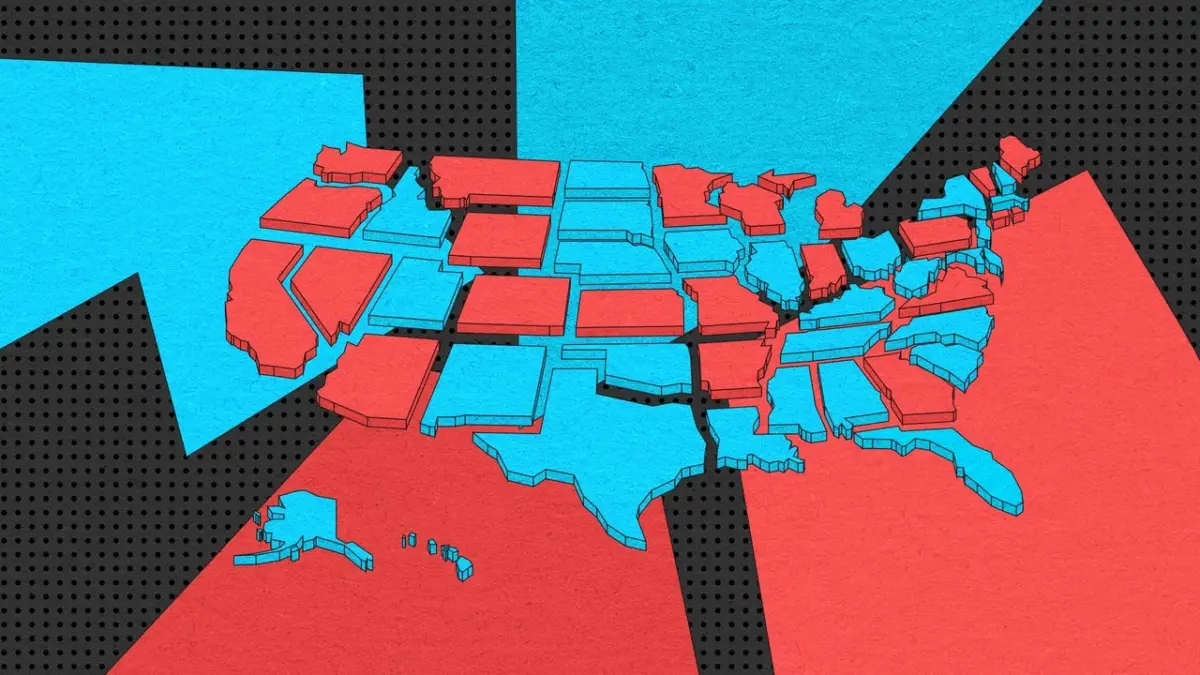
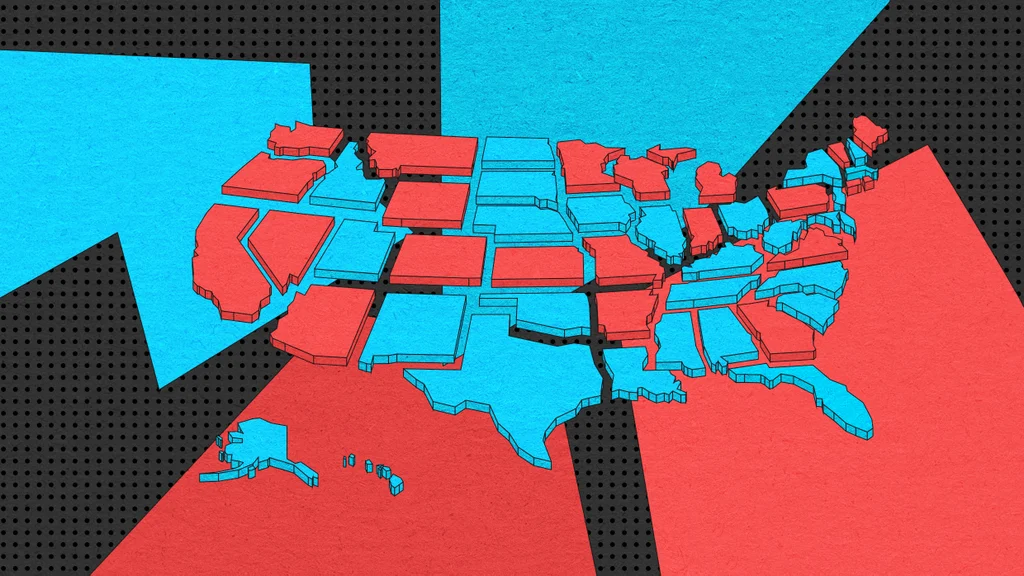
It stands as a profound and somewhat surreal irony, then, that America’s premier conservative party, the Republican Party, is now universally known as the red one. There was no grand ideological design behind this sudden semantic switch, nor was there any founding decision by either major political party to claim a specific color as its permanent identity. The entire red-state and blue-state vocabulary that dominates modern political discourse is actually much newer than most citizens assume. It dates almost exactly from the controversial and contested 2000 presidential election.
And yet, despite its omnipresence in modern media, that simple color-coded binary in many cases fails to accurately capture the complex and multifaceted reality of politics in America.
When Nobody Could Agree on a Color Scheme
For decades, television networks and major news organizations needed a visual way to distinguish two competing presidential candidates on an electoral map, and for a long time, they simply picked whatever colors looked aesthetically pleasing or technically functional that year. There was no standardized system, and viewers certainly did not associate a party’s core values with a specific hue.
In the 1976 presidential election, for example, NBC famously colored GOP candidate Gerald Ford’s winning states blue, while assigning the color red to Democratic challenger Jimmy Carter. Four years later, that exact same color scheme meant that when Republican Ronald Reagan swept the nation in a historic landslide victory, the television map was painted almost entirely blue.
Looking back, that visual reality is a strange thing to picture today, especially given how thoroughly Reagan eventually became cemented as the ideological patron saint and philosophical bedrock of the modern Republican Party—the self-proclaimed “red” team.
That temporary assignment of colors was not just a one-network quirk or an isolated broadcasting error, either. Major print publications also played fast and loose with political palettes. The Washington Post, for instance, was still routinely assigning the color red to Democrats and the color blue to Republicans in the graphic displays and infographics used throughout the 2000 presidential campaign cycle.
It was only as the 2000 election dragged on through weeks of recounts, legal battles, and unprecedented television coverage that the red-and-blue map became permanently seared into the American consciousness. Broadcasters needed a uniform shorthand to explain complex voting data to viewers tuning in around the clock, and the visual convention stuck.
What began as a matter of television production convenience gradually transformed into a rigid cultural shorthand. Today, the colors dictate how Americans view their neighbors, their communities, and their government, transforming a fluid spectrum of political thought into a starkly divided landscape—even if the historic roots of those colors bear almost no resemblance to the ideological battles that once defined the phrase “better dead than red.”