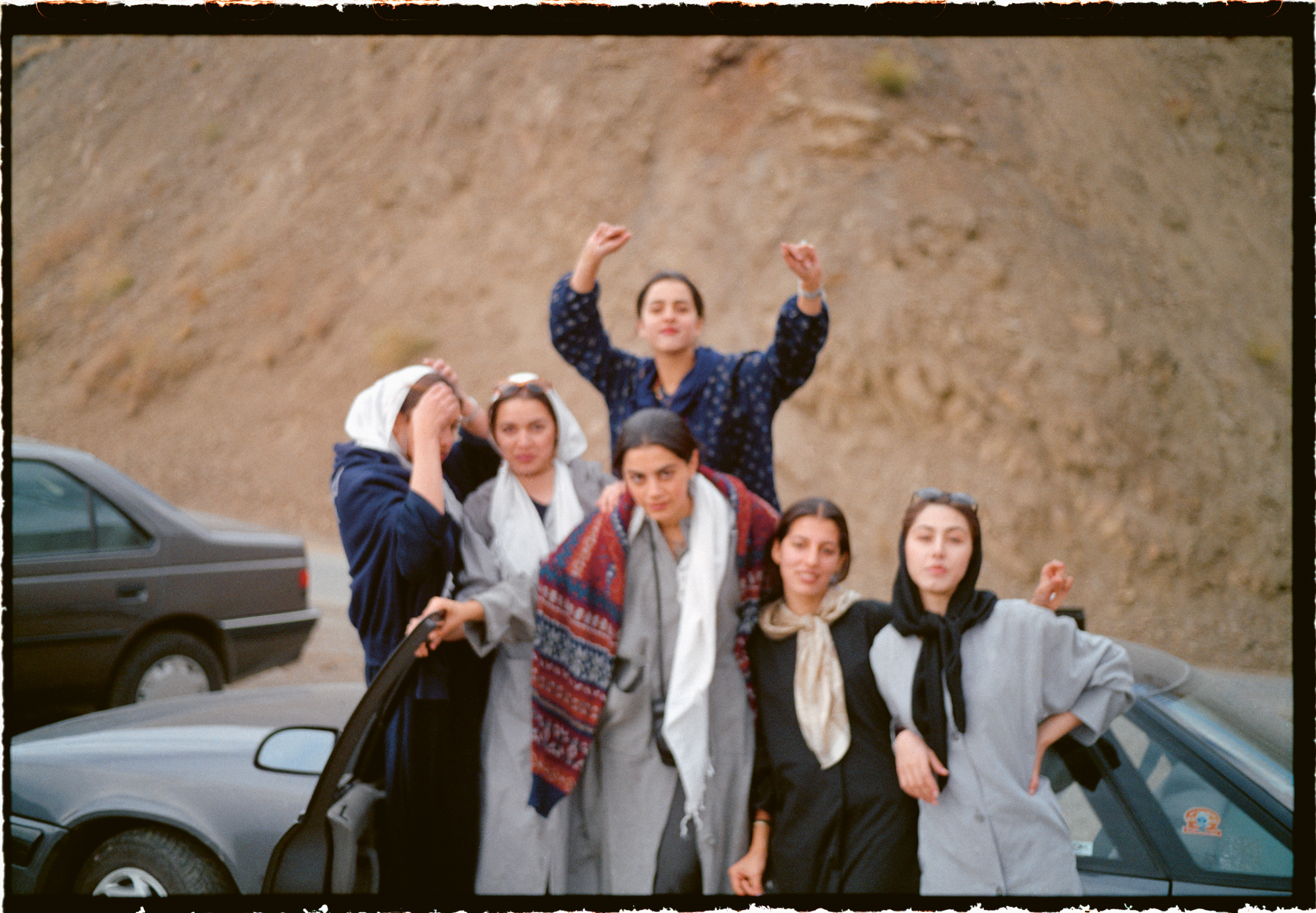
Published by Kehrer Verlag in Europe and the United States, the 240-page hardcover monograph spans a tumultuous period in modern Iranian history, charting a complex narrative that moves from the naive optimism of youth to the sobering weight of political reality. Rather than assembling a traditional "greatest hits" collection, Tavakolian purposefully searched her archives for crooked, out-of-focus, and discarded snapshots—what she describes as her "eyesore" photos—to construct a visceral visual diary of memory, grief, and resilience.
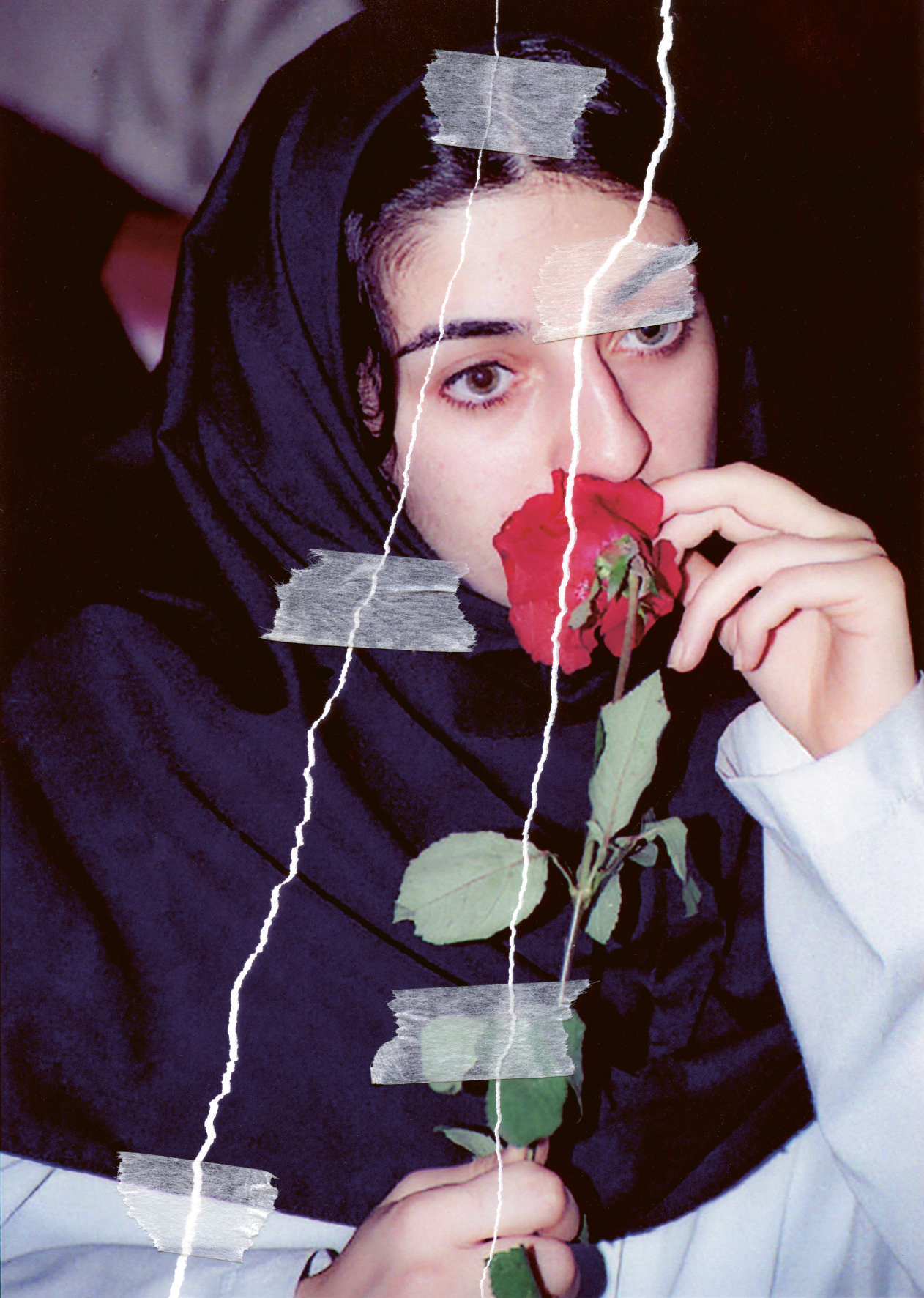
At the emotional core of the book is a poignant, damaged photograph taken by Tavakolian in 2001. The image features a young girl in a dark headscarf lifting a red rose to her face and looking directly into the camera lens. Originally captured at an election rally where politicians promised expanded freedoms for the country’s youth, the picture once stood as a powerful symbol of hope and innocence.
Over time, however, that initial promise curdled into profound disillusionment. "I wanted to kill that image because we had been lied to in such a blatant manner, and I was upset over just how naive my generation had been," Tavakolian reflects. In an act of rejection, she printed the negative, tore the print apart with her hands, and locked the jagged pieces away in a drawer. The photograph remained fractured for nearly two decades, only brought back into the light and taped back together following the death of her father in 2019. Today, those visible tears and strips of tape define the print, serving as a powerful metaphor for the fractured history of a generation whose aspirations were repeatedly dashed by political realities.
Back to basics
The genesis of And They Laughed at Me is rooted in profound personal loss and artistic paralysis. Following her father’s death, Tavakolian found herself unable to lift a camera or take new photographs for nearly two years, trapped in a state of grief and anger. Seeking a way forward, she turned inward, diving deep into her vast personal archive of negatives and contact sheets.
Instead of hunting for technical perfection or compositionally flawless frames, she sought out the mistakes—the images she had mentally discarded years prior. This unorthodox curatorial approach breathed new life into her archive. The first section of the book covers the formative years of her career between 1995 and 2001, a time when she began working as a professional photojournalist in Tehran at the remarkably young age of 16.
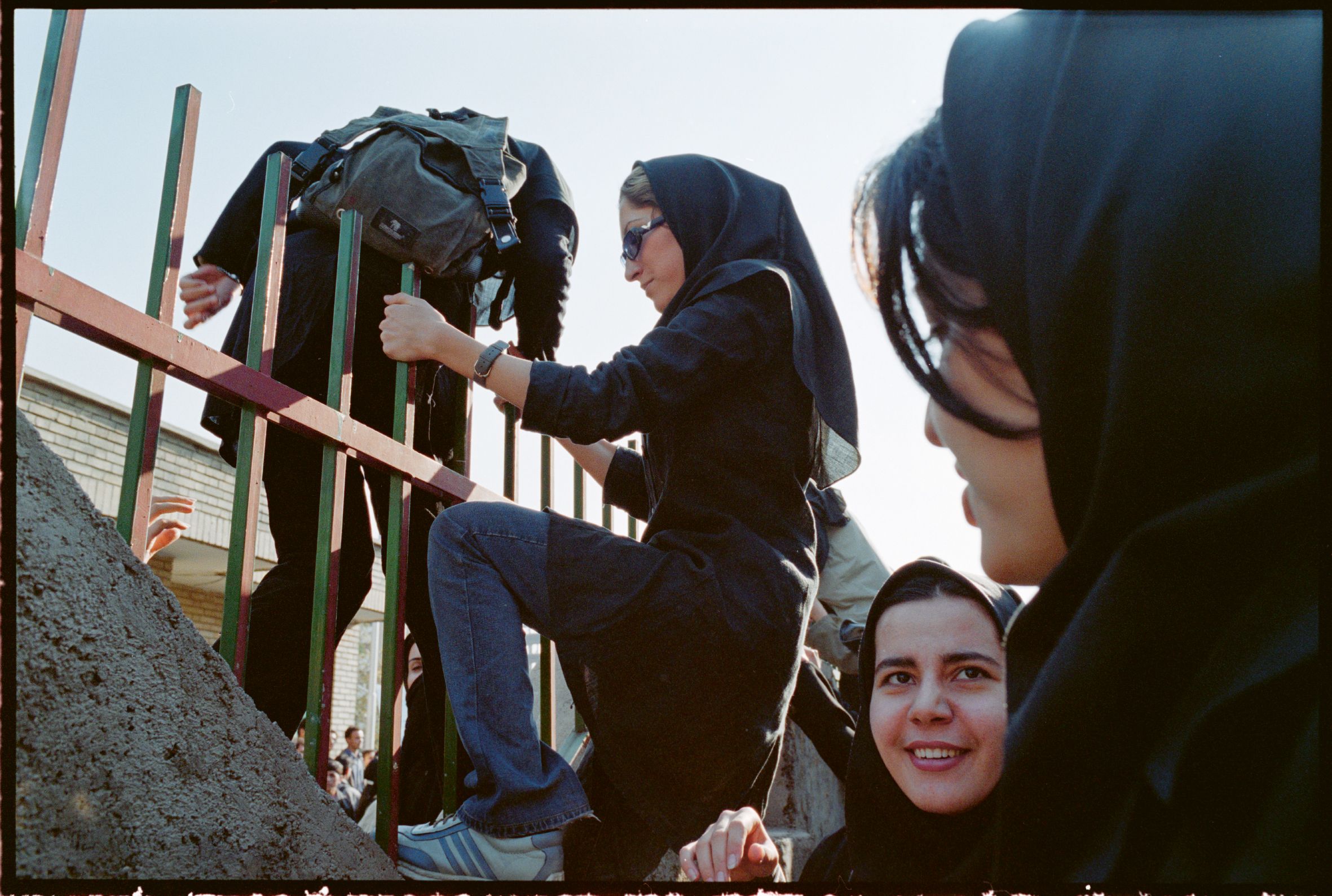
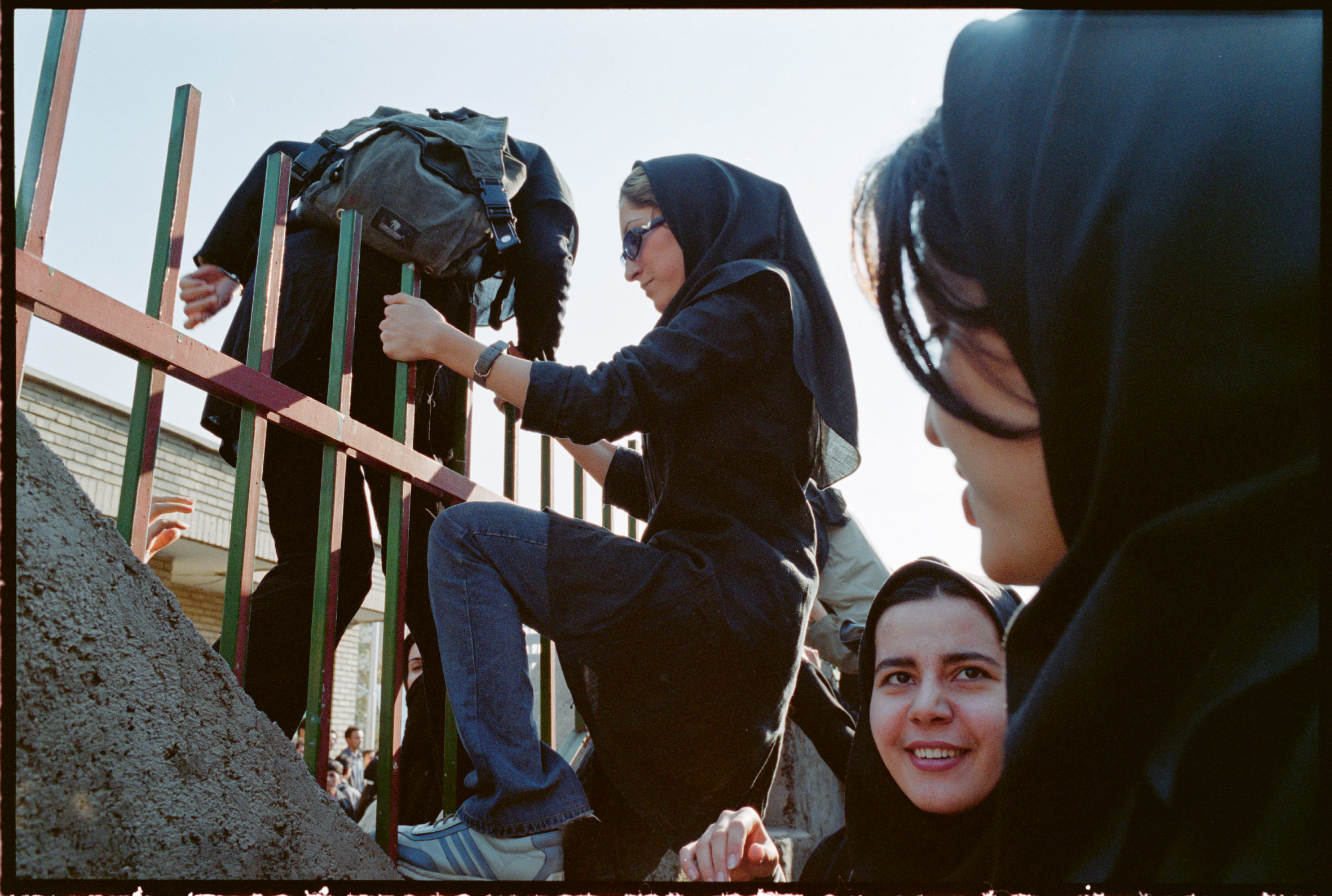
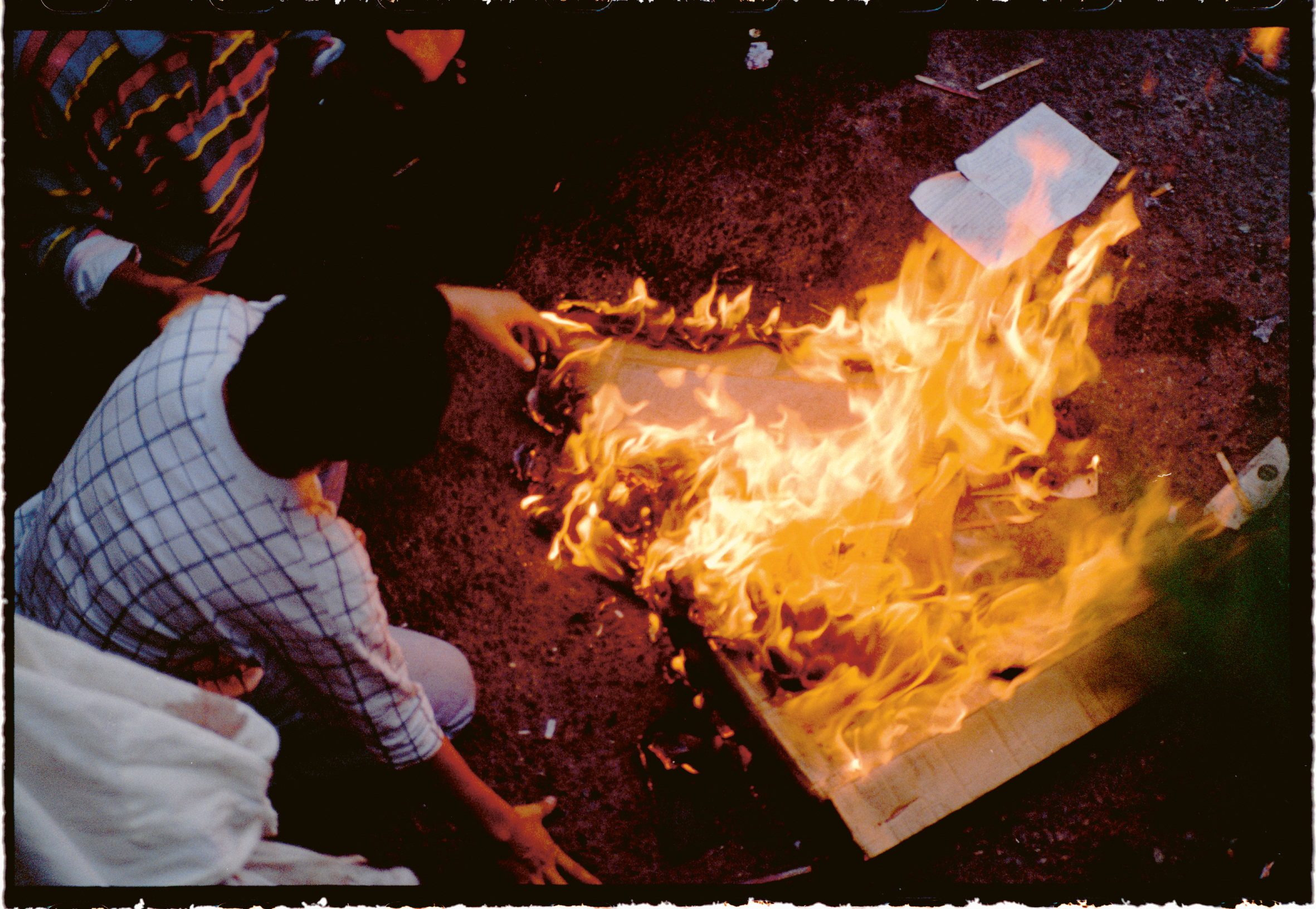
By mixing original contact sheets with enlarged, imperfect frames, Tavakolian crafts a raw and authentic window into the shifting societal landscape of late-1990s and early-2000s Tehran. Among the pages are striking historical moments captured on the ground: young women scaling metal fences to join student protests, a scene Tavakolian notes she had never witnessed before; protesters burning cardboard sheets on the pavement, utilizing the heavy smoke to drive away tear gas deployed by riot police; and friends and families dancing together in the rugged mountains outside the capital in Shemshak.
Other frames capture the electric, kinetic energy of election campaigns, rendered as blurs of motion and camera flash. While these photographs often lack the pristine technical execution typically demanded of mainstream photojournalism, those very imperfections elevate the work. As Tavakolian explained in a recent interview, those flaws became integral to the storytelling. They reflect the inherent fragility of human memory and the profound uncertainty of the times, capturing a demographic of young Iranians who genuinely believed that systemic reform was within their grasp.
Fighting the dark
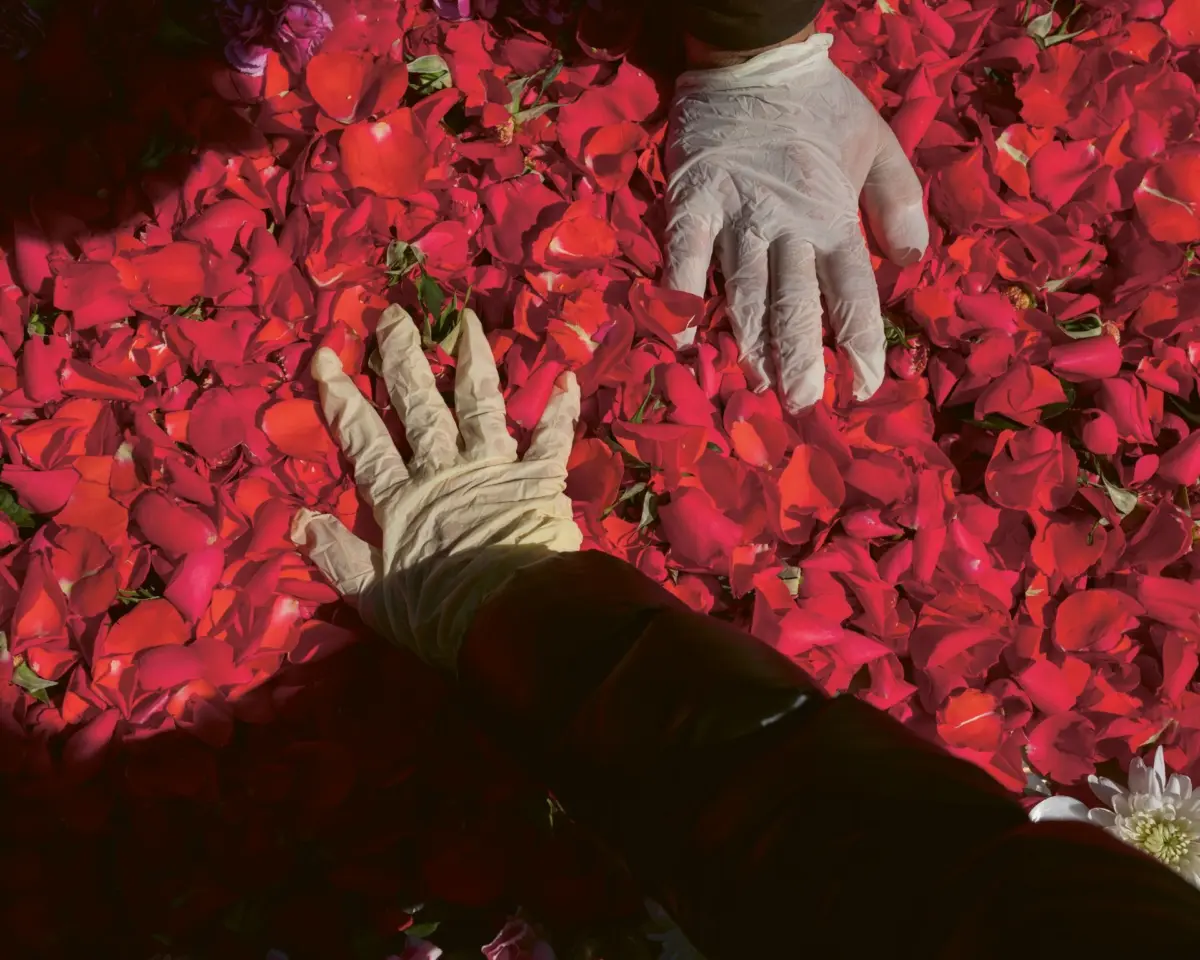
As the narrative progresses, the atmosphere within the monograph shifts dramatically. The second part of the book jumps forward to the turbulent years between 2017 and 2019, reflecting a darkening socio-political climate in Iran. The vibrant, rebellious energy of the earlier chapters gives way to stark, melancholic imagery: wilted sunflowers bent helplessly against a harsh blue sky, choked by plastic bags snagged in their petals; gloved hands resting softly upon a dense, somber bed of red rose petals at the Behesht Zahra cemetery; and a striking portrait where thick, aggressive strokes of yellow paint obscure almost an entire face, leaving only a single, haunting closed eye visible.
Tavakolian conceptualizes the overarching narrative arc of the book as a journey that begins with the unbridled hope and ambitious dreams of youth before colliding directly with the stark disappointment of reality. Yet, despite the pervasive darkness and the heavy weight of disillusionment, the photographer finds a defiant sense of agency within the struggle. She suggests that individuals ultimately face a stark choice: to be consumed by the surrounding darkness, or to actively choose to fight against it and move toward the light.
Drawing a parallel to the enduring resilience of ordinary people under pressure, Tavakolian likens the cumulative impact of these historical moments to gentle drops of water slowly hollowing out stone, eventually swelling from rolling waves into an unstoppable tsunami. Much like the young girl holding a red rose to her face amidst the broken promises of decades past, the overarching message remains one of fundamental endurance and the persistent human desire to live fully.
And They Laughed at Me is available as a 240-page hardcover publication featuring 144 color illustrations, complete with a versatile dust jacket that cleverly doubles as a poster, priced at $58 / £46.