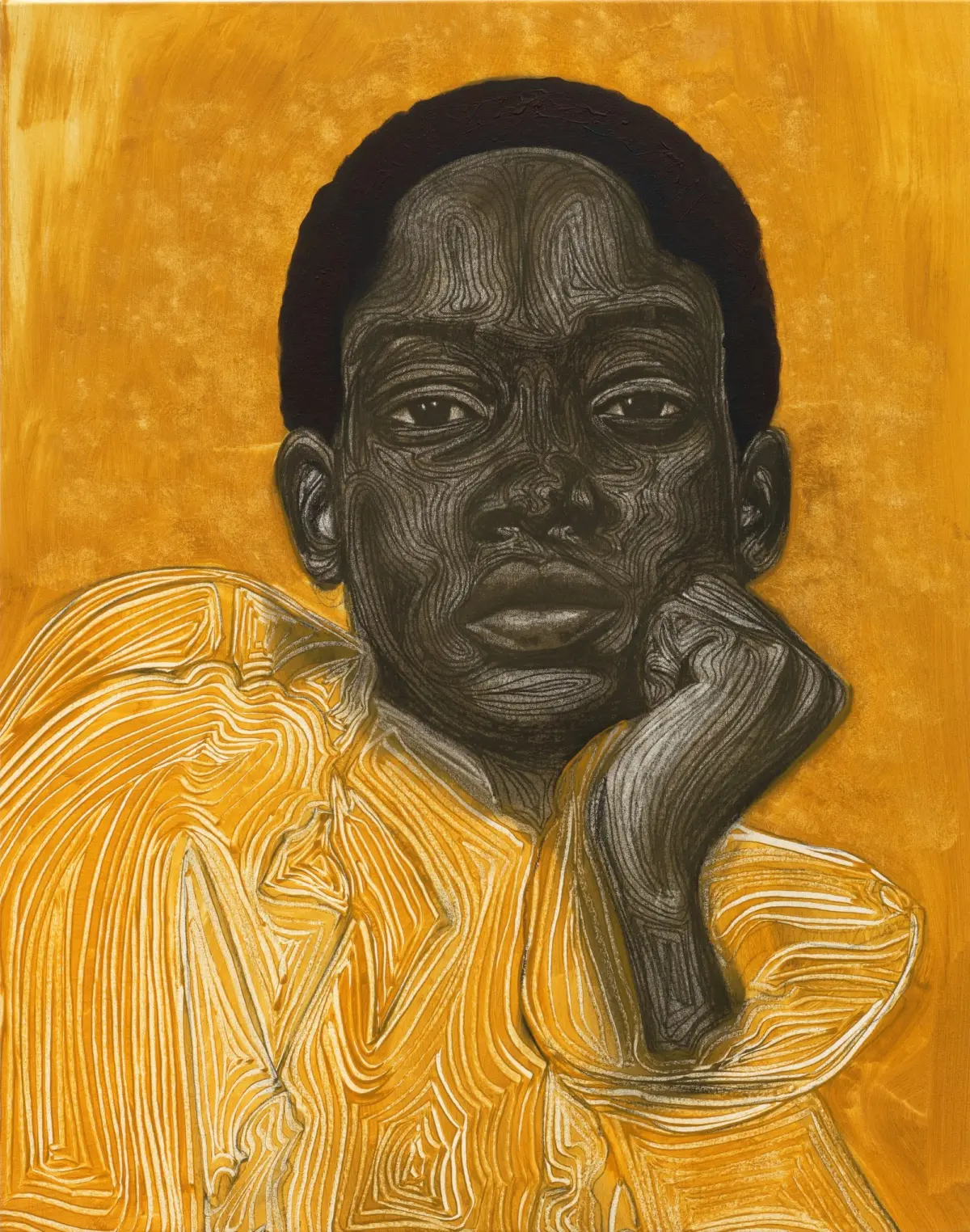
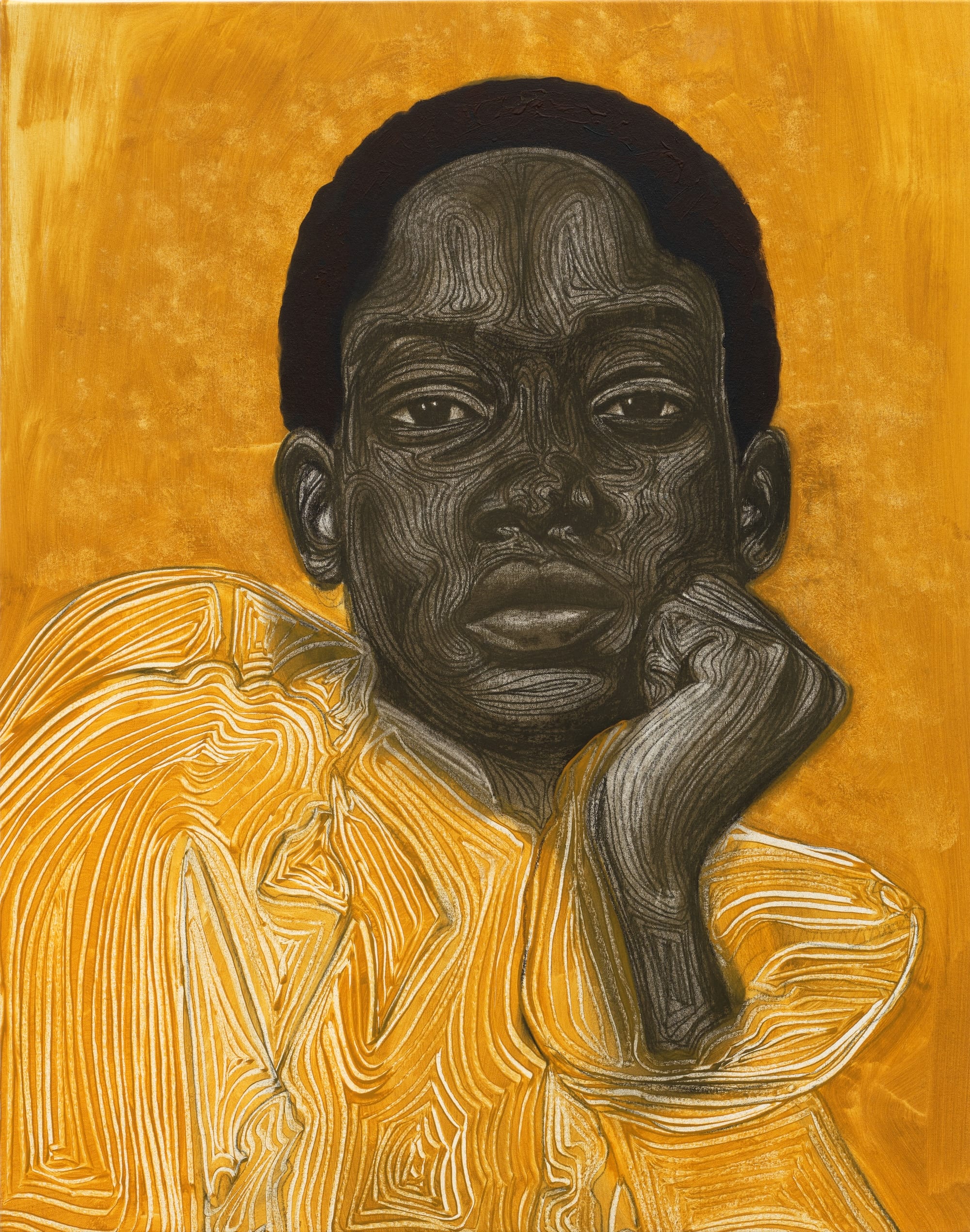
Through eloquent linear details and brushy, color-blocked backgrounds, artist Collins Obijiaku renders tender, captivating portraits in oil and charcoal. Often directly meeting the viewer’s gaze, the striking figures that populate his canvases are deeply inspired by real individuals within the artist’s immediate community, commanding our attention with an undeniable presence. Obijiaku expertly harnesses a sense of timelessness in his practice, utilizing a sophisticated palette that swings effortlessly from earthy tones to rich, jewel-toned hues. Enhanced by subtle architectural motifs, natural elements, and art historical iconography, his works transcend specific eras, bridging the gap between historical traditions and contemporary portraiture.
Raised in Nigeria’s Kaduna region, Obijiaku recently relocated to Chicago, a major geographic and cultural shift that has prompted him to deeply grapple with the emotional resonance of physical distance and the complex process of getting used to an entirely new place. This transition has become a central thematic pillar in his newest body of work. "Seen through a sentimental lens, these settings lend the paintings an intimate, dreamlike quality, as though recalling a presence from memory," notes an official statement from Roberts Projects, the prominent Los Angeles-based gallery that will present the artist’s forthcoming solo exhibition, titled Wherever You Are, Remember Me.
The exhibition, which opens on November 7 and runs through December 19 in Los Angeles, offers viewers a profound exploration into how human beings process distance, longing, and the persistence of memory across thousands of miles. Obijiaku’s work often investigates how everyday experiences have the profound potential to spontaneously prompt memories of home and loved ones. Simple sensory triggers, such as the distinct smells of food, can immediately evoke thoughts of festive holidays or distant relatives. Similarly, a passing sound or an ambient noise can instantly transport us to specific, cherished times and places in our past, defying the limitations of our current physical surroundings.
This psychological phenomenon is particularly potent when navigating an unfamiliar city. When exploring somewhere new, it is remarkably common to experience a kind of illusory familiarity—that fleeting, uncanny moment when a stranger passes on the street and briefly reminds us of someone we objectively know is thousands of miles away. It is this emotional landscape of displacement, searching, and ghostly familiarity that Obijiaku captures with such remarkable sensitivity on canvas.
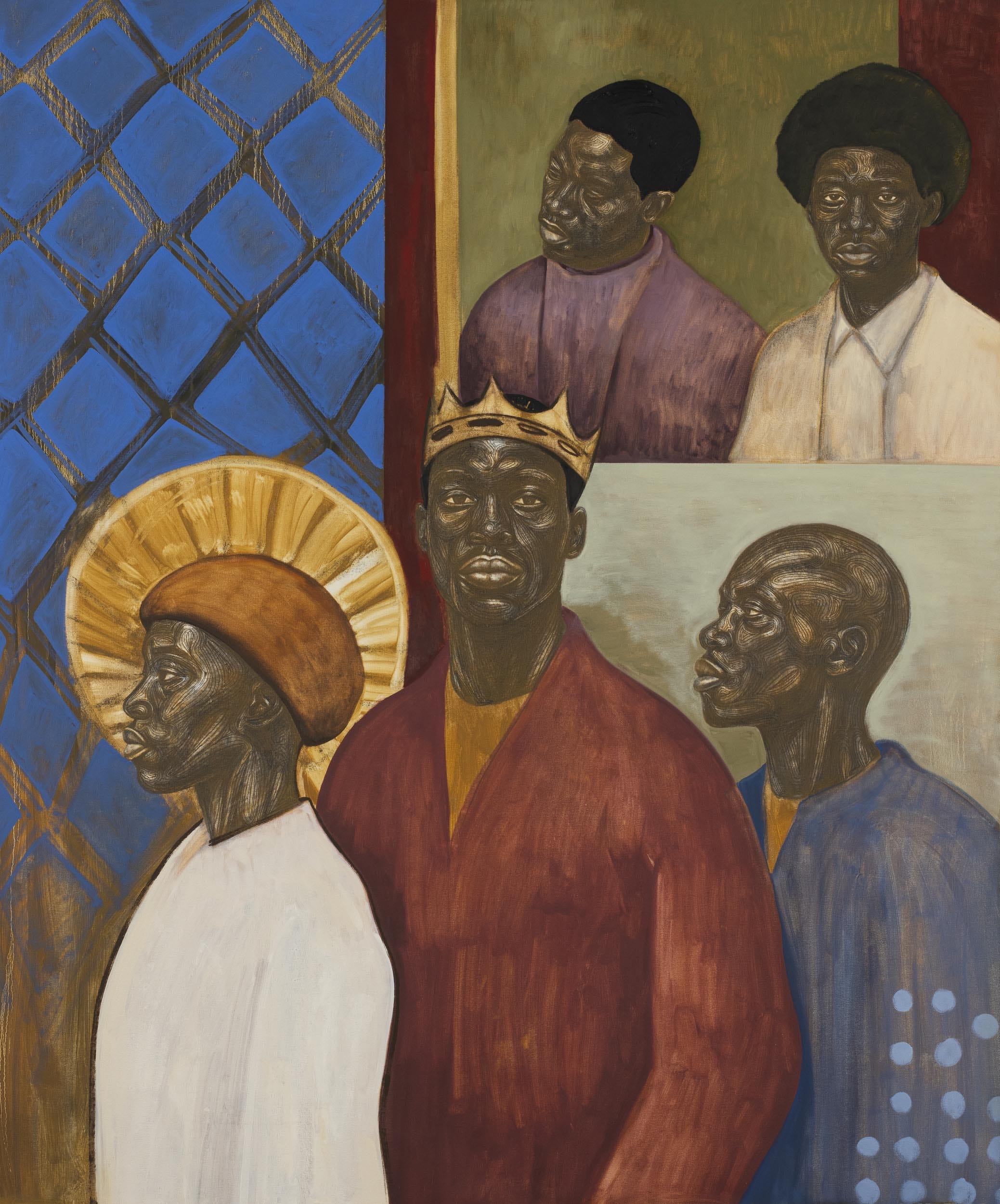
A curated selection of works from this new series, including standout pieces such as "Rengaji" and the "Portrait of Benedicta Rufus," will be prominently featured in the upcoming exhibition, complementing a thoughtful suite of newly minted still lifes. "Rengaji," in particular, serves as a prime example of Obijiaku’s ability to weave together disparate cultural and historical threads. The expansive oil and charcoal canvas nods directly to Renaissance paintings rooted in the Christian tradition of European masters such as Fra Angelico, while simultaneously referencing Obijiaku’s own vivid childhood memories of royal processions in Nigeria, where massive crowds would eagerly gather to observe the king.
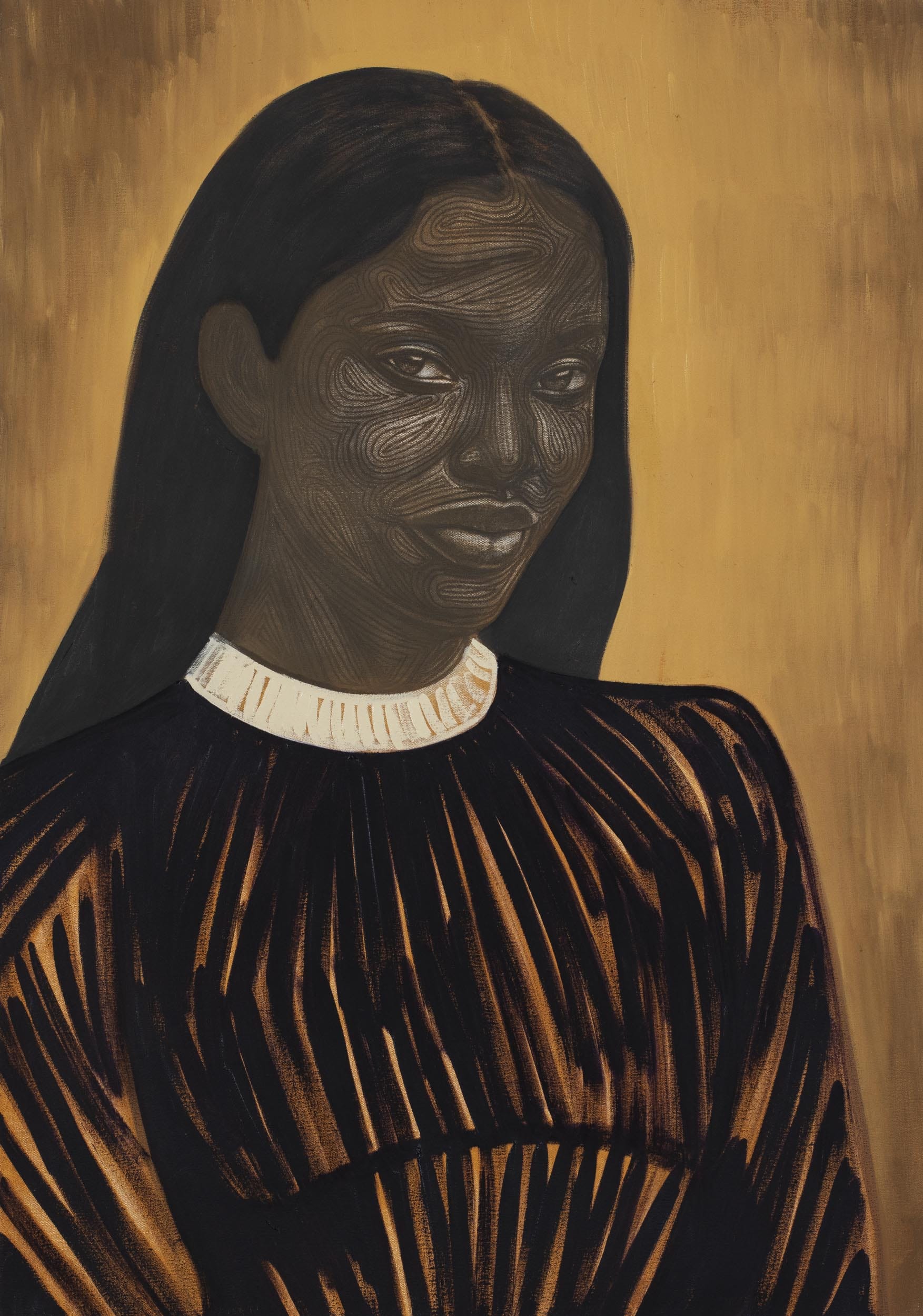
The interplay between European art historical reverence and personal, localized African heritage creates a rich visual dialogue that defines much of Obijiaku’s mature output. In "Portrait of Benedicta Rufus," created in 2026, a Black woman is rendered in a three-quarter profile wearing a crisp, white-collared top, set against a glowing, golden background that isolates her in a timeless, reverential space. The directness of her gaze, combined with the artist’s characteristic linear precision and expressive color blocking, turns a seemingly simple portrait into an arresting monument to individual identity and quiet dignity.
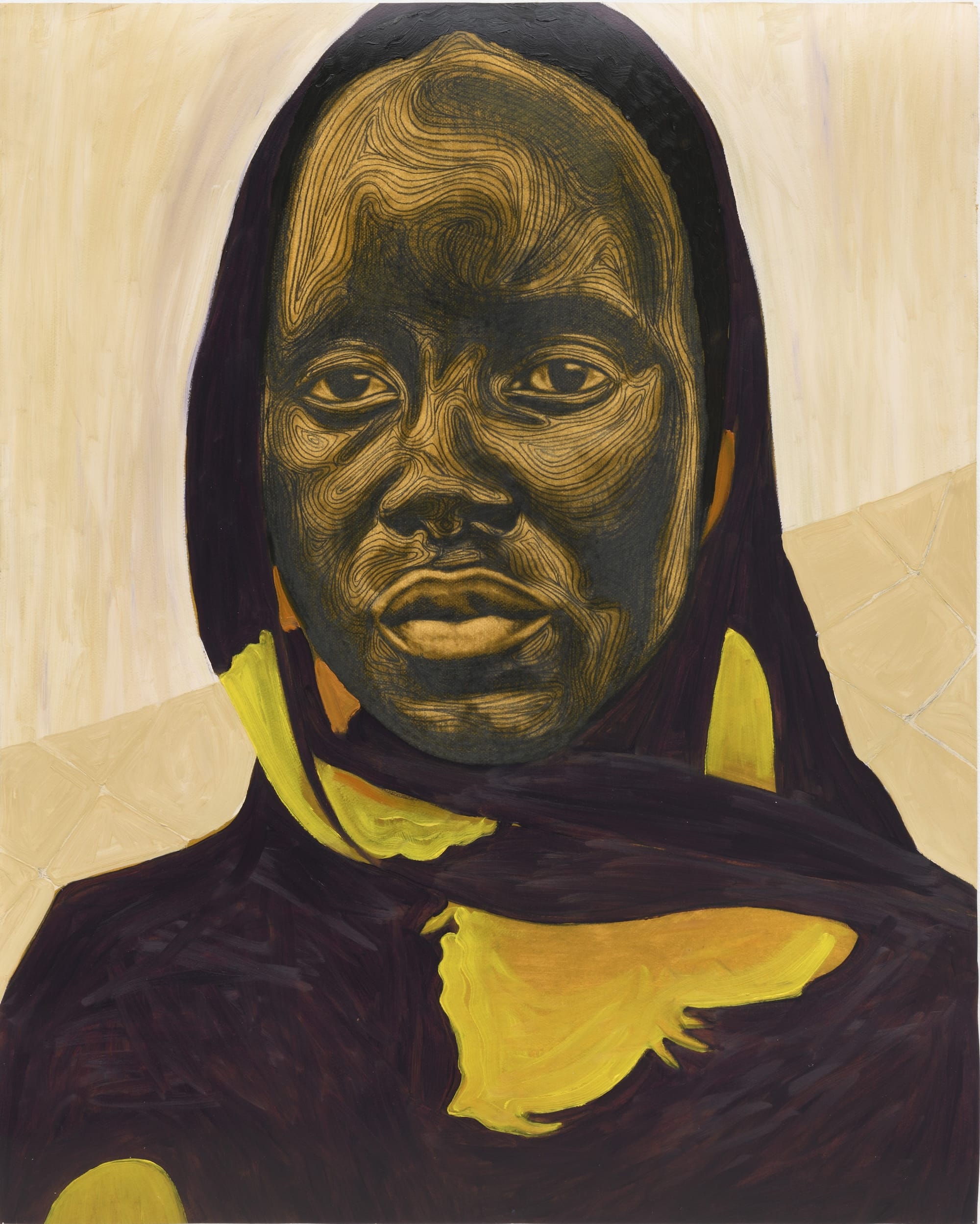
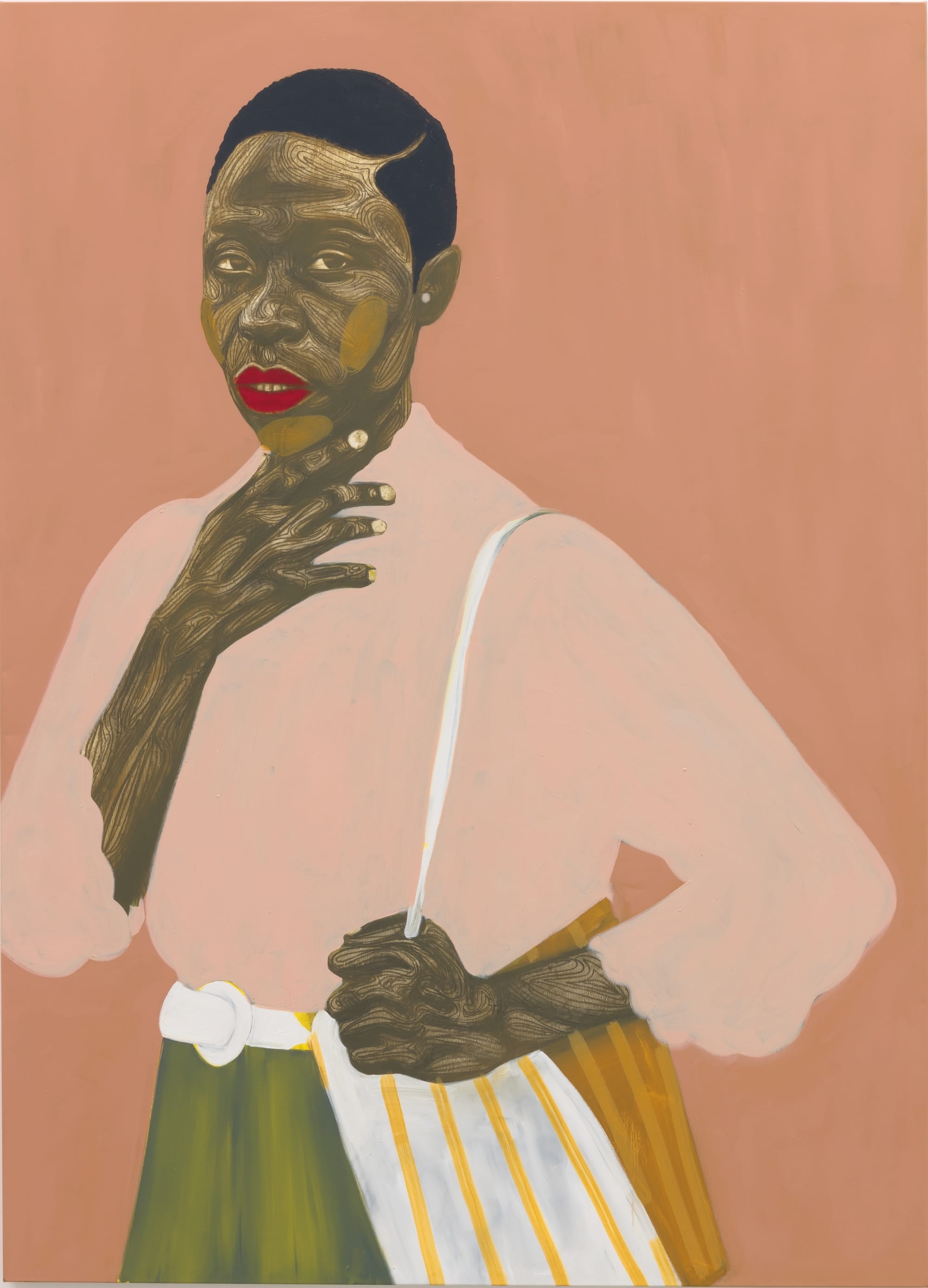
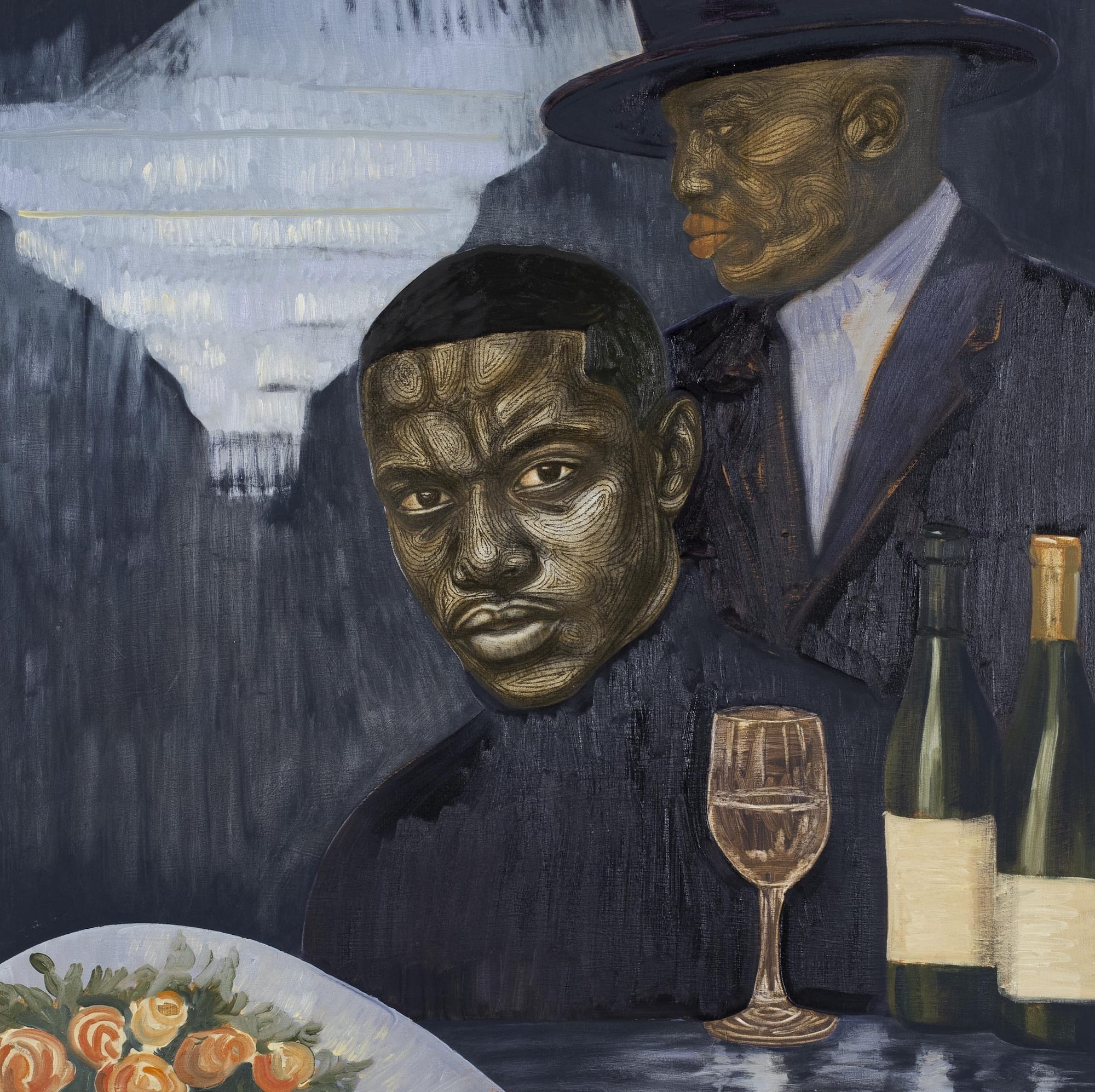
Other works featured in the broader scope of his recent practice further demonstrate his evolving mastery over scale, medium, and emotional depth. Pieces like "Yene I" (2023), executed in oil and charcoal on linen, present towering figures against vibrant, coral-pink backgrounds, with subjects captured in contemplative poses, such as a hand resting thoughtfully on a chin. Meanwhile, works like "In Good Company" (2026) and "SLO" (2023) highlight Obijiaku’s ongoing fascination with human connection, community, and the subtle nuances of interpersonal relationships. In "Aunt Vivian and Coach" (2022), a woman and a young boy stand side by side against a soothing lavender-colored backdrop, their individual expressions hinting at unspoken narratives and shared bonds that extend far beyond the borders of the canvas.
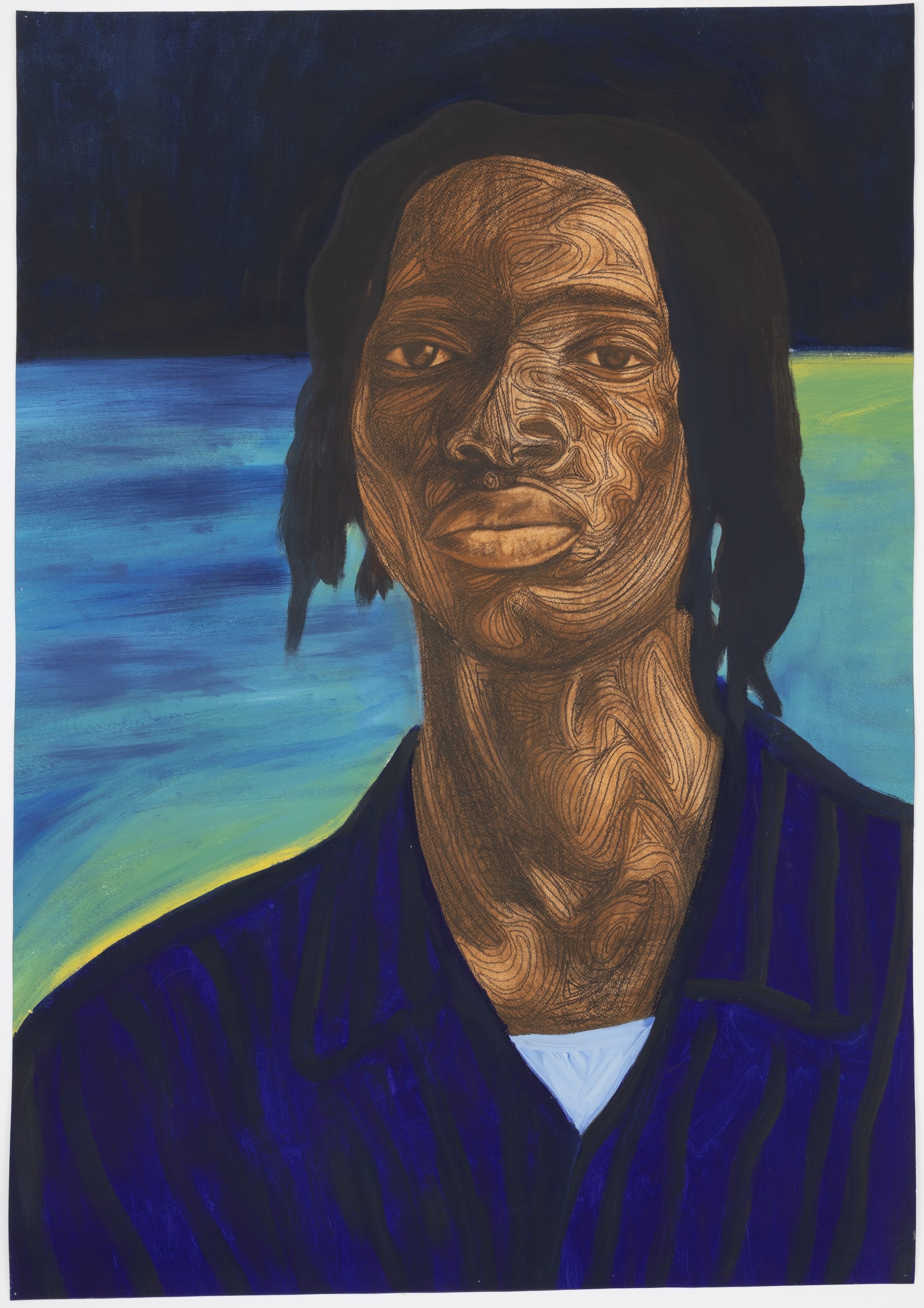
Throughout these diverse compositions, whether working on paper, linen, or canvas, Obijiaku maintains an unwavering focus on the human spirit. His figures are never anonymous archetypes; they are rooted in real relationships, cultural histories, and personal nostalgia. By filtering his new American experiences through the lens of his Nigerian upbringing, the artist constructs a visual bridge that connects two vastly different worlds, inviting viewers to reflect on their own relationships with memory, home, and the people who shape our lives no matter where we find ourselves.
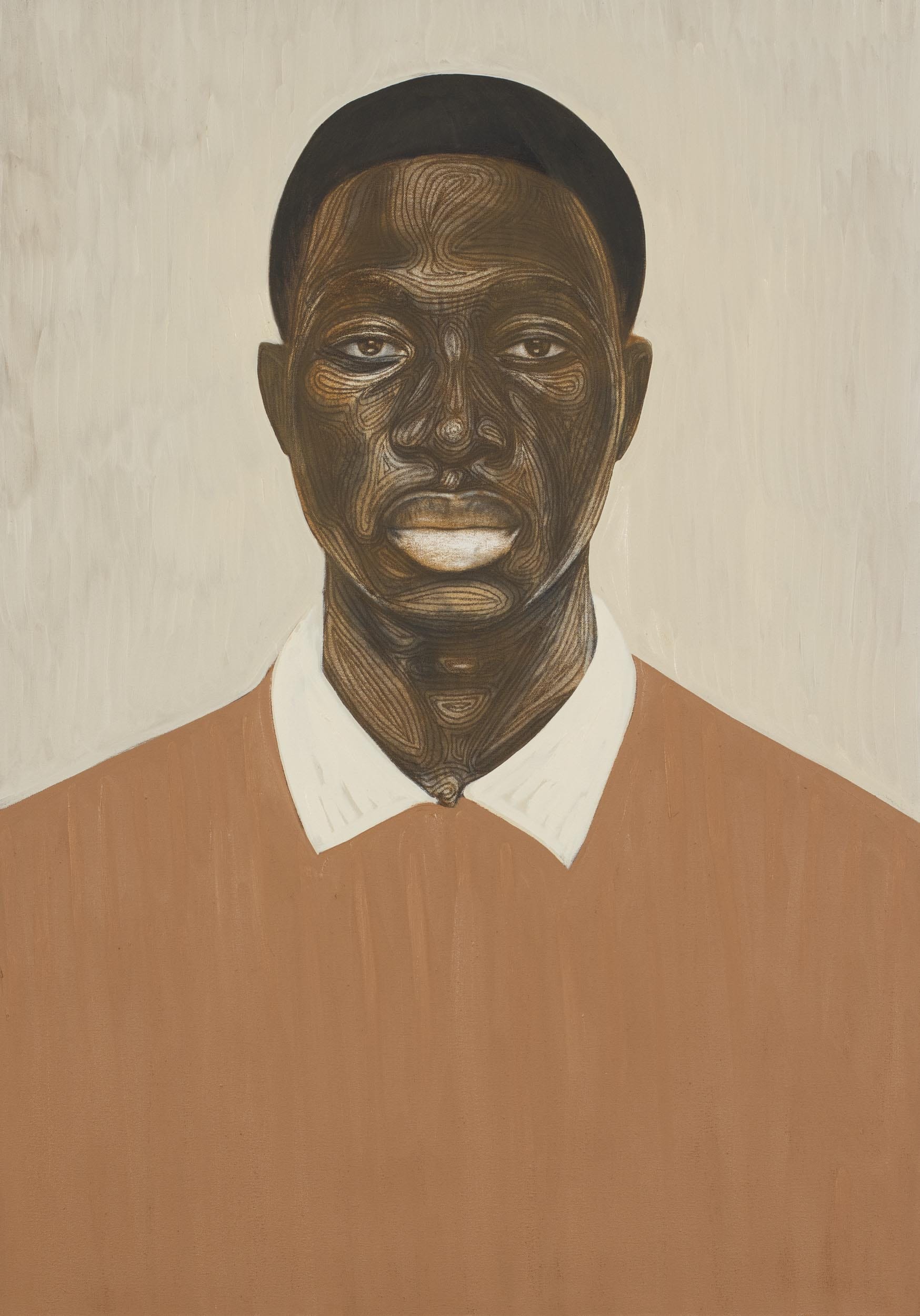
Wherever You Are, Remember Me opens on November 7 and continues through December 19 at Roberts Projects in Los Angeles.