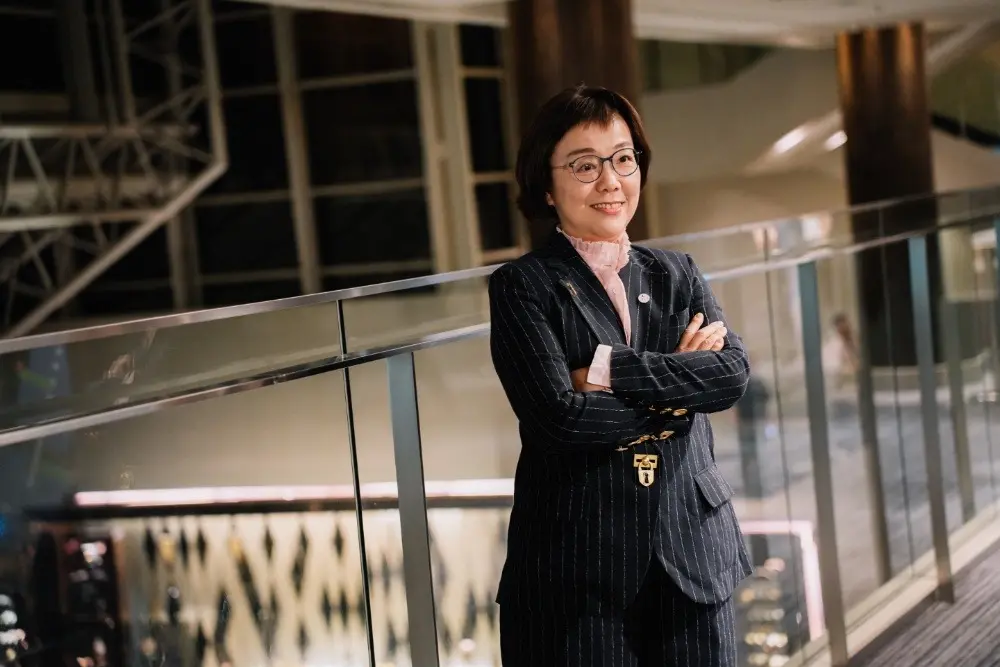
Sue Wang, chair of the Taiwan Creative Content Agency, believes that Taiwan’s vibrant content and entertainment industry must make intellectual property development and commercialization its absolute top priority to achieve long-term global impact and financial stability. As the 2026 Taiwan Creative Content Fest gets underway in Taipei for a multi-day run from November 6 through November 9, industry leaders have gathered to discuss the evolving landscape of global media, financing, and cross-border collaboration. Wang’s perspective highlights a critical pivot for the region, moving past simple creative output toward robust business infrastructure.
The core challenge facing local creators and production companies is not merely whether Taiwan can consistently produce high-quality artistic content, but rather whether these enterprises possess the necessary operational capabilities, strategic business models, and market acumen to translate creative ideas into sustainable revenue streams. Furthermore, companies must learn to build scalable businesses that can successfully reach diverse audiences across multiple international markets. Wang emphasizes that without a viable business model that has been rigorously tested and proven in the market, simply introducing more funding programs, government grants, or investment incentives will not necessarily create a self-sustaining growth cycle for the domestic creative economy.
According to Wang, operating without intellectual property that has demonstrated clear market potential leaves investment risks persistently high. Under such conditions, even initial overseas distribution deals may fail to convert into sustained sales or long-term brand equity. To address this structural vulnerability, TAICCA aims to help domestic businesses systematically strengthen their pricing, licensing, branding, and audience-development capabilities first. Only after these foundational commercial pillars are firmly established does the agency plan to bring in aggressive growth capital and facilitate broader international distribution networks.
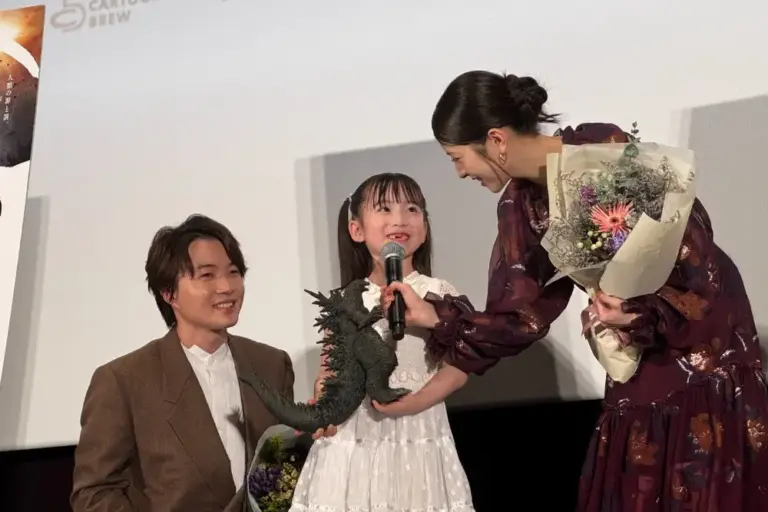
Despite these strategic challenges, TAICCA’s recent financial and infrastructural interventions have already yielded substantial results on the global stage. As of October 30, the agency had invested approximately NT$560 million, equivalent to roughly $17.1 million, across 24 international co-financing and co-production projects. These initiatives span feature-length films, episodic television series, and sophisticated animation works, forged through active partnerships across 15 distinct countries and territories. A prominent example of this cross-border strategy is the Taiwan-Japan feature film “Arrested Memory,” which achieved significant international recognition after being selected for the Venice Open – Out of Competition program at the 83rd Venice Film Festival, as well as the prestigious Midnight Madness section at the 51st Toronto International Film Festival.
The ongoing TCCF Market reflects this growing international integration, bringing together 107 professional exhibitors representing seven countries and territories. Notably, exhibitor participation within intellectual property categories such as publishing, original comics, and character licensing has experienced a robust 13 percent increase compared to the previous year, signaling heightened commercial interest from both domestic and foreign stakeholders.
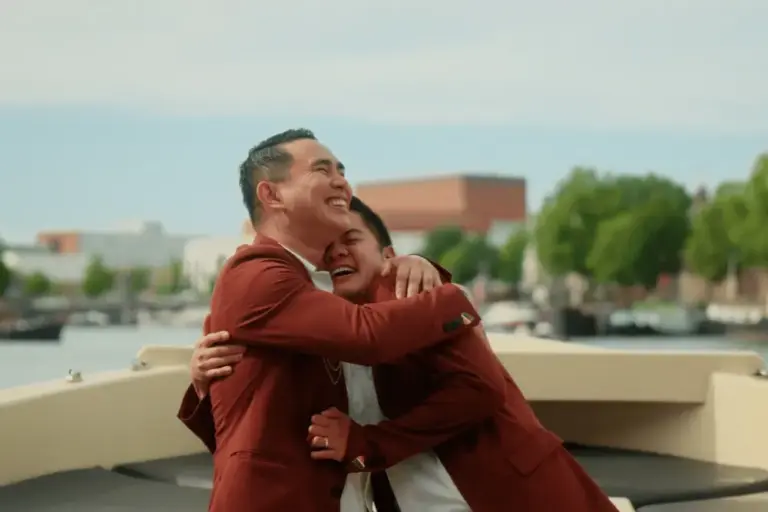
To further amplify this commercial momentum, the event has introduced its inaugural Spotlight Screenings initiative. The program presents the title “April” on November 7, followed by the highly anticipated Taiwan-Singapore collaborative series “See You at 11pm” on November 8. Wang explains that the primary strategic goal behind these screenings is to significantly raise the international profile of Taiwanese acting talent and provide international buyers with direct opportunities to meet the actors and creative teams driving these productions forward.
Complementing the market floor, this year’s TCCF Forum operates under the overarching theme of “Reshape.” The program features 12 comprehensive talks and panel discussions featuring more than 20 industry experts from around the world. Core topics on the agenda include international co-production strategies, ongoing streaming platform consolidation, intellectual property management, the rapid rise of short-form content, and the practical implications of artificial intelligence in media production. The comprehensive structure of TCCF—spanning its Pitching, Market, and Forum sections—is intentionally designed to directly connect promising projects with crucial development support, strategic investors, essential production resources, and eager international buyers. Additionally, selected pitching teams gain the valuable opportunity to apply for early-stage financial support through TAICCA’s established Cultural Content Development Program.
Looking outward toward broader diplomatic and cultural partnerships, Wang notes that TAICCA is actively seeking to deepen its longstanding ties with France in the specialized sector of Cultural Tech, building upon more than a decade of continuous cooperation. This sustained bilateral relationship is set to be highlighted by the 30th anniversary of the Taiwan-France Cultural Award in 2027. Meanwhile, in terms of collaboration with South Korea, the agency harbors ambitions to expand joint efforts far beyond traditional screen content, pushing into independent music, live performance venues, specialized festivals, and the broader performing arts sector.
This collaborative financing model has already begun to bear fruit through specialized funding vehicles. The Taiwan-Korea Entertainment and Cultural Content Fund, alongside the Far EasTone Creative Entertainment Fund’s Enjoy Entertainment Limited Partnership, have successfully approved investments in 12 distinct projects. These approvals have mobilized approximately NT$600 million, or roughly $18.3 million, in private capital. Supported initiatives include the Kaohsiung Park Music Festival, which was developed in direct cooperation with CJ ENM’s established Seoul Park Music Festival, as well as the 2026 ID. Music Festival organized in collaboration with Spotify, and the prominent concert intellectual property titled “Her Voice: The Fearless Female Voice.” On the narrative film side, these dedicated funds have provided vital backing for the road movie “Lonely Together” and “The Rope Curse 4: Kuntilanak,” which represents the latest terrifying installment in Taiwan’s commercially successful “The Rope Curse” horror franchise.
Amid these rapid commercial and technological expansions, TAICCA maintains a deliberate and measured stance regarding the integration of artificial intelligence into the creative pipeline. The agency views AI primarily as a supporting tool designed to assist with technical, labor-intensive work such as digital animation, visual effects, and post-production refinement. Conversely, Wang expresses considerable caution regarding the use of generative artificial intelligence in core creative responsibilities, such as professional scriptwriting and original music composition. This cautious approach is driven by uncertain public acceptance of AI-generated art and the substantial amount of human correction and editorial oversight that AI-generated material frequently requires to meet professional standards.
Elaborating on the industry’s turbulent transitional phase, Wang stresses that there is currently no established playbook or ready-made solution available to smoothly navigate the sweeping transformations taking place across the global entertainment sector. The overarching goal, she insists, is to safeguard the integrity of human artistry and avoid scenarios where human professionals are relegated to working merely as assistants to automated software systems.
Looking toward the horizon, Wang outlines ambitious benchmarks for the domestic market over the next three years. She hopes to see the emergence of several medium-sized or larger production companies in Taiwan, each capable of independently producing more than 10 distinct titles annually. Furthermore, she envisions a future where international co-production transforms from an occasional endeavor into a regular, standardized business practice, accompanied by a steady and substantial flow of private equity and technology-sector investment into Taiwan’s expanding creative economy.