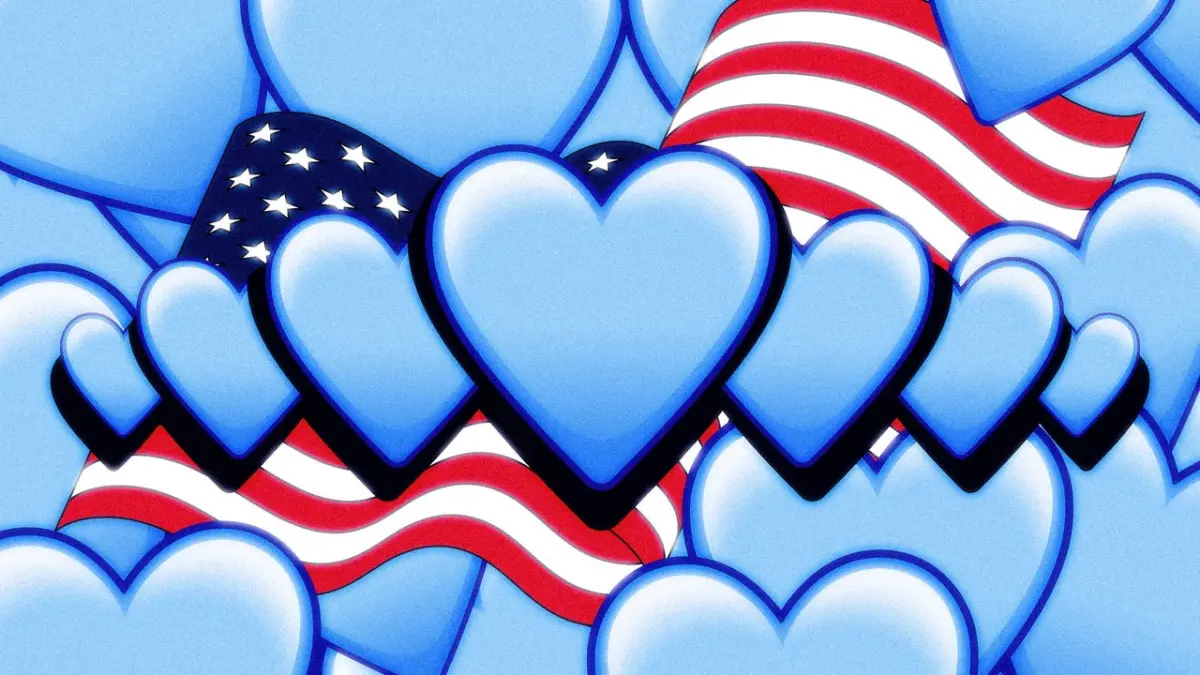
Pop star Tinashe leaned heavily into the symbol on X, formerly Twitter, on Election Day, using the blue heart emoji 12 times in a single post encouraging her fans to vote. Writing "VOTE OR DIE ! LETS GO AMERICA," she punctuated the message with a continuous string of blue hearts, while countless other users similarly spammed the emoji to express excitement over the party’s electoral gains.
Scrolling through the comments section on the Democratic Party’s official Instagram account reveals a veritable tsunami of blue hearts. The party posted on its grid nearly 100 times within a 24-hour period, sharing good news regarding flipped states and legislative seats, and supporters responded in kind. The blue heart is frequently paired with other joyful emojis, such as clapping hands, the U.S. flag, or a wave, creating a unified visual language of celebration.
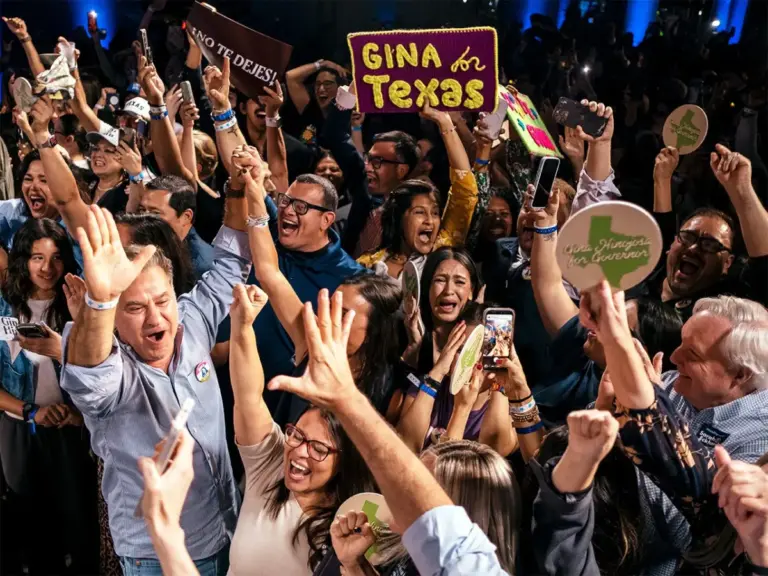
Data analytics reflect this digital enthusiasm. Google searches for the blue heart emoji have surged by 80% compared to the previous month, and represent a staggering 1,050% increase from the comparable period last year. Notably, these searches are highest in Texas and North Carolina, two states where Democrats successfully flipped key U.S. House and Senate seats. Meanwhile, on Emojitracker—a platform that tracks real-time emoji usage on Emojipedia and GetEmoji—the blue heart emoji outpaced pink and white hearts by more than two to one on Wednesday, trailing only the red heart, which serves as the standard universal symbol for love on the platform.
The adoption of specific emojis to signify political movements or expressions of support is part of a growing trend in modern digital communication. Emojis have previously been utilized to represent various political ideologies and campaigns, such as the rose, which has long stood as a socialist symbol and is regularly used by the Democratic Socialists of America in their tweets. During Kamala Harris’s 2024 presidential campaign, supporters frequently deployed coconut and palm tree emojis as a direct reference to her widely memed remarks about context. Similarly, Canada’s Green Party officially adopted the green dot emoji as its new logo last year to modernize its digital branding.
The use of the color blue to represent a center-left political party is a uniquely American quirk of visual political communications. In many other Western democracies, these color associations are effectively flipped, with red traditionally tied to movements ranging from labor to socialism and communism. Mainstream center-left parties, such as the United Kingdom’s Labour Party and Canada’s Liberal Party, utilize red as their primary branding color, while the conservative parties in both nations are historically associated with blue.
Before the year 2000, the colors used to represent American political parties on television were far from standardized, depending heavily on the specific TV network, news outlet, and election year. However, following the contentious, weeks-long Florida recount of the 2000 presidential race between George W. Bush and Al Gore—which played out continuously over cable news and nightly newscasts—television networks standardized the current color schemes, and the convention ultimately stuck.
In 2004, the Republican Party officially formalized red as its primary color when it rebranded to an all-red "GOP" logo. That same year, during his keynote speech at the Democratic National Convention, Barack Obama, then a senator from Illinois, publicly bemoaned political pundits who liked to slice and divide the country into red states and blue states.
Even though those color designations had already caught on as shorthand for the contemporary partisan divide separating conservative rural areas from liberal urban populations, Obama still took the time during his 2004 speech to explicitly explain which party stood for which color for listeners who might not yet be familiar with the terminology. Today, the political shorthand is so universally understood that the Democratic Party’s social media posts simply refer to their candidates keeping or flipping a seat to "blue," allowing a simple string of blue emojis to communicate the full scope of excitement over a successful election night without saying a word.