In 1970, an inventor working out of Princeton, New Jersey, looked at a conventional vacuum-cleaner motor and envisioned an entirely different application: launching tennis balls. That creation, Bob McClure’s iconic “Little Prince,” served as the foundational launchpad for Prince’s massive entry into the tennis equipment industry. For more than half a century afterward, the fundamental mechanics of the tennis ball machine remained remarkably static. Players would wheel a heavy box to the back of the baseline, program it to feed balls from a fixed position, and rely entirely on their own imagination to simulate the unpredictable nature of a real match.
More than fifty years later, solo practice faces a completely different design challenge. Modern players no longer just want a repetitive stream of balls; they crave the rhythm, dynamic pacing, and spatial responsiveness of a genuine hitting partner. AceiiLab has stepped up to answer that exact question with the A1—a moving, artificial intelligence-powered tennis robot that abandons the static box format in favor of a nimble wheeled base, advanced cameras, and sophisticated repositioning algorithms.
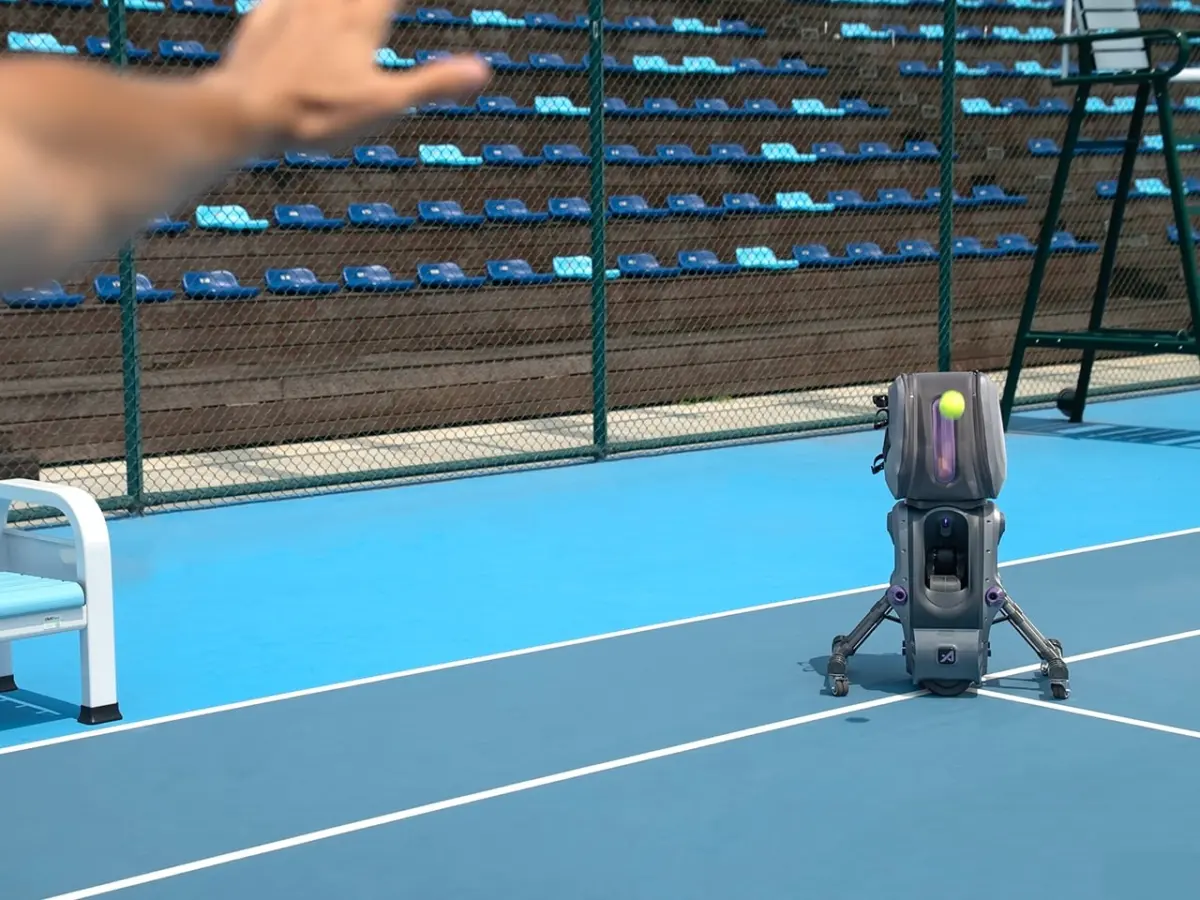
First introduced on Kickstarter under the working title Aceii One, the AceiiLab A1 tackles the limitations of traditional solo training through autonomous movement. Rather than standing like a statue behind the baseline, its motorized, wheeled chassis can dynamically reposition itself between feeds, introducing changing court angles, realistic spatial variations, and demanding footwork patterns into an otherwise solitary training session.
The product’s pedigree traces back to founder Liu Liqian, who previously engineered advanced industrial and consumer robots at prominent firms like DJI and KUKA. That heavy robotics background is immediately evident in how thoroughly the A1’s design revolves around fluid, intelligent motion. For everyday tennis enthusiasts attempting to fit their passion around demanding careers, family obligations, and the notoriously difficult task of aligning schedules with a hitting partner, the practical appeal is immense. It allows players to train entirely on their own terms while retaining much of the organic rhythm of playing opposite a human opponent. The unit is capable of reaching a brisk launch speed of up to 80 miles per hour, though the true cardiovascular and technical workout stems from the constant adjustments the robot’s movement demands of the player.
Movement Is The Main Event
In a standard tennis rally, striking the ball is only a fraction of the overall equation. A player must constantly adjust their footwork, actively recover their court position, read the opponent’s body language across the net, and prepare for the next incoming shot. Modifying the pace and placement of a ball is helpful, but altering the origin point of the next feed introduces an entirely new spatial variable to practice routines.
The A1 makes this spatial variable the core of its engineering philosophy, presenting solo players with a dynamic moving target rather than a predictable stream of projectiles originating from a single stationary source. The robot is capable of traveling at speeds up to 13.1 feet per second—roughly four meters per second—which is swift enough that standing still to admire a well-hit shot is no longer a viable option on the court.
To achieve this level of environmental awareness, AceiiLab pairs sophisticated 4K binocular vision systems, which judge depth perception similarly to human eyes, with an agile wheeled base. This vision system continuously tracks both the player and the tennis ball, calculating trajectories and autonomously repositioning the chassis for each subsequent feed. Dedicated baseline, sideline, and service-line modes provide versatile configuration options, with the sideline and service-line settings closely mimicking how professional coaches typically feed students during drills from different angles across the net.
Adjustable timing settings—ranging from 0.5 to 15 seconds between feeds—allow athletes to tailor a training session around specific tactical drills. Each feed draws a fresh ball from the integrated bag, ensuring consistent bounce and spin, while the machine’s shifting physical position and variable timing force players to react to constantly changing sequences. Furthermore, the machine is capable of injecting tactical variety through adjustable topspin, backspin, and high lobs traveling up to 26.2 feet—or 8 meters—over the net, offering a valuable tool for anyone looking to iron out a shaky overhead smash.
Rolls In Like Luggage, Fits Into Your Routine
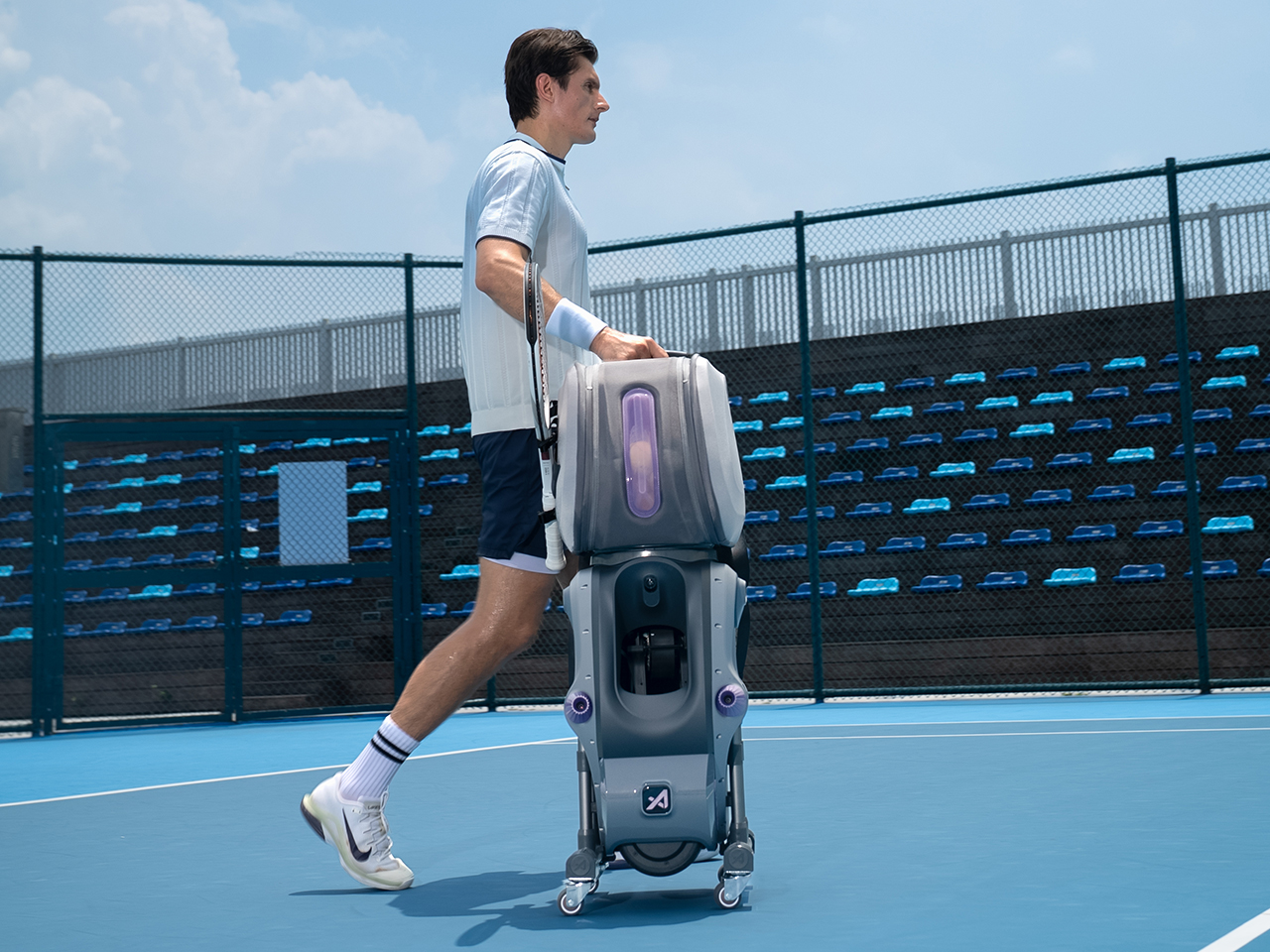
Advanced training technology is only as good as its accessibility; a responsive machine is of little use if hauling the equipment onto the court feels like an exhausting workout in its own right. When folded down for transport, the AceiiLab A1 adopts a streamlined, suitcase-style form factor. Roughly the size of a standard checked piece of luggage, it features a sturdy pull rod and durable wheels designed to ease the journey from a vehicle’s trunk to the court surface.
Its detachable storage bag accommodates up to 120 tennis balls, while built-in accommodations for a racket holder, a cup holder, and additional gear consolidate a player’s entire kit into a single, cohesive unit. Weighing in at 52.5 pounds—approximately 23.8 kilograms—without its battery attached, the A1 still requires a degree of deliberate planning when lifting it into a car, but its luggage-inspired architecture makes the transit significantly more manageable once it is on solid ground.
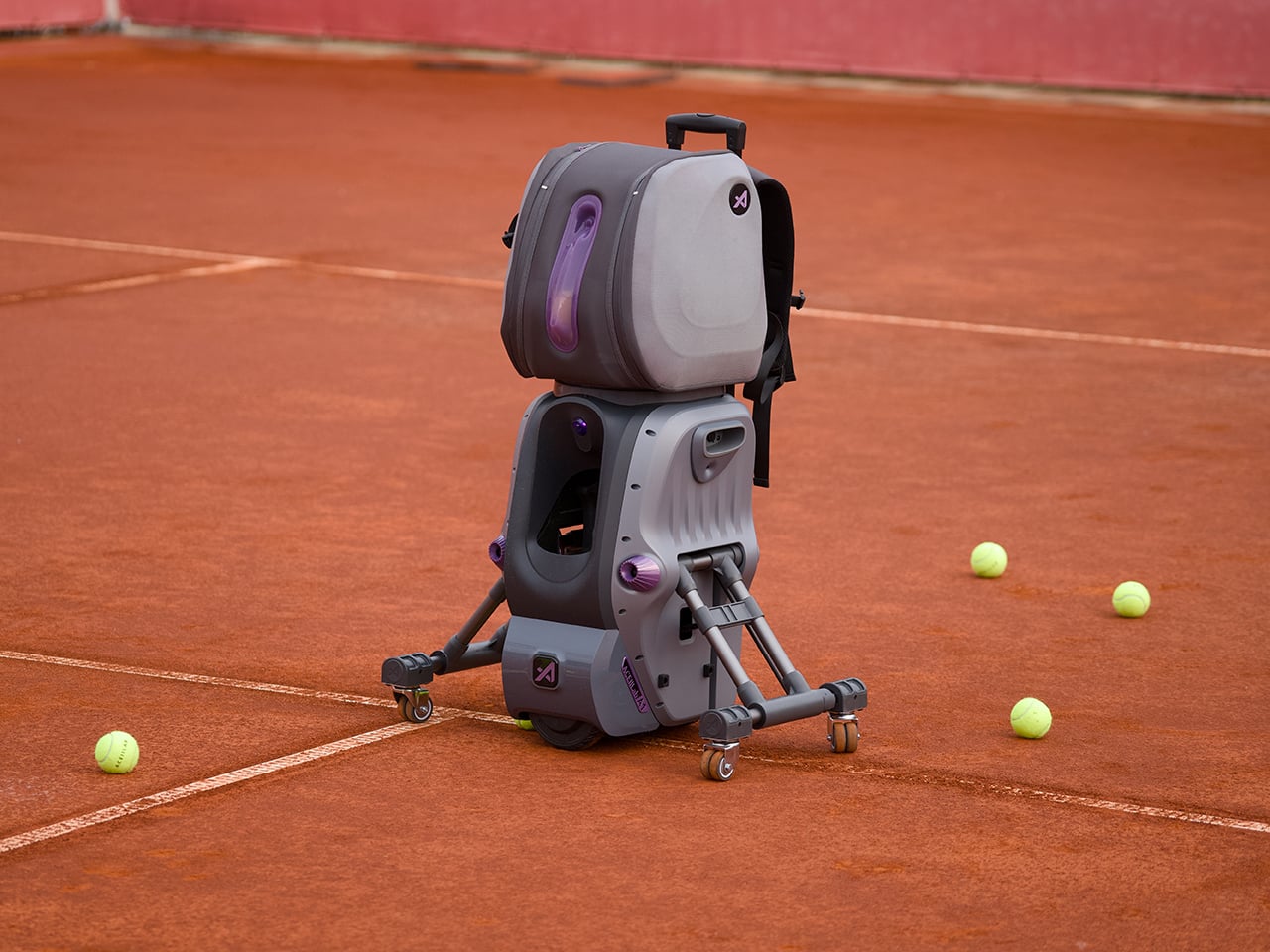
The removable battery system serves a similarly practical role in daily ownership. AceiiLab rates the 36V 7Ah power pack for up to eight hours of static feeding or two hours of intensive, dynamic training sessions where the machine is constantly in motion. For the vast majority of players, two hours of continuous, movement-heavy rallies will cause physical fatigue long before the machine’s battery depletes. For those looking to extend their time on the court, carrying a charged spare battery offers an easy solution to stretch training into an all-day weekend drill session.
The A1 is fully engineered to operate across hard courts, clay surfaces, and traditional grass courts, ensuring seamless adaptation to whatever court surface a local club happens to feature. Together, the folding chassis, integrated storage compartments, and swappable power source directly address the logistical friction points that often exist between marketing promises and actual court-side use.
Less Interruption, More Time on Court
Managing a training session should not require constant interruptions to walk back to the machine and adjust settings. The A1 integrates directly with the AceiiLab mobile application, available for both iPhone and Android devices, granting users comprehensive control over preset drills, custom training sequences, and competitive features such as Challenge and Ranking modes.
For real-time adjustments during a rally, Apple Watch support enables convenient wrist-based controls, while physical hand gestures allow players to instantly start or pause practice sessions without ever leaving their ready position. This thoughtful interface minimizes wasted time and cuts down on unnecessary cross-court sprints that rarely contribute meaningfully to an athlete’s conditioning.
In the background, AceiiLab’s integrated AI Coach compiles session metrics—including shot landing points, ball velocity, and overall consistency—and translates that data into personalized training recommendations. These insights help players quickly identify technical weaknesses and accurately track their performance improvements over time, allowing the technology to remain a seamless background utility rather than an operational burden.
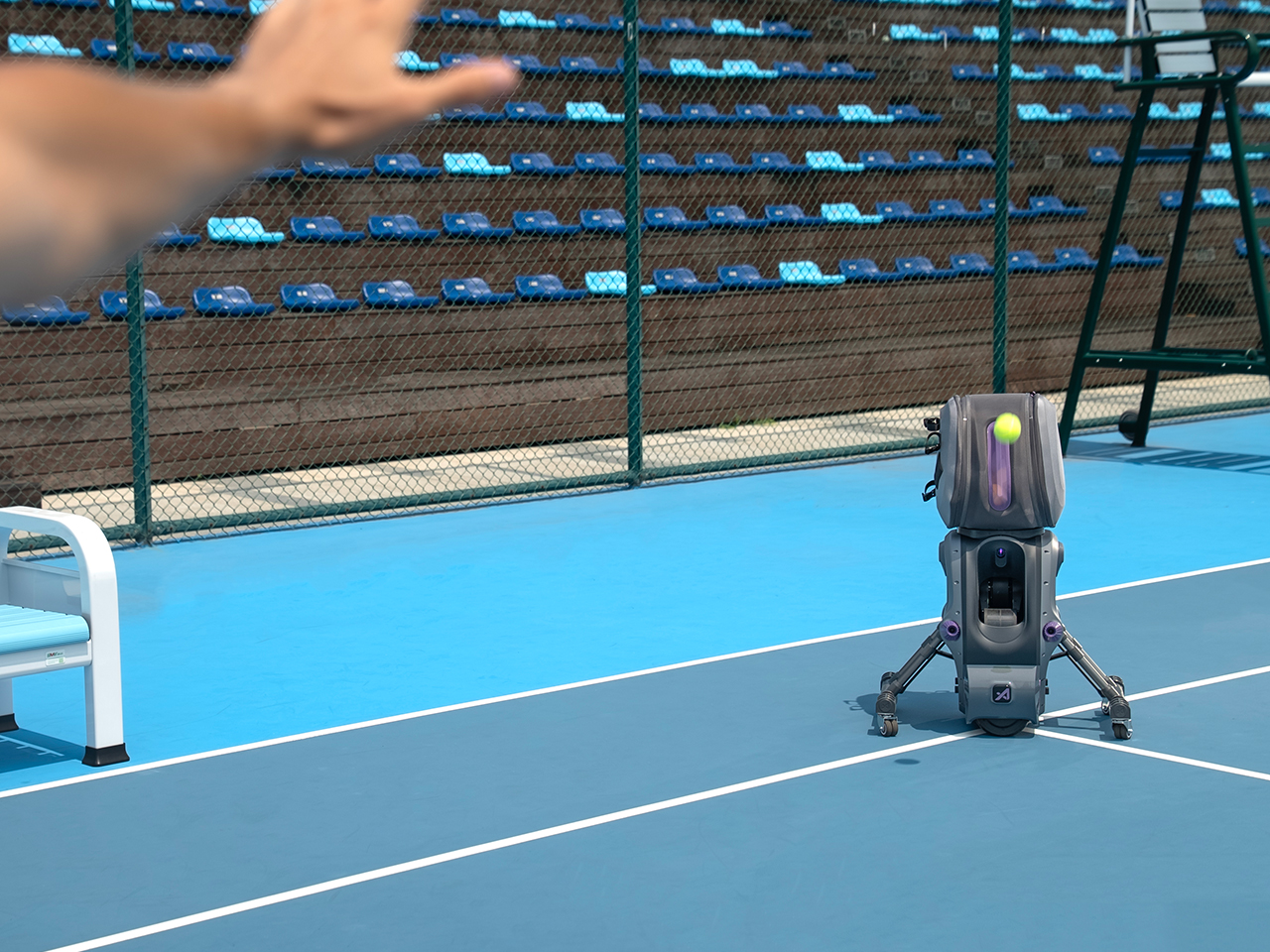
The A1’s integration into an athlete’s lifestyle is designed to be straightforward: it acts as a reliable training companion when a human hitting partner is unavailable, embedding movement and unpredictable variation directly into the session. Officially rated for players falling within the 1.0 to 5.0 range of the National Tennis Rating Program, the machine accommodates everyone from absolute beginners stepping onto a court for the first time to seasoned, highly competitive club players.
More than half a century after Bob McClure first introduced tennis players to the concept of automated solo practice, modern innovations like the AceiiLab A1 ensure that a canceled appointment with a hitting partner no longer has to result in a missed day of training.