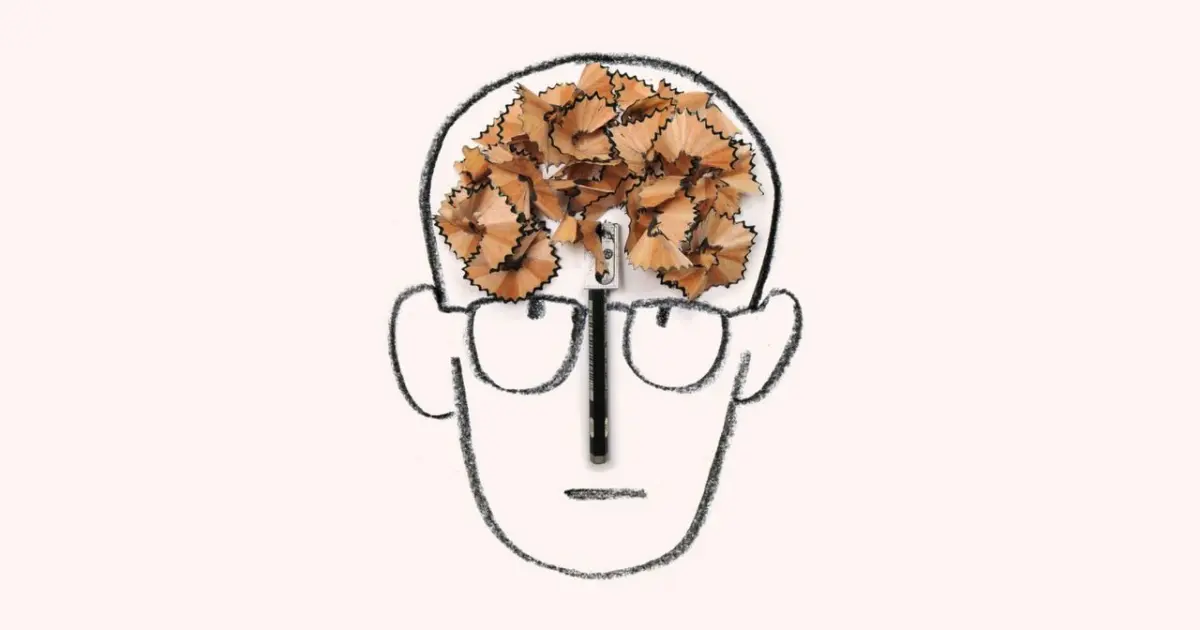
For years, acclaimed illustrator Christoph Niemann spent his Sundays engaging in a deceptively simple yet brilliant drawing experiment. Sitting down with a blank piece of paper and a random, everyday object pulled from his surroundings, Niemann never truly knew what he was going to draw. The only rule was absolute: his final illustration had to incorporate whatever ordinary object happened to be sitting in front of him.

Through this weekly ritual, Niemann routinely transformed mundane items into surreal visual poetry. Pennies effortlessly morphed into glistening scoops of ice cream. Ordinary bananas were ingeniously reimagined as the powerful legs of a horse. Bright neon highlighters found new life as glowing, futuristic light sabers. Over time, Niemann devised hundreds of these clever visual puns, turning constraint into a masterclass in spontaneous creativity.

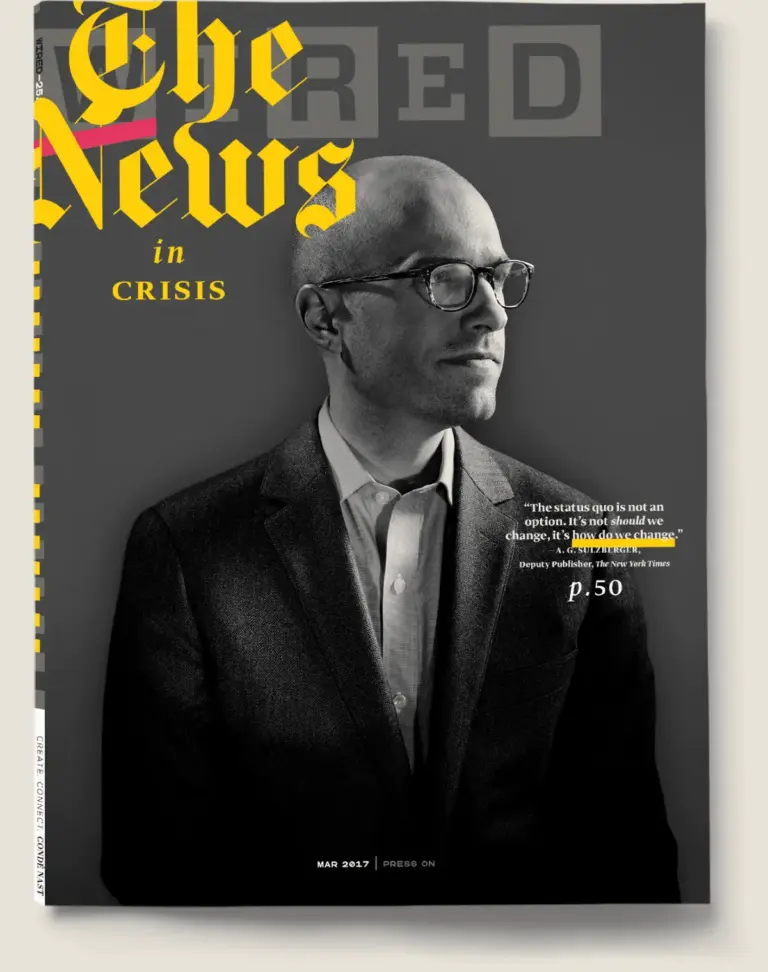
Now, Niemann has collected these experimental exercises alongside a broader retrospective of his celebrated career in his new monograph, Sunday Sketching, published by Abrams. While the book serves as a stunning visual catalog of Niemann’s iconic illustrations—which have graced the pages of WIRED, The New Yorker, and The New York Times—it is much more than a traditional portfolio. At its heart, Sunday Sketching functions as a candid, deeply reflective meditation on the realities of the creative process.

Throughout the pages of the monograph, Niemann utilizes his trademark wit and charming visual humor to tackle some of the most uncomfortable and tricky subjects confronting modern creators, including professional insecurity, financial precarity, and the terrifying necessity of changing course mid-stream while a career appears to be thriving. The book stands as a timely and comforting reminder that even the most brilliant, widely recognized creative minds face immense challenges when attempting to produce consistently great work in a rapidly shifting media landscape.

The Limits of Routine and the Elusiveness of Greatness
In the opening sections of the book, Niemann addresses the foundational mechanics of an artistic career, noting that relying on craft and routine is significantly less glamorous than the romanticized notion of being touched by artistic genius. However, he argues, establishing a solid routine is an essential, highly practical strategy for maintaining one’s sanity in a demanding profession.

According to Niemann, even in the absolute absence of raw talent and sudden inspiration, an artist can—through sheer, unglamorous practice—become so technically proficient that they can reliably deliver very good work on demand. Yet, creating truly great work is an entirely different endeavor altogether. Achieving greatness certainly requires a deep foundation of skill and technical craft, but it also demands an unpredictable X-factor—an elusive element that simply cannot be controlled or forced into existence.

Once an artist accepts this fundamental limitation, Niemann suggests, their professional life actually becomes significantly easier. For clients and commissioners, it is a vital reality check: the only reasonable expectation one can have of an artist is consistently very good work, because true greatness is ultimately unplannable.

Navigating Industry Disruption and Financial Realities
Despite the stabilizing power of routine and craft, focusing too narrowly on perfecting a specific discipline carries a distinct, hidden danger. Niemann points out the risk of becoming entirely blindsided by shifting cultural tides—comparing the phenomenon to a dedicated chef who spends night after night perfecting the ultimate hamburger, only to suddenly realize that the entire population has transitioned to a vegetarian diet.

This professional vulnerability is magnified by the turbulent economic realities of modern publishing. Many of the traditional magazines and print publications that employed scores of art directors and sustained armies of freelance illustrators just a few years ago have entirely vanished, or have been reduced to mere fractions of their former operational size. While this disruption represents a natural evolution within a changing media ecosystem, the breathtaking speed and ruthless efficiency with which it has destroyed established businesses and radiant careers remain profoundly unsettling. As Niemann notes, this ongoing revolution is far from over and will likely continue at an accelerating pace.

To survive and maintain creative independence in such an unpredictable environment, Niemann stresses the necessity of financial prudence—a subject he approaches with characteristic pragmatism. Worrying about money and looming budgets while attempting to create art acts as a potent creative poison. Niemann notes that he has never worked using traditional time sheets, observing that the process of dreaming up ideas is inherently inefficient and that the hours spent—whether five or fifty—have no direct correlation to the final quality of the outcome. Yet, completely ignoring financial realities is simply not an option.

To carve out crucial mental breathing room, Niemann relies on a strict financial safety zone. He regularly calculates his exact monthly expenses, which he notes remain surprisingly consistent, and strives to maintain a financial buffer equivalent to six months of living expenses in the bank. This buffer provides him with a critical safety net if professional circumstances deteriorate, but more importantly, it affords him two invaluable luxuries: the ability to turn down ill-fitting assignments and the profound peace of mind knowing that he can walk away from any job if necessary. While financial anxiety is stressful and inevitably bleeds into one’s creative output if left unmanaged, Niemann views financial prudence not as a restriction, but as an unglamorous yet crucial pillar of sustainable artistic practice.

The Double-Edged Sword of Social Media and Public Approval
Beyond financial stability, Niemann addresses the ongoing challenge of creative self-assessment and the desire to remain culturally relevant. While working on a piece, an artist must be kind and forgiving toward their own fragile ego. However, Niemann argues that creators must also periodically step back and attempt to evaluate their entire body of work through the eyes of an old, jaded outsider—or a hyper-critical insider.

Evaluating one’s own output is notoriously difficult. It is nearly impossible to accurately judge mistakes without bias, and equally challenging to recognize genuine successes. Decades ago, Niemann could only discuss these complex creative dilemmas with a small circle of trusted friends and colleagues. While those trusted perspectives remain invaluable for solving specific artistic problems, they cannot replicate the fresh, unbiased eyes of an unfamiliar audience.

In the modern era, social media has fundamentally transformed that dynamic. With the simple tap of a screen, Niemann can publish a finished piece or a quick experimental sketch and instantly gauge the reaction of actual readers worldwide. Within minutes, he can glean a strong sense of whether the broader public values a particular idea.

However, Niemann is quick to acknowledge the psychological trap inherent in these platforms. Anyone who claims they are entirely immune to the validation of a post receiving a flood of likes, or completely unaffected by the quiet insecurity of a post falling flat, is simply being dishonest. Having built a career that predates the rise of Facebook, Twitter, and Instagram, Niemann remembers what it felt like to create work with barely any immediate public reaction. While he considers social media to be a fascinating and potentially indispensable tool, he warns against the subtle manipulation engineered into modern algorithms. It is dangerously easy for creators to unconsciously conflate digital likes and algorithmic validation with true artistic quality.

Online approval and viral success, Niemann cautions, are far too superficial and cheap to serve as genuine measurements of creative value. While positive feedback is exciting, viral listicles and fleeting internet trends ultimately leave audiences feeling empty. In an ocean of swift digital reactions, creators must remind themselves that the art which truly resonates and moves people is often slow, strange, and lingering.

This digital saturation forces creators into a constant state of technological whiplash. As new platforms continuously emerge, artists are forced to decide whether to adopt every new fad or intentionally step back to focus purely on their work. While Niemann admires artists who stubbornly pursue their visions with unfazed determination, he also recalls the cautionary tales of peers who resisted necessary technological shifts—such as designers in the late 1990s who dismissed computers as a temporary hype destined to fade away.

Ultimately, Niemann recognizes that occupying the role of an artistic maverick feels satisfying, but a rejected client pitch or a post that fails to gain traction on social media does not automatically make a work an unappreciated masterpiece ahead of its time. Sometimes, a piece is simply not good. Navigating that delicate balance between uncompromising personal vision and self-awareness remains the ultimate challenge of a creative life.

Sunday Sketching by Christoph Niemann is available now from Abrams, offering readers a rare, humorous, and deeply insightful look behind the curtain of a master illustrator’s mind.