Iconic A-line skirts twirl overhead, silver-covered handbags gleam in a secret underground passage, and a futuristic spacesuit prototype brings more than a century of fashion history into the future at Prada’s new permanent exhibition in Milan, aptly called “Pradasphere.” Located within the historic Galleria Vittorio Emanuele II, this highly visual journey through the Italian luxury brand’s evolution is connecting Prada aficionados with the fashion house’s heritage in ways that go far beyond mere nostalgia, and it is already delivering a remarkable commercial payoff for the company.
The exhibition anchors a massive physical and cultural expansion by the brand within the legendary Milanese shopping arcade, a multi-floor presence that now spans eight levels. This includes the existing Marchesi 1824 pastry shop, the Osservatorio Fondazione Prada contemporary art space, a newly minted private salon and apartment, and the immersive museum itself. According to company leadership, this strategic blend of culture, architecture, and retail is proving to be a powerful engine for business growth, reshaping how consumers interact with the brand and encouraging them to open their wallets after experiencing the curated journey.
“The exhibition is a multiplier,” said Lorenzo Bertelli, Prada Group’s chief group marketing officer.
Prada projects that the Pradasphere exhibition will add an impressive 100 million euros ($111 million) in annual revenues to the brand’s balance sheets, and Bertelli noted that this ambitious financial target could ultimately be surpassed. Demand for the experience has been exceptionally high, with Pradasphere fully booked months into the new year. Furthermore, visitors have demonstrated a distinct behavioral trend: after immersing themselves in the brand’s history across the eight carefully curated rooms, they often return to the adjacent retail spaces to make additional purchases, viewing the merchandise through an entirely transformed lens.
“We see that the customers who go through the museum have a completely different perspective of the brand and also they browse the store with completely different minds,” said Bertelli, who is widely identified as the future leader of the Prada Group. The 38-year-old executive, whose diverse portfolio of responsibilities includes serving as the executive chairman of Versace following a major acquisition deal by the luxury conglomerate, is uniquely positioned in the family business as the son of creative director Miuccia Prada and Prada Group chairman Patrizio Bertelli.
Longtime Prada lovers are well aware that Mario and Martino Prada founded the original Fratelli Prada leather goods shop in 1913 right inside the historic Galleria. However, even the most devoted brand historians may never have seen in person some of the rare vintage items and archival pieces now on display, including a pleated evening bag featuring a devilish head-shaped clasp with its tongue sticking out—a whimsical yet striking detail that recently appeared on the Spring-Summer 2024 runway. For many casual shoppers, it may also come as news that the founding brothers originally designed the brand’s signature inverted triangle logo, which has since become one of the most recognizable symbols of luxury fashion across the globe.
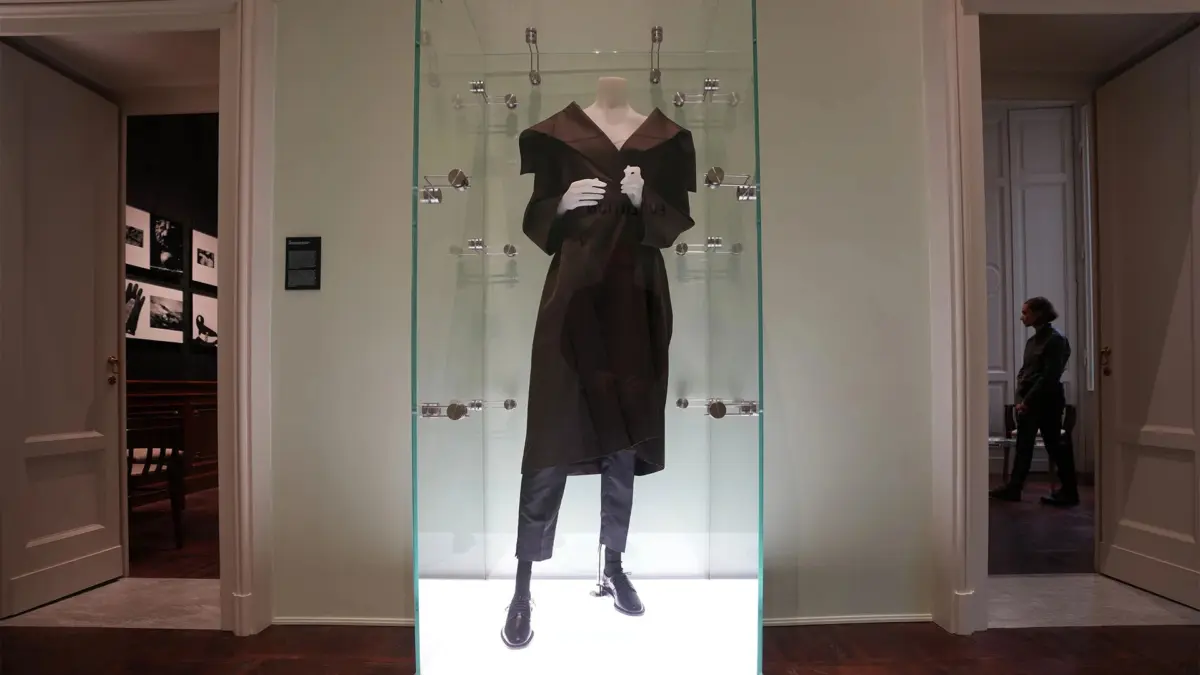
The narrative arc of the exhibition moves seamlessly from the brand’s humble beginnings into the revolutionary third-generation entrance of Miuccia Prada into the family business. This pivotal era is announced through the trademark nylon backpacks and accessories that she began designing in the 1970s. These early pieces brilliantly embodied the Prada high-low, industrial-luxury paradox that would come to define her design philosophy. The exhibition also showcases a chocolate brown opera coat hailing from her very first womenswear runway collection, which was presented to the fashion world in 1988 and immediately signaled a radical new direction for modern dressing.
Moving deeper into the chronological and thematic layout, the exhibition contains a treasure trove of runway hits that defined contemporary style over the decades. Visitors can marvel at the iconic 2012 Flame heels, which instantly burned themselves into fashion memory, alongside the distinctive Formica tile prints that inadvertently helped forge Prada’s tongue-in-cheek “ugly chic” reputation. At the same time, the exhibition highlights the broader cultural reach of Miuccia Prada and the senior Bertelli, showcasing their extensive ventures into contemporary art, cutting-edge architecture, independent film, and elite competitive sport.
“Curiosity and having fun is what drives my parents,” the younger Bertelli said, reflecting on the foundational ethos that has guided the company for decades. He added that creative experimentation does not always bring immediate financial success or commercial validation, “but for sure it drives the enrichment of our story, and our culture and our knowledge.”
To illustrate this point, Bertelli cited the company’s long-standing investments in sports and high-end engineering, most notably marked by the formation of the Luna Rossa America’s Cup sailing team in the 1990s. While competitive sailing might seem far removed from the traditional fashion runway, that sustained investment helped the company develop advanced materials expertise and technical knowledge. This cross-disciplinary capability ultimately led to a groundbreaking collaboration with commercial space company Axiom Space to help design a next-generation spacesuit, an authentic prototype of which is prominently displayed near the conclusion of the exhibition.
Prada lent its deep expertise in textiles and manufacturing to help design the spacesuit’s advanced outer layer, which is expertly engineered to withstand extreme thermal conditions in the harsh environment of space. Additionally, the fashion house contributed to the development of the high-performance inner layer, placing a primary focus on thermal regulation, mobility, and wearer comfort. The finalized suits are intended to be worn by astronauts walking on the moon as part of NASA’s upcoming Artemis IV mission, which is currently targeted for launch in 2028.
Maintaining an intimate and exclusive atmosphere is a priority for the management team. Just 20 visitors are admitted to Pradasphere by appointment each hour to explore the compact and thoughtfully designed eight rooms of the exhibition. Bertelli has promised that the displays will not remain static, but will instead be in constant evolution, ensuring that repeat visitors will always find something new to discover within the gallery space.
Most visitors ultimately end their immersive journey by descending into a secret underground passage that physically connects the menswear and womenswear boutiques, the latter of which proudly occupies the original Fratelli Prada premises that have stood for more than a century. This hidden subterranean corridor houses some of the "lesser-known" and most whimsical chapters from the brand’s extensive history, including a dazzling chandelier dress that was custom-created for director Baz Luhrmann’s cinematic adaptation of The Great Gatsby.
For those who have experienced it firsthand, the exhibition bridges the gap between local heritage and global retail expansion. Luca Missio, an architect visiting from the northeastern Italian city of Udine, reflected on his journey through the space with a sense of personal connection to the brand’s global identity.
“It was a great experience,” Missio said. “I recognized the stores I’ve visited around the world, in Tokyo and New York, in the models and displays. That was lovely.”