For many creative professionals, the ideal
role for artificial intelligence is strictly defined: take over the exhausting, repetitive chores that drain the joy out of production, but stay far away from actual creative decisions. Most designers, video editors, and digital artists are more than happy to let algorithms handle the mind-numbing administrative overhead of creative work—tasks like renaming and tagging thousands of raw video files, syncing complex multi-angle camera setups, or manually reformatting a single advertisement into 50 different aspect ratios for various digital platforms. Letting the computer handle these mechanical hurdles makes practical sense. When Adobe demonstrated how its proprietary AI agents could automate these exact workflows directly inside its desktop applications earlier this year, the reception was largely pragmatic. Automating the drudgery is welcome; handing over core creative judgment to a machine is an entirely different matter.
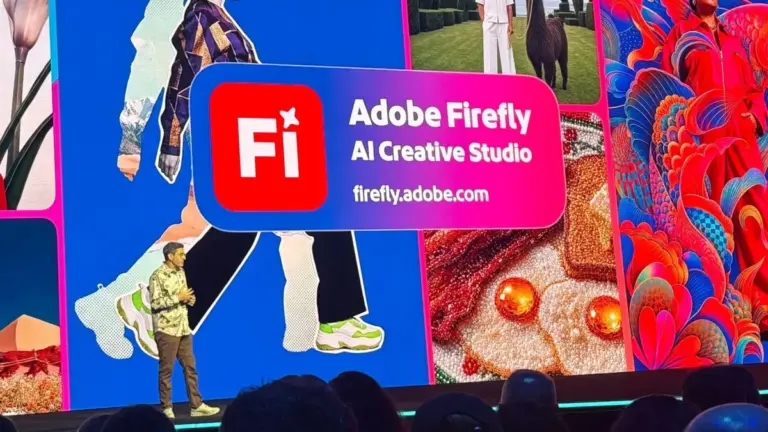
However, the technology landscape is shifting at a pace that often leaves working professionals spinning. At its annual Max conference, Adobe is introducing a development that moves well beyond the automation of file organization and proxy generation. The company is publicly previewing what it describes as local Model Context Protocol integrations for its flagship Creative Cloud tools. This represents a fundamental evolution in how third-party artificial intelligence systems will interact with professional design environments, introducing capabilities that are significantly more powerful—and potentially more disruptive—than anything the software giant has previewed in recent months.
The foundation of this new capability rests on the Model Context Protocol, commonly known as MCP. Created by Anthropic in late 2024, MCP was designed as an open standard that functions essentially as a universal digital adapter. Its primary purpose is to allow any artificial intelligence agent to plug seamlessly into virtually any software tool or data repository. Until now, the conversation around AI in creative software has largely been confined to closed ecosystems or heavily guarded proprietary assistants. The integration of MCP into Adobe’s ecosystem changes that paradigm completely by opening the door for third-party intelligence engines to operate within professional desktop applications.
Under this new architecture, external artificial intelligence agents such as OpenAI’s ChatGPT, Anthropic’s Claude, or Google’s Gemini will be able to work directly inside a user’s local projects. This is not happening through a remote browser window or a cloud-based rendering farm; these integrations function locally on the user’s actual machine. When an external agent is invoked, it gains direct access to the intricate details of local project files—including individual layers in Photoshop, complex vector paths in Illustrator, sprawling footage bins in Premiere, and elaborate animation sequences in After Effects.
Despite this deep level of integration, the fundamental nature of the software workflow remains collaborative rather than entirely autonomous. The projects themselves remain fully editable by hand, ensuring that human creators maintain ultimate authority over the asset. According to Adobe’s framing of the technology, users will be able to step in at any given moment to adjust, override, or redirect the work being performed by the agent. Furthermore, Adobe has clarified that these external agents cannot simply operate in a vacuum. The host applications—such as Photoshop, Illustrator, Premiere, and After Effects—must be actively installed and properly licensed on the user’s computer. This requirement exists because the agent operates locally within the project files, leveraging the full computational depth and structural complexity of the desktop tools rather than relying on a lightweight web-based simulation.
This announcement marks a dramatic reversal of the integration model that Adobe has spent the past year building. For quite some time, Adobe’s creative suite has successfully worked with third-party artificial intelligence platforms, but the data flow and operational control operated strictly in the opposite direction. Since December 2025, users of OpenAI’s ChatGPT have possessed the ability to call upon Photoshop, Adobe Express, and Acrobat to execute specific design tasks directly within OpenAI’s service environment. Following that initial rollout, Adobe continued expanding these cross-platform capabilities. In April 2026, the company launched a dedicated connector for Claude, allowing the Anthropic assistant to utilize more than 50 distinct tools drawn from Photoshop, Illustrator, and Premiere, all while operating within Anthropic’s cloud-based ecosystem. By September of the same year, that identical functional capability was extended to Google’s Gemini, further solidifying a trend where Adobe’s powerful toolset was made accessible as a series of modular capabilities within competing AI ecosystems.
In all of those previous implementations, the workflow followed a predictable and centralized pattern. A user would typically drop a standalone file—whether it was a complex PDF, a high-resolution raster image, or a piece of media—into an active conversation with an artificial intelligence model. The user would then instruct the AI to perform specific modifications or transformations, and Adobe’s integrated tools would quietly execute the request behind the scenes. While these integrations allowed users to seamlessly transition their modified assets back into Adobe’s native desktop applications for final polishing, the initiating spark and the primary interface always resided within the chat-based AI service.
The newly announced local MCP integrations completely flip that operational dynamic on its head, fundamentally altering the question of who remains in control of the creative session. Instead of a user dragging an Adobe asset into a chatbot environment, an external chatbot environment is now reaching directly into the user’s local, proprietary workspace.
This shift raises complex questions about accountability, safety, and workflow predictability. Adobe’s own native AI agent—which is now officially rebranded across the ecosystem as the Adobe Creative Agent—operates with a known set of boundaries, guardrails, and quality assurances. Because Adobe designed the agent specifically for its own applications, users have historically understood that there is a measurable degree of corporate control and technical accountability governing its actions. Adobe has always decided precisely how much autonomy its proprietary agent could exercise on its own accord.
By introducing the Model Context Protocol to the ecosystem, however, that controlled environment opens up significantly. Outside agents developed by entirely different companies will now gain access to the same foundational tools and project structures, operating with a level of local system access that Adobe simply cannot fully vet, predict, or vouch for. For many industry veterans and digital artists who have spent decades perfecting their craft within these software environments, the prospect of handing over local file access to third-party language and vision models produces a distinct sense of vertigo. The core dilemma facing the creative community is no longer just whether artificial intelligence can technically execute complex design tasks, but whether creative professionals can truly trust these external agents with their sensitive project files—and more importantly, whether they actually want to.