Shanghai Art Week has officially opened its doors across China, bringing together a formidable lineup of international galleries—including blue-chip heavyweights such as Hauser & Wirth, David Zwirner, and White Cube—alongside a vibrant community of local collectors, curators, and institutional leaders.
The launch takes place against a complex backdrop for the country’s broader cultural economy. China’s recent economic deceleration and a noticeable wave of museum closures across the nation have occasionally cast a shadow over external perceptions of its contemporary art market. Yet, industry insiders suggest that looking past pessimistic media headlines reveals a resilient undercurrent of optimism. As Shanghai Art Week runs through November 15, participants remain steadfast in their commitment to the city’s creative ecosystem.
"We’re still quite positive about this year’s fair because we have 149 participating galleries," says Bao Yifeng, co-founder of Art021, one of the event’s marquee contemporary art fairs. "It’s quite a good list compared with events in other countries."
A Crowded Global Calendar and Shanghai’s Enduring Draw
The fair arrives amid an extraordinarily busy period for the Asian art market, which has seen a profusion of regional events crowding the global cultural calendar. The autumn months feature a dense succession of major happenings, including Art Jakarta, Art Week Tokyo, and Art Collaboration Kyoto. The schedule grows even tighter as Paris Photo overlaps simultaneously with Art Mumbai, Art021, and West Bund Art & Design—Shanghai Art Week’s twin anchor fair—while the inaugural edition of Frieze Abu Dhabi prepares to open its doors the following week.
Despite this intense global competition, the enduring presence of elite international galleries—such as Hauser & Wirth, David Zwirner, White Cube, and Esther Schipper—underscores Shanghai’s vital status as a premier destination. According to the 2026 Art Basel and UBS Global Art Market Report, China firmly retains its position as the third-largest art market in the world, maintaining its strategic importance for the international trade.
Commercial auction houses are sharing in this buoyant atmosphere. Christie’s is currently hosting a major series of auctions in Shanghai, putting an impressive roster of high-value artworks and luxury items under the hammer. The sales feature masterworks by modern and contemporary icons like Pablo Picasso and Yayoi Kusama, alongside significant modernist paintings by celebrated Chinese masters such as Zao Wou-ki.
"These lots with attractive estimates address the broadening interest and growing demand of seasoned and new collectors," notes Rebecca Yang, chairman of Christie’s China. "Our global sales saw an increasing number of fresh buyers from China, highlighting the immense potential of this market."

The Rise of a New Generation of Chinese Collectors
This emergent cohort of Chinese collectors is rapidly transforming the cultural landscape of Shanghai. Beyond sheer purchasing power, these patrons are demonstrating a deep, sustained commitment to nurturing the local creative scene. Among them is Cherry Xu, an art philanthropist and cultural entrepreneur who began collecting works during the coronavirus pandemic.
Having trained originally in fashion design before earning a fine-art degree in the United States, Xu established the independent art space Cheruby last year. The venue is designed to explore the intersection of fashion and fine art through dynamic artist residencies and ambitious exhibitions.
This week, Cheruby’s home—a restored 1930s heritage building located in Shanghai’s historic Jing’an district—is showcasing the culmination of a two-month residency by Thai artist Tanat Teeradakorn. The project marks Teeradakorn’s first institutional solo exhibition in China. Exploring how mass entertainment shapes human understanding of place and complex histories, the artist presents Memory Threshold: Chaos Resonance, an immersive film project that he characterizes as a "staged performance made for the camera."
The installation weaves together coded choreography, elaborate costumes, and striking visual effects to demonstrate how cultural and political values are transmitted through consumer-friendly experiences. Expanding the boundaries of the exhibition, Teeradakorn has also collaborated on a line of bespoke merchandise, including T-shirts, scarves, and keychains, adding a tactile, consumer-facing dimension to Cheruby’s cross-disciplinary approach.
For Cheruby director Joni Zhu, it is precisely this willingness to experiment outside traditional parameters that makes Shanghai’s art scene uniquely dynamic.
"Not all Chinese institutions follow established Western models centred around a permanent collection, which enables us to continually experiment and reinvent," Zhu tells Monocle.
Freedom of Experimentation in Institutional Curating
This sentiment is echoed across the city by other institutional leaders, including X Zhu-Nowell, the executive director and chief curator of the Rockbund Art Museum.

"We are a non-collecting museum, so we can direct significant resources towards research and experimentation, sometimes supporting projects whose eventual forms aren’t fully anticipated at the outset," Zhu-Nowell explains. "There are risks involved, but I think it’s important for an institution to create the conditions for artists to take those kinds of risks and pursue ideas that might otherwise be difficult to realise."
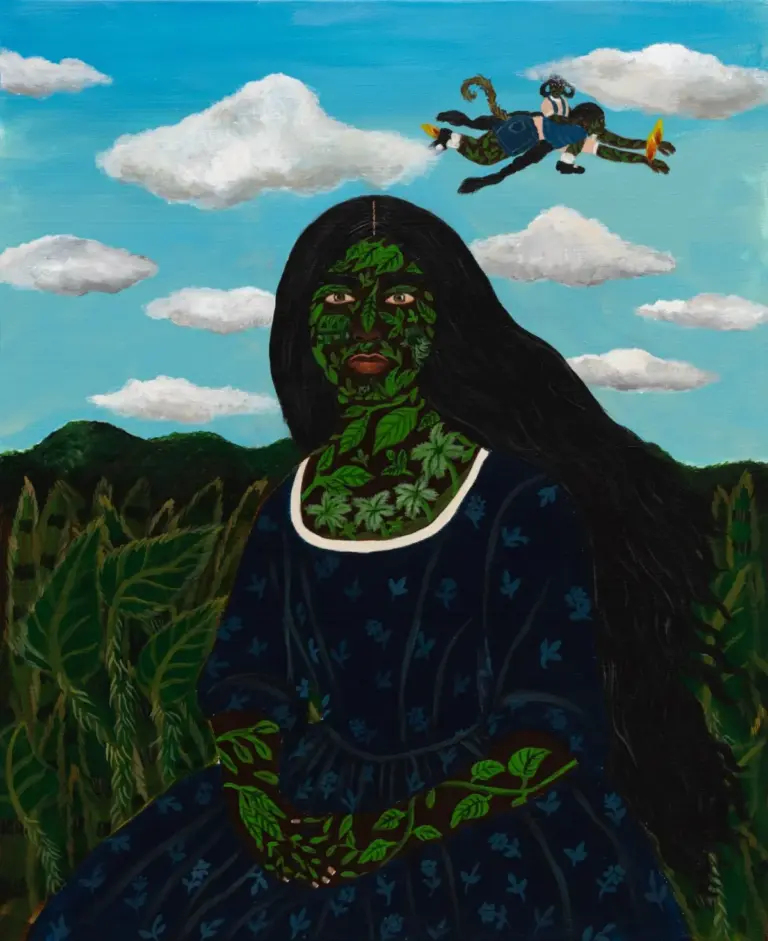
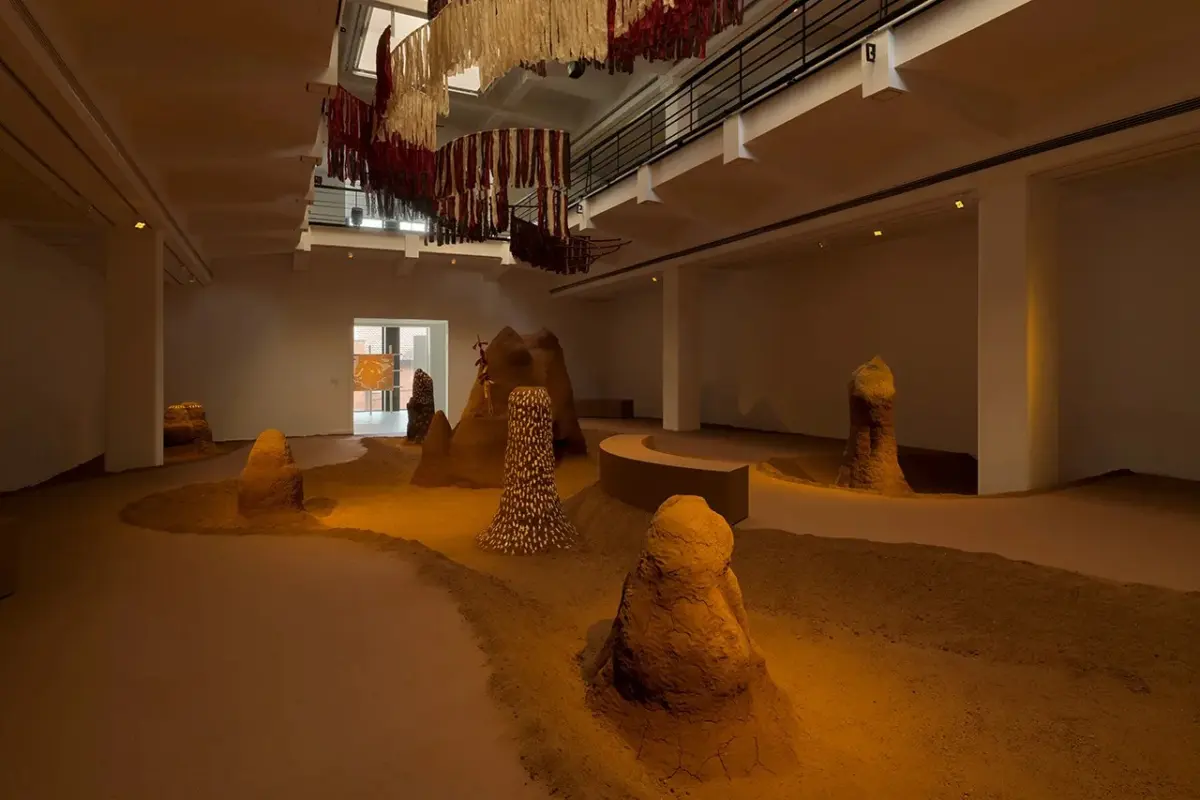
Since taking the helm in January 2025, Zhu-Nowell has sought to redefine the museum’s programming by fostering dialogue across unfamiliar geographies and amplifying historically marginalized voices. This mission is vividly reflected in the Rockbund Art Museum’s latest exhibitions: Stuck in Movement (In the Tide), the debut institutional solo exhibition in Asia by non-binary Brazilian artist Jota Mombaça, and a presentation by Hong Kong artist Wong Kit Yi featuring the installations Bank-a-oke and Tem-ple-oke, both of which investigate the fluid boundaries of voice and identity.
Ultimately, these developments point to an art market navigating a period of transition, with cities, fairs, and institutions worldwide vying for prominence. Yet, as Zhu-Nowell observes, Shanghai’s intrinsic value on the global stage transcends the transient fluctuations of the commercial art market.
"The city has a historical and intellectual complexity that is irreducible to its contemporary art-market identity," they say. "Its unique potential lies in its capacity to develop artistic conversations, rather than provide another destination on the international art calendar. Shanghai doesn’t need another museum or fair to demonstrate that it is a global cultural capital. The more interesting question is how it is contributing to conversations taking place in the world."
Three Shanghai Museums to Visit
Rockbund Art Museum
Founded in 2010 within a meticulously restored art deco building, the Rockbund Art Museum operates as a non-profit institution with a forward-thinking curatorial vision that connects artistic cultures across Asia. Last year, it became one of the few private museums in China to offer free public admission, reflecting a deep institutional commitment to artistic equity and accessibility.
Power Station of Art
As China’s first state-run contemporary arts museum, the Power Station of Art serves as a vital anchor for the city’s cultural infrastructure. It is the permanent home of the Shanghai Biennale, which is preparing to host its 16th edition in November 2027. The museum has previously presented major exhibitions featuring prominent local and international figures, including Cai Guo-Qiang, Zhang Enli, Shirin Neshat, and Anselm Kiefer.
Long Museum West Bund
Established by prominent Chinese collectors Liu Yiqian and Wang Wei, the Long Museum West Bund is an architectural landmark situated within a larger cultural precinct along the Huangpu River. Housed inside a monumental board-formed concrete structure designed by Chinese architect Liu Yi-chun, the museum holds an expansive and diverse collection spanning traditional Chinese antiquities, revolutionary-era works, and major modernist paintings.