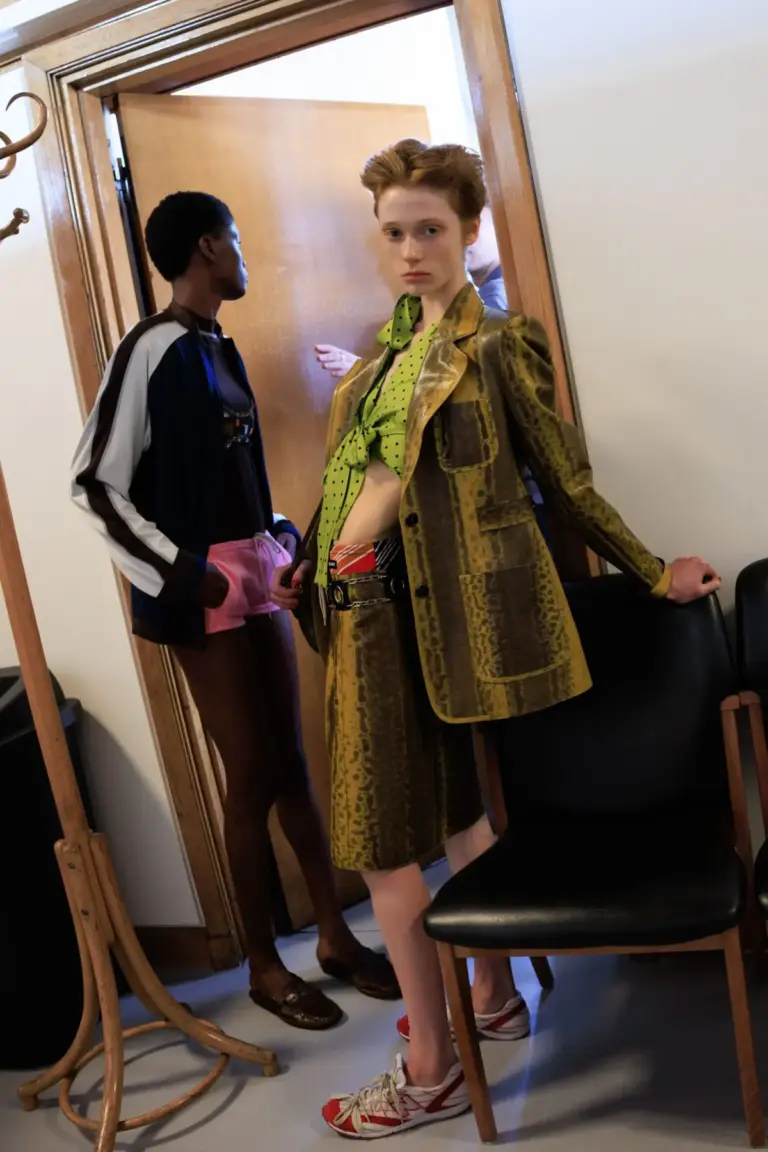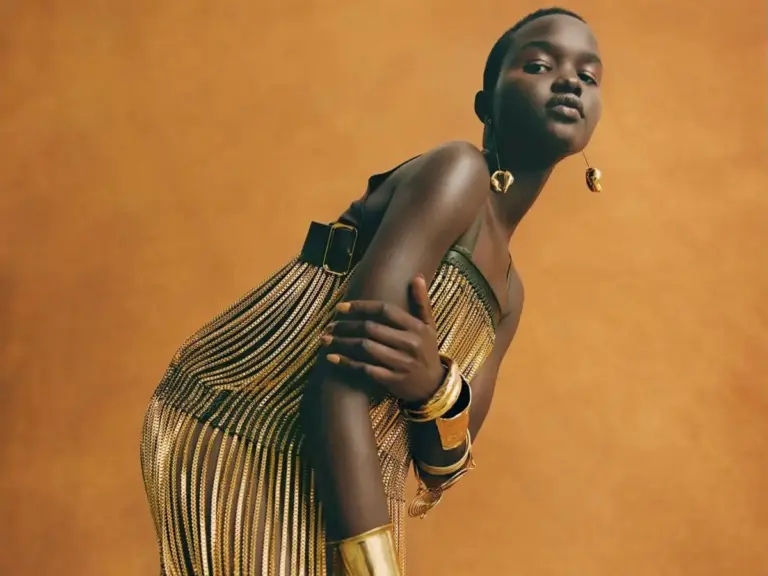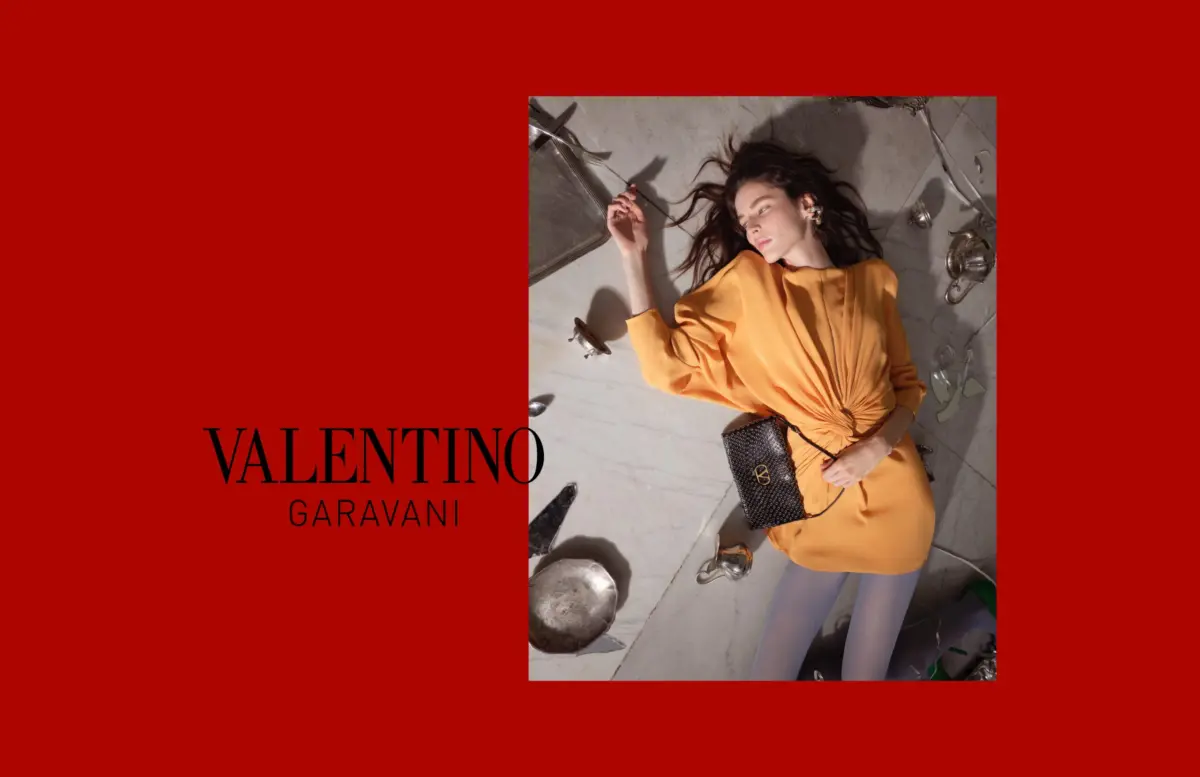
Holidays, festivities, and high-fashion parties have long walked hand in hand, typically captured in the height of their exhilarating glamour. For its upcoming Cruise 2027 holiday campaign, however, Valentino is taking a radically different approach to the time-honored tradition. Rather than focusing on the bright lights, the roaring laughter, and the peak of nocturnal revelry, the storied Italian fashion house is training its lens on the morning after. Shot within the cavernous, history-drenched halls of an antique palazzo, the campaign portrays a starkly contrasting reality: the quiet, reflective stillness that settles over a venue once the music has stopped and the guests have gone home.
In the arresting images captured by photographer Liv Liberg, Valentino creative director Alessandro Michele invites viewers into a space that has clearly played host to an exceptionally wild night. Scattered across the ornate floors of the palazzo are the unmistakable remnants of a grand celebration: shattered champagne glasses, abandoned silver plates, precariously overturned chairs, and even fallen chandeliers that hint at the sheer scale of the festivities. Yet, amid the
structural chaos and the lingering debris of the night before, the atmosphere is not one of devastation, but of quiet suspension.
Central to this narrative are models George Anderson, Joe Bottomer, Khadim, Libby Taverner, and Dario Tonin. Rather than posing with active energy, they are depicted lounging and resting amidst the ruins, wrapped in the holiday collection’s striking designs. They inhabit a surreal landscape where the frenzy of the night has dissolved into a profound stillness, offering a visual meditation on what remains when the spectacle finally subsides.
In an accompanying letter detailing the vision behind the project, Alessandro Michele elaborates on the conceptual underpinnings of the campaign. He describes the imagery as capturing “that suspended moment when the euphoria has faded and the space still holds the traces of something that has already happened.” According to the designer, the models are “immersed in an atmosphere in which beauty seems to have survived the tumult of the night.” It represents, he suggests, an awakening of sorts, where “what remains offers itself as material for a story yet to be imagined.”
Beneath the surface of the theatrical staging, Michele utilizes the aftermath of the party as a deeply thoughtful metaphor. Known for his pensive design philosophy and his penchant for infusing historical and sociological context into his work, the creative director uses the ruined palazzo to reflect on larger currents sweeping through the contemporary fashion industry. He challenges observers to look past the surface glamour and consider the shifting values, societal transformations, and enduring artistic integrity that persist amidst systemic change.

“From the very beginning, this representation contained a larger question: What remains of magnificence when its rituals come to an end? What happens when a universe built around the promise of desire encounters its own vulnerability?” Michele contends in his artist’s statement. He views the party as a direct mirror for the transformations currently reshaping the fashion ecosystem—a global industry that has historically relied on exceptionality, exclusivity, and spectacularization as its defining codes, but which now faces a necessary redefinition of its languages, values, and relationship with society at large.
The conceptual weight of the campaign took on an entirely unexpected layer of meaning due to external events that occurred long after the photographs were lensed in July. As civil unrest and widespread protests over the escalating costs of living swept through various European urban centers, leaving damaged shop windows and public disruptions in their wake, the visual language of the campaign began to intersect with real-world turbulence.
The shattered glass and structural disruption depicted within the private confines of the antique palazzo suddenly started to resonate with the stark realities of public rupture playing out across Europe. This uncanny coincidence fundamentally shifted the context in which the campaign photographs would ultimately be viewed, bridging the gap between an imagined fictional narrative and tangible societal friction in a way that could not possibly have been anticipated when the shutter was first clicked.
The convergence of art and real-world strife led Michele to deeply question the appropriateness of releasing the campaign as originally intended. At one juncture during the developmental process, the designer seriously contemplated abandoning the project altogether, uncertain whether the imagery might be misconstrued or rendered insensitive by the unfolding historical climate.
Ultimately, however, Michele decided that suppressing the work would be a missed opportunity for genuine dialogue. He reasoned that openly recounting the genesis of the photographs, the original intentions that birthed them, and the unsettling questions that subsequently shaped them might provide a valuable framework for reflection. The campaign transformed into an opportunity to meditate on the unpredictable relationship between creative images and the historical context in which they are produced and consumed.
Reflecting on this philosophical dilemma, Michele draws a parallel to the theoretical frameworks of philosopher Walter Benjamin, specifically noting his famous reflections on the dialectical image. It is that precise instant, the designer suggests, when what has been in the past encounters the immediate present, giving birth to new relationships and unforeseen meanings that were previously difficult to discern. The campaign demonstrates that the artistic meaning of an image is never fully exhausted at the exact moment of its creation; rather, subsequent historical events continually raise new questions and alter how visual culture is interpreted by the public.
Choosing to lean into these uncomfortable associations rather than shying away from them, Michele signals a desire to move forward with transparency and creative integrity. He wishes to begin anew from the remnants of the spectacle—anchored by the enduring beauty that continues to inhabit the human body and the shared responsibility of engaging meaningfully with the complex contradictions that define our modern society.