For professional wildlife photographers, the phrase "good weather" rarely translates to a warm, cloudless afternoon. Instead, the most evocative and dramatic imagery is often forged in less-than-ideal meteorological conditions. This truth was demonstrated brilliantly in London this week, where a heavy blanket of early morning fog transformed a routine wildlife shoot into a breathtaking visual showcase.
Getty Images photographer Brook Mitchell spent a crisp October morning stationed at Richmond Park in London, England, capturing the ethereal beauty of red stags and fallow bucks. The timing was far from coincidental. October marks the peak of the rut, or annual mating season, for the park’s resident deer populations. During this period, the stags and bucks are notably more active, driven by territorial instincts and the search for mates, making it a premier window for wildlife observation and documentation.
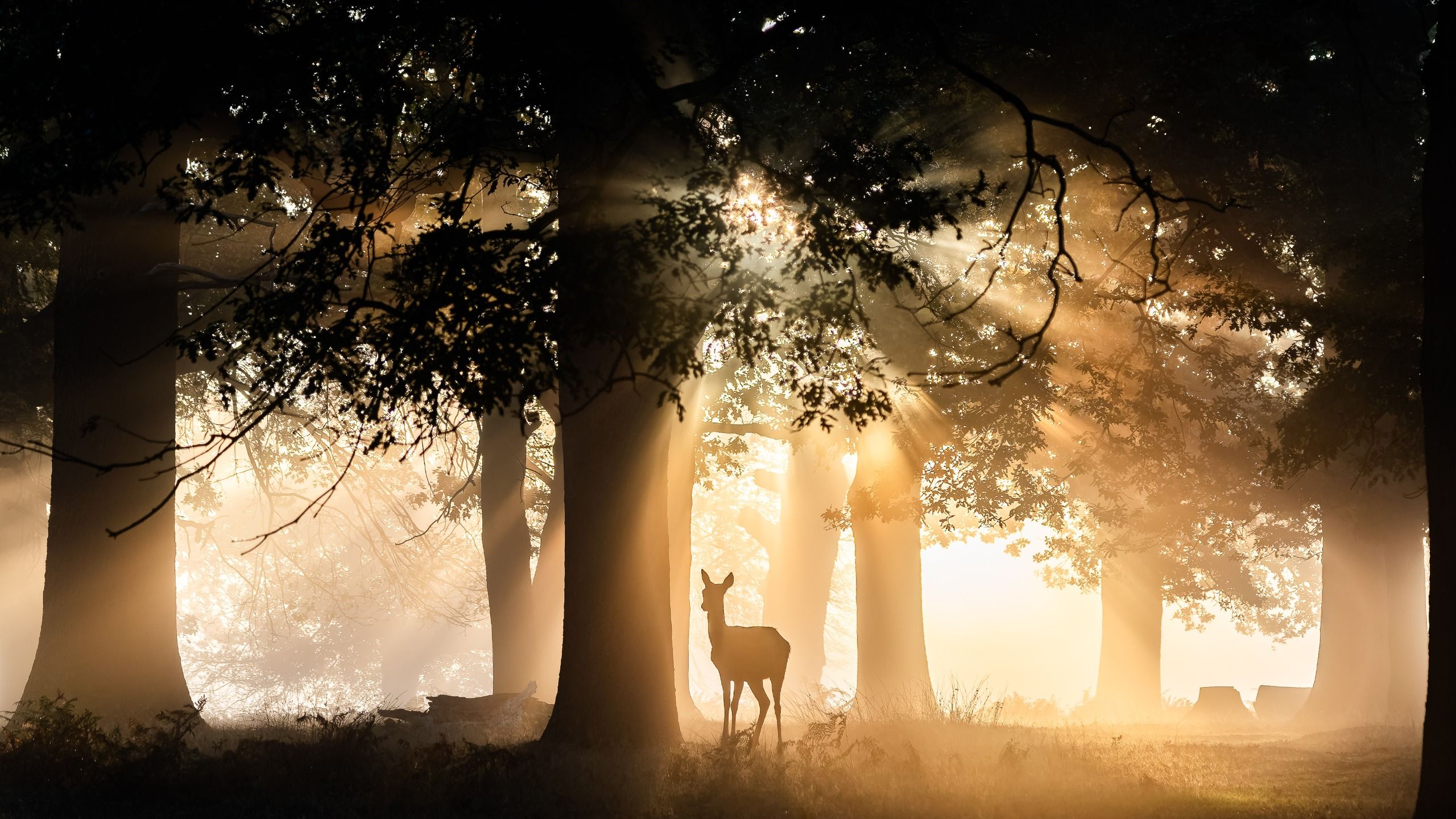
However, capturing these majestic creatures during the autumn rut required navigating significant environmental hurdles. Foggy conditions inherently reduce visibility, presenting a formidable obstacle when attempting to track fast-moving wildlife with long telephoto lenses. Furthermore, the high moisture content in the air poses equipment challenges, frequently causing condensation to build up quickly on exposed camera glass.
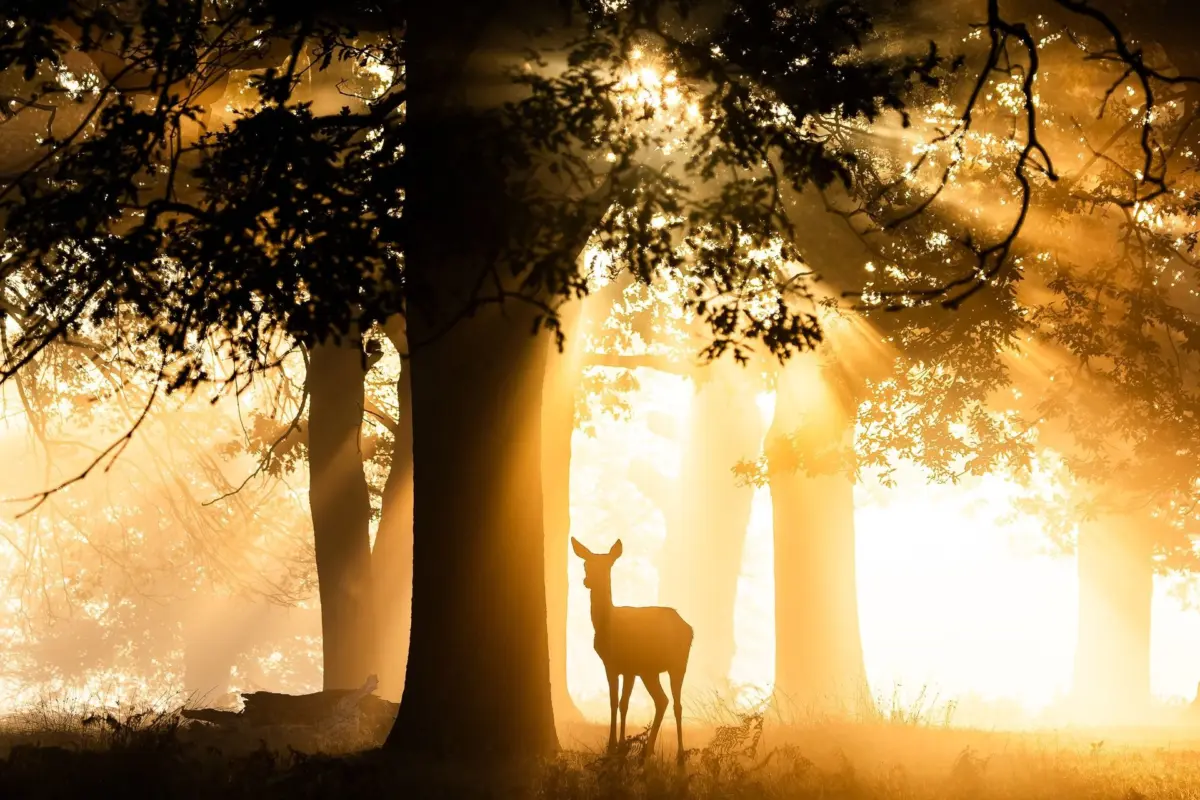
Yet, as Mitchell’s photographs demonstrate, these atmospheric challenges are precisely what give the images their extraordinary character. When ground fog interacts with a low-rising morning sun—and importantly, remains unmixed with heavy clouds overhead—it creates a striking optical phenomenon known as crepuscular rays, or sunbeams.
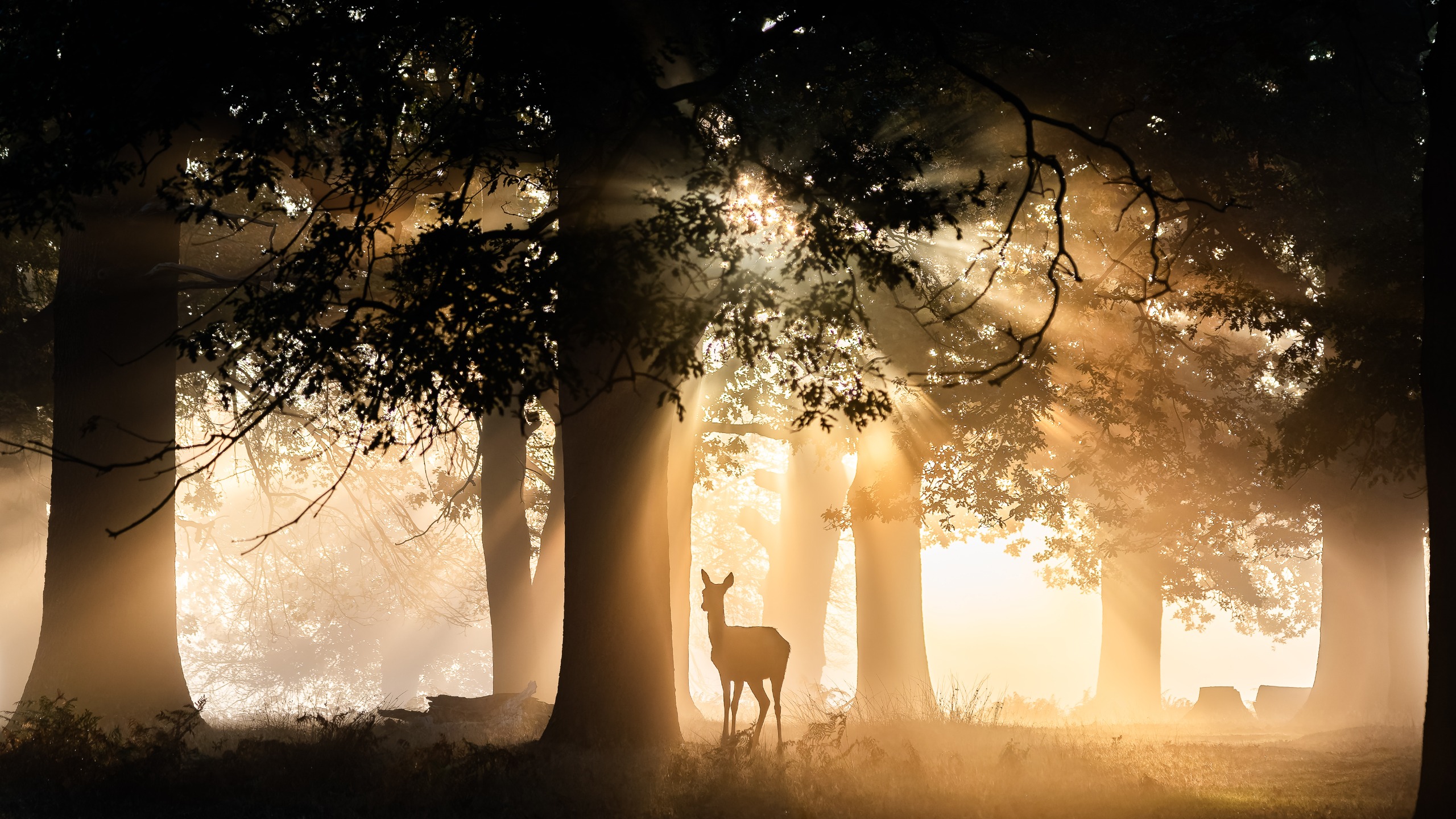
This dramatic lighting occurs when the early morning sunlight strikes the microscopic water droplets suspended in the dense fog, causing the light to scatter in distinct, glowing paths. To successfully capture these luminous shafts of light, photographers must carefully orchestrate their positioning, often shooting directly toward the rising sun. This technique requires precise camera handling, as the intensity of the scattered light can easily overexpose an image unless balanced with a narrower aperture or a faster shutter speed.
Moreover, these luminous rays achieve maximum visual impact when contrasted against a darker backdrop, such as the dense timber and foliage of Richmond Park’s ancient trees, a compositional element prominently featured in Mitchell’s portfolio. While fog is the most common atmospheric medium for creating these dramatic sunbeams, similar lighting effects can occasionally be produced by mist, dust, or smoke particles suspended in the air.
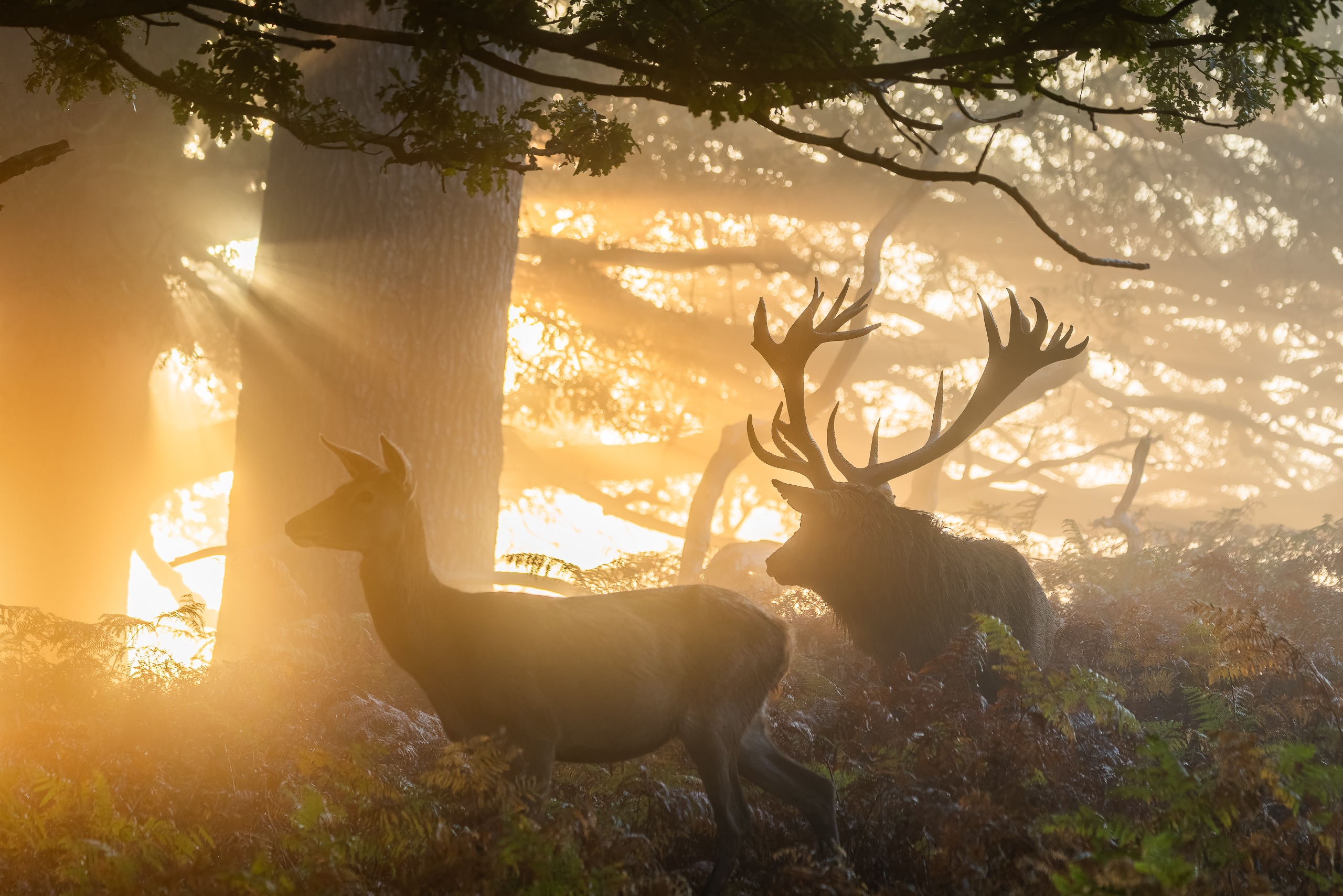
For this assignment, Mitchell relied on high-end professional equipment, utilizing a Canon EOS R5 Mark II camera paired with a Canon RF 100-500mm f/4.5-7.1 L IS USM telephoto zoom lens. The resulting images quickly garnered widespread attention, earning a coveted spot among Getty’s top news photos of the week and serving as a seasonal highlight of the deer rutting phenomenon.
The success of the shoot underscores a fundamental principle of wildlife photography: timing and behavior dictate opportunity. Like many large mammals, red stags are crepuscular, meaning they exhibit their peak activity levels during the dawn and dusk hours. These twilight and early morning periods naturally align with the photographic golden hour, offering a convergence of compelling animal behavior and flattering natural light that continues to inspire visual storytellers worldwide.