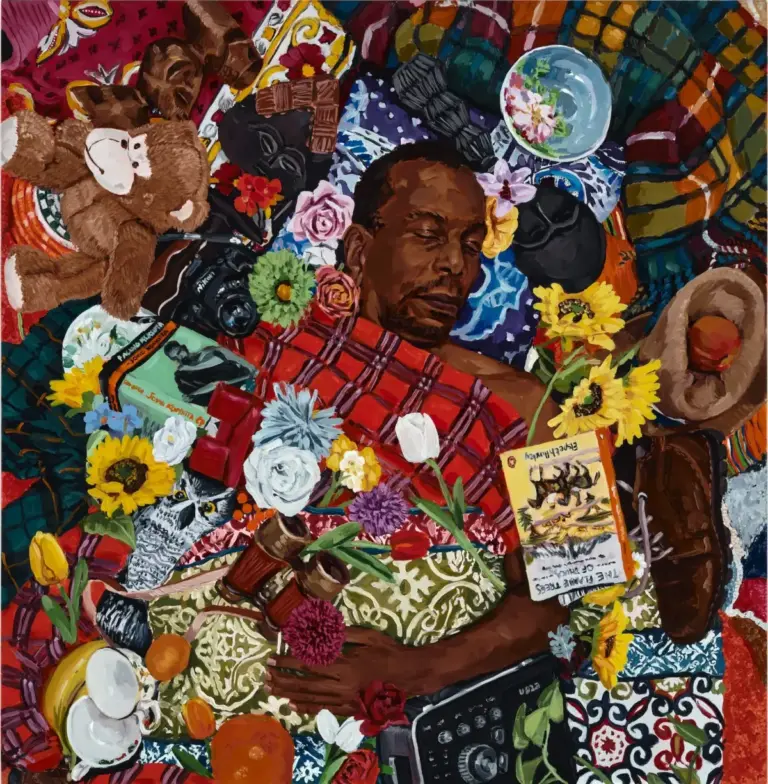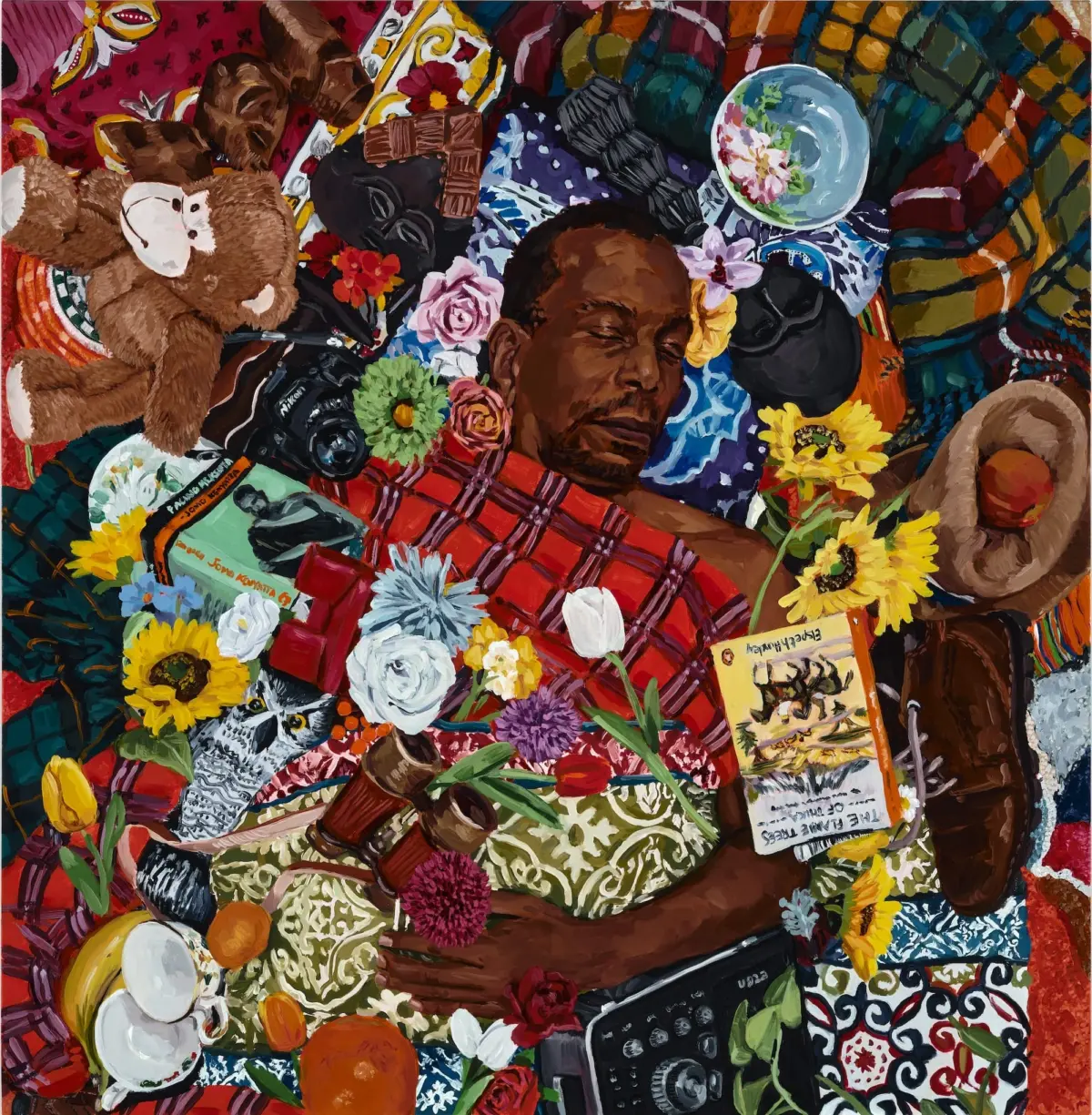
In 1963, following nearly seventy years of formal British colonial rule, Kenya officially declared its independence. This monumental shift did not occur in isolation; throughout the 1960s, nations across the African continent—including Gambia, Guyana, Malawi, Nigeria, and several others—successfully liberated themselves from British imperial control. This watershed historical period was characterized by sweeping democratic redevelopment, profound political shifts, and vast socio-cultural transformations. Drawing deeply from this crucial historical era, Nairobi-born artist Wangari Mathenge engages with the not-so-distant past through an ongoing, vibrant series of large-scale oil paintings that interrogate history, memory, and identity.
Many of the prominent works featured in this recent creative phase form the core of the artist’s current solo exhibition, titled Re-membering, currently on view at Lévy Gorvy Dayan. The exhibition’s conceptual framework is inspired in part by scholar Ngũgĩ wa Thiong’o’s influential 2009 book, Something Torn and New: An African Renaissance. In this foundational text, Thiong’o examines the deep-seated, long-lasting impacts of colonialism and slavery across the African continent, exploring how communities might recover from historical fractures. Through this intellectual lens, Mathenge investigates her own cultural identity, anchoring her visual exploration primarily in the socio-political context of Kenya during the first half of the twentieth century and the transformative decades that followed.
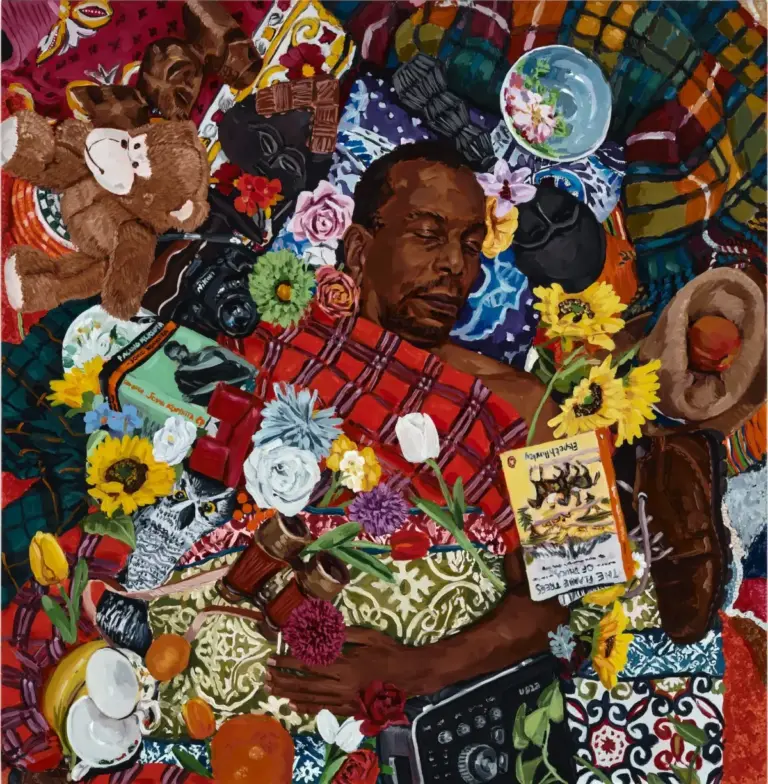
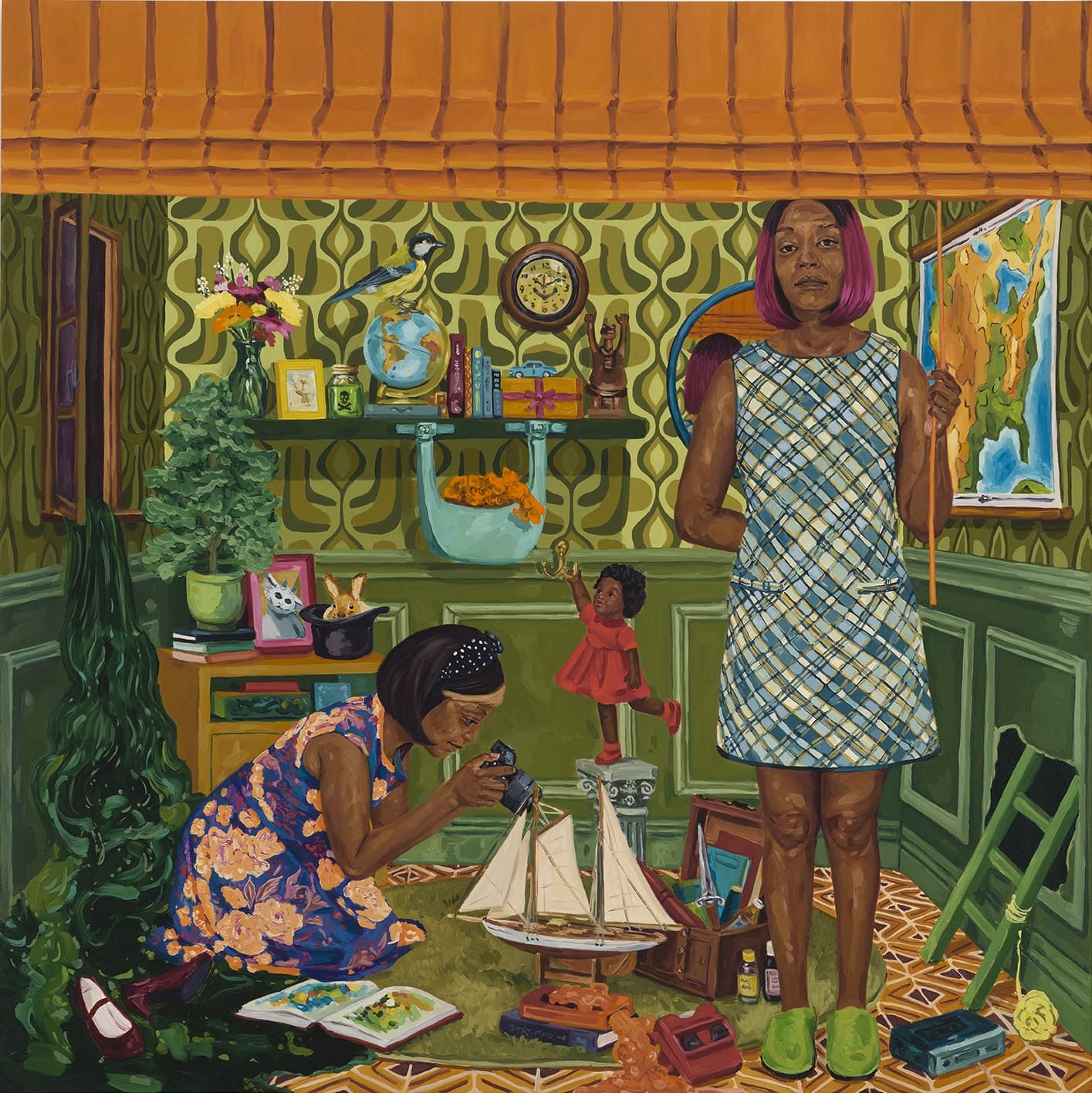
Within her recent body of work, Mathenge frequently depicts herself as multiple characters within a single composition, embodying all of the women who populate these richly detailed domestic spaces. These imagined interiors are filled with an eclectic array of everyday objects, toys, books, maps, and occasional surreal or uncanny elements. For instance, in the striking composition Re-membering XI (To Leave This Steady Unendurable Land), a vivid green ladder is embedded directly into the wall, offering a subtle yet powerful nod to a transitional period defined by profound change, displacement, and upward striving across Africa. The figures within these domestic scenes actively engage with their environments, frequently playing with, manipulating, or altering the items placed before them. In various canvases, women might be seen carefully documenting the passage of a transatlantic vessel or jostling a teddy bear—actions that evoke a complex emotional state blurring the lines between structural gutting and careful mending.
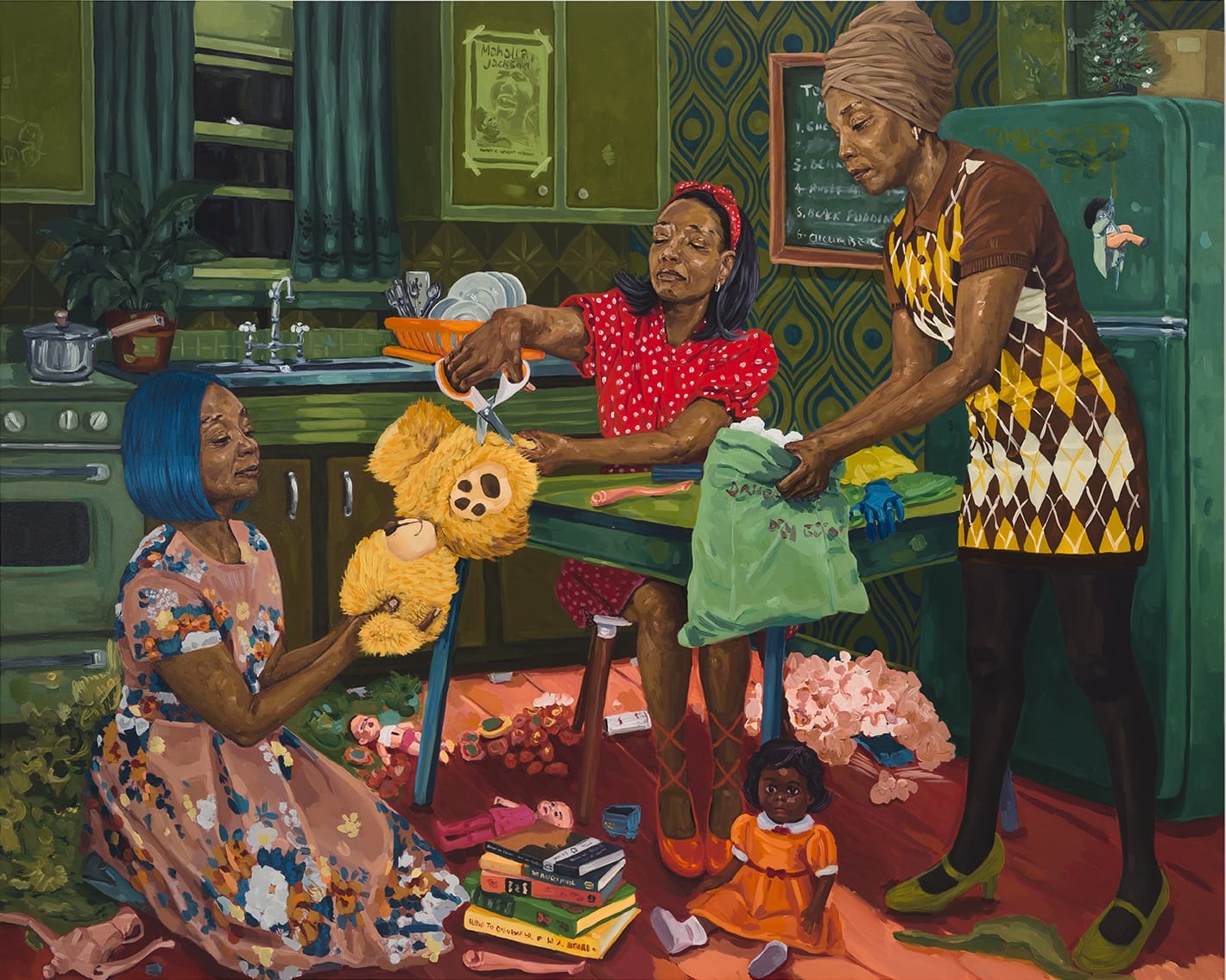
The psychological and emotional tone of Mathenge’s protagonists varies dramatically from one canvas to another. Sometimes, her subjects meet the viewer’s gaze directly and almost confrontationally, projecting an undeniable sense of agency, resilience, and self-possession. In other settings, the figures relax completely amid an accumulation of sentimental and everyday items. By channeling her narrative through the complex lens of cultural memory, the artist gathers powerful symbols of resistance, psychological healing, and historical reclamation.
These compositions are frequently paradoxical in nature, contrasting innocent toys and nostalgic childhood items with underlying currents of tension and alertness. A compelling example of this duality can be seen in Re-membering XIII (May the Wind Be Always at Your Back), where one of the central figures is depicted quietly steadying an arrow within a bow, introducing a palpable undercurrent of readiness and defense into an otherwise domestic scene.
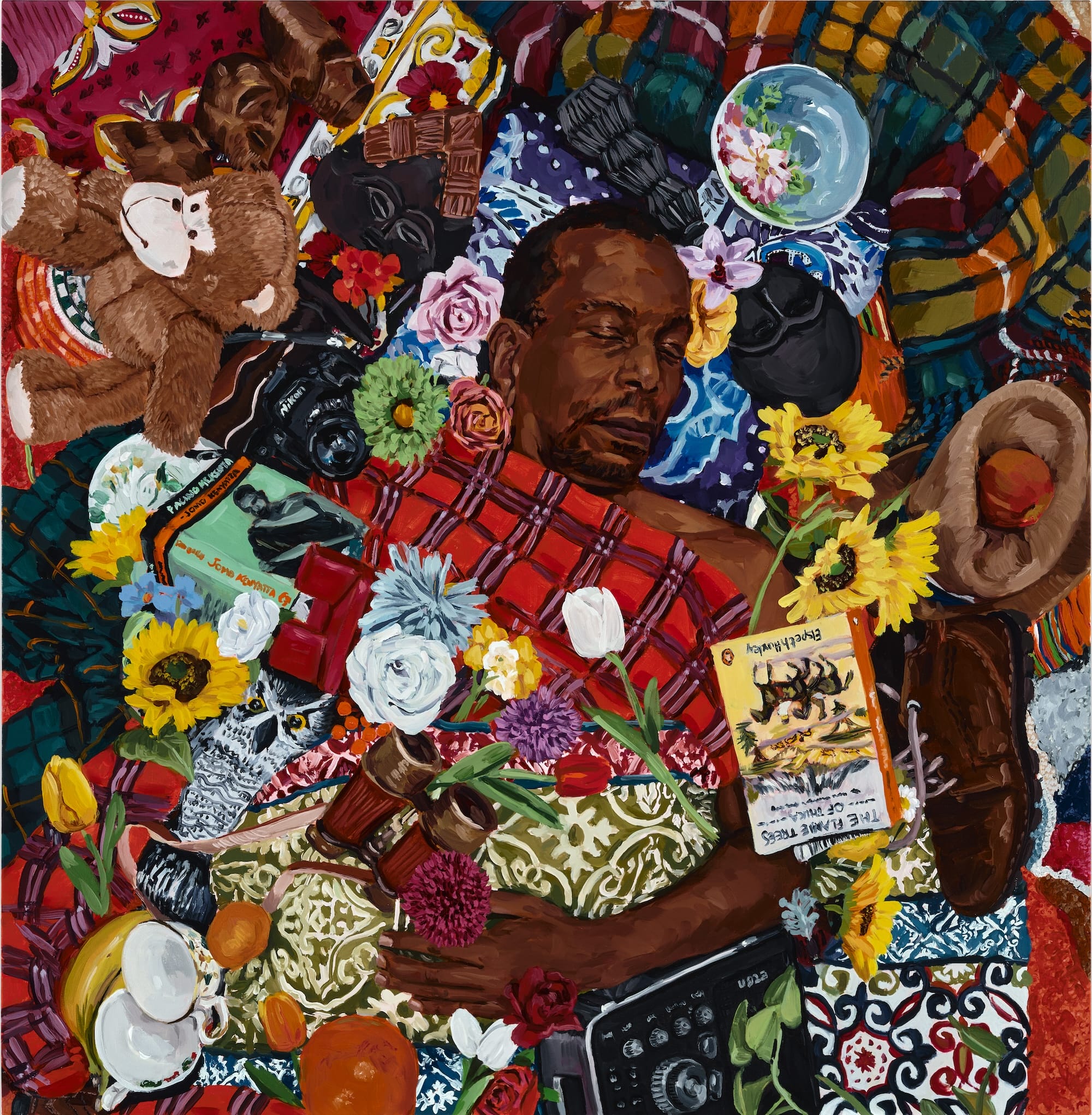
Discussing the core philosophy behind her latest creative output, the artist offers profound insight into the title of the exhibition. "Re-membering signifies not merely the act of recall, but the active gathering and reassembly of what has been fragmented: cultural memory, inherited forms, histories, and ways of seeing," Mathenge explains in an artist statement accompanying the show. By visually reassembling these disparate fragments of history, personal experience, and cultural heritage, her paintings function as restorative sites where past trauma and present identity are negotiated on the canvas.
The exhibition Re-membering continues its run in New York through October 24, drawing widespread attention from art critics, scholars, and collectors interested in contemporary African diaspora art and post-colonial discourse. Art enthusiasts and those following Mathenge’s career can find additional updates, installation views, and previews of her ongoing creative projects on the artist’s official Instagram account.