This week, the upper echelons of the international art and design market converged on the storied Saint-Germain-des-Près district in Paris, filling the historic Hôtel de Maisons—the former home of the late fashion icon Karl Lagerfeld—for the latest edition of Design Miami Paris. As gallery representatives, high-level advisers, and avid collectors navigated the magnificent 18th-century private mansion, hushed conversations regarding prices, provenance, and high-stakes acquisitions set the tone for a bustling marketplace.
Steered by curatorial director Charlene Prempeh, the multi-day showcase brought together an elite selection of collectible design, ranging from rare antique treasures to cutting-edge, one-off contemporary statements. Among the myriad presentations filling the landmark rooms, a few standout galleries and collaborative showcases captured the attention of critics and buyers alike, offering a compelling snapshot of where the global design world is heading.
The Designers of Tomorrow Showcase
One of the most anticipated highlights of the fair was the "Designers of Tomorrow" showcase, a special collaborative presentation between Design Miami Paris and tech giant Apple. Curated by Rodman Primack, the exhibition brought together four emerging international design studios under the unifying thematic umbrella of "Design for Presence."
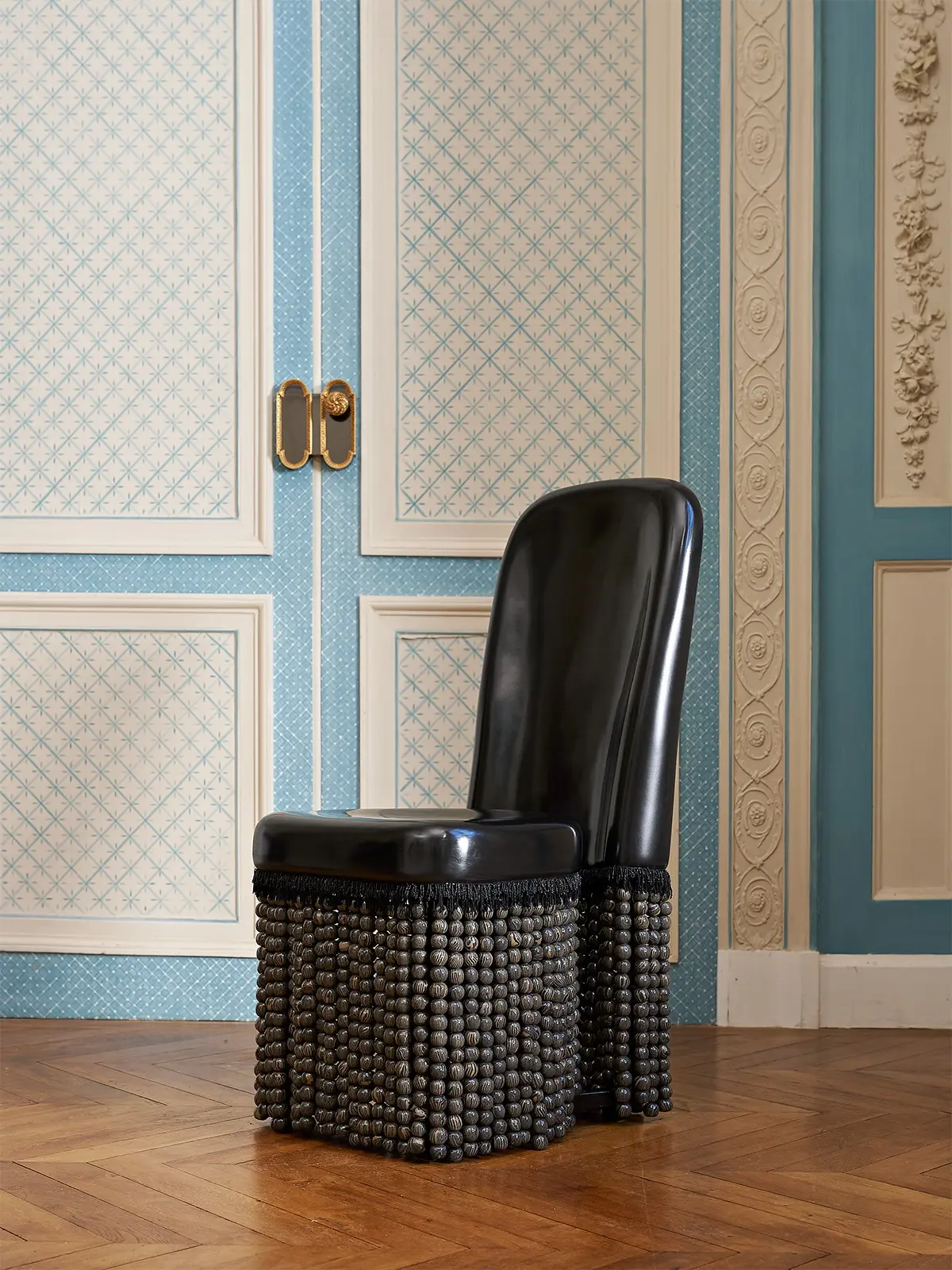
Among the standout contributors was New York-based designer Isabel Rower, who presented her arresting piece, "Padded Chair 1860." The work is a 19th-century boudoir-inspired seat characterized by a dramatic fringe composed of 1,500 individual ceramic beads. For Rower, a craftsperson’s sense of presence begins deep within the physical making process, particularly when working with a medium like ceramics that demands total surrender, as color and finish can never be entirely predicted.
"There is this inherent embracing of the presence of the present, of opening the kiln and relinquishing any control," Rower explains of the slow, laborious, and almost ritualistic process that brought her a "monastic" kind of presence.
Rodman Primack noted that the piece functions as a deliberate physical invitation to sit and remain still. However, the design purposefully resists complete passivity; touch the delicate beads, and a soft clatter interrupts the expected moment of absolute rest, drawing sudden awareness back to the human body and its immediate environment. "It wakes you up," Rower adds, highlighting the dynamic interplay between stillness and sensory awakening.
Yet Rower’s chair was far from the only work within the historic halls to reward deep reflection. Across the various rooms of the Hôtel de Maisons, international galleries pushed the boundaries of material exploration and sculptural form.
The A/P Room
Representing the United Arab Emirates, Dubai-based gallery The A/P Room made a striking Paris debut at Design Miami Paris, presenting a curated selection of international designers who boldly pushed materials into unexpected territories.
California-based artist Rogan Gregory offered one of the presentation’s most arresting visual spectacles, effectively bringing the raw textures of the farm directly to the table. Gregory’s nearly two-meter-long upholstered chandelier cleverly combined unexpected elements like goat fur with gypsum, creating an organic yet monumental lighting fixture. In a similar vein, his smaller sculptural lighting pieces successfully married the industrial weight of bronze with the delicate texture of horse hair, demonstrating a sophisticated approach to material synthesis that resonated strongly with collectors seeking pieces that challenge conventional categorization.
Pulp Galerie
Adding a vibrant splash of color and distinct architectural energy to the ground-level spaces, Paris-based Pulp Galerie made a bold first entrance to Design Miami with striking orange walls and a prime, high-visibility spot situated right by the doors of the Hôtel de Maisons.
Specializing in design spanning from the 1980s to the 2000s, the gallery operates under a provocative manifesto: "style before function, form above all." This ethos was perfectly embodied by Gaetano Pesce’s Canovaci lights. Created in collaboration with renowned Italian glassmaker Venini, these luminaries serve as a ludic, playful nod to laundry strung across traditional Italian alleyways, transforming an everyday cultural snapshot into high-concept collectible design.
Galerie Scène Ouverte
Upstairs, Galerie Scène Ouverte transformed an ornate 18th-century room into a deeply contemplative, sculptural office space with their presentation titled "Around a Desk."
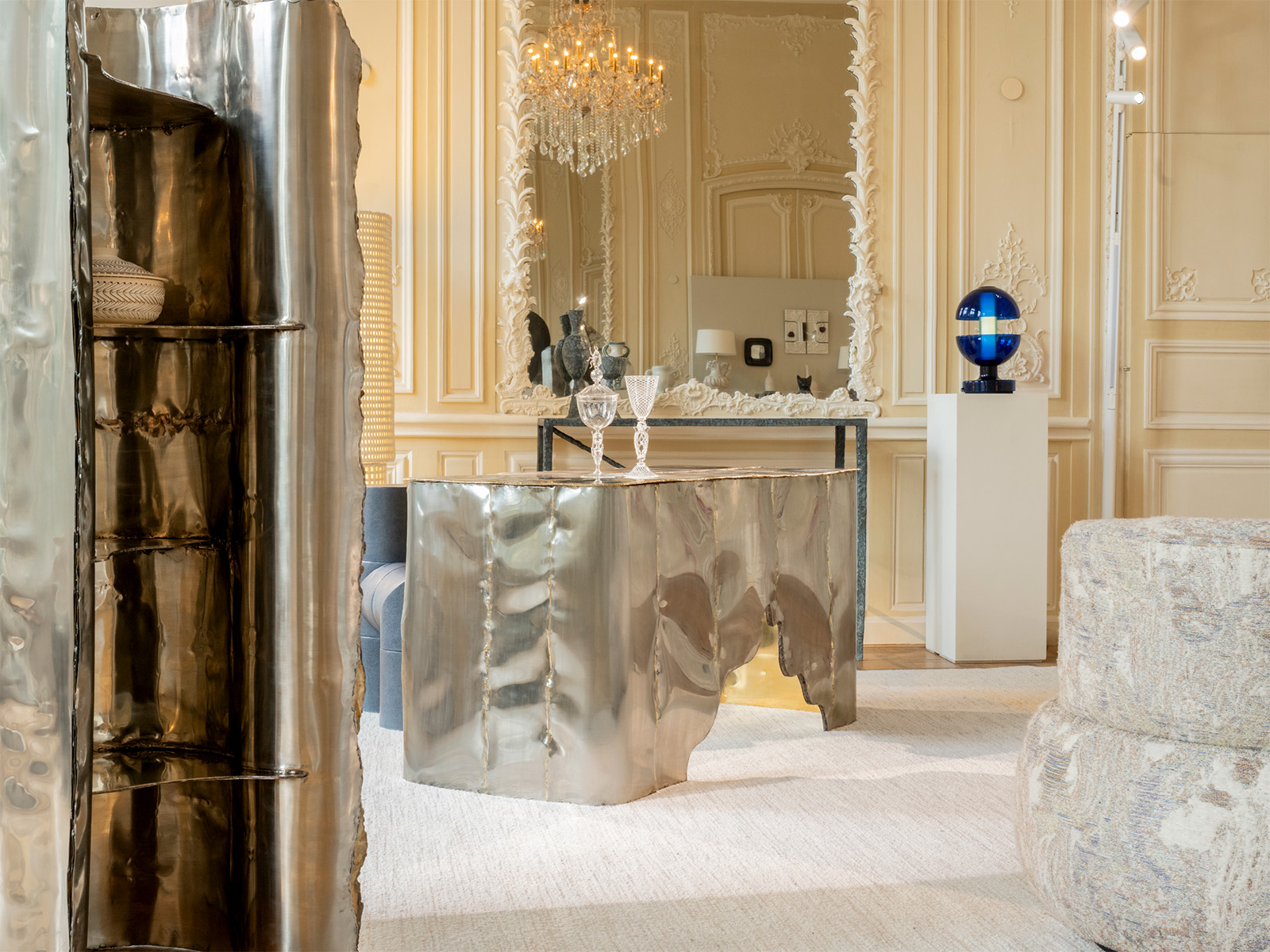
Utilizing peeled and unfurled layers of maillechort—commonly known as nickel silver—Studio Lugo presented a desk and library collection that evoked deeply organic, natural forms. Founder Laurence Bonnel explained the philosophy behind the striking metallic creations, noting that the manufacturing process was intentionally left unconcealed.
"The manufacturing process is not concealed; it is highlighted, embraced and placed at the very heart of the creative gesture," Bonnel says. "A sculptural horizontality serves a functional object whose layers of metal unfold like geological strata or petals."
As Design Miami Paris draws to a close, the strong turnout and intense commercial and critical engagement within Karl Lagerfeld’s former residence underscore the enduring vitality of the collectible design market in the French capital.