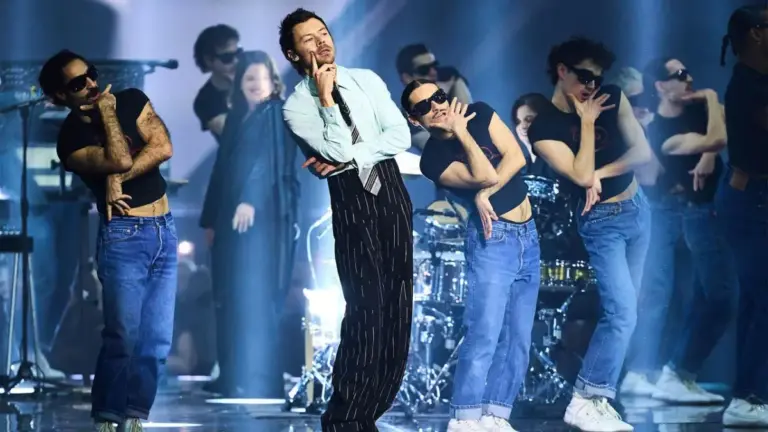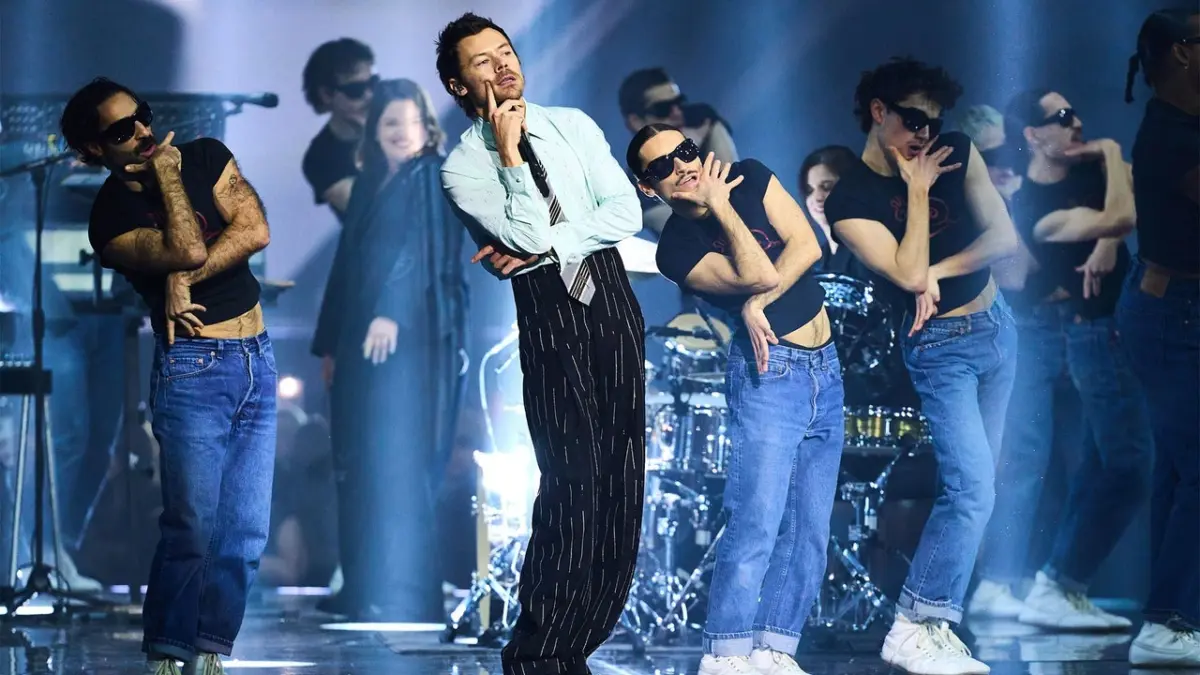
For Harry Styles’s dedicated audience, it is the can’t-miss event of the year. Tens of thousands of fans have descended on New York City’s iconic Madison Square Garden each night of his expansive 30-date residency, rushing to catch the electrifying show before it concludes over Halloween weekend. The massive New York stint directly follows the artist’s blockbuster 2022 run, when he performed 15 consecutive nights at the famous Manhattan arena to widespread critical and commercial acclaim.
Styles is far from alone in embracing the format. While concert residencies were once viewed by many as the final professional stop at the end of a long, fading career—typically associated with aging acts settling into Las Vegas showrooms—the paradigm has fundamentally shifted. Today, the format has successfully attracted a younger, highly energetic generation of contemporary hitmakers. Performers such as Usher, Katy Perry, and Lady Gaga have all embraced extended runs in entertainment capitals. In 2024, Adele embarked on a massive 10-date residency in Munich. Meanwhile, last year, Bad Bunny’s 31-date residency in Puerto Rico single-handedly boosted the island’s fragile economy, generating over $200 million while powerfully extending his ongoing efforts to elevate the U.S. territory’s global cultural profile.
Celine Dion, who famously holds the record for the highest-grossing residency in Las Vegas history, recently embarked on a new concert series just outside of Paris. The high-profile European dates mark her very first concert series since publicly revealing her diagnosis with stiff-person syndrome, proving the enduring emotional power and personal resilience that long-term performance runs can offer both icons and their supporters.
Industry insiders and artists alike say there are many compelling reasons why residencies have firmly taken hold across the modern music business. Yet, this massive commercial pivot has not arrived without friction, sparking debates among devoted ticket buyers who argue that the format frequently shifts financial burdens onto fans. Critics point out that consumers often face steep travel and lodging expenses to attend a centralized hub rather than saving money by catching an artist on a traditional tour stop in their own hometown.
Residencies Fulfill Evolving Needs
Residencies are not exactly a novel concept in the grand history of live entertainment, explains Mitch Rose, Creative Artists Agency’s head of North American touring, who represents major musical acts including Styles and Katy Perry.
"Go back in time to early Vegas, in the ’60s when Frank Sinatra had a residency and Tony Bennett had a residency," Rose notes, reflecting on the historical roots of the medium. "They played multiple shows across a year at a hotel. That was the birth of a residency."
Over time, however, Vegas residencies gradually became synonymous with a very specific kind of artist: one nearing retirement age who wanted to avoid the grueling physical toll of international travel. That perception changed dramatically in the early 2000s, when Celine Dion completely revitalized and modernized the format with her yearslong "A New Day…" and "Celine" runs at Caesars Palace. John Meglen, co-CEO of Concerts West, was instrumental in producing both of those historic Vegas residencies as well as Dion’s recent enterprise in France.
"Most people thought we were crazy," Meglen recalls, looking back on the sheer scale and financial gamble of the early planning phases. He notes that the initial commitment required an unprecedented operational schedule: "It was 200 shows a year, 40 weeks a year. Five shows a week."
Despite the initial skepticism from industry peers, the gamble paid off spectacularly. Across 16 years and 1,141 total performances, Dion’s legendary runs grossed an astonishing $681.3 million, according to data from Billboard, shattering all previous conceptions of what a stationary concert enterprise could achieve financially.
Nowadays, extended residencies have become a common fixture of the contemporary touring landscape. Rose points out that modern attendees frequently approach these stationary concert series less like traditional arena shows and more like destination music festivals.
"Think of Coachella," Rose explains, comparing the cultural phenomenon. "People from all around the world come to the desert mid-April to share an experience. And residencies are the same vibe. When we announced Harry’s residency, the Garden was the only place in America that we were playing in 2026. There’s a uniqueness."
This distinct atmosphere is frequently amplified by temporary artist pop-up shops, themed merchandise installations, and organized fan meetups, all of which contribute significantly to a vibrant, festival-like ecosystem surrounding the venue.
Both Artists and the Industry Benefit
R&B superstar Usher hosted his immensely popular "Usher: My Way The Vegas Residency" throughout 2022 and 2023, serving as a high-profile prelude to his triumphant 2024 Super Bowl halftime show. Speaking with The Associated Press during the run, Usher explained that a major part of the format’s personal appeal was the rare gift of consistency and stability.
"I like the idea of what I’ve found in Las Vegas. It gives me an opportunity to settle. I have children now. I got a life," he shared regarding his decision to plant roots temporarily.
Beyond the lifestyle advantages for performers with families, there are clear, undeniable financial benefits to the residency model. Meglen points out that stationary runs drastically cut down on the massive overhead expenses associated with constantly packing up, shipping, and rebuilding complex production infrastructure, personnel, and heavy equipment across dozens of different cities.
Another major upside centers on physical and psychological well-being. "If you do a residency in one city, you’re not on an airplane or in a bus. It’s good mental healthcare for the artist," Rose explains, highlighting the grueling toll that traditional world tours often take on creative talent.
Furthermore, residencies provide artists with a unique, unparalleled opportunity to develop massive, highly ambitious stage productions that simply do not have to be engineered for rapid dismantling and global transport. Nowhere is that technological advantage more clearly demonstrated than at the immense, 516-foot-wide Sphere in Las Vegas, which boasts state-of-the-art acoustic systems and a high-resolution LED screen that wraps halfway around a 17,500-seat audience.
In 2026, Mexican singer-songwriter Carín León made history by becoming the very first Latino artist to hold a residency at the technologically advanced venue. "It’s a venue that lets you express a lot of stuff because of all of the tools," León said of the experience. "For me, it was perfect."
Some Say Residencies Shift Expenses to the Fans
Despite the clear operational and creative advantages for performers, the economic reality for the audience can be daunting. Attendees at Styles’s sprawling New York engagement typically spend anywhere from under $100 to upwards of $1,000 per ticket, a sum that does not factor in the considerable cost of airfare, hotels, and local transportation for out-of-town enthusiasts traveling from across the country or around the globe.
"I understand why residencies make sense for an artist and why it would be less stressful and make their lives easier. But as a fan, I don’t understand how they cost as much money as they do," says Sara Feigin, a dedicated Styles fan and New York-based professional photographer. "You’re playing over 30 days at the same venue, why is this $300?"
Feigin voices a sentiment shared by many loyal concertgoers: if stationary residencies genuinely prove more cost-effective and operationally streamlined for top-tier talent and promoters, those savings should logically translate into more affordable ticket prices for the consumer base.
A representative for Harry Styles declined to comment on ticket pricing structures. For events managed through platforms like Ticketmaster, such as Styles’s extended residency, the base price of a ticket before various service fees, facility charges, and local taxes—commonly referred to as the face value—is determined directly by the event organizer and management team.
Meglen acknowledges the tension surrounding ticket economics while emphasizing that traditional touring must continue to coexist alongside stationary runs. He argues that residencies provide a healthy counterbalance within the wider live entertainment ecosystem. According to Meglen, residencies give "all these other markets a breather," which subsequently helps build sustainable future demand for broader tours. "I don’t know any artist that keeps touring over and over and over in the same markets that their ticket sales go up," he adds.
Residencies Can Be Found All Over the Globe
Ultimately, the geographic location of a successful residency depends entirely on the unique global footprint and cultural resonance of the artist. Consider the monumental achievement of Bad Bunny. "Nobody could do what he did in Puerto Rico, right?" Rose points out, emphasizing that local connection matters deeply. "Major markets are always going to be the first choices of residencies. And I don’t think every city works."
Similarly, when discussing Celine Dion’s recent European return, Meglen notes a fundamental truth about touring geography: "Paris is Celine’s biggest market in the world."
Otherwise, established entertainment capitals boasting high concentrations of large-scale venues—such as Los Angeles, Las Vegas, and New York—continue to top the industry list for multi-date concert runs. Consequently, passionate fans who reside far from these major metropolitan hubs should fully expect to travel if they wish to catch their favorite acts live, as the commercial momentum behind residencies shows no signs of slowing down.
"Everything is cyclical and the residencies are certainly having a moment," Rose concludes. "And as long as there’s a Las Vegas or an act big enough to do multiple nights in arenas, it will never go away."