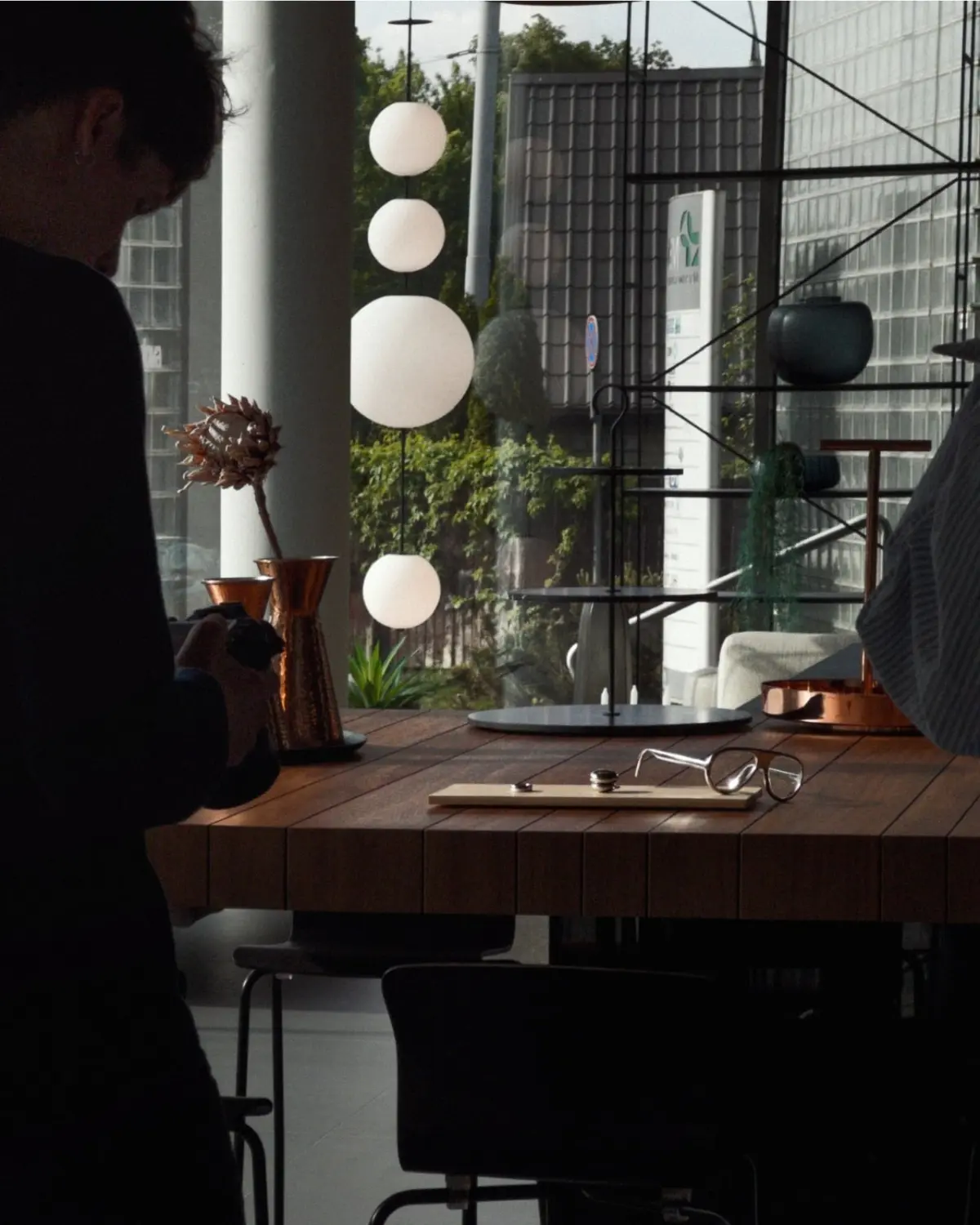
Fitting a computer into a pair of conventional glasses has long created an awkward and persistent design problem: the necessary electronics require physical space and volume, yet the final product still has to rest comfortably and aesthetically on someone’s face. Too often, tech companies attempt to mask this tension by disguising heavy hardware as ordinary eyewear, resulting in thick, unconvincing frames that pretend to be something they are not. Designer Povilas Grigas approaches this inherent tension without pretending it can simply disappear. His innovative Glasses concept gives the integrated hardware a deliberately distinct and unapologetic silhouette, treating smart eyewear as an entirely unique design category rather than just ordinary frames hiding a technological secret.
Developed originally as part of his design BA thesis in 2024, the mixed-reality concept imagines a compelling alternative to being tethered to a mobile phone or a desktop computer screen. The underlying ambition of the project is to make everyday computing available through something worn directly on the body, rather than something a user must continually look down at or sit in front of for hours at a time. It is an undeniably appealing proposition for the future of human-computer interaction, although moving digital information fundamentally closer to the human eye does not automatically make it any less demanding of a user’s attention. By exploring this space, Grigas pushes the conversation past mere miniaturization and straight into the realm of architectural and sculptural identity.

Visually, these glasses possess more than enough distinct personality to carry that complex design discussion forward. The broad, rounded lens openings sit comfortably within a flowing, metallic silver-colored frame, while the bridge features two dark circular elements positioned directly above an oval opening. When viewed from the front, that specific arrangement almost resembles a tiny, surprised facial expression. It is an unexpectedly playful and humanizing detail to encounter within an otherwise polished and industrial object. To the eye of many design observers, the overall aesthetic effect lands somewhere between avant-garde sculptural eyewear and a high-end science-fiction costume department possessing unusually good taste.
Material selection plays a critical role in establishing the physical presence of the concept. Grigas specifies CNC-milled, polished grade 5 titanium for the construction of the frame, alongside optically polished sapphire crystal for the lenses. While these are proposed material choices rather than concrete evidence that a finished, mass-produced pair of glasses would feel featherlight or easily survive the rough-and-tumble nature of everyday abuse, the intention behind them remains clear and commendable. A computer worn as prominently on the face as a pair of spectacles deserves the same level of serious material attention that society traditionally gives to a luxury mechanical watch or a favorite designer frame, particularly if the ultimate expectation is for the device to become an integrated part of someone’s daily appearance and identity.
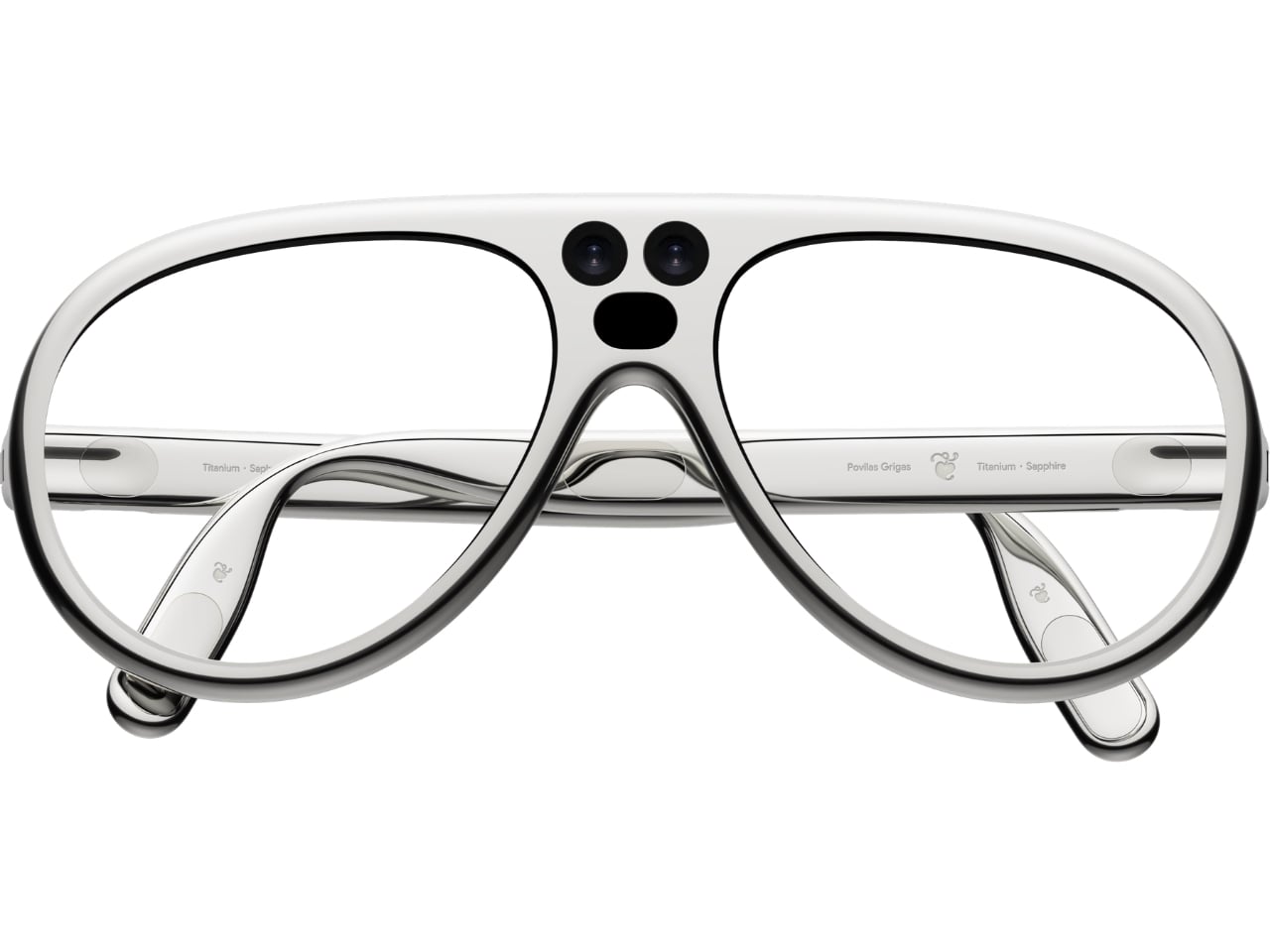
The layout of the frame is similarly deliberate, following the natural bones surrounding the human eyes, according to Grigas. Meanwhile, the essential vision sensors occupy the bridge area to provide a centered, natural point of view for the wearer. That specific placement gives the front profile of the glasses a clean and clear organizing feature. Rather than scattering visually competing electronic details haphazardly across the brow line and the outer corners, the design concentrates its most conspicuous technology near the exact middle of the frame. It forms a remarkably convincing and balanced composition, even if achieving a visually convincing composition is ultimately only one part of the broader puzzle of making wearable computing genuinely practical for daily life.
Examined from the side, the arms of the glasses look remarkably substantial, featuring long, smooth surfaces that curve downward gracefully behind the ears. Their noticeable thickness is treated as an intentional part of the frame’s visual identity rather than a technical detail that the presentation tries to conceal or apologize for. Many modern wearable designers chase an elusive thinness at the structural expense of the overall shape, often leading to ungainly bulges or fragile components. In Grigas’s concept, the broad arms and the generous front sections feel like unified parts of the very same cohesive object, reinforcing its bold stance.
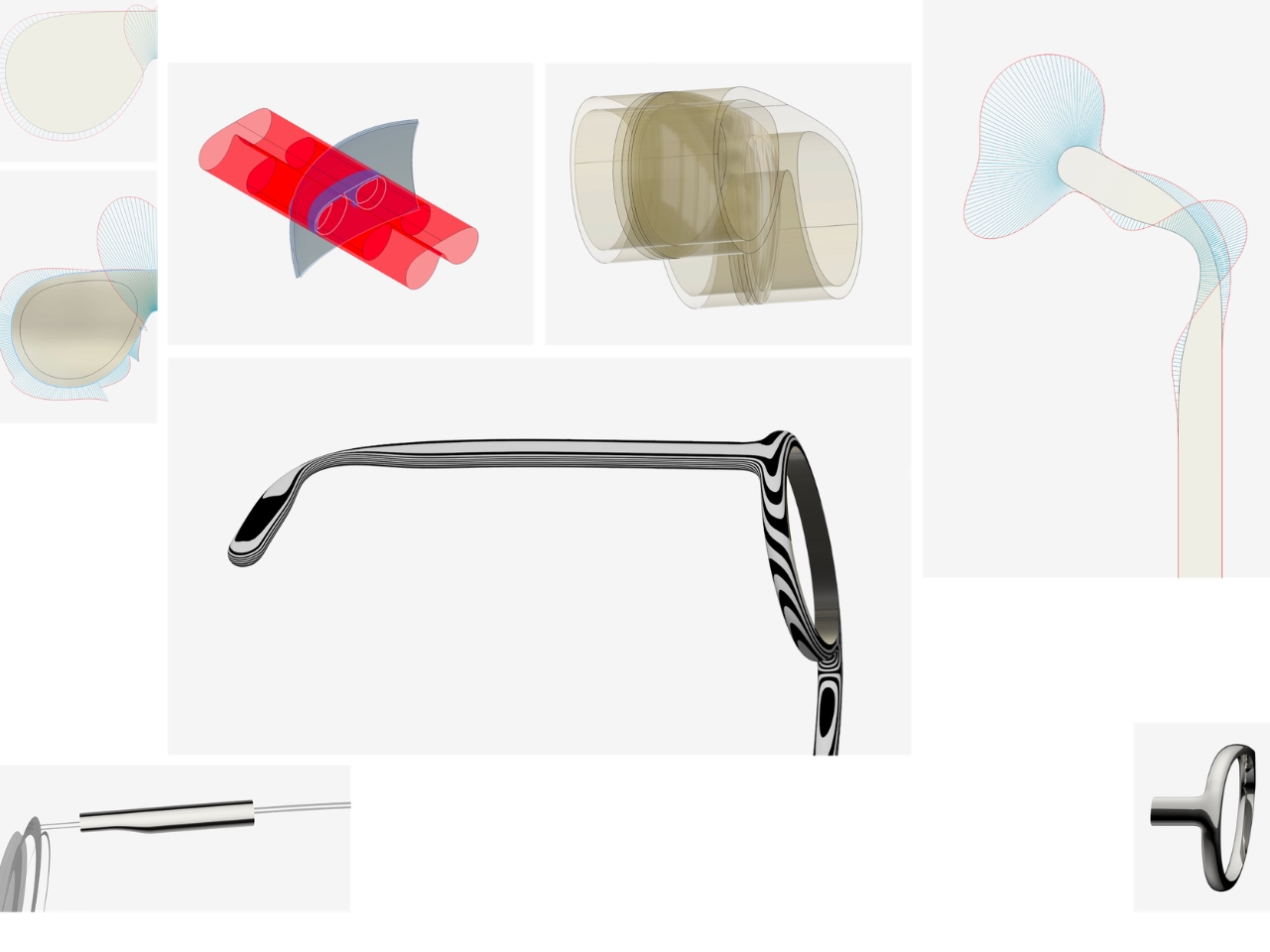
This distinctive aesthetic naturally raises a deeply personal question for any potential user: Would someone truly want such a bold and definitive object defining their face on a daily basis? The uncertainty surrounding that question is precisely what makes the concept worth keeping in the ongoing conversation about wearable tech. Eyeglasses are fundamentally an unusually intimate piece of technology because people look through them to navigate the world, while simultaneously other people look directly at them during every social interaction. A frame can be brilliantly and beautifully resolved from a purely industrial design perspective and still feel entirely wrong for an individual wearer’s personal style or comfort. Moving past an impressive digital rendering would require evaluating how such a piece fits into an actual routine.
The inclusion of a proposed leather charging case helps make imagining that daily routine significantly easier. In the design presentation, the glasses fold completely flat inside the case, which features a dark, textured exterior complete with visible stitching and a secure circular metal closure. The accessory reads much more like a traditional, high-end eyeglass case than a miniature electronics bag or tech pouch. More importantly, the physical act of folding the glasses up and putting them away feels like a recognizable and comforting human action. That sense of closure is reassuring in an era where technology trends often push the expectation that a wearable computer should remain mounted to the body indefinitely, blurring the boundaries between human rest and digital engagement.
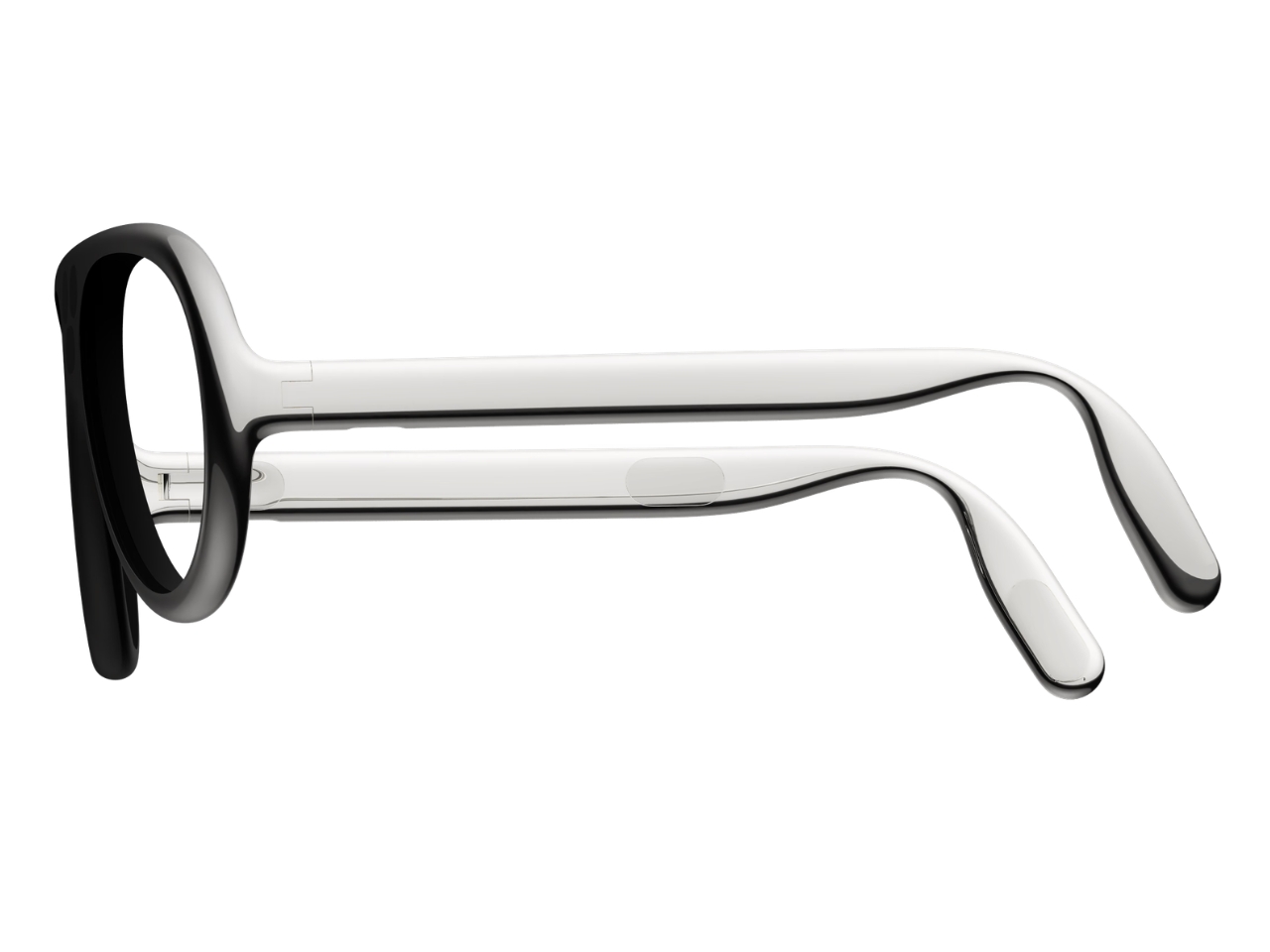
For now, this project remains strictly an academic design proposal rather than a market-ready replacement for a laptop or a smartphone. Its initial presentation does not establish specific technical metrics such as battery endurance, display resolution, or long-term ergonomic comfort, meaning those vital questions must remain open for future engineering exploration. What earns genuine interest and industry attention here is the designer’s willingness to give computing a visible, proud physical presence without making the surrounding frame look apologetic or deceptive. The goal is not to trick the world into thinking these glasses are ordinary, unassuming eyewear, but rather to question whether their eventual utility could ever truly earn the unique space they demand to occupy on the human face.