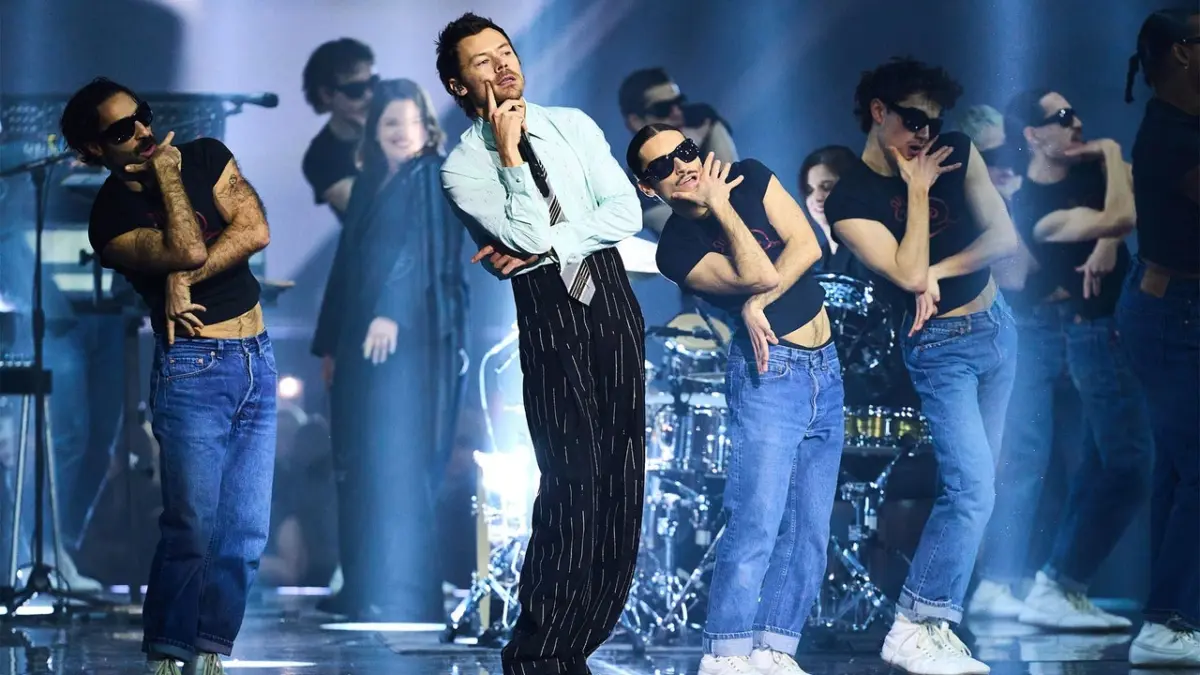
For Harry Styles’s dedicated audience, it stands as the can’t-miss cultural event of the year: tens of thousands of fans have descended on New York City’s iconic Madison Square Garden each night of his sweeping 30-date residency, rushing to catch the electrifying show before the engagement concludes over Halloween weekend.
The massive stint follows the British pop star’s blockbuster 2022 run, when he performed 15 consecutive, sold-out nights at the famous Manhattan arena. Yet Styles is hardly alone in embracing this format. Long viewed as the final career stop for veteran acts winding down decades on the road, modern residencies have firmly captured the attention and creative ambitions of younger, contemporary performers.
Over recent years, major entertainment hubs have seen an influx of high-profile headliners. Artists such as Usher, Katy Perry, and Lady Gaga have all claimed long-term stakes in performance capitals. In 2024, Adele embarked on a massive 10-date residency in Munich. Last year, Bad Bunny’s 31-date residency in Puerto Rico single-handedly energized the island’s fragile local economy, generating over $200 million while extending his ongoing efforts to elevate the U.S. territory’s global cultural profile.
Meanwhile, Celine Dion—who famously holds the record for the highest-grossing residency in Las Vegas history—recently embarked on a new series of performances just outside Paris. It marks her first major concert series since publicly revealing her diagnosis with stiff-person syndrome.
Industry insiders, promoters, and artists alike point to a complex web of motivations driving the modern music business toward residencies. This shift comes despite persistent arguments from fans and critics who contend that the stationary format ultimately transfers the burden of travel costs onto consumers, who might otherwise save money attending a more accessible tour stop in their own hometowns.
Residencies Fulfill Evolving Needs
Residencies are certainly not a novel concept in the architecture of live entertainment, explains Mitch Rose, Creative Artists Agency’s head of North American touring, who represents prominent artists including Styles and Perry.
"Go back in time to early Vegas, in the ’60s when Frank Sinatra had a residency and Tony Bennett had a residency," Rose notes, reflecting on the historical roots of the format. "They played multiple shows across a year at a hotel. That was the birth of a residency."
Over time, however, Las Vegas residencies evolved to become synonymous with a specific, predictable kind of artist: legendary performers nearing retirement age. That industry paradigm shifted dramatically in the 2000s, when Celine Dion revitalized the medium with her years-long "A New Day…" and "Celine" runs at Caesars Palace. John Meglen, co-CEO of Concerts West, was instrumental in spearheading both those landmark Vegas residencies and Dion’s subsequent run in France.
"Most people thought we were crazy," Meglen recalls, pointing out the unprecedented financial and logistical scale of the venture. "It was 200 shows a year, 40 weeks a year. Five shows a week."
Despite initial skepticism from industry analysts, the gamble paid off spectacularly. Across 16 years and 1,141 performances, Dion’s residency grossed an astonishing $681.3 million, according to data from Billboard, proving the commercial viability of a stationary entertainment model.
Nowadays, residencies have become a mainstream staple of modern concert scheduling. Rose explains that contemporary concertgoers increasingly treat multi-night runs less like standard arena shows and more like curated music festivals—destination experiences that command travel.
"Think of Coachella," Rose says, drawing a parallel to the massive annual desert gathering. "People from all around the world come to the desert mid-April to share an experience. And residencies are the same vibe. When we announced Harry’s residency, the Garden was the only place in America that we were playing in 2026. … There’s a uniqueness."
This festival-like atmosphere is frequently reinforced by auxiliary fan engagement, including exclusive artist pop-up shops, branded merchandise installations, and coordinated fan meetups in the host city, creating an immersive cultural moment rather than a simple evening out.
Both Artists and the Industry Benefit
The appeal of the residency format extends far beyond box office receipts, offering profound lifestyle and operational advantages for the talent involved.
R&B superstar Usher hosted his popular "Usher: My Way The Vegas Residency" across 2022 and 2023, a high-profile run that directly preceded his triumphant 2024 Super Bowl halftime show performance. Speaking to The Associated Press during his run, Usher explained that a primary factor in choosing the format was the simple desire for professional and personal consistency.
"I like the idea of what I’ve found in Las Vegas. It gives me an opportunity to settle. I have children now. I got a life," he said, highlighting the contrast with the grueling, nomadic nature of traditional world tours.
From a business and operational standpoint, there are clear financial and logistical benefits as well. Residencies eliminate the massive, recurring expenses associated with constantly packing up and transporting complex stage production, specialized personnel, and heavy audio-visual equipment from city to city, Meglen points out.
There is also a significant human element to consider. "If you do a residency in one city, you’re not on an airplane or in a bus. It’s good mental healthcare for the artist," Rose notes, emphasizing how physical exhaustion and travel fatigue can impact performers on extended global outings.
Furthermore, stationary runs provide artists with the unique opportunity to develop massive, highly sophisticated stage productions that simply cannot be hauled efficiently across international borders. Nowhere is this technological leap more apparent than at the 516-foot-wide Sphere in Las Vegas, which features state-of-the-art technological attractions and a towering, high-resolution LED screen that wraps halfway around a 17,500-seat audience.
In 2026, Carín León made history by becoming the first Latino artist to headline a residency at the technologically advanced venue. Reflecting on the experience, he noted the creative freedom it afforded: "It’s a venue that lets you express a lot of stuff because of all of the tools. For me, it was perfect."
Some Say Residencies Shift Expenses to the Fans
Despite the clear professional advantages for artists and promoters, the rise of the residency format has sparked debate among concertgoers regarding equity and affordability.
For Harry Styles’s current New York audience, ticket prices span a wide spectrum—anywhere from under $100 to upwards of $1,000 for premium seating—and that calculation entirely excludes the often-substantial cost of lodging, dining, and travel for out-of-town attendees making the pilgrimage to Manhattan.
"I understand why residencies make sense for an artist and why it would be less stressful and make their lives easier. But as a fan, I don’t understand how they cost as much money as they do," says Sara Feigin, a dedicated Styles fan and New York-based photographer. "You’re playing over 30 days at the same venue, why is this $300?"
Feigin voices a common sentiment among devoted fan bases: if a stationary residency drastically reduces overhead production and touring expenses for the talent and management team, those savings should logically translate into more accessible ticket prices for the public.
A representative for Harry Styles declined to comment on the pricing structure. For events managed through ticketing platforms like Ticketmaster during Styles’s residency, the baseline price of a ticket before mandatory fees, service charges, and taxes—frequently referred to as the face-value cost—is determined directly by the event organizer and artist management.
Addressing the broader ecosystem of live music, Meglen emphasizes that traditional touring must continue to thrive alongside stationary runs, arguing that there is ample room for both models to coexist. Residencies give secondary and regional markets a necessary "breather," as he puts it, which in turn helps sustain long-term demand.
"I don’t know any artist that keeps touring over and over and over in the same markets that their ticket sales go up," Meglen observes.
Residencies Can Be Found All Over the Globe
The geographic placement of a successful residency depends heavily on an artist’s distinct demographic strengths, cultural ties, and global appeal.
Consider the unprecedented scale of Bad Bunny’s engagement in the Caribbean. "Nobody could do what he did in Puerto Rico, right?" Rose points out. "Major markets are always going to be the first choices of residencies. … And I don’t think every city works."
Similarly, for Celine Dion, strategic location was tied deeply to her core audience. "Paris is Celine’s biggest market in the world," Meglen explains.
For most other performers, established entertainment capitals possessing robust infrastructure and multiple large-scale venues—such as Los Angeles, Las Vegas, and New York—consistently top the industry list. Consequently, fans who reside far outside these major metropolitan hubs must often prepare to travel significant distances if they wish to experience these specialized runs firsthand, as residencies show no signs of fading from the modern entertainment landscape.
"Everything is cyclical and the residencies are certainly having a moment," Rose concludes. "And as long as there’s a Las Vegas or an act big enough to do multiple nights in arenas, it will never go away."