In December 1963, following nearly seventy years of formal British colonial rule, Kenya officially declared its independence. The momentous occasion did not occur in a vacuum; rather, it was part of a transformative global wave across the African continent during the 1960s. Nations including Gambia, Guyana, Malawi, and Nigeria similarly liberated themselves from British imperial control during a watershed era characterized by rapid democratic redevelopment, the drafting of new constitutions, and profound socio-cultural shifts. Decades later, contemporary artist Wangari Mathenge—who was born in Nairobi—is looking back at this critical, not-so-distant past through an ongoing series of vivid, psychologically rich oil paintings that interrogate how history shapes modern identity.
Many of the striking works featured in this recent exploration form the core of Mathenge’s solo exhibition, titled Re-membering, hosted at Lévy Gorvy Dayan. The exhibition draws heavy inspiration from Kenyan scholar Ngũgĩ wa Thiong’o’s influential 2009 book, Something Torn and New: An African Renaissance. In that seminal text, Ngũgĩ examines the deep, enduring impacts of colonialism and the transatlantic slave trade on African societies, arguing for a cultural renaissance and a conscious reclamation of native languages, histories, and worldviews. Channeling these ideas into her visual practice, Mathenge utilizes her canvases to examine her own complex cultural identity through the contextual lens of Kenya during the pivotal mid-20th-century transition from colony to sovereign nation.
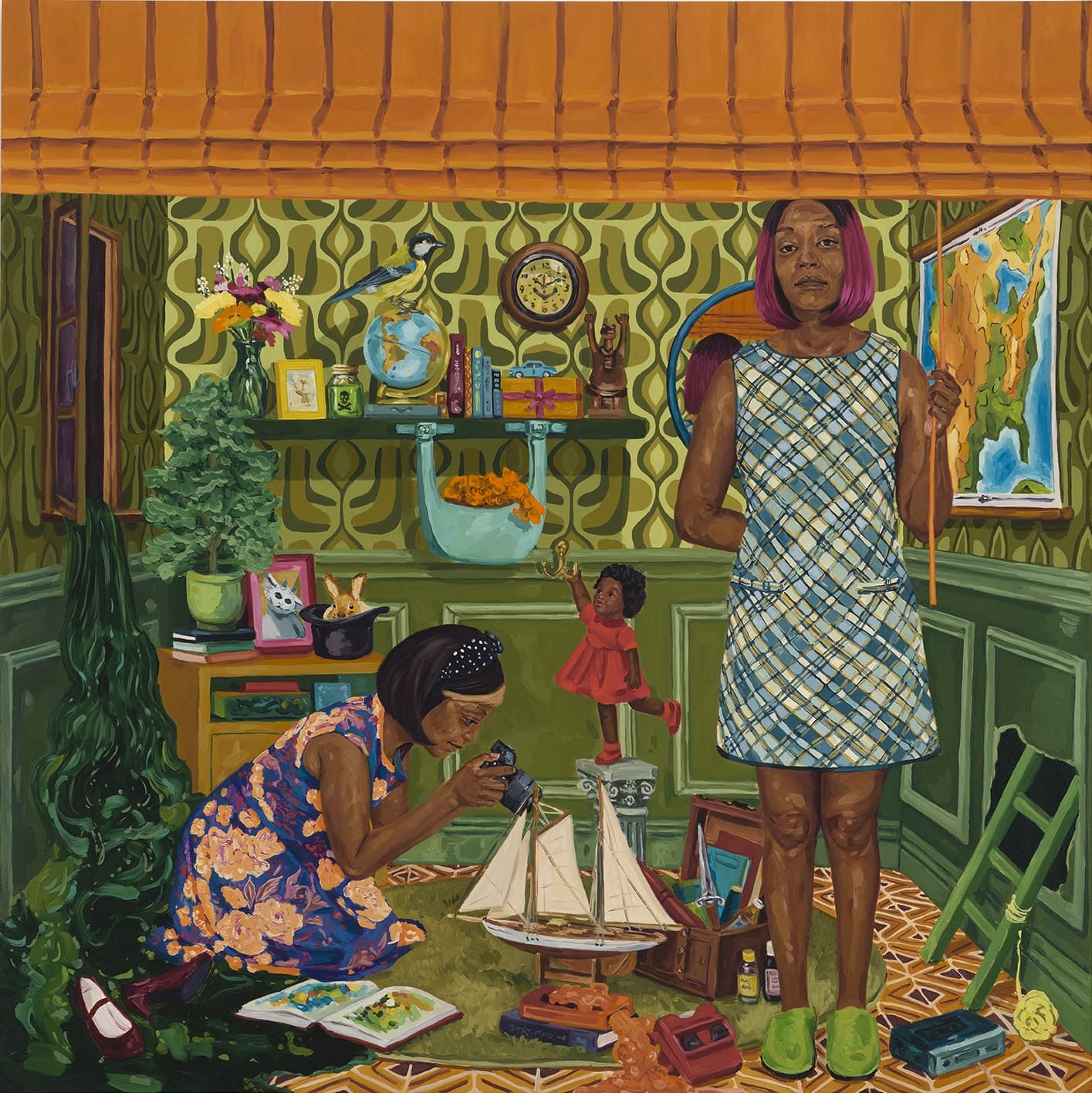
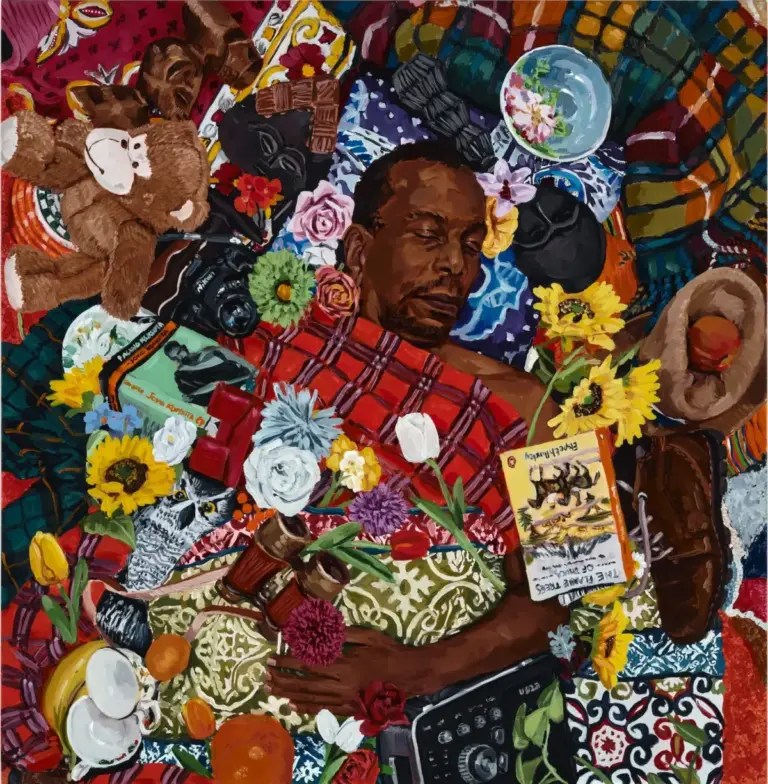
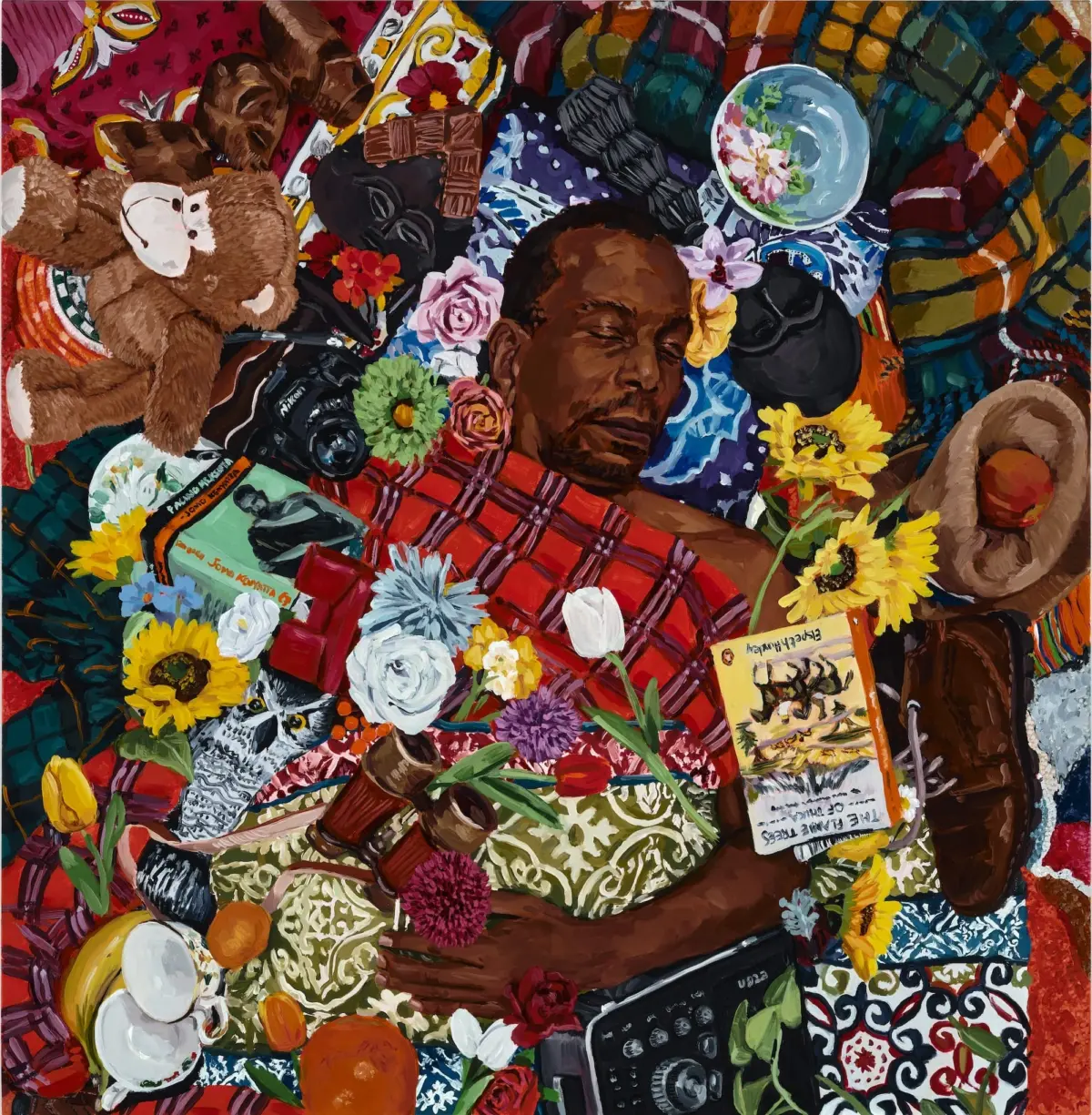
Central to Mathenge’s recent artistic output is a fascinating conceptual and visual choice: the artist frequently depicts herself as every single woman populating these intricate domestic scenes. Within these imagined interiors, which evoke the aesthetic and atmospheric texture of Kenya in the 1960s, these surrogate figures engage with one another and their surroundings in ways that blur the boundaries between reality, memory, and surrealism. The domestic spaces are densely layered with a vast array of everyday items, toys, books, and geopolitical maps. Yet, these familiar objects are often accompanied by uncanny narrative elements, such as the unexpected appearance of a bright green ladder built directly into a domestic wall in the painting Re-membering XI (To Leave This Steady Unendurable Land).
These compositional choices deliberately nod to a turbulent, exhilarating period of unprecedented social change in Africa, where the comforting structures of the home collided with the massive political transformations happening just outside the door. The figures within the paintings rarely remain passive observers of their environments. Instead, they actively play with, manipulate, or alter the items resting in front of them. In various canvases, a woman might be found meticulously documenting the route of a transatlantic vessel or jostling a standard teddy bear in an ambivalent gesture that simultaneously evokes a sense of tender nurturing and aggressive dismantling—an activity that brilliantly blurs the line between gutting and mending, destruction and preservation.
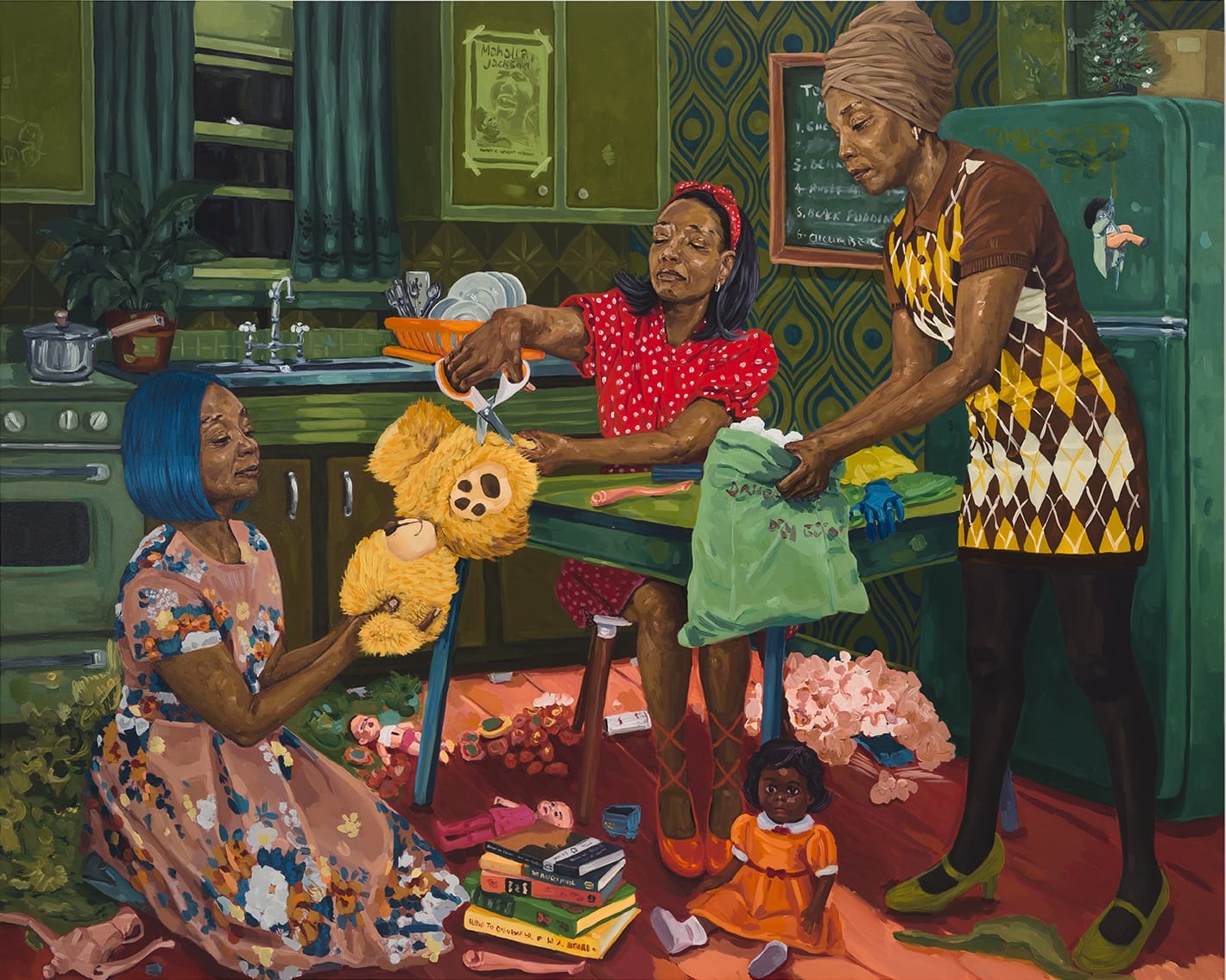
The emotional tenor of Mathenge’s subjects varies dramatically from one canvas to the next, creating a dynamic rhythm throughout the exhibition. Sometimes, the artist’s protagonists meet the viewer’s gaze directly, establishing an almost confrontational dialogue that demands accountability and active seeing from the audience. In other settings, the figures relax completely, lounging casually amid a chaotic, rich array of nostalgic keepsakes and everyday domestic objects. Through this rigorous exploration of cultural memory, Mathenge carefully gathers symbols of both quiet resistance and profound personal healing.
These compositions are frequently paradoxical, juxtaposing cheerful childhood toys and nostalgic keepsakes with underlying currents of tension and readiness. A prime example is Re-membering XIII (May the Wind Be Always at Your Back), where one of the central figures calmly readies an arrow within a taut bow, introducing an element of defensive preparedness into an otherwise domestic scene.
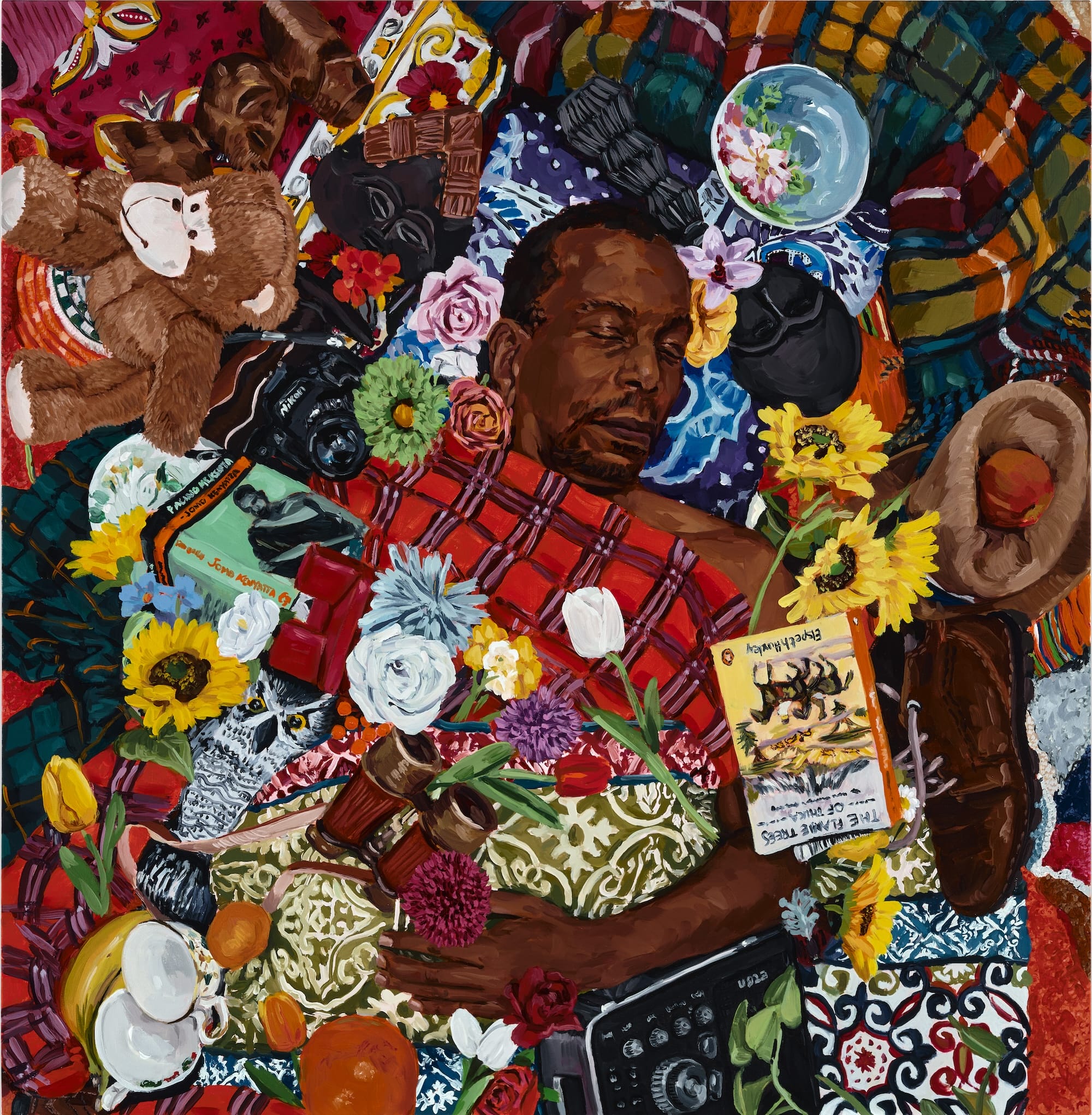
Discussing the conceptual underpinnings of her work, the artist offers a clear definition of her overarching project. As Mathenge notes in an artist statement accompanying the exhibition, Re-membering signifies not merely the act of casual recall, but rather the active, deliberate gathering and reassembly of what has been fractured over generations. This process involves stitching back together disparate pieces of cultural memory, inherited artistic forms, historical narratives, and alternate ways of seeing the world.
The exhibition continues its run in New York through October 24, drawing considerable attention from critics and collectors alike who are eager to engage with Mathenge’s sophisticated visual vocabulary. For those unable to visit the gallery in person, additional images of her ongoing painting series, studio process, and related works can be viewed on Mathenge’s official Instagram account.