Italian photographer Giovanna Silva has spent years documenting the transient, highly adaptable spaces of European club culture. What began as a commission for the Venice Architecture Biennale has since expanded into a comprehensive examination of how discotheques, nightclubs, and improvised underground dance floors capture the shifting social and architectural currents of our time. Through her lens, Silva explores spaces that are constantly forced to reinvent themselves, balancing the demands of changing musical trends, technological innovations in lighting and sound, and the ephemeral nature of nightlife.
The project originated in 2014 when Monditalia commissioned Silva to document the architecture of Italian nightlife for the Venice Architecture Biennale. At the time, the subject was entirely unfamiliar to her. Rather than approaching the assignment with preconceived notions of club culture, Silva brought an unconventional and detached eye to the task, which required an intense level of focus and a methodical approach to spaces she was only just beginning to understand.
Because discotheques and nightlife venues are notoriously mutable—frequently altering their physical appearance to keep pace with fashion, musical movements, and advances in technology—Silva and her collaborators turned first to the archive. They gathered published books on the subject to map out the historical landscape of Italian discotheques. These texts did more than provide structural layouts; they introduced the human element into the research, connecting Silva to the critics, architects, DJs, art directors, and club owners whom she describes as the "night swimmers."
Following her extensive documentation of Italy, Silva expanded her scope to analyze the state of the art in four major European cultural capitals: Berlin, London, Paris, and Barcelona. Selecting the locations within each city proved to be a complex curation task. While the initial Biennale research demanded exhaustive breadth, the subsequent phase required strict selectivity. Silva aimed to highlight clubs that held significant social and musical weight while also possessing distinct architectural value.
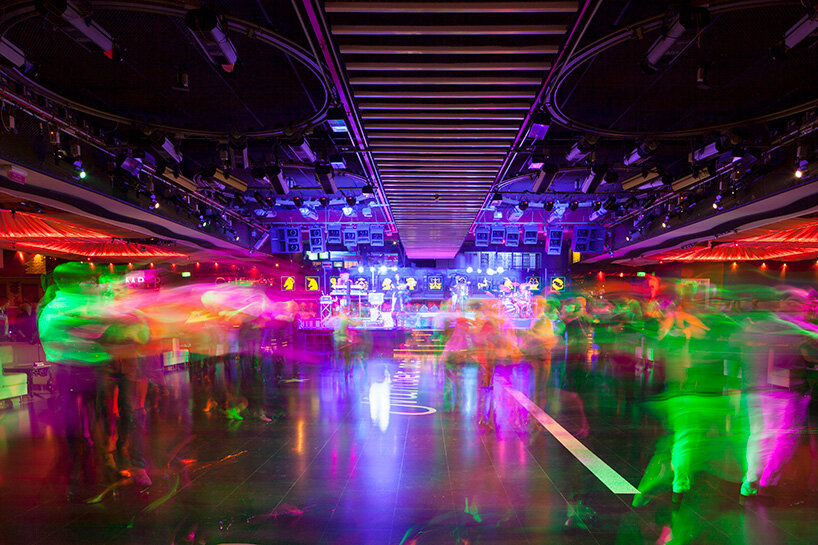
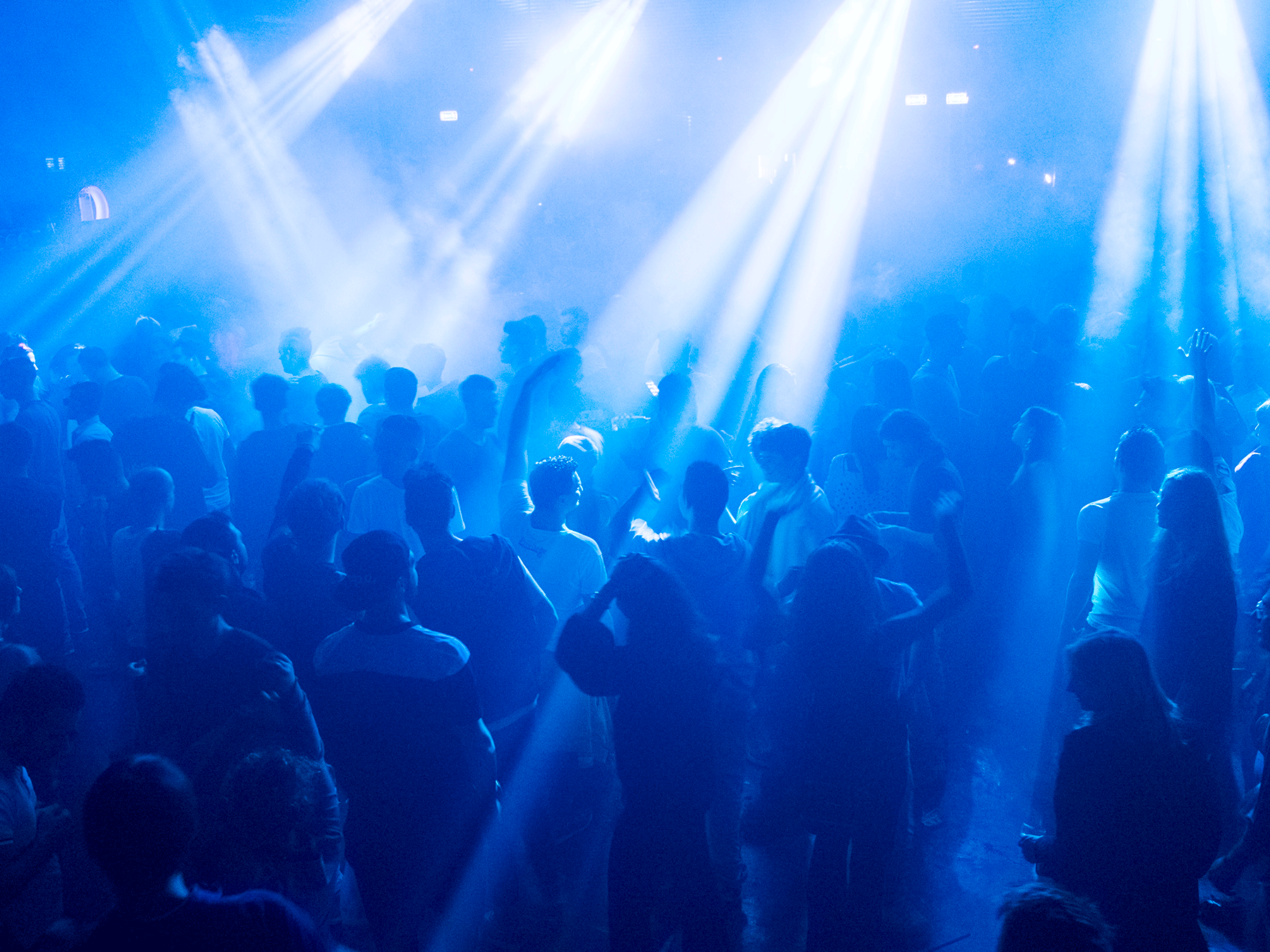
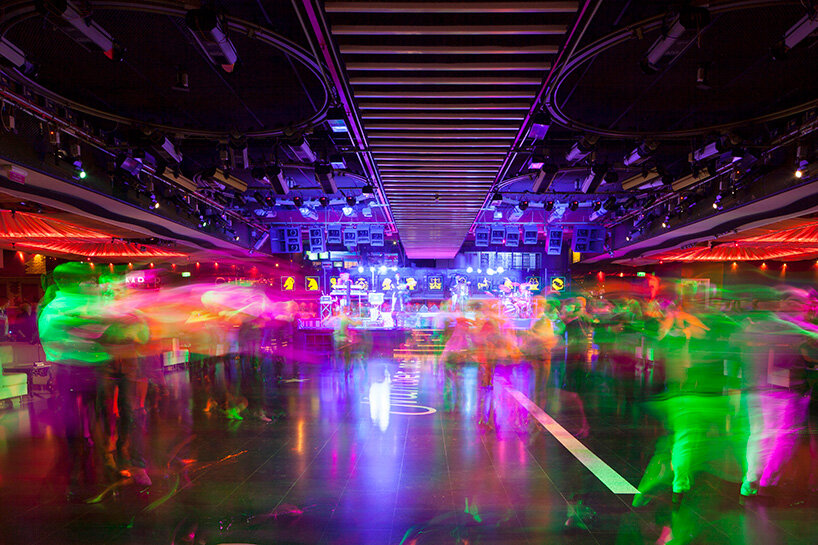
The resulting photographs capture a specific, contemporary perception of the night. Across Europe, spaces not originally designed to function as discotheques are increasingly being occupied and transformed into temporary party locations. Silva views this trend as a modern legalization and institutionalization of the rave culture that first emerged in the 1990s. Her photographs capture these venues in dual states—sometimes entirely empty during daylight hours, and other times filled with crowds whose sheer presence seems to dissolve and erase the physical boundaries of the architecture itself.
For Silva, the experience of documenting these environments relied heavily on sensory impressions encountered long before the crowds arrived. Entering a club during the quiet hours of the day presented a consistent, lingering atmosphere. The first thing to strike her in almost every location was the smell—a unique olfactory marker that acted as a kind of involuntary memory. She notes that she is still trying to determine whether this universal scent is the result of cleaning detergents or simply the lingering essence of the night itself: a dense mixture of human presence, smoke, and industrial cleaning products.
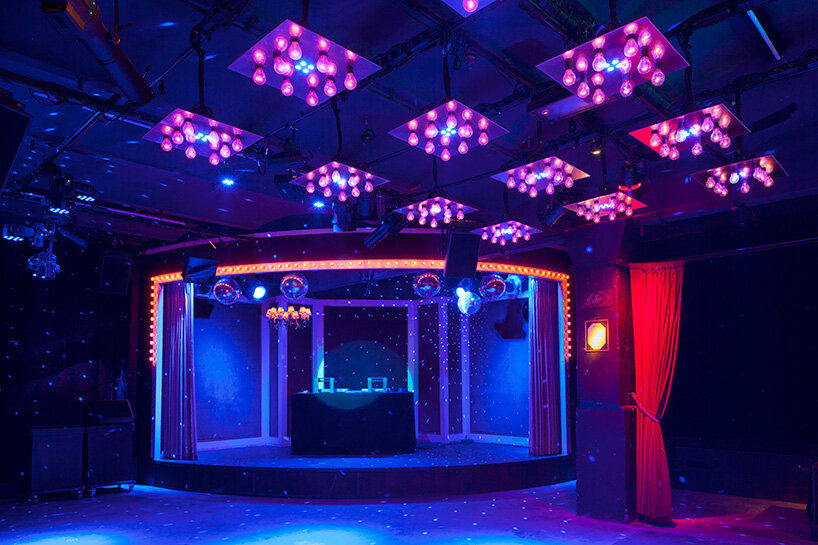
The second and most transformative element of any club environment, according to Silva, is light. Nightclubs are frequently compared to performers or older women who should never be seen without their makeup, a sentiment Silva echoes entirely. Lighting serves as the primary illusionist in these spaces, capable of completely altering spatial dimensions and mood at the flick of a switch. While the clubs are built for darkness, pulsing lasers, and strobes, Silva often photographed them under harsh, flat white light. This clinical illumination stripped away the nocturnal disguise, revealing the raw bones of the architecture beneath. Yet, through this process of methodical documentation, what began as a detached artistic investigation gradually transformed into a deeply familiar landscape, aided by those who took the time to explain the complex ecosystem of the night.
Giovanna Silva, born in 1980 and based in Milan, has built a prolific career as a photographer, publisher, and educator. Her extensive publishing history includes numerous titles focusing on urban landscapes, architecture, and sociopolitical geography, ranging from Napoli and Milan. City, I listen to your heart to international travel and documentary projects such as Baghdad: Red Zone, Green Zone and Syria: A Travel Guide to Disappearance. In addition to her photographic work, Silva is the founder of Humboldt Books and San Rocco Magazine, and she teaches at NABA Milan and ISIA Urbino.
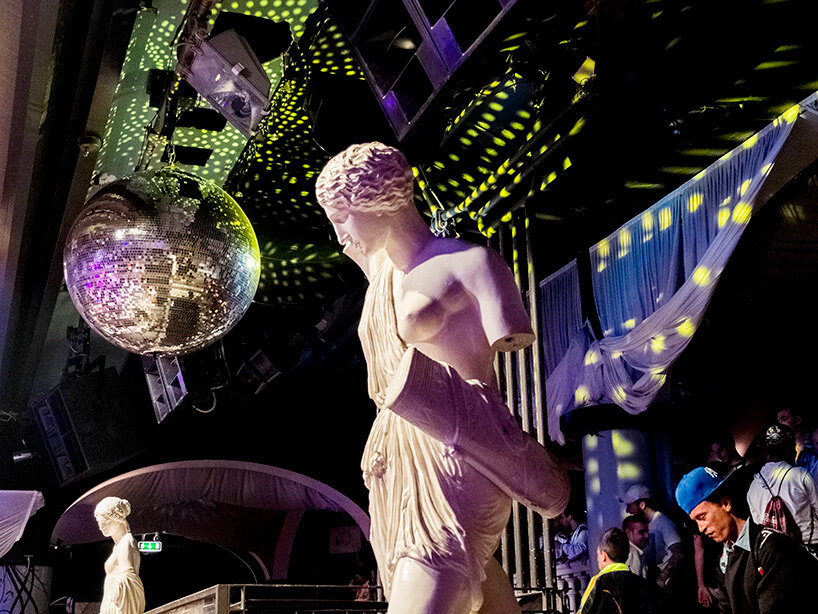
Her documentation of discotheques forms part of a broader contemporary conversation regarding how wonder, spectacle, and ephemeral human experiences are built into our physical environments, turning casual onlookers into active participants in the spaces they inhabit.