Anyone who has driven Interstate 25 between Denver and Colorado Springs knows that traffic can get extraordinarily heavy, fast-paced, and unpredictable. For decades, the bustling stretch of highway has served as a vital economic corridor connecting two of Colorado’s most populous urban centers. However, this high-speed, multi-lane artery has long presented a severe and continuous hazard for local wildlife attempting to navigate their ancestral migration routes.
It is not just human drivers whose safety has been at risk along this busy route. Animals such as elk, bears, coyotes, pronghorns, and other native species regularly need to cross the corridor to access approximately 39,000 acres of crucial natural habitat split in two by the asphalt. For generations, the intersection of high-speed vehicular traffic and migrating wildlife has created a perilous environment. Simply put, cars and large mammals just are not compatible on the open road.
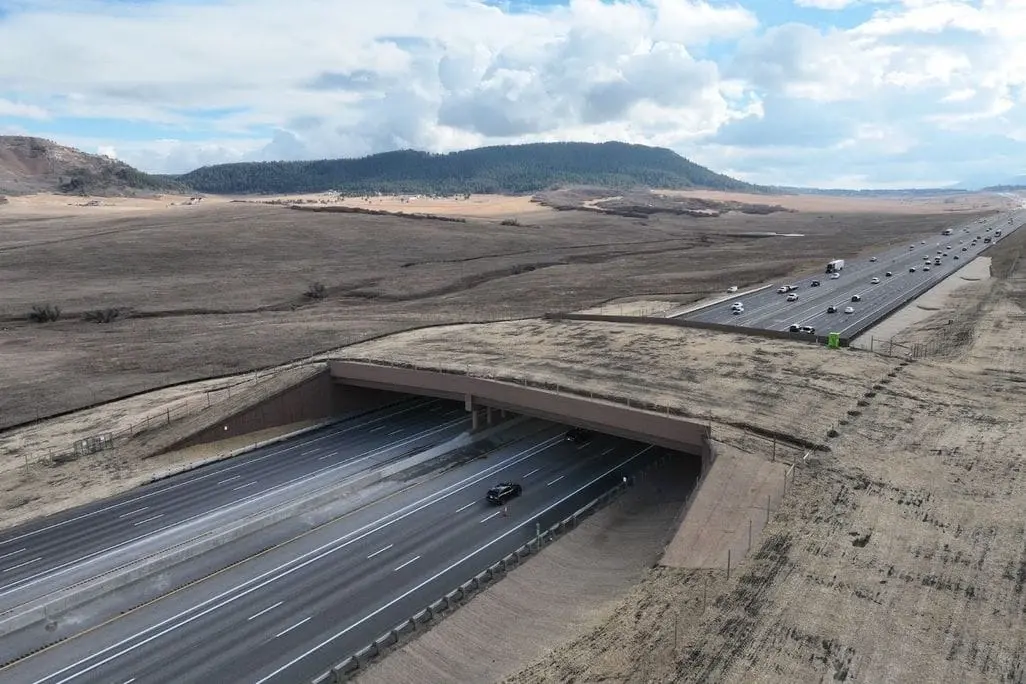
Recognizing the urgent need to protect both motorists and the state’s rich biodiversity, the Colorado Department of Transportation (CDOT) set out to engineer a pioneering solution. The agency spearheaded an ambitious infrastructure project to build a dedicated, wildlife-only bridge spanning the busy corridor. Completed in December 2025, the structure stands as the largest of its kind currently in North America, representing a monumental shift in how transportation planners approach ecological preservation and highway safety.
The early results of the massive engineering undertaking have exceeded initial expectations. Within the first nine months since the crossing officially opened to animal traffic, wildlife-vehicle collisions along this specific stretch of Interstate 25 were already down a staggering 91 percent. This dramatic reduction not only underscores the immediate effectiveness of the overpass but also highlights the profound impact that thoughtful infrastructure design can have on mitigating human-wildlife conflict.
Before the innovative crossing finally opened its grass-covered pathways to nature, the toll was devastating. Dozens of animals were killed by vehicles every single year, with the carnage peaking during seasonal migration periods when animals move between lower winter ranges and higher summer grounds. During the height of these seasonal movements, highway patrol and wildlife officials would often record up to one fatal animal strike per day, creating a constant hazard for unsuspecting drivers and resulting in tragic losses for local wildlife populations.
The newly constructed overpass is specifically designed to seamlessly integrate into the surrounding landscape while neutralizing the barrier effect of the interstate. The impressive structure spans all six lanes of Interstate 25, creating a wide, secure corridor above the rushing traffic. Crucially, the surface of the bridge is completely covered in native soil, grass, and vegetation. This natural camouflage ensures that critters feel secure and comfortable using the overpass, granting them uninterrupted, intuitive access to the vast expanses of habitat located on both sides of the highway.
Beyond the obvious ecological benefits of preserving animal populations and maintaining genetic diversity among local herds, the project delivers tangible advantages for human travelers. Drivers face significantly less risk of sudden, catastrophic collisions with large animals like elk and deer, which frequently total vehicles and can result in severe personal injury or fatalities. Furthermore, reducing the sheer volume of these accidents saves millions of dollars in vehicle repair costs, insurance claims, emergency response deployments, and highway maintenance.
The completion of the Interstate 25 overpass is part of a broader, growing movement of infrastructure projects taking shape across the United States. State transportation and wildlife agencies are increasingly recognizing that traditional highway fencing is insufficient without providing safe alternative pathways for animals to cross busy transportation networks. In Colorado alone, a handful of additional projects are currently in progress or recently completed, incorporating a mix of strategic wildlife underpasses, smaller overpasses, and specialized fencing designed to guide animals toward these safe crossing zones.
These investments are reshaping the relationship between modern transportation networks and the natural environment, proving that infrastructure can be designed to accommodate both human mobility and ecological health. Wildlife biologists and transportation planners working on these initiatives have watched the early success of the I-25 project with immense encouragement, viewing it as a blueprint for future infrastructure developments across the American West.
Brandon Marette, a wildlife biologist with Colorado Parks and Wildlife, shared a poignant personal reflection on the early successes of the regional crossing network in an interview with CBS News. Describing the emotional weight of seeing the project succeed in its mission, Marette noted, "One of the most heartwarming moments for me was when CDOT sent me a picture of an elk mama taking her calf under I-25."