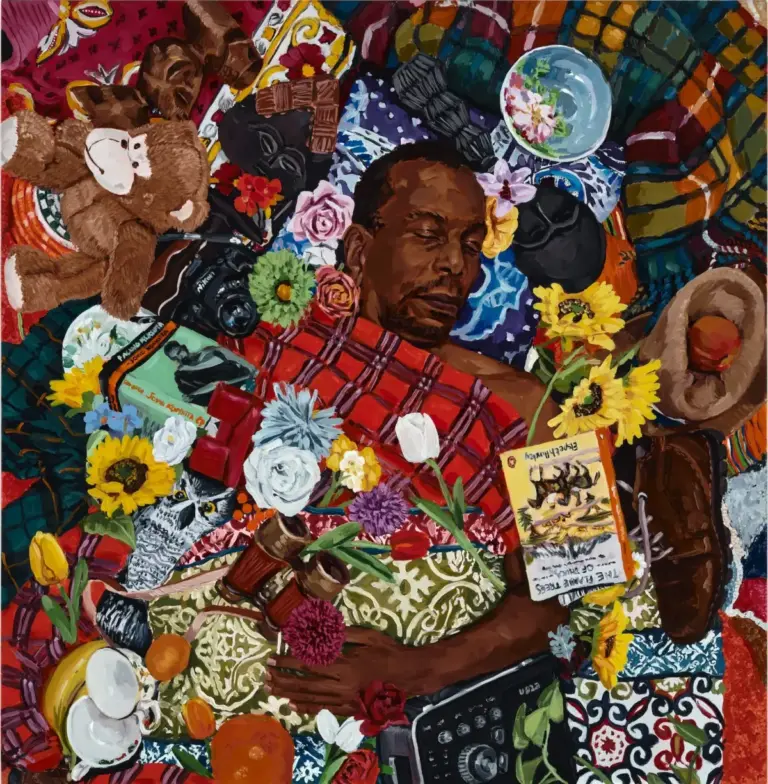
In 1963, following nearly seven decades of British colonial rule, Kenya officially declared its independence. The historic milestone was part of a monumental, continent-wide wave of liberation during the 1960s, during which nations such as Gambia, Guyana, Malawi, and Nigeria similarly freed themselves from British control. This watershed era marked a profound period of democratic redevelopment, political self-determination, and sweeping socio-cultural shifts across the formerly colonized world. Drawing inspiration from this pivotal chapter in history, Nairobi-born artist Wangari Mathenge investigates the echoes of the past through an ongoing series of striking, highly detailed oil paintings.
Many of these compelling works form the centerpiece of Mathenge’s current solo exhibition, appropriately titled Re-membering, on view at Lévy Gorvy Dayan. Deeply influenced by Kenyan scholar Ngũgĩ wa Thiong’o’s seminal 2009 book Something Torn and New: An African Renaissance, Mathenge examines her own complex cultural identity through the lens of Kenya during the first half of the 20th century. Wa Thiong’o’s influential text explores the profound, long-lasting impacts of colonialism and slavery in Africa, dissecting how external domination fractured indigenous cultures, languages, and traditional ways of life. Through her medium of choice, Mathenge responds to these historical fractures by building a visual vocabulary of reclamation.
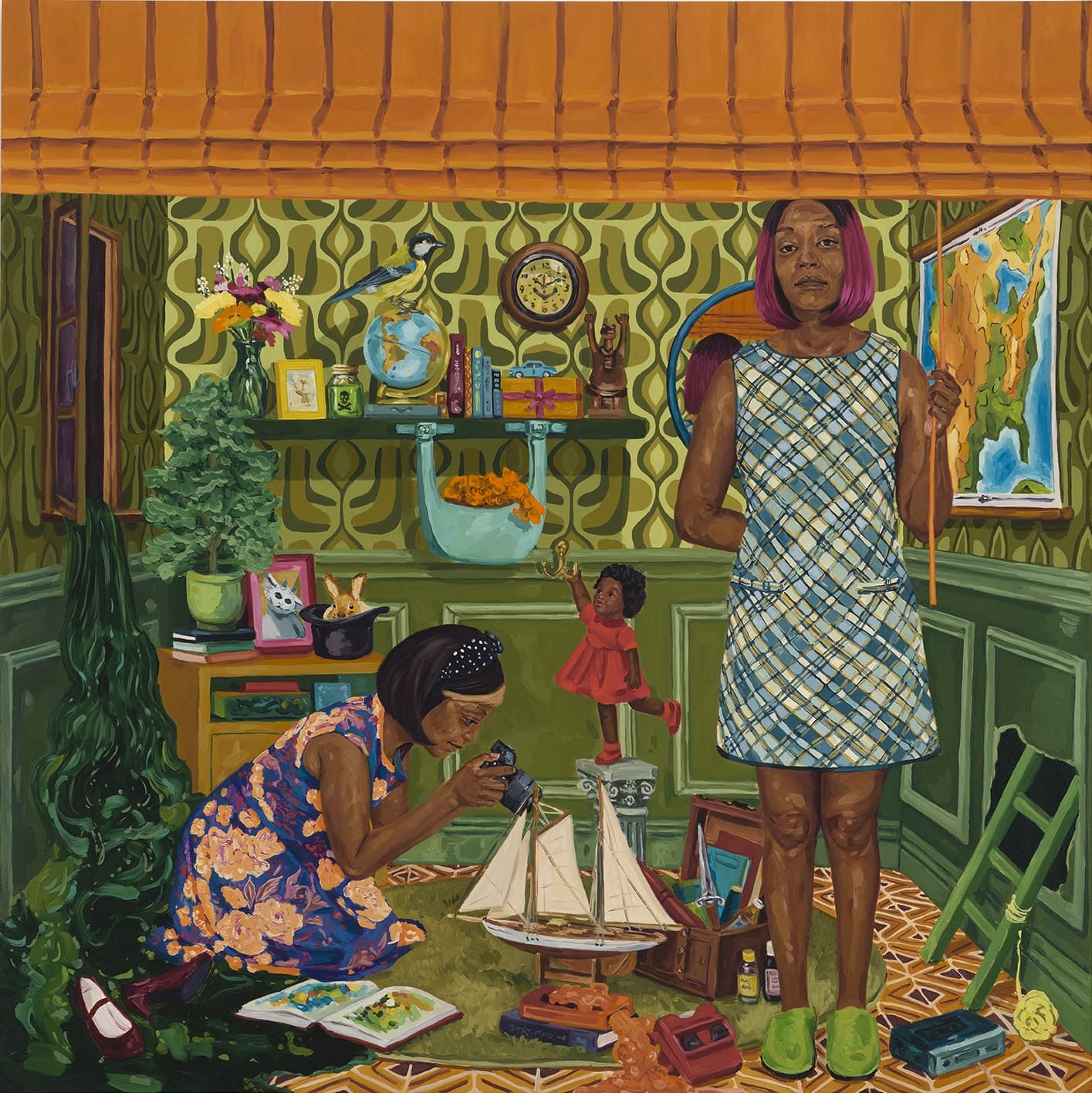
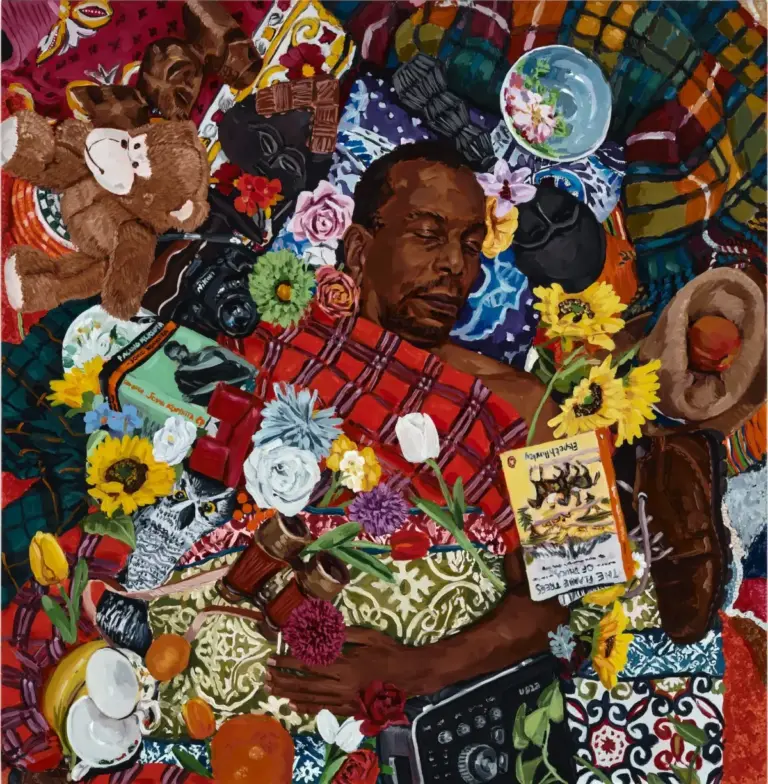
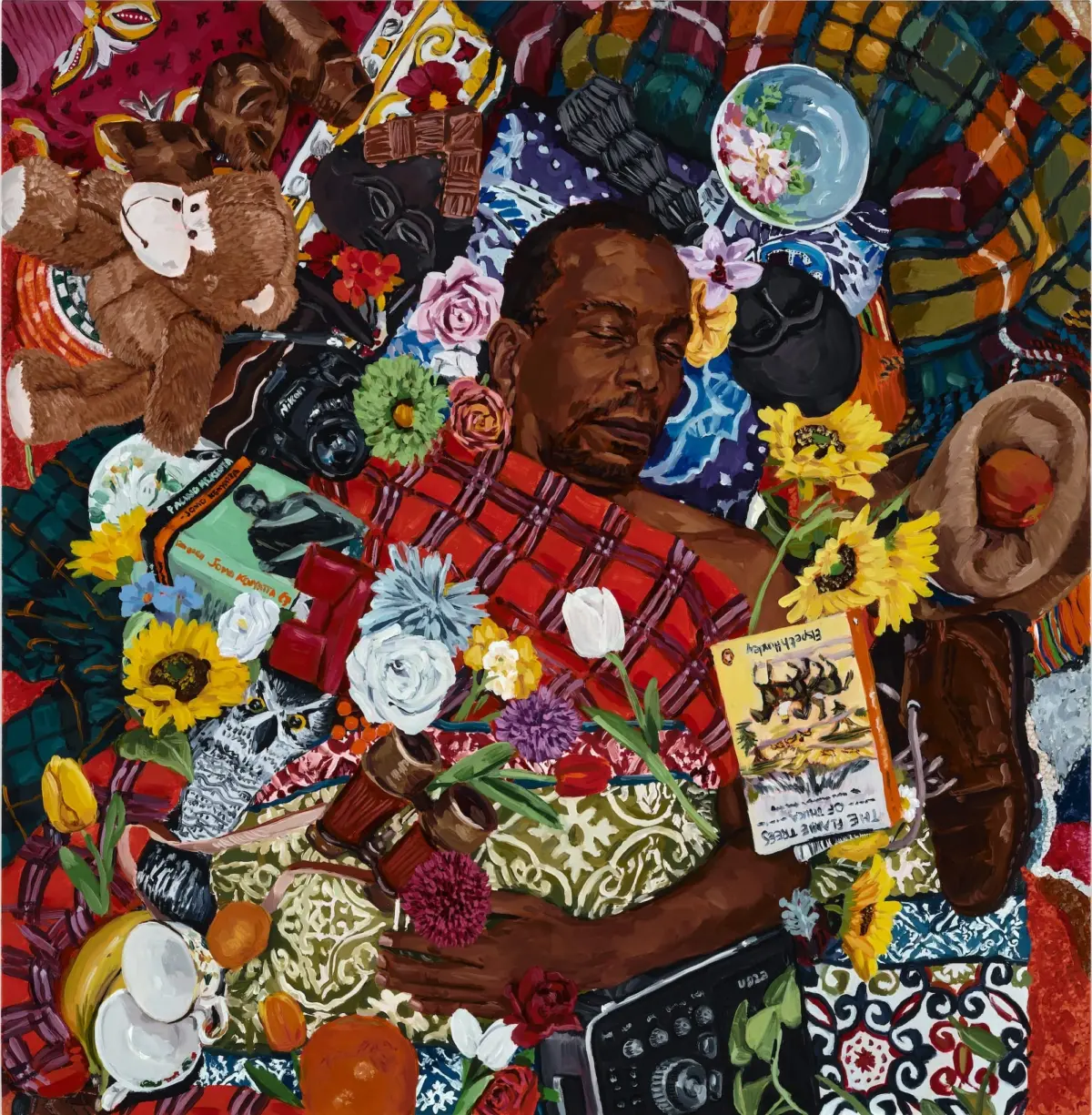
In her recent work, Mathenge frequently employs a deeply personal and conceptual approach to representation, depicting herself as all of the women who inhabit her vibrant, meticulously constructed domestic spaces. These imagined interiors are filled to the brim with everyday objects—toys, books, maps, and an array of nostalgic items—that ground the scenes in a familiar reality. Yet, this realism is often disrupted by subtle, uncanny scenarios that hint at deeper psychological and historical undercurrents. For instance, in "Re-membering XI (To Leave This Steady Unendurable Land)," a strange green ladder juts directly out of a wall, introducing an element of surrealism to the composition.
Throughout the exhibition, the artist’s figures actively engage with their environments. They handle, alter, or scrutinize the items scattered before them—whether they are meticulously documenting a transatlantic vessel or jostling a teddy bear. These ordinary actions are rendered with a layered complexity that often blurs the line between gutting and mending, symbolizing the delicate, ongoing process of national and personal healing after historical trauma.
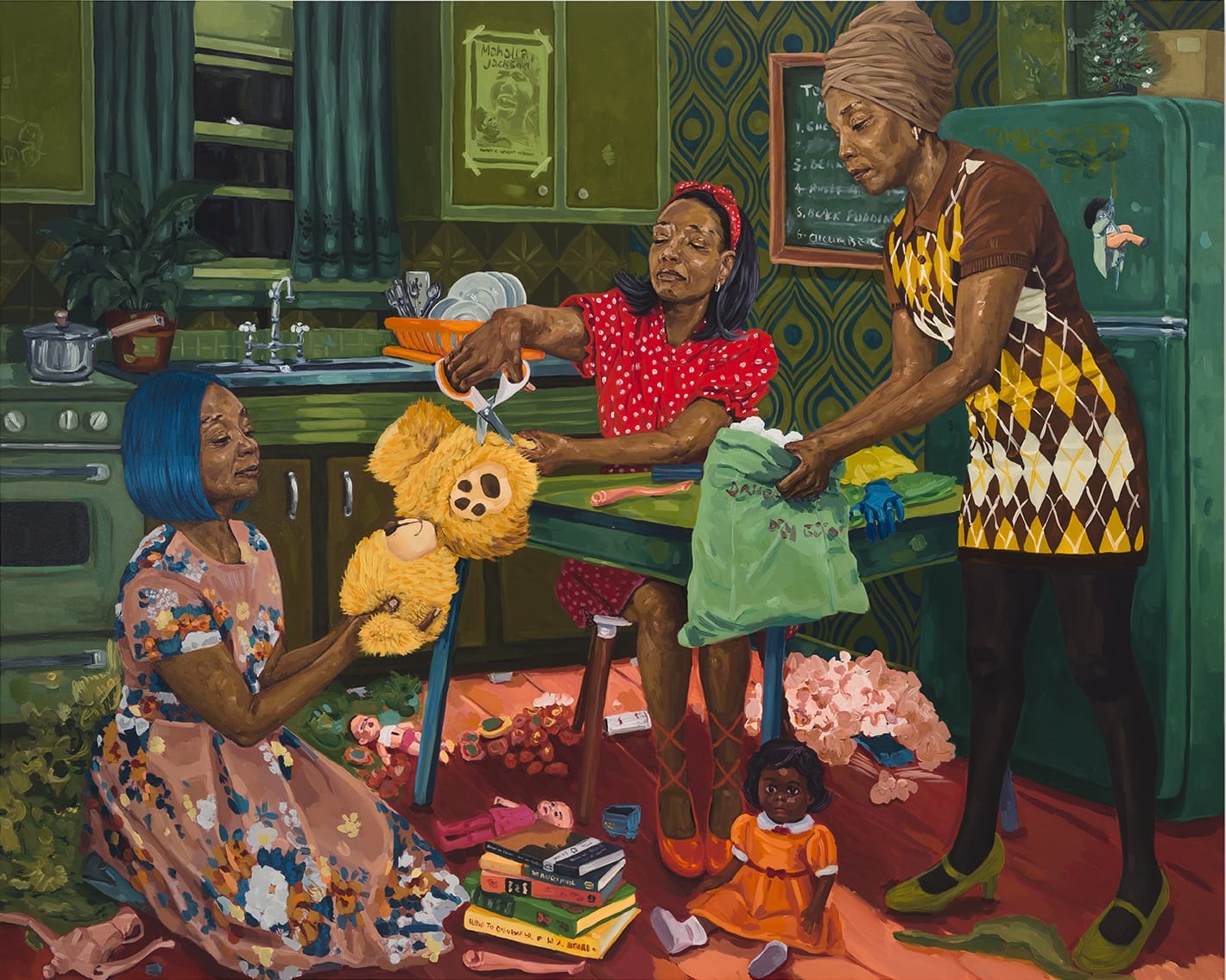
The emotional tenor of the figures varies widely from canvas to canvas. Sometimes, Mathenge’s protagonists meet the viewer’s gaze directly and almost confrontationally, demanding an active engagement from the audience. In other settings, the figures relax completely, lounging amid an eclectic array of personal and cultural artifacts. Through the powerful lens of cultural memory, the artist gathers diverse symbols of resistance and resilience.
These compositions are frequently paradoxical, pairing seemingly innocent items like children’s toys and nostalgic keepsakes with an underlying tension. This duality is starkly evident in works such as "Re-membering XIII (May the Wind Be Always at Your Back)," where one of the central figures calmly readies an arrow in a bow, contrasting domestic calm with a latent readiness for defense or assertion.
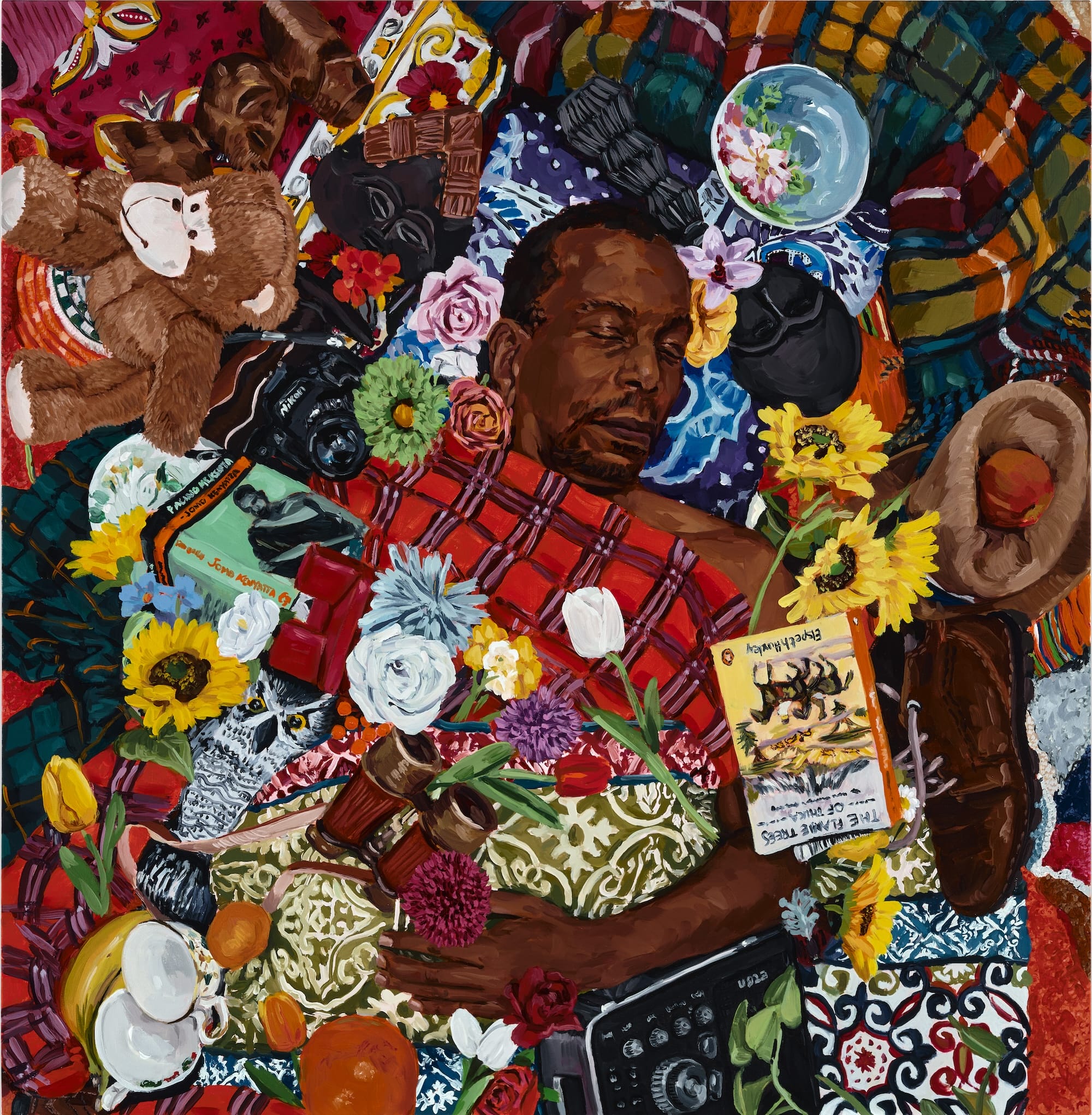
"Re-membering signifies not merely the act of recall, but the active gathering and reassembly of what has been fragmented: cultural memory, inherited forms, histories, and ways of seeing," the artist explains in an official statement accompanying the exhibition.
The exhibition continues through October 24 in New York, offering viewers a profound visual exploration of how societies and individuals piece themselves back together in the wake of historical disruption.