In 1963, following nearly seventy years of British colonial rule, Kenya officially declared its independence. The momentous occasion did not occur in isolation across the African continent; the 1960s marked a watershed period of democratic redevelopment, socio-cultural shifts, and liberation movements. During this decade, nations such as Gambia, Guyana, Malawi, and Nigeria similarly freed themselves from Britain’s long-standing imperial control. Today, Nairobi-born artist Wangari Mathenge looks back at this not-so-distant past through an ongoing, highly anticipated series of vivid, large-scale oil paintings that interrogate history, identity, and the lingering psychological architecture of the colonial era.
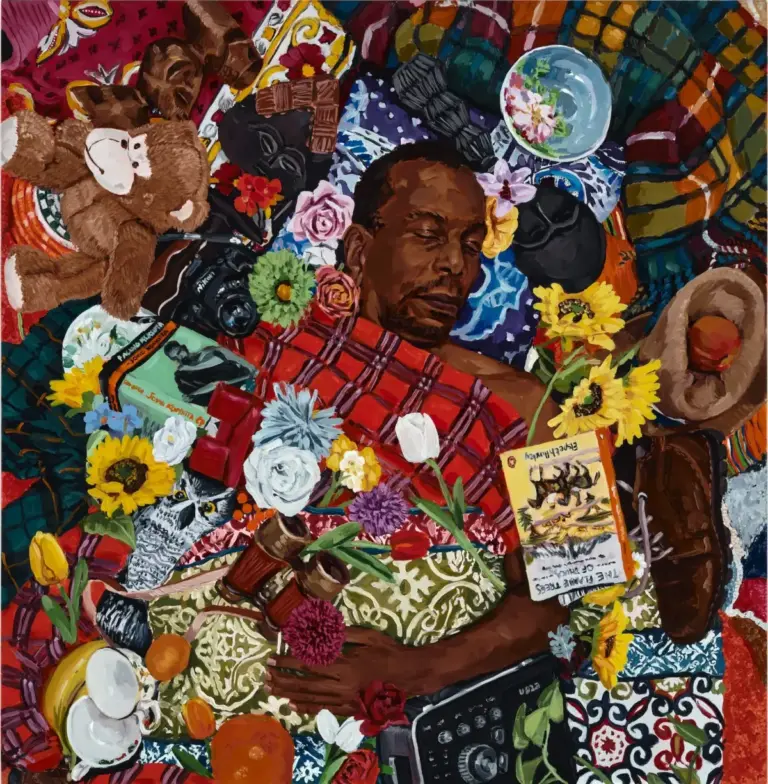
Many of the arresting works featured in this exploration form the foundation of the artist’s current solo exhibition, appropriately titled Re-membering, on view at the prominent gallery Lévy Gorvy Dayan. Deeply inspired by Kenyan scholar Ngũgĩ wa Thiong’o’s influential 2009 book, Something Torn and New: An African Renaissance, Mathenge uses her canvas to examine her own complex cultural identity through the historical lens of Kenya during the first half of the twentieth century and the pivotal decades of independence that followed. Thiong’o’s seminal text focuses extensively on the profound, long-lasting impacts of colonialism, cultural displacement, and slavery across the African continent, themes that pulse steadily underneath Mathenge’s contemporary visual language.
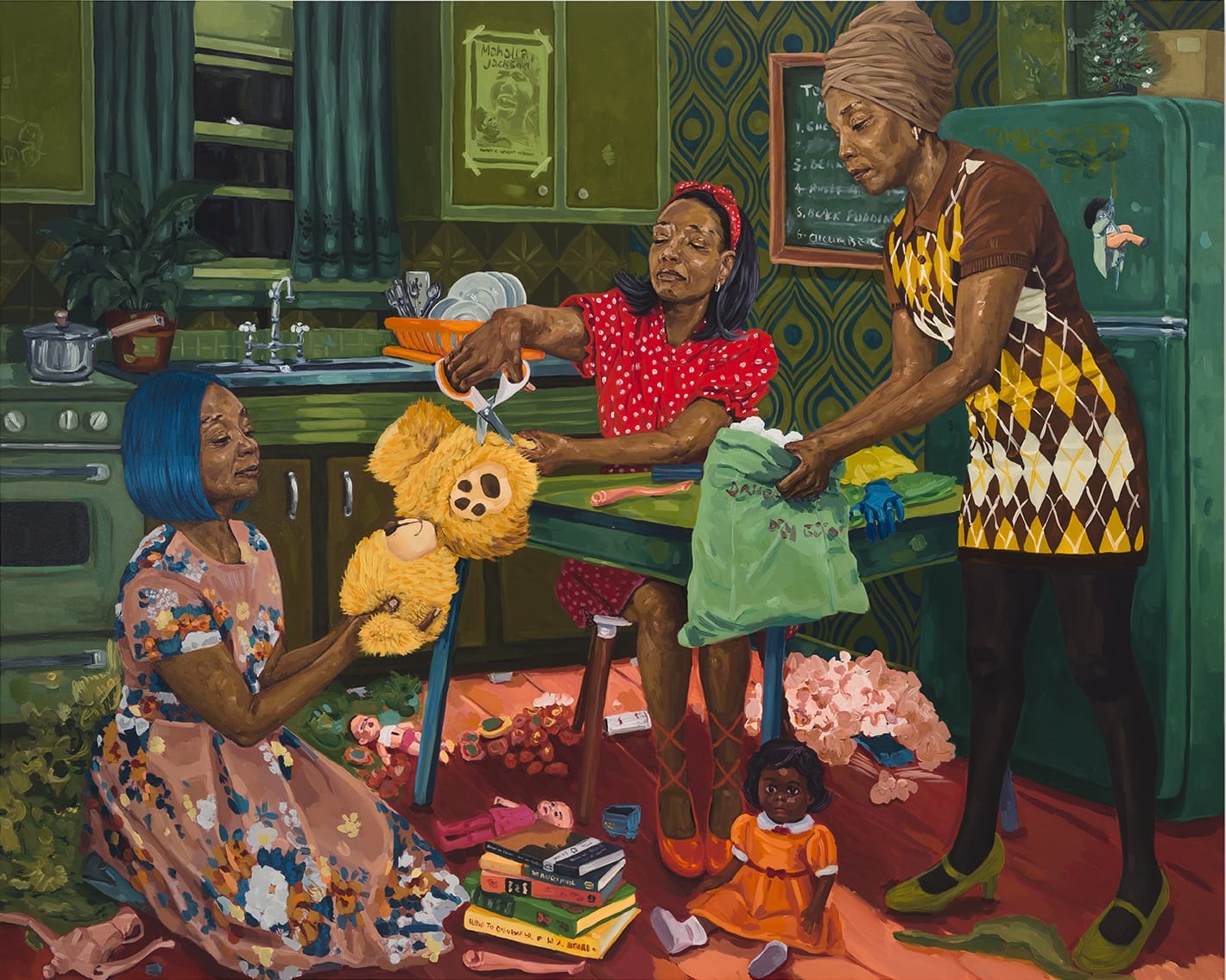
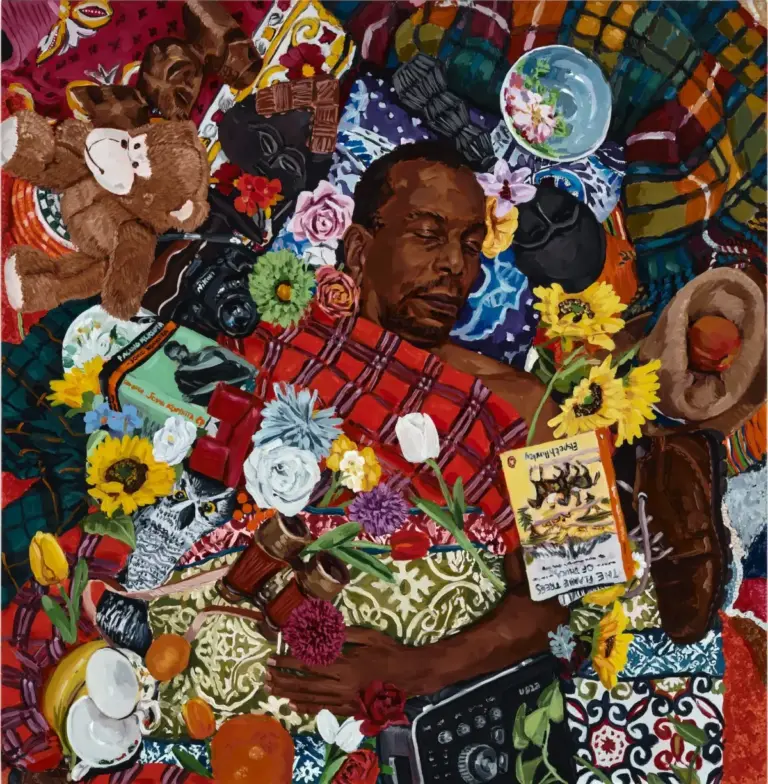
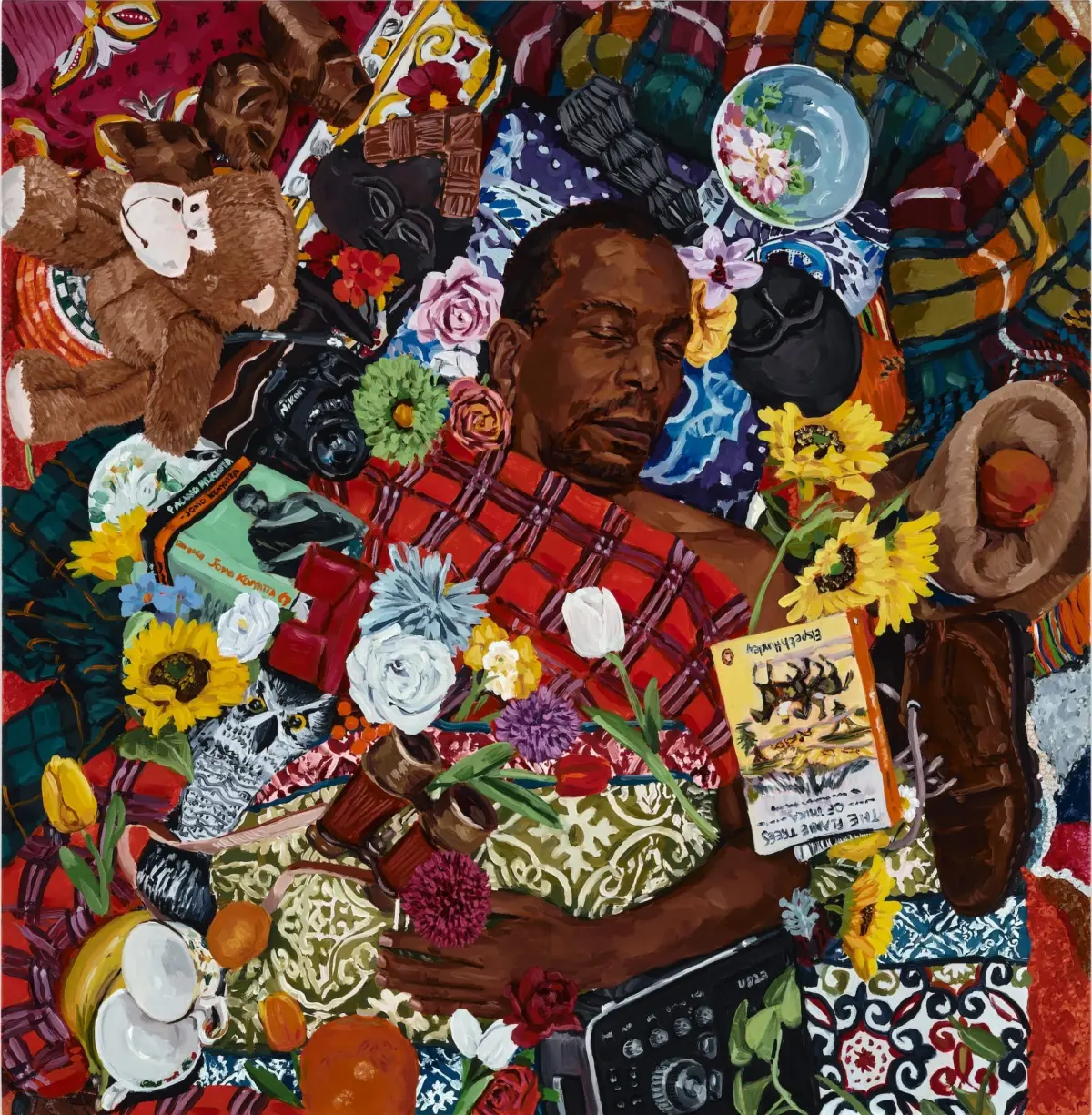
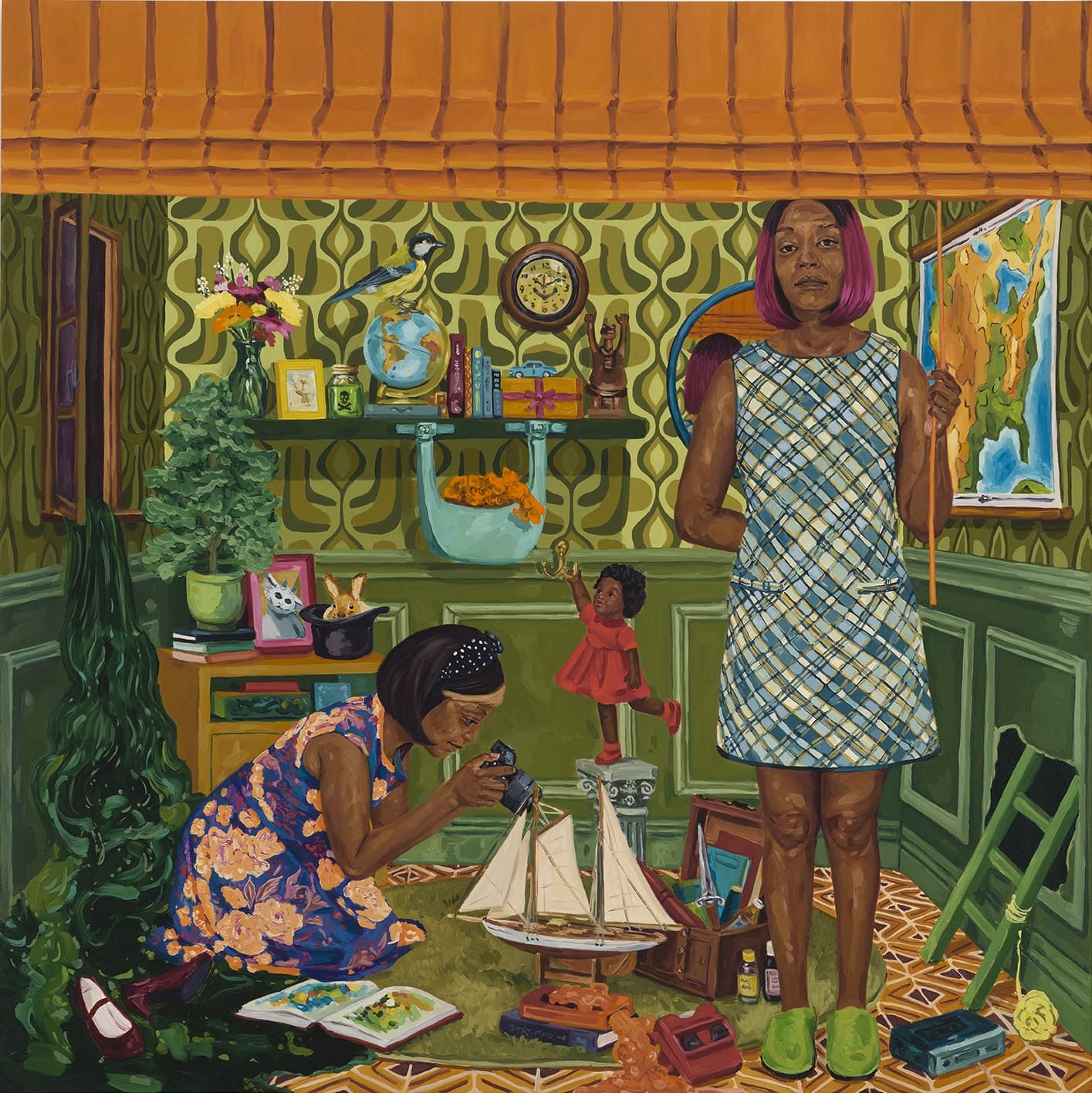
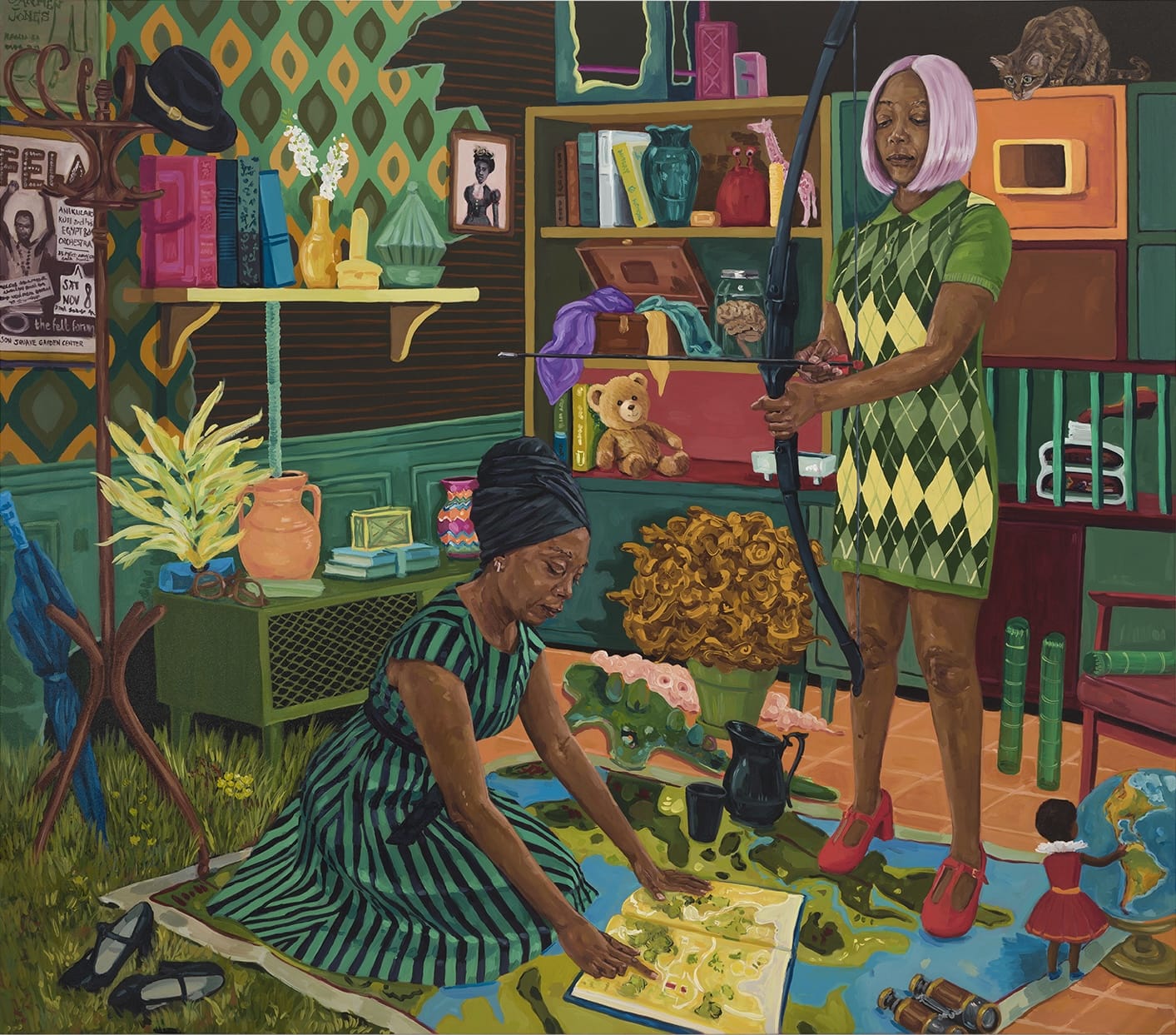
Within her recent work, Mathenge employs a deeply personal and striking conceptual device: she depicts herself as every single woman populating these intricate domestic spaces. These meticulously rendered interiors are densely layered with an eclectic array of objects, including toys, books, maps, and occasional surreal or uncanny scenarios that subtly nod to a period of radical and turbulent transformation in Africa. For instance, in the canvas titled Re-membering XI (To Leave This Steady Unendurable Land), a startling green ladder is embedded directly into the wall, introducing an element of psychological displacement. The figures frequently interact with the items scattered before them—whether they are meticulously documenting the path of a transatlantic vessel or gently jostling a teddy bear in an ambivalent activity that blurs the fine line between gutting and mending, nurturing and destruction.
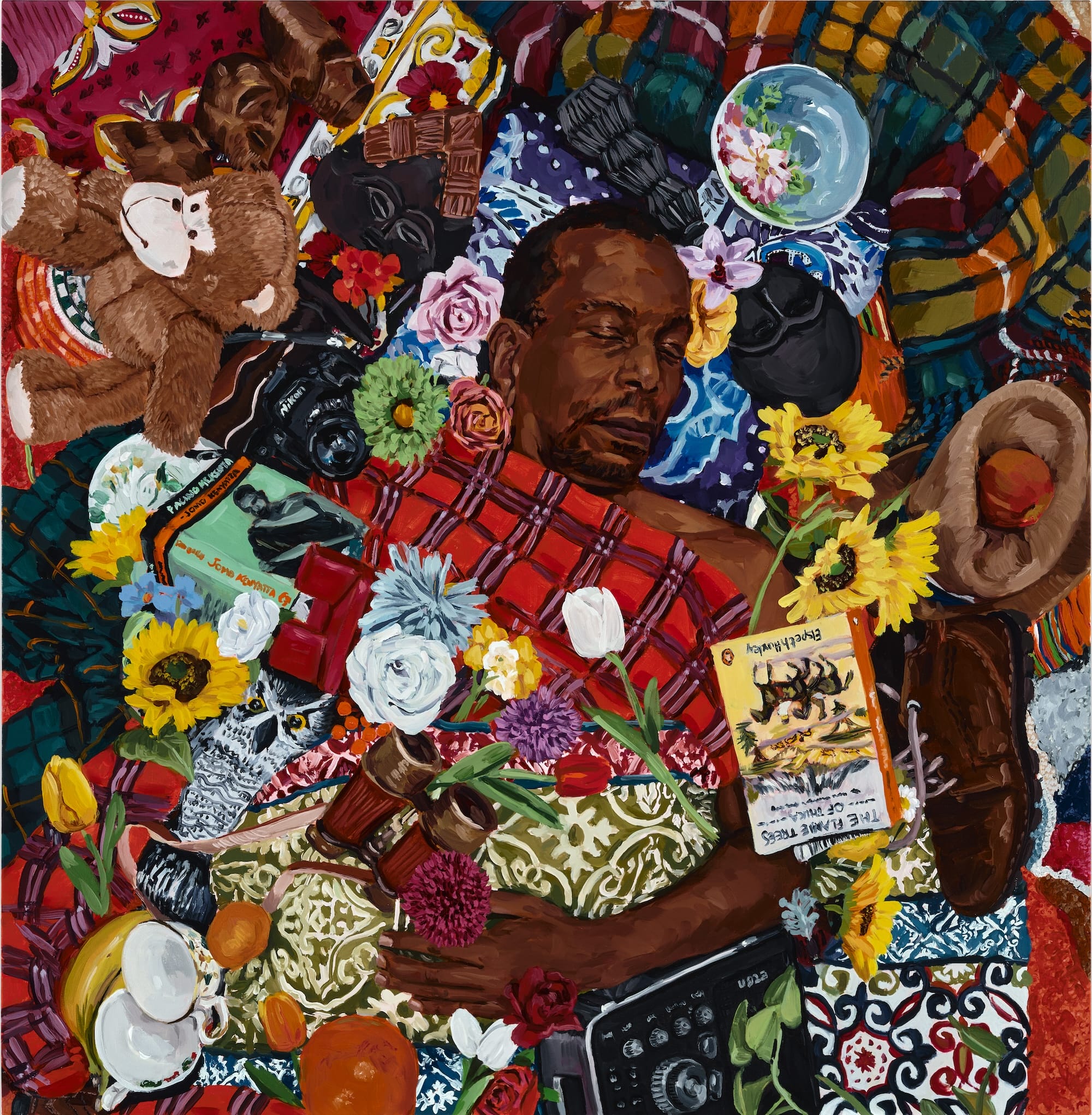
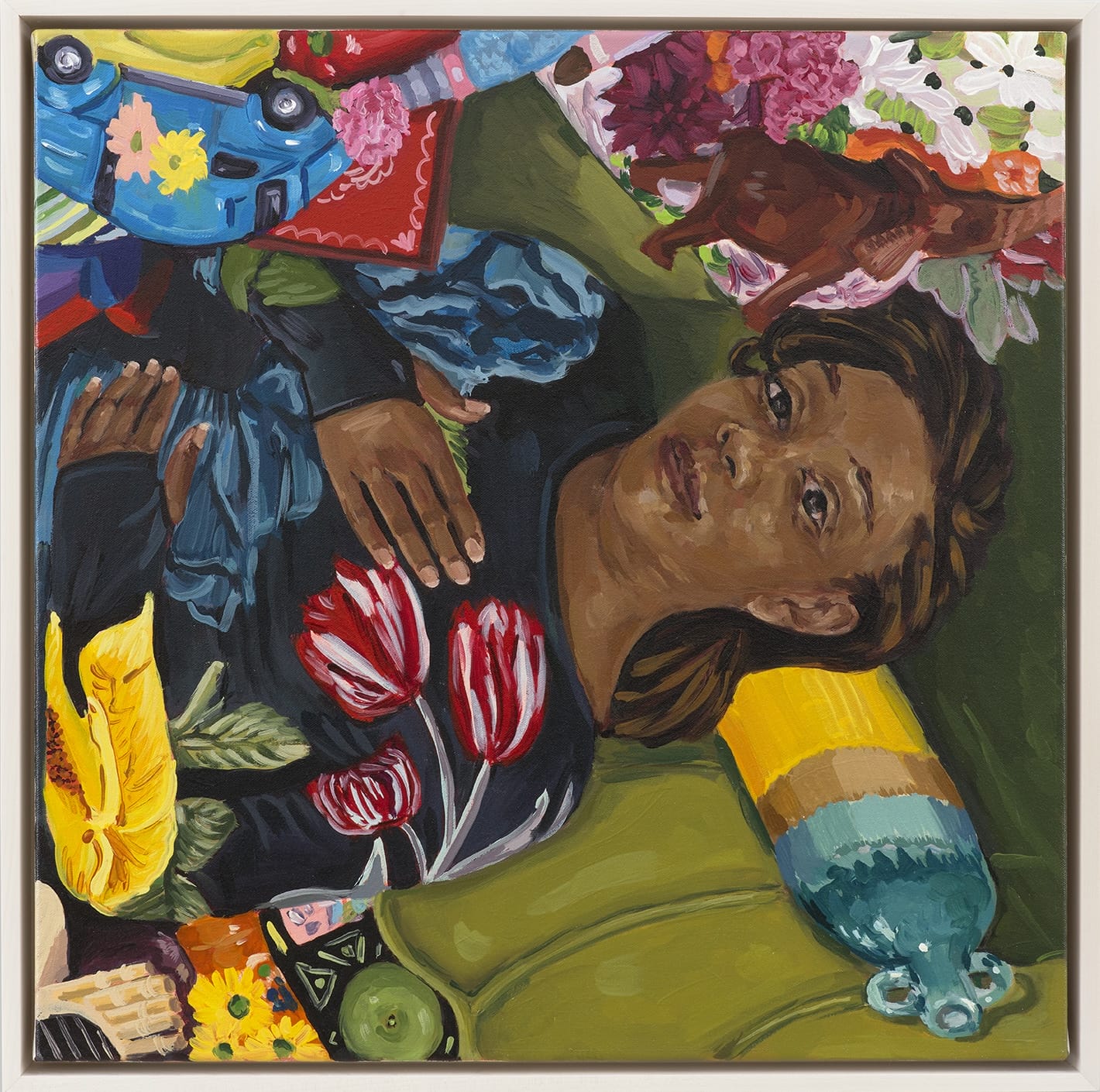
The emotional tenor of Mathenge’s protagonists shifts dynamically across the collection. Sometimes, her painted figures meet the viewer’s gaze directly and almost confrontationally, establishing a powerful psychological dialogue across the threshold of the canvas. In other domestic settings, the figures relax completely amid an overflowing array of nostalgic and everyday items. Through this careful application of cultural memory, the artist gathers potent symbols of both historical resistance and personal healing.
These compositions are frequently paradoxical, pairing innocent toys and nostalgic objects with an undercurrent of palpable tension. A striking example is found in Re-membering XIII (May the Wind Be Always at Your Back), where one of the solitary figures purposefully readies an arrow in a bow, injecting a quiet sense of readiness and latent defense into an otherwise domestic scene.
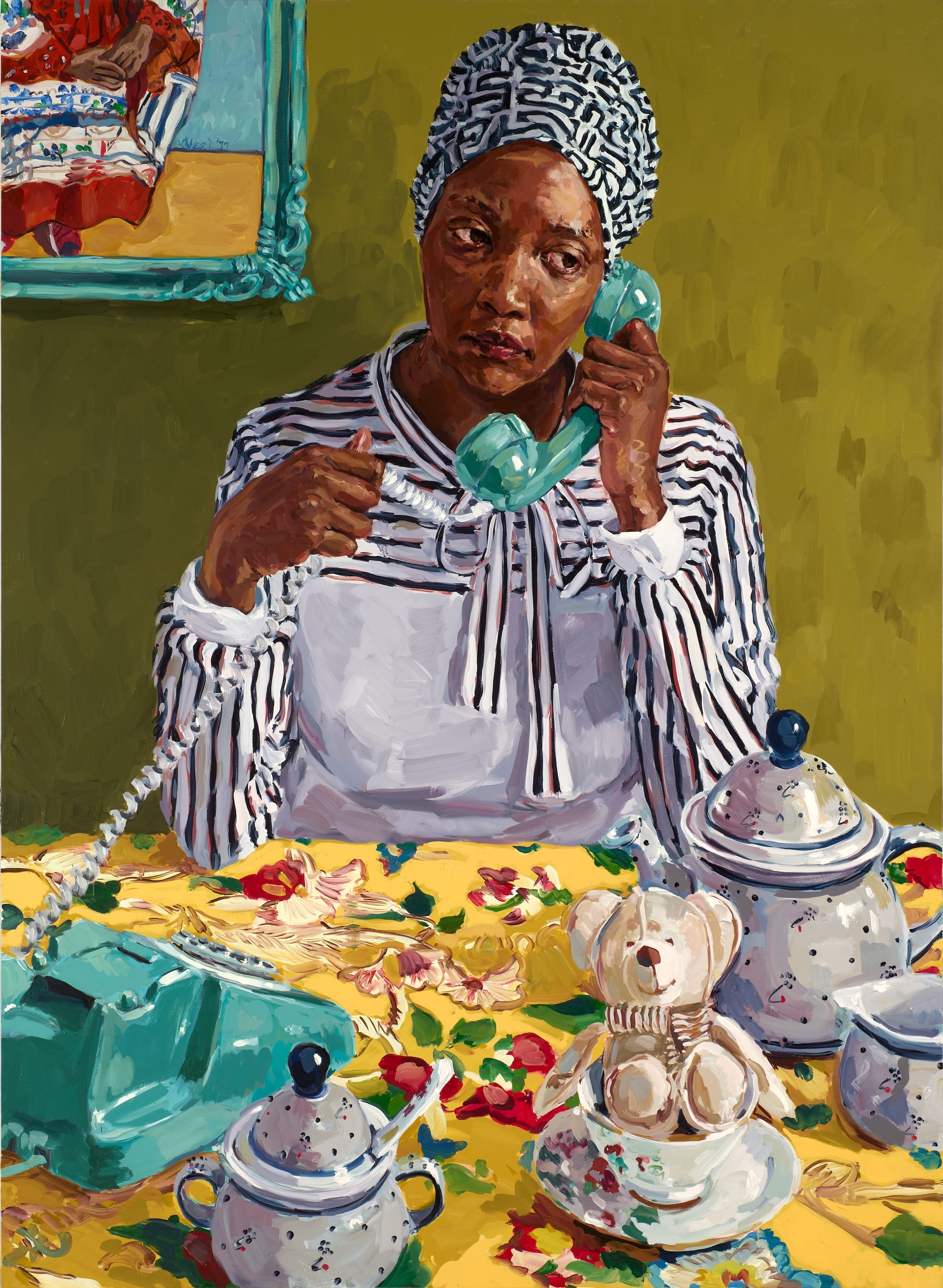
"Re-membering signifies not merely the act of recall, but the active gathering and reassembly of what has been fragmented: cultural memory, inherited forms, histories, and ways of seeing," the artist explains in an official statement accompanying the exhibition.
The exhibition Re-membering continues its run in New York through October 24, drawing widespread attention from critics, historians, and art enthusiasts alike. Through her commanding brushwork and deeply conceptual approach, Mathenge continues to cement her place as a vital voice in contemporary painting, bridging the historical ruptures of the past with the vivid realities of the present.