Growing up, actress and writer Illeana Douglas spent a formative amount of time surrounded by cinematic royalty. In her grandfather’s Upper West Side apartment, figures like Gore Vidal and screen legends such as Myrna Loy would regularly gather salon-style, creating an environment that deeply informed her lifelong fascination with film history. That dual passion for performance and cinema history defined her trajectory. In her twenties, she worked double-duty: performing in a sketch comedy group by night while holding down a day job as a film publicist, shaping promotional campaigns for future classics like The Princess Bride, The Untouchables, and Moonstruck.
As she entered the 1990s, Douglas established herself as one of Hollywood’s most reliable and versatile character actresses, delivering memorable, scene-stealing performances in zeitgeist-defining films such as Goodfellas and To Die For. Reflecting on her early acting years, she notes how often her creative instincts substituted for written material. She would look through a script, notice a lack of dialogue, and be told by filmmakers to improvise something brilliant. Looking back, she recognizes that process as a form of writing, even if she did not realize it at the time.
In the past decade, Douglas has made a smooth, Louise Brooks-like transition into a celebrated film historian and writer. She began with her acclaimed 2015 memoir, I Blame Dennis Hopper: And Other Stories from a Life Lived in and Out of the Movies, before becoming a fixture on Turner Classic Movies (TCM), where she presented the beloved Trailblazing Women series.
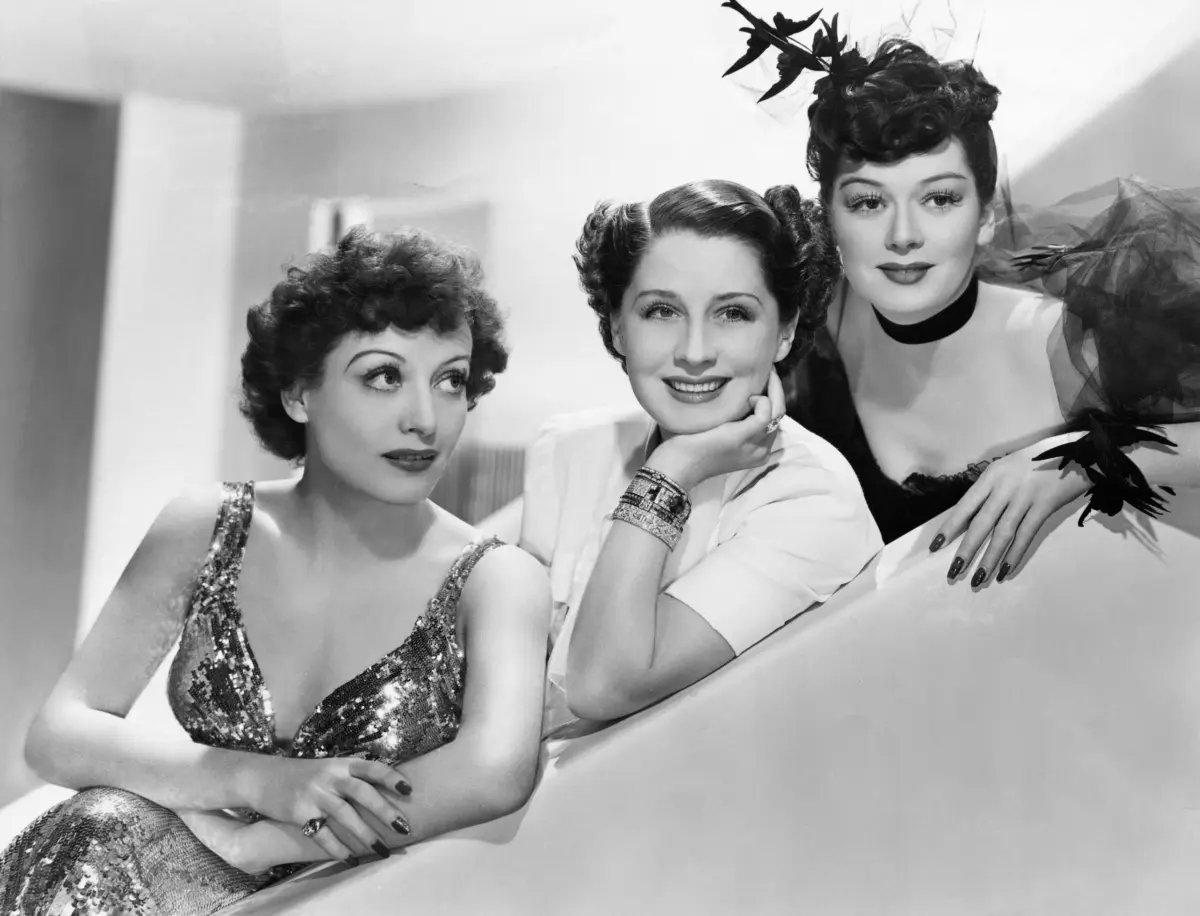
Now, with her latest book, Jungle Red!: The Making of MGM’s The Women, Douglas turns her sharp analytical eye toward a subject she seems uniquely born to tackle: the chaotic production of the 1939 all-female blockbuster. Directed by George Cukor and starring an iconic ensemble led by Norma Shearer, Joan Crawford, and Rosalind Russell, the film saved Cukor’s career, sparked enduring fashion trends, and later inspired several remakes, including a critically panned 2008 version starring Meg Ryan and Annette Bening.
Based on the hit play by writer and former Vanity Fair managing editor Clare Boothe Luce, The Women explores the sharp social and romantic maneuvers of Manhattan high-society frenemies. The plot kicks into gear when the circle of acquaintances learns that Norma Shearer’s virtuous socialite, Mary Haines, is losing her husband to Joan Crawford’s fabulously venomous shopgirl, Crystal Allen. Famously featuring a cast entirely devoid of male actors, the film completely upended Hollywood’s traditional patriarchal studio system, becoming a major box-office hit during a historic movie-going year dominated by cinematic behemoths like Gone with the Wind and The Wizard of Oz.

By the time the women’s liberation movement gained momentum in the 1960s, many feminists disavowed the film, arguing that the characters’ conversations revolved entirely around men. Yet, decades later, modern viewers can appreciate how accurately the movie reflects the restrictive societal constraints placed on women of that era. By focusing its narrative battles on luxury department stores, exclusive fashion shows, high-end beauty spas, nail salons, and domestic spaces, the film vividly illustrated the remarkably limited options available even to privileged women. In this social ecosystem, men essentially functioned as chess pieces manipulated to secure social standing, financial stability, and power.
Jungle Red! approaches this historical milieu with profound appreciation, guiding readers through the intricate, soup-to-nuts process of studio filmmaking during Hollywood’s golden age while celebrating the unsung heroes—pioneering women and talented gay artists—who brought the magic to the screen. Douglas notes that her background as an actress grants her a distinct perspective, allowing her to catch nuances that straight-up historians might overlook. Writing the book was an emotional experience for her, often bringing her to tears as she felt she was lifting the cobwebs off remarkable historical figures whose compelling American stories had been largely forgotten.
Reflecting on her motivations for writing the book, Douglas explains that The Women serves as a narrative nexus capable of telling multiple intersecting stories. Produced simultaneously with Gone with the Wind and The Wizard of Oz, the film crossed paths with many of the same creative luminaries. She wanted to capture why the project was crucially important for the careers of Joan Crawford, George Cukor, Paulette Goddard, Rosalind Russell, and legendary costume designer Adrian, as well as its institutional significance at MGM. The production drew in a carousel of remarkable figures, from F. Scott Fitzgerald and screenwriter Anita Loos to producer Hunt Stromberg, Louis B. Mayer, Irving Thalberg, Mickey Rooney, and even Douglas’s own grandfather.
While numerous biographies cover figures like George Cukor and Joan Crawford, Douglas noticed that historians invariably glossed over The Women. Without it, Cukor’s career likely would have effectively ended following his firing from Gone with the Wind. Similarly, Paulette Goddard secured her spot in the film after losing the coveted role of Scarlett O’Hara, saving her momentum, while Joan Crawford’s career was walking a tightrope following the box-office disaster Ice Follies of 1939. By weaving these interlocking narratives together across the span of 1936 to 1939, Douglas uses the film as a device to transport readers back in time.
From a feminist perspective, Douglas is passionate about redefining what The Women is truly about. Over generations, many women grew hesitant to embrace being labeled a "bitch," viewing it strictly as a negative term. In contrast, promotional materials from 1938 and 1939 reveal that the cast embraced the concept of frivolity and sharp-tongued wit; Joan Crawford famously declared how much she loved playing a "bitch." Douglas finds it fascinating that uttering similar sentiments today often draws caution from modern observers.

Douglas emphasizes that the film is fundamentally a social satire rather than a mean-spirited portrayal of malicious women. Instead, it exposes the rigid, pre-determined roles that society forced upon women—whether as an unmarried spinster dismissed for her appearance, a dutiful wife, a wise mother, or a hyper-sexualized siren. She draws a parallel to the modern twenty-first-century landscape, questioning how women define themselves today and noting that both women and men often feel pressured to conform to narrow archetypes. In contrast, Clare Boothe Luce utilized her intellect, wit, and style to carve out her own path, much like the diverse array of writers and actresses behind The Women who deployed their own unique talents to succeed. Furthermore, Douglas views The Women as the direct historical precursor to modern reality television franchises like The Real Housewives, which similarly explore money, power, social status, and volatile frenemy dynamics.
Among the most surprising discoveries during her research was confirming the legendary, combustible real-life feud between Joan Crawford and Norma Shearer. While some Hollywood rivalries—such as the one between Crawford and Bette Davis—were largely manufactured or exaggerated for public consumption, the animosity between Crawford and Shearer was entirely genuine. Shearer actively sought to sabotage Crawford’s career by stealing her leading men, such as Clark Gable, and poaching the specialized cameramen Crawford relied on for favorable lighting, leveraging her status as the widow of studio executive Irving Thalberg. Studio executives recognized the explosive potential of casting them together, even stationing reporters on the set in anticipation of an on-set war.
Rather than hiding their mutual hostility, both actresses leaned into it with the flair of a Molière restoration comedy, making unapologetic public remarks and trading sharp press volleys that delighted contemporary fans—a level of transparency that would be virtually impossible to manage in today’s tightly PR-managed environment.
Douglas was equally surprised to uncover the extensive script contributions of F. Scott Fitzgerald. While modern film scripts typically pass through numerous hands, the sheer volume of material contributed by Fitzgerald, Donald Ogden Stewart, Anita Loos, and Jane Murfin revealed a fascinating collaborative tug-of-war. Each writer injected their distinct personality and vision into the project, continuously shifting it away from Clare Boothe Luce’s original theatrical blueprint.
Style and fashion remain central to the film’s enduring legacy. The cinematic climax featuring a confrontation between Norma and Joan’s characters immediately follows Rosalind Russell’s iconic line, "I saw it in Vogue." That famous scene culminated in an unscripted moment where Crawford walked directly into Shearer’s camera frame, delivering the sharp ad-lib: "When anything I wear doesn’t please Stephen, I take it off."

According to Anita Loos’s blue-penciled script notes—which documented on-set ad-libs and last-minute changes—Crawford’s aggressive physical intrusion into Shearer’s close-up was unplanned, capturing a genuinely aghast, unflappable reaction from Shearer. Filming the sequence took an entire week, fueled by off-camera friction where Crawford deliberately attempted to ruin Shearer’s takes, ultimately leading the two stars to stop speaking entirely off-camera.
The wardrobe choices were equally weaponized in their real-life rivalry. Joan Crawford fought to wear a famously garish, over-the-top gold lamé outfit and turban that highlighted her legs, while Norma Shearer countered by wearing an elaborate, unused ball gown featuring a massive bustle left over from her historical epic Marie Antoinette. Shearer strategically chose the bulky dress to physically occupy space on the set, making it nearly impossible for director George Cukor to frame her alongside other actresses in tight two-shots.
Costume designer Adrian played an instrumental role in shaping the psychological profiles of the characters through fashion. To Adrian, sequins inherently signified a "bad girl," leading him to design a sequined dress for Crawford’s character. When Shearer objected out of fear of being upstaged, Crawford and Adrian cleverly collaborated, presenting studio head Louis B. Mayer with an alternative design. When studio executives realized the sheer difficulty of managing Crawford’s persistence, they relented, prompting Shearer to demand a gold cape in response. Crawford famously doubled down by appearing in a bathtub scene completely unclothed—showing her natural freckles under harsh studio lighting—ensuring massive press coverage and maintaining the upper hand in their ongoing game of theatrical one-upmanship.
Adrian also co-directed the stunning six-minute Technicolor fashion show sequence integrated into the department store setting. While initially conceived by producers as an experimental gimmick to showcase color technology, the sequence deeply embedded the film within the consumer culture of the era. Modified, ready-to-wear versions of the costumes seen on screen—ranging from Rosalind Russell’s pinstripe ensembles to Norma Shearer’s travel suits and even custom handkerchiefs—were mass-produced and sold in major department stores like Macy’s under the banner of "As seen in The Women."
Reflecting on Adrian’s legacy, Douglas laments that many of his legendary MGM costumes were tragically discarded or cut up within years of the film’s release, making Jungle Red! an essential tribute to a lost era of Hollywood craftsmanship and the pioneering creative forces who shaped it.