Filming any form of wildlife, whether it is a rare mammal in the dense rainforest or a common bird in a backyard garden, can be maddeningly difficult. It is not just that animals are generally wary of humans and instinctively prefer to stay completely out of our way. The moment a human points a camera lens in their direction, they often sense they are being watched or hunted, making them even less likely to show up in the way a photographer or researcher might be hoping for.
To overcome these natural barriers, wildlife researchers and photographers frequently rely on specialized equipment. A trail camera—a durable, motion-activated device left secured in place that fires automatically the moment an animal passes by—can help get around that issue. Yet, even with advanced technology, working with certain elusive species means researchers are still crossing all their fingers and thumbs that the animals will turn up at all. And the giant armadillo very much fits squarely into that category.
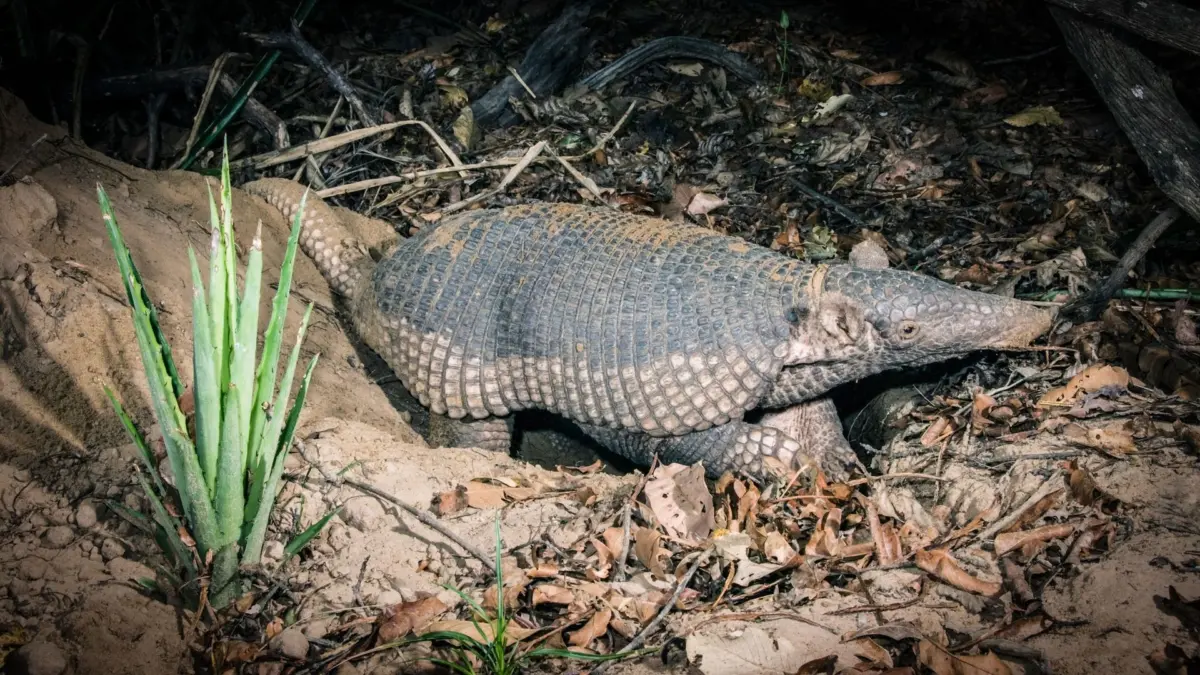
Native to much of South America, the giant armadillo is well known for successfully staying out of human sight. It lives a largely solitary lifestyle, spending the daylight hours safely tucked away inside deep underground burrows, and mostly emerges only after dark to look for food. Spotting the adults is already a formidable challenge, but seeing babies is especially rare. This is because giant armadillos breed remarkably slowly, with females giving birth only about once every three years, significantly limiting the population’s growth and visibility in the wild.
All of which makes a recent piece of footage all the more remarkable. In a major triumph for wildlife documentation, a camera trap deployed deep within the Peruvian Amazon has successfully filmed a baby giant armadillo moving through its natural habitat.
The conservation group Amazon Research International set up the camera system in the remote Loreto region of Peru. The short, compelling video clip shows the young armadillo quickly and curiously scurrying through the undergrowth of the forest, offering a rare glimpse into the early life of one of the continent’s most secretive creatures.
“Giant armadillos are amongst the most difficult animals to see on a camera trap,” Rosa Vásquez Espinoza, the founder of Amazon Research International, explained during an appearance on Wild Lives, the BBC Wildlife podcast. Detailing the sheer scale of the undertaking, she noted that researchers and field teams can easily spend over a year utilizing hundreds of cameras just to try to capture a single, fleeting clip of an adult.
Vásquez Espinoza credited her team’s extraordinary success to close collaboration with Indigenous colleagues who possess deep knowledge of the local landscape and wildlife corridors. Reflecting on the emotional impact of the discovery, she added that seeing a baby giant armadillo was simply not something her team had ever dared to dream of. She described the footage as a powerful source of hope, showcasing the resilience and ongoing presence of rich biodiversity in the region.
Filmed with Purpose
While the newly released clip is undeniably captivating and fun to watch, there is a serious and urgent point behind its capture. The giant armadillo is currently listed as a vulnerable species by the International Union for Conservation of Nature (IUCN). Its population numbers are actively falling across its historical range due to severe habitat loss caused by rampant deforestation, expanding cattle ranching, and agricultural conversion, alongside the ongoing threat of hunting.
Capitalizing on this rare momentum, Amazon Research International now plans to use the newly captured footage as concrete, persuasive evidence to push for a brand-new local law in the Loreto region. The proposed legislation aims to provide formal legal protection for the giant armadillo and other large, vulnerable mammals sharing the ecosystem. Parts of this vital area are already partially protected due to previous conservation efforts spearheaded by Vásquez Espinoza, notably her dedicated work focused on protecting local stingless bees.
Those interested in learning more about the discovery and the broader conservation efforts in the region can listen to the full, in-depth interview featuring Rosa Vásquez Espinoza on the Wild Lives podcast from BBC Wildlife.