At first glance, FlexiQuad looks like a small, unassuming drone—just one more buzzing quadcopter performing its routine aerial maneuvers in the open air. Then, an unexpected collision occurs as it crashes directly against a sturdy tree trunk. While a regular, commercially available drone would shatter its rotors, fracture its rigid frame, and plummet helplessly to the ground, this innovative aircraft behaves entirely differently. Instead of breaking or stalling, it bounces back elastically from the tree trunk and happily continues flying along its path as if nothing ever happened.
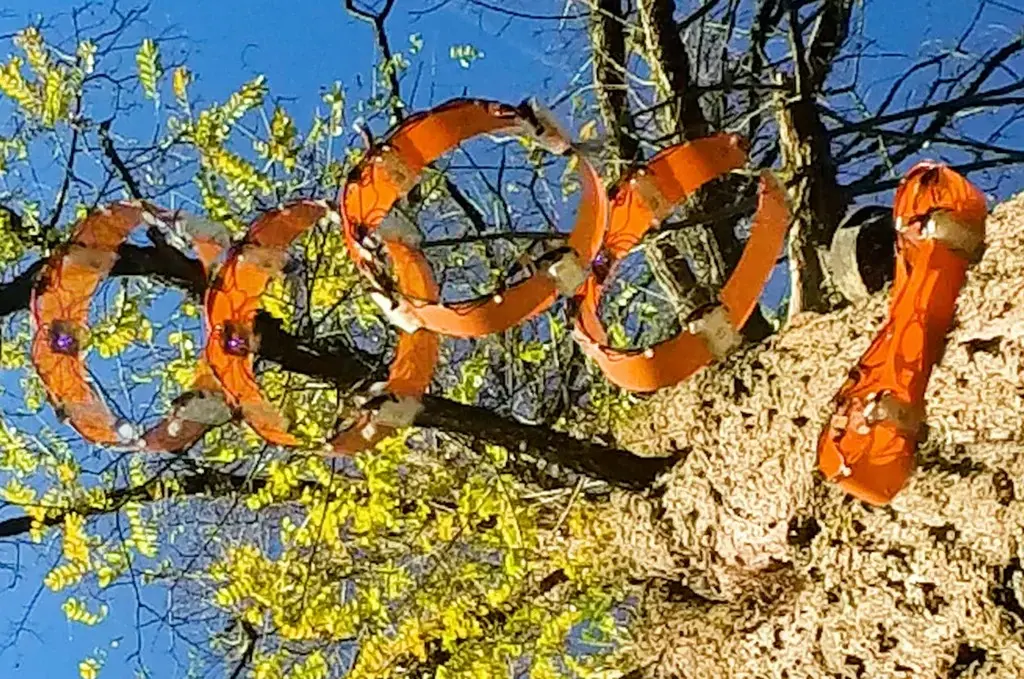
The secret behind this remarkable mid-air resilience lies in a radical departure from conventional aerospace engineering. Traditional quadcopters almost universally rely on four stiff arms bolted securely to a centralized body. That central core typically houses the primary battery, the flight computer and processing brains, various navigational sensors, and occasionally additional payloads or cameras. Engineer Luca Girardi and Stefano Mintchev, a former professor at ETH Zürich’s Environmental Robotics Lab, decided to completely scrap that traditional core and the rigid arms altogether. Instead of the standard configuration, they placed the rotors directly onto a flexible hollow ring, distributing the batteries and the rest of the essential electronics evenly around the perimeter of the rim.
The resulting structure leaves the middle of the FlexiQuad entirely empty, resembling a vertically flat donut floating in the air. This ring-shaped geometry is not merely an aesthetic choice; it is the fundamental mechanism that allows the drone to survive high-impact collisions. The ring itself is flexible, and that flexibility serves as its ultimate superpower. When the aircraft hits a wall, a tree, or another solid obstacle, the structure buckles inward at the point of contact. This temporary deformation effectively absorbs the kinetic force of the impact rather than transmitting it directly to fragile internal components. As the structure rapidly stabilizes and springs back to its original shape, the drone seamlessly maintains its equilibrium and keeps itself airborne.
The inspiration for this unconventional design did not come from traditional aviation history, but rather from the natural world. Specifically, the creators looked closely at how the wings of birds and insects bend dynamically in certain directions while remaining completely rigid in others. In a public statement discussing the project, Girardi explained the biological curiosity that sparked their research. They were deeply interested in understanding the precise degree of stiffness found in biological wings and how creatures control the way those wings bend—or refuse to bend—when subjected to varying aerodynamic forces in different directions.
This biological phenomenon has a specific technical term in engineering: anisotropic stiffness. It refers to the inherent resistance of a material or a complex physical structure to deformation, a property that changes dynamically depending on the precise direction from which a pushing or colliding force is applied. By mimicking this natural balance of flexibility and rigidity, the research team was able to engineer a robotic frame that can yield to sudden external impacts without losing its overall structural integrity or flight capabilities.
Bringing this concept from a theoretical idea to a functional flying machine was no small feat. Girardi spent approximately five years working on the development of the flexible ring drone, refining the mechanics and testing various iterations. Reflecting on the long development process, he admitted that initial doubts were normal. At first, he was genuinely skeptical about whether a drone could successfully fly at all without the traditional central reinforcement and rigid frame that engineers have relied on for decades. However, he remained drawn to the elegance and potential of the approach. Eventually, the team moved past the theoretical stage, built a working prototype, and tested it out in the real world—proving through trial and error that the unconventional design actually worked as intended in flight.